 US Dollar
 Euro
 Australian Dollar
 Canadian Dollar
 Polish Zloty
 British Pound

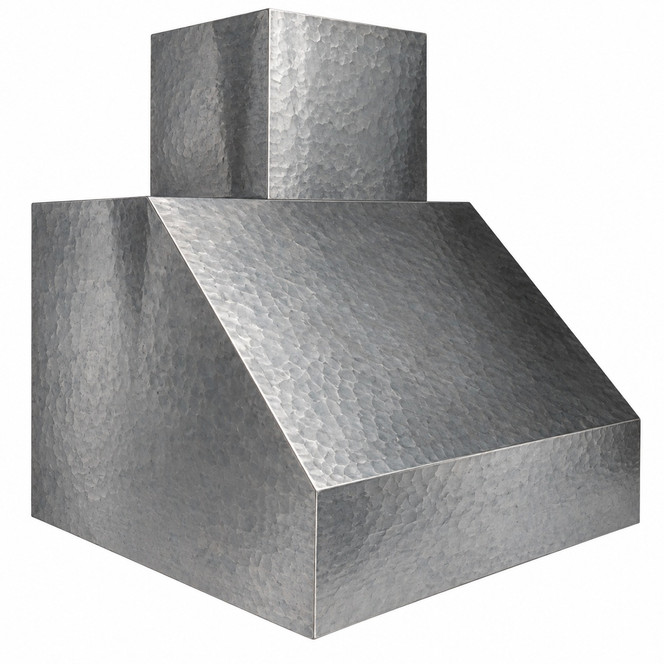
The Hand-Hammered Zinc Range Hood with Rectangular Canopy brings artisan metal texture and clean architectural geometry into four distinct kitchen interiors. Its broad rectangular front, centered chimney, sloping side profile, and straight lower apron create a structured appearance without decorative straps or rivets. The hammered zinc surface introduces subtle light variation while its restrained metallic color complements cabinetry, stone, wood, brick, and concrete. These lifestyle images demonstrate how the same range hood works in a modern kitchen, an industrial setting, a modern farmhouse, and a transitional American home. Each design uses different materials, colors, and architectural details to emphasize the hood's versatility. Rather than changing the hood itself, the surrounding kitchen establishes its character. Explore these four kitchen design ideas to see how a handcrafted zinc range hood can become a distinctive cooking-area focal point.
Blog Summary
- Featured hood: Hand-hammered zinc
- Architecture: Rectangular canopy and chimney
- Modern kitchen: Clean lines and minimal decoration
- Industrial kitchen: Brick, concrete, and dark steel
- Modern farmhouse: Painted cabinets and natural wood
- Transitional kitchen: Traditional and modern balance
- Metal character: Textured neutral zinc surface
- Design guide: Hammered Zinc Range Hood with Rectangular Canopy Guide
Four Kitchens Featuring a Hammered Zinc Range Hood
A metal range hood occupies a prominent position above the cooking surface, making its shape and finish important to the overall kitchen composition. This particular zinc hood combines a rectangular front elevation with a sloping profile visible from the side. The chimney remains centered above the broad canopy, while the lower apron creates a clear horizontal boundary over the range.
Unlike highly ornamented metal hoods, this design depends on proportion, geometry, and hand-hammered texture. Those qualities allow it to complement several interior styles without requiring decorative straps, exposed rivets, or additional metal embellishments.
The four kitchen images illustrate how different surroundings change the hood's appearance. Smooth cabinetry emphasizes its texture, brick reinforces its industrial character, natural wood adds warmth, and traditional cabinet proportions create a balanced transitional setting.
Modern Kitchen with Hammered Zinc Range Hood
A modern kitchen provides a natural setting for the rectangular zinc canopy. Flat-front cabinetry, simple hardware, broad countertop surfaces, and restrained decoration complement the hood's straight front outline. The centered chimney reinforces the room's geometric organization, while the hammered surface introduces a handcrafted detail among otherwise smooth materials.
Because zinc has a comparatively neutral metallic appearance, it can coordinate with light cabinetry, dark finishes, natural wood, and stone without introducing a strong contrasting color. This makes the hood suitable for kitchens that emphasize material texture rather than elaborate ornament.

Minimalist Cabinetry and Zinc
Flat-panel cabinets create broad uninterrupted surfaces that contrast with the irregular hammer marks on the hood. White, cream, gray, charcoal, and natural wood finishes can all work, depending on the desired atmosphere.
The rectangular front keeps the hood visually aligned with cabinet doors, countertop edges, and other horizontal architectural features. Its sloping side profile introduces depth without changing the orderly front composition.
Modern Material Contrast
Stone countertops, smooth ceramic backsplashes, and simple metal hardware provide a restrained background for hammered zinc. Rather than repeating the hammered texture elsewhere, the kitchen can allow the hood to serve as the principal handcrafted surface.
Keeping decorative objects limited also helps the broad canopy remain a recognizable architectural element above the cooking area.
Industrial Kitchen with Hammered Zinc Range Hood
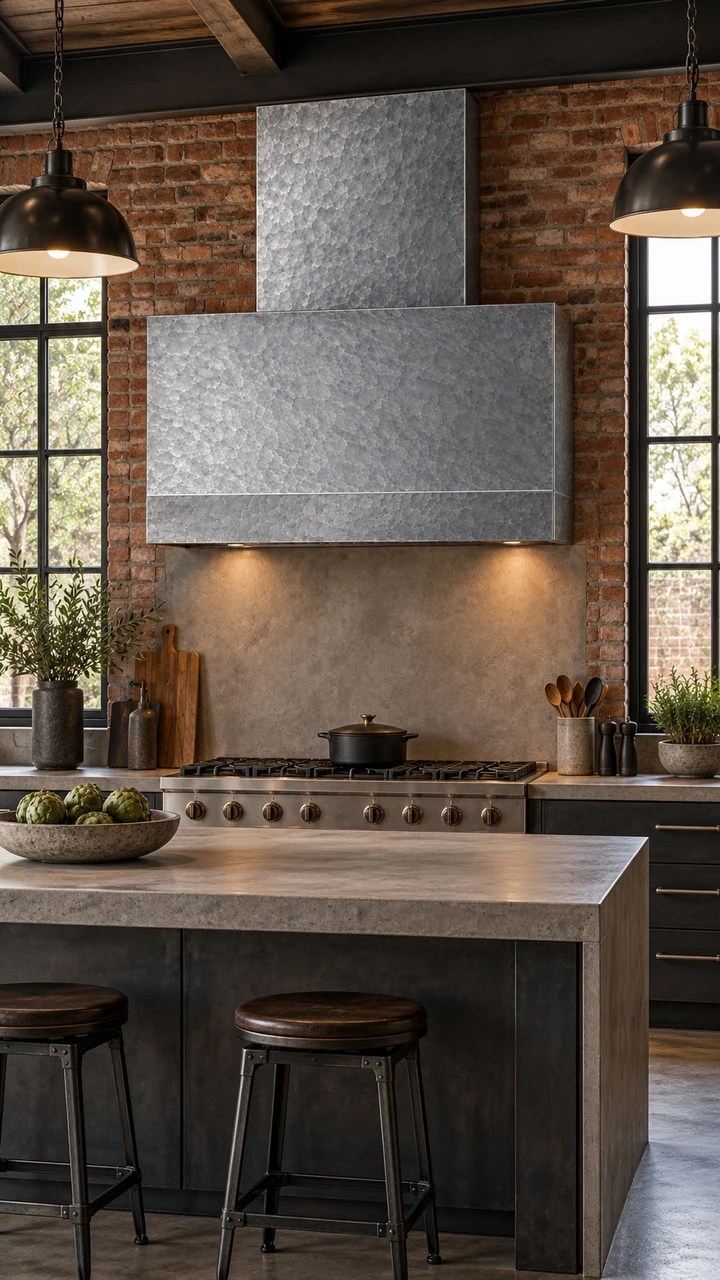
Industrial kitchens emphasize practical materials, exposed structure, and straightforward construction. Brick, concrete, steel, and utilitarian lighting naturally complement the hammered zinc hood because the metal surface introduces texture without excessive ornament.
The rectangular canopy reinforces the functional appearance associated with industrial interiors. Its centered chimney creates a strong vertical element, while the straight lower apron establishes a substantial horizontal line above the range.
Exposed Brick and Metal
Brick provides a textured backdrop that works with the irregular hammered surface. Warm red or brown brick creates contrast with the cooler zinc tone, while gray brick produces a more restrained industrial palette.
Dark steel shelving, simple cabinet hardware, and exposed architectural details can reinforce the utilitarian character without requiring decorative elements on the hood itself.
Concrete and Industrial Lighting
Concrete countertops, cement-look flooring, and simple pendant lighting support the functional atmosphere. The hammered zinc surface softens the visual uniformity of smooth concrete by introducing small variations in reflected light.
Industrial lighting should complement the hood rather than obscure its front silhouette. Simple metal pendants or understated ceiling fixtures can maintain the emphasis on the cooking wall.
Modern Farmhouse Kitchen with Hammered Zinc Range Hood
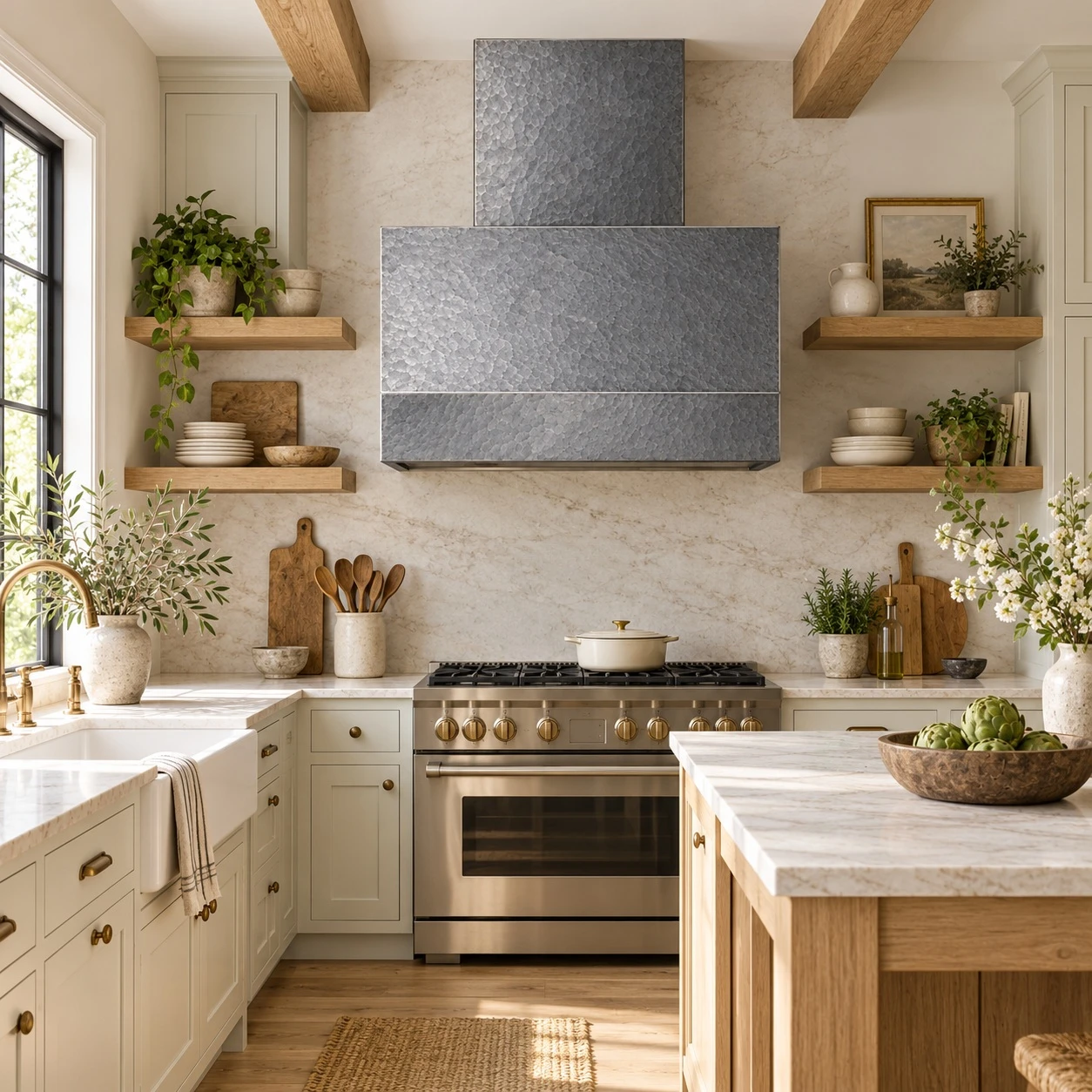
A modern farmhouse kitchen combines familiar traditional materials with cleaner contemporary details. Painted cabinetry, natural wood, stone countertops, and apron-front sinks create a warm background for the hammered zinc range hood.
The rectangular canopy fits this style particularly well because it offers substantial visual presence without elaborate ornament. The hand-hammered surface introduces craftsmanship, while the straight lower apron maintains a simple architectural appearance.
Painted Cabinetry and Natural Wood
Warm white and cream cabinetry create a bright foundation for the zinc hood. Natural oak, walnut, or other wood accents introduce warmth that balances the cooler metal surface.
Shaker-style cabinet doors can reinforce the traditional side of the farmhouse design, while simple hardware and uncluttered countertops maintain its modern character.
Farmhouse Backsplash Ideas
Subway tile, handmade-look ceramic, natural stone, and lightly textured plaster can all complement the zinc. A simple backsplash is particularly effective because it allows the hammered canopy to remain the most distinctive surface above the cooking area.
Wood shelves, woven accessories, and understated pottery can provide additional texture without overwhelming the kitchen with competing decorative elements.
Transitional American Kitchen with Hammered Zinc Range Hood
A transitional kitchen bridges traditional cabinet proportions and contemporary finishes. The hammered zinc range hood contributes to that balance through its structured rectangular front and handcrafted surface.
The design works with shaker or simplified raised-panel cabinetry, stone countertops, substantial islands, and restrained metal hardware. Its broad canopy creates a focal point above the cooking range without requiring the surrounding kitchen to follow a strictly industrial or rustic style.

Traditional Proportions with Contemporary Finishes
Transitional cabinetry often retains familiar door profiles while reducing elaborate molding and ornament. The zinc hood follows a similar approach: its rectangular front creates a defined architectural feature, while the absence of straps and rivets keeps the composition relatively simple.
Light cabinetry and subtly veined stone emphasize the hood's metallic surface. Darker islands or natural wood accents can introduce contrast and prevent the kitchen from appearing overly uniform.
Balancing the Cooking Wall
The centered chimney creates a useful visual axis above the range. Cabinetry and backsplash details can be arranged symmetrically around it, establishing an orderly cooking-wall composition.
Because the hood already provides texture through hammering, surrounding materials can remain relatively restrained. This approach preserves the transitional balance between traditional warmth and contemporary simplicity.
Comparing the Four Kitchen Styles
| Kitchen Style | Main Materials | Zinc Hood Effect |
|---|---|---|
| Modern | Flat-panel cabinets, smooth stone | Textured architectural contrast |
| Industrial | Brick, concrete, dark steel | Functional metallic character |
| Modern farmhouse | Painted cabinets, wood, ceramic | Handcrafted rustic warmth |
| Transitional | Shaker cabinetry, stone, wood | Traditional-modern balance |
Choosing Cabinet Colors for a Zinc Range Hood
Cabinet color affects how prominently the hammered zinc appears within the kitchen. Light finishes increase contrast and emphasize the hood's silhouette, while darker cabinetry creates a more integrated metallic composition.
- Warm white: Bright and timeless contrast
- Light gray: Coordinated neutral palette
- Natural oak: Warm organic balance
- Walnut: Rich wood and metal contrast
- Charcoal: Strong industrial definition
- Greige: Soft transitional coordination
The most successful combinations generally include some contrast between the zinc and surrounding cabinetry. This allows the rectangular canopy to remain recognizable as a separate architectural element.
Backsplash Materials for Hammered Zinc
The backsplash is one of the most important surrounding surfaces because it sits directly behind the hood. Its color, texture, and pattern influence how the hammered zinc appears.
Modern kitchens can use large-format stone or simple ceramic tile. Industrial interiors may incorporate exposed brick or concrete-look finishes. Modern farmhouse kitchens work with handmade-look ceramic or traditional subway tile, while transitional interiors often benefit from understated stone or softly patterned tile.
When the backsplash is highly textured, the zinc hood provides a smoother overall architectural outline despite its hammered surface. When the backsplash is visually quiet, the metal texture becomes more noticeable.
Lighting and Hammered Zinc Texture
Lighting changes the appearance of hammered zinc throughout the day. Natural daylight reveals subtle irregularities in the metal surface, while directional artificial lighting can create more concentrated highlights across the canopy.
In a modern kitchen, broad ambient lighting helps maintain a clean and balanced appearance. Industrial interiors can use simple pendants and utilitarian fixtures, while farmhouse and transitional kitchens may incorporate warmer decorative lighting.
The goal is to illuminate the cooking area effectively while allowing the hood's texture and rectangular silhouette to remain visible.
Styling Around a Rectangular Zinc Canopy
The restrained design of this hood allows surrounding kitchen elements to establish the room's decorative character. Modern kitchens benefit from minimal countertop accessories, while industrial spaces can emphasize brick, dark steel, and exposed construction materials.
Modern farmhouse interiors can incorporate wood cutting boards, pottery, woven textures, and natural materials. Transitional kitchens often work best with a limited selection of decorative objects and carefully coordinated cabinetry and hardware.
Across all four settings, the rectangular zinc canopy remains the central architectural feature above the range. Its handcrafted texture adds character without requiring decorative embellishment.
Interior Design Perspective
The distinguishing feature of this zinc hood is its combination of a broad rectangular front and visibly sloping side profile. From the front, the design appears orderly and architectural. From the side, the angled canopy introduces depth and a more dimensional silhouette.
Hammered zinc reinforces the handcrafted character without changing that geometry. This explains why the same hood can complement modern, industrial, farmhouse, and transitional kitchens. Each interior emphasizes a different aspect of the design while preserving the hood's fundamental shape.
For technical details about dimensions, zinc finish options, mounting configurations, and ventilation preparation, consult the Hammered Zinc Range Hood with Rectangular Canopy Guide.
Explore the Hammered Zinc Range Hood
These four lifestyle images demonstrate how a handcrafted zinc range hood can work across several kitchen design directions. Its rectangular front, centered chimney, sloping side profile, straight apron, and hammered surface provide a consistent architectural foundation, while cabinetry, backsplashes, countertops, and lighting establish the individual character of each interior.
Whether used in a minimalist modern kitchen, an industrial space with exposed brick, a welcoming modern farmhouse, or a balanced transitional American home, the hood introduces metal texture without excessive decoration. Explore the Hand-Hammered Zinc Range Hood with Rectangular Canopy to compare the design, available zinc finishes, and custom configuration options for your kitchen.