 US Dollar
 Euro
Euro
 Australian Dollar
 Canadian Dollar
 Polish Zloty
 British Pound

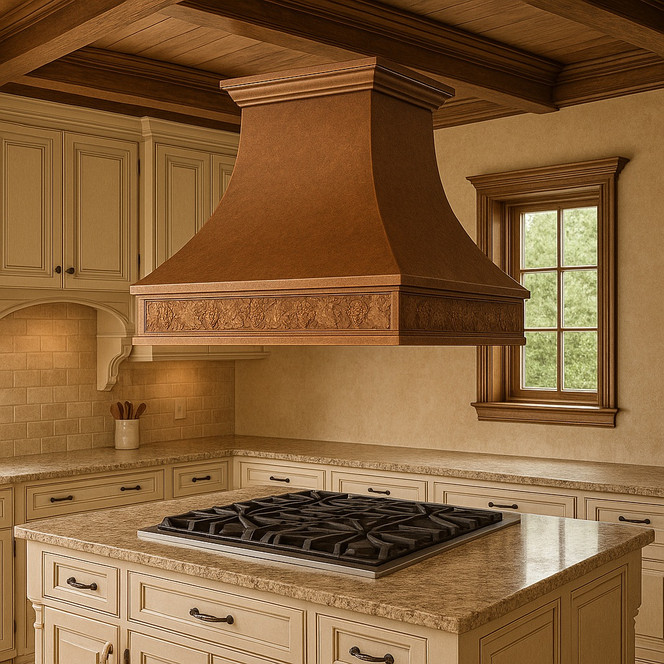
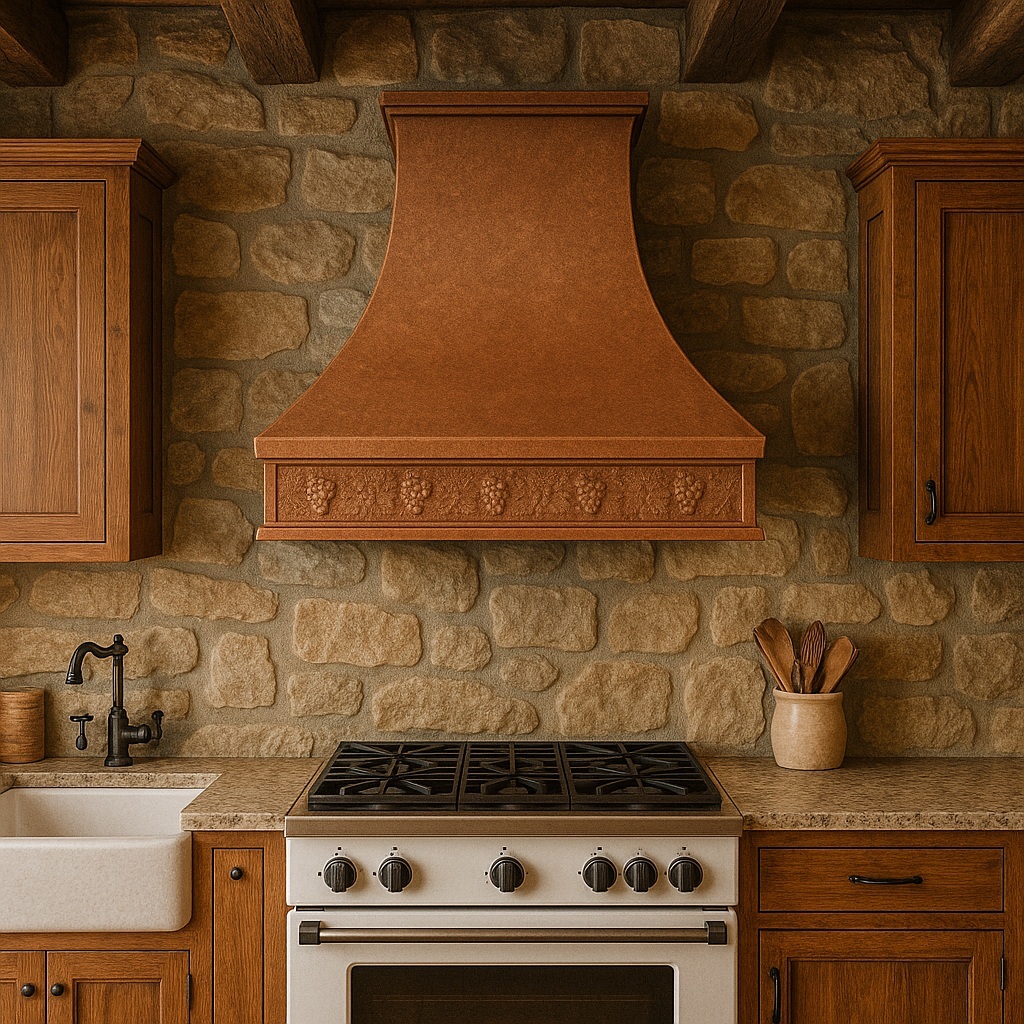
Hammered Copper Exhaust Hood with Grapevine Apron brings handcrafted metal texture, Old World ornament, and warm architectural presence to custom kitchens. Its broad crown, gently sloped body, hammered copper surface, and fruiting grapevine apron create a decorative focal point above ranges and cooktops. This design guide explains how to use the hood in rustic, Tuscan, Mediterranean, farmhouse, Spanish Colonial, and transitional interiors. Explore the grapevine copper exhaust hood to review its artisan details, installation options, patina choices, and custom sizing possibilities.
Design Guide Overview
A hammered copper exhaust hood with a grapevine apron is designed to do more than cover ventilation equipment. It becomes the visual anchor of the cooking wall. The hammered surface adds depth, while the shaped canopy gives the kitchen an architectural center. The grapevine apron introduces decorative relief inspired by vineyard, Tuscan, Spanish, and Old World design traditions. This combination makes the hood suitable for kitchens that need warmth, ornament, and handcrafted texture. When planned correctly, the hood can coordinate with stone counters, wood cabinetry, plaster walls, tile backsplashes, iron lighting, and rustic dining furniture.
Grapevine Apron Detail
The grapevine apron is the most distinctive feature of this copper hood. Its fruit, leaves, vines, and raised decorative work create a handcrafted band across the lower front. This detail gives the hood a strong sense of personality without covering the entire surface in ornament. It works especially well in kitchens inspired by wine country, Tuscan villas, Mediterranean homes, and Spanish Colonial architecture. The apron also helps visually ground the sloped body of the hood. Because the motif sits near eye level, it becomes an important design element that should be coordinated with surrounding materials and colors.
Apron Design Features
- Raised grapevine motif
- Fruit and leaf detailing
- Decorative lower band
- Old World character
- Handcrafted copper relief
Hammered Copper Texture
Hammered copper gives the hood a surface that changes with light throughout the day. Small hammer marks create highlights and shadows, helping the metal look warm, dimensional, and handmade. This texture is useful in kitchens with smooth cabinets or simple stone surfaces because it prevents the cooking wall from feeling flat. It also hides small tonal changes better than polished smooth copper. In rustic interiors, hammered texture feels natural beside reclaimed wood, brick, stone, and plaster. In more refined kitchens, it adds artisan depth without requiring excessive ornament beyond the grapevine apron.
Patina and Finish
Patina controls the mood of the hood. A dark coffee or antique espresso finish creates an aged, dramatic look that suits Spanish Colonial, Tuscan, and traditional kitchens. A honey or natural copper finish gives the room a warmer and brighter appearance. Oxidized green details can add artistic contrast, especially when paired with handmade tile or Mediterranean colors. Hand-polished copper feels cleaner and more reflective, but it may need more visible maintenance. The best finish should relate to cabinet color, backsplash material, flooring, hardware, and natural light so the hood feels integrated rather than isolated.
Finish Options
- Dark coffee patina
- Antique espresso finish
- Warm honey copper
- Natural fired copper
- Oxidized green accents
Kitchen Style Fit
This hood fits best in kitchens where handcrafted materials are part of the design story. In a rustic kitchen, the hammered texture supports wood beams, stone floors, and aged finishes. In a Tuscan kitchen, the grapevine apron connects naturally with vineyard-inspired details, warm plaster, and earth-tone tile. In a farmhouse kitchen, the copper brings warmth above painted cabinets and apron-front sinks. In a transitional kitchen, the hood provides a strong artisan focal point against cleaner cabinetry. The key is balance. The hood should be the central decorative feature, while nearby surfaces support it without competing.
Spanish Colonial Kitchens
Spanish Colonial kitchens often combine plaster walls, dark wood, iron hardware, patterned tile, and warm metalwork. A hammered copper hood with grapevine apron fits this language because it brings both structure and ornament. The broad top and sloped body create architectural weight, while the grapevine band adds hand-detailed character. Pair the hood with dark iron lighting, Saltillo-style flooring, carved cabinetry, or simple cream walls. If the backsplash includes Talavera tile, keep the tile colors related to the copper finish. This prevents the cooking wall from becoming too busy while still celebrating handmade materials.
Spanish Style Pairings
- Dark wood cabinets
- Iron light fixtures
- Plaster wall finishes
- Talavera tile accents
- Stone countertops
Tuscan Kitchen Influence
The grapevine apron makes this hood especially appropriate for Tuscan-inspired kitchens. Grapes, leaves, vines, and warm copper tones naturally echo vineyard and villa design themes. Pair the hood with travertine, limestone, terracotta, cream cabinetry, warm wood, and aged bronze or iron hardware. The hammered copper surface can stand out against a simple stone backsplash or coordinate with more decorative tile if the palette remains controlled. Tuscan kitchens often benefit from layered texture, but too many heavy details can overwhelm the range wall. Let the hood carry the main decorative motif and keep adjacent finishes supportive.
Farmhouse Kitchen Use
In farmhouse kitchens, the hood adds warmth and handmade detail above the range. White shaker cabinets, apron-front sinks, wood shelving, and stone counters create a practical foundation for the copper surface. The grapevine apron gives the room a more decorative personality without making it overly formal. A darker patina can create contrast against light cabinets, while honey or natural copper softens the overall palette. Use the hood as the main artisan feature, then repeat smaller warm accents through cabinet pulls, stools, pottery, or wood tones. This keeps the farmhouse design relaxed and balanced.
Transitional Kitchen Balance
A transitional kitchen can use this hood as a bridge between classic detail and cleaner modern lines. The sloped body and hammered copper surface introduce traditional warmth, while the overall form can still feel balanced with simple cabinetry. Choose fewer competing patterns if the hood includes a strong grapevine apron. A quiet stone backsplash, neutral walls, and restrained hardware allow the copper to remain the focal point. For a cleaner look, use a controlled patina and avoid adding too many additional decorative metals. The result is a kitchen that feels custom, warm, and refined without becoming overly rustic.
Transitional Planning Tips
- Use simple cabinets
- Choose quiet backsplash
- Limit competing patterns
- Repeat warm accents
- Keep hardware restrained
Wall or Island Mounting
The hood can be planned for wall-mounted or island installation depending on the kitchen layout. Wall-mounted versions work above ranges placed against a backsplash and can be framed by cabinets or left as a standalone focal point. Island versions are viewed from more angles and require extra attention to symmetry, ceiling support, and venting path. The grapevine apron should remain visible from the main viewing side. In both installations, proportions matter. Width, height, depth, chimney length, and mounting clearance should be considered before production so the hood looks intentional and performs correctly.
Ventilation Planning
A copper hood cover should be selected together with the ventilation insert. Cooking style, range size, duct route, ceiling height, and installation type all affect the final setup. Frequent frying, grilling, or high-heat cooking may require stronger ventilation than lighter daily cooking. The hood should provide adequate capture area above the range while leaving comfortable clearance for cooking. For broader category comparisons, review metal range hoods and compare copper with zinc, pewter, iron, and mixed metal options.
Ventilation Checks
- Confirm range width
- Review insert size
- Plan duct direction
- Check ceiling height
- Choose wall or island
Custom Copper Choices
Custom copper hoods allow the design to match the exact kitchen. Width, height, depth, finish, texture, apron details, crown shape, and installation style can be planned around the room. This matters because the hood must relate to cabinetry, ceiling height, backsplash width, and the cooking appliance below. A tall room may need a longer chimney, while a compact kitchen may need a simpler proportion. For deeper planning details, read the custom copper hood guide before choosing final dimensions and decorative features.
Copper Hood Categories
The grapevine apron hood belongs to a broader family of handcrafted copper ventilation covers. Some designs are smooth and minimal, while others include straps, rivets, crowns, scrollwork, or embossed motifs. Barrel, bell, pyramid, and box shapes each create a different architectural effect. Copper is especially popular because it brings warmth and develops character over time. To compare related styles, explore copper range hoods and consider how shape, finish, and decorative detail change the atmosphere of the kitchen.
Mixed Metal Pairings
Although copper can stand alone, it also works with other metals when planned carefully. Dark iron lighting can frame a copper hood with contrast, while brass hardware may add a warmer refined tone. Stainless appliances can still work if they are balanced with wood, stone, or copper accessories. Mixed metal range hood designs may include straps, bands, or contrasting trim for a more layered appearance. For inspiration, browse mixed metal range hoods and study how different finishes can complement copper without overwhelming the cooking wall.
Metal Pairing Ideas
- Copper with black iron
- Copper with brass trim
- Copper with dark bronze
- Copper near stainless steel
- Copper with pewter accents
Backsplash Coordination
The backsplash should support the hood rather than compete with it. Because the grapevine apron already includes decorative movement, many kitchens benefit from a quieter stone, plaster, brick, or solid tile background. If you choose Talavera or patterned tile, select colors that repeat the copper patina, cabinetry, or countertop tones. A framed tile panel can work if the scale is controlled and the motif does not conflict with the grapevine relief. The backsplash height should also be planned around the hood’s lower edge and apron band so the entire cooking wall feels carefully composed.
Lighting and Surroundings
Lighting affects how the hammered copper surface appears. Warm bulbs bring out red, brown, honey, and antique tones, while cooler lighting can flatten the patina. Under-cabinet lighting, sconces, pendants, and natural daylight all change the visual effect. If the hood is the kitchen’s main focal point, avoid placing overly ornate lighting directly beside it. Simple iron, glass, or warm metal fixtures often work best. The surrounding materials should guide the eye toward the hood rather than distract from it. This is especially important when the grapevine apron is richly detailed.
Care and Patina
Copper hoods should be cleaned with mild soap, warm water, and a soft cloth. Abrasive pads, harsh chemicals, bleach, ammonia, and aggressive polishing can damage patina and surface texture. Hammered copper may hide minor marks well, but grease should still be removed before it hardens. Dry the hood after cleaning to avoid water spots. If the hood has a dark or aged patina, avoid frequent acidic cleaners because they can lighten the finish. For common owner questions, review the copper range hood FAQ.
Care Guidelines
- Use mild soap only
- Wipe with soft cloth
- Dry after cleaning
- Avoid harsh cleaners
- Protect the patina
Design Summary
A hammered copper exhaust hood with grapevine apron is best used as the main decorative feature above the range or island cooktop. Its hammered texture adds depth, while the fruiting vine motif introduces Old World personality. The hood works well in Spanish Colonial, Tuscan, Mediterranean, rustic, farmhouse, traditional, and transitional kitchens when nearby materials are chosen with restraint. Patina, backsplash, lighting, cabinet color, and hardware should all support the copper rather than compete with it. Proper sizing and ventilation planning ensure the hood performs as well as it decorates.
Final Design Guidance
Hammered Copper Exhaust Hood with Grapevine Apron design works best when proportion, finish, ventilation, and surrounding materials are planned together. Choose a patina that complements the cabinetry, keep the backsplash balanced, and let the grapevine apron remain the central decorative detail. Use iron, stone, wood, tile, and warm lighting to reinforce its handcrafted character. Whether installed on a wall or above an island, this copper hood can bring lasting beauty, kitchen freshness, smoke and odor removal, and artisan architectural presence to a custom cooking space.