 US Dollar
 Euro
Euro
 Australian Dollar
 Canadian Dollar
 Polish Zloty
 British Pound

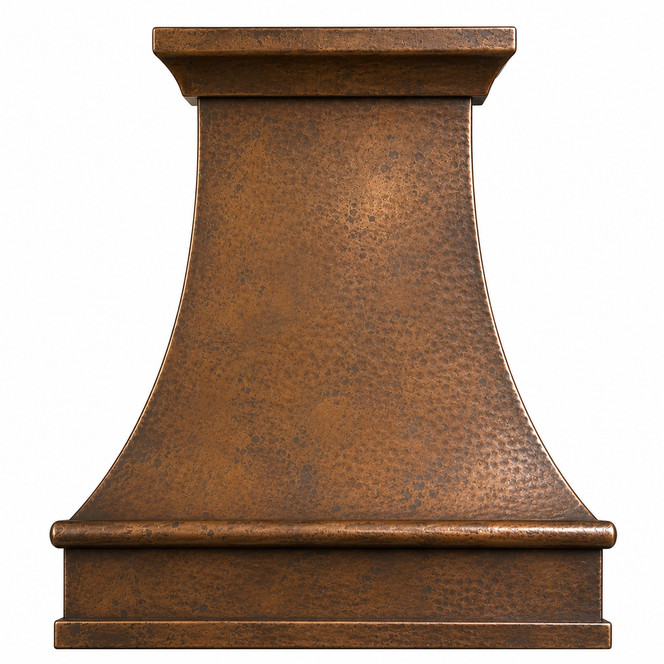
The Hammered Copper Bell Range Hood with Layered Crown and Apron is shown in these kitchen lifestyle images as a warm architectural focal point for Spanish Colonial, Mediterranean, rustic European, French country, and transitional kitchens. Its bell-shaped hammered copper body, layered crown molding, structured apron, softly curved canopy, and warm patina create a strong range-wall feature with traditional character and handcrafted depth. The design has enough detail to support old-world interiors, but the front remains clean enough for refined kitchens that need copper warmth without excessive ornament. Explore the hammered copper bell range hood with layered crown and apron to compare its bell profile, crown detail, apron, finish, and kitchen style applications. For product-specific design context, read the hammered copper bell range hood with layered crown and apron guide.
Blog Summary
- Focus: kitchen lifestyle images
- Product: hammered copper bell hood
- Feature: layered crown and apron
- Shape: curved bell canopy
- Scenes: five kitchen styles
- Look: warm and architectural
Hammered Copper Bell Hood Images
Lifestyle images help show how this hammered copper bell range hood looks inside finished kitchens rather than as a standalone product photo. Cabinet color, backsplash material, ceiling height, lighting, flooring, counter surface, wall texture, and nearby hardware all affect how the copper patina appears. In one kitchen, the hood can feel Spanish Colonial and historically grounded. In another, the same bell shape can support Mediterranean warmth, rustic European texture, French country softness, or transitional balance.
This hood stands out because the silhouette combines curve, crown, and apron. The bell body gives the range wall movement, the layered crown finishes the top with architectural weight, and the apron gives the lower section a substantial frame above the cooking area. For broader copper silhouette comparison, review the copper range hood shapes guide.
Design Highlights
- hammered copper bell canopy
- layered crown molding detail
- structured lower apron
- warm aged copper patina
- soft curved range-wall profile
- traditional without heavy ornament
- Spanish to transitional flexibility
Spanish Colonial Kitchen Image
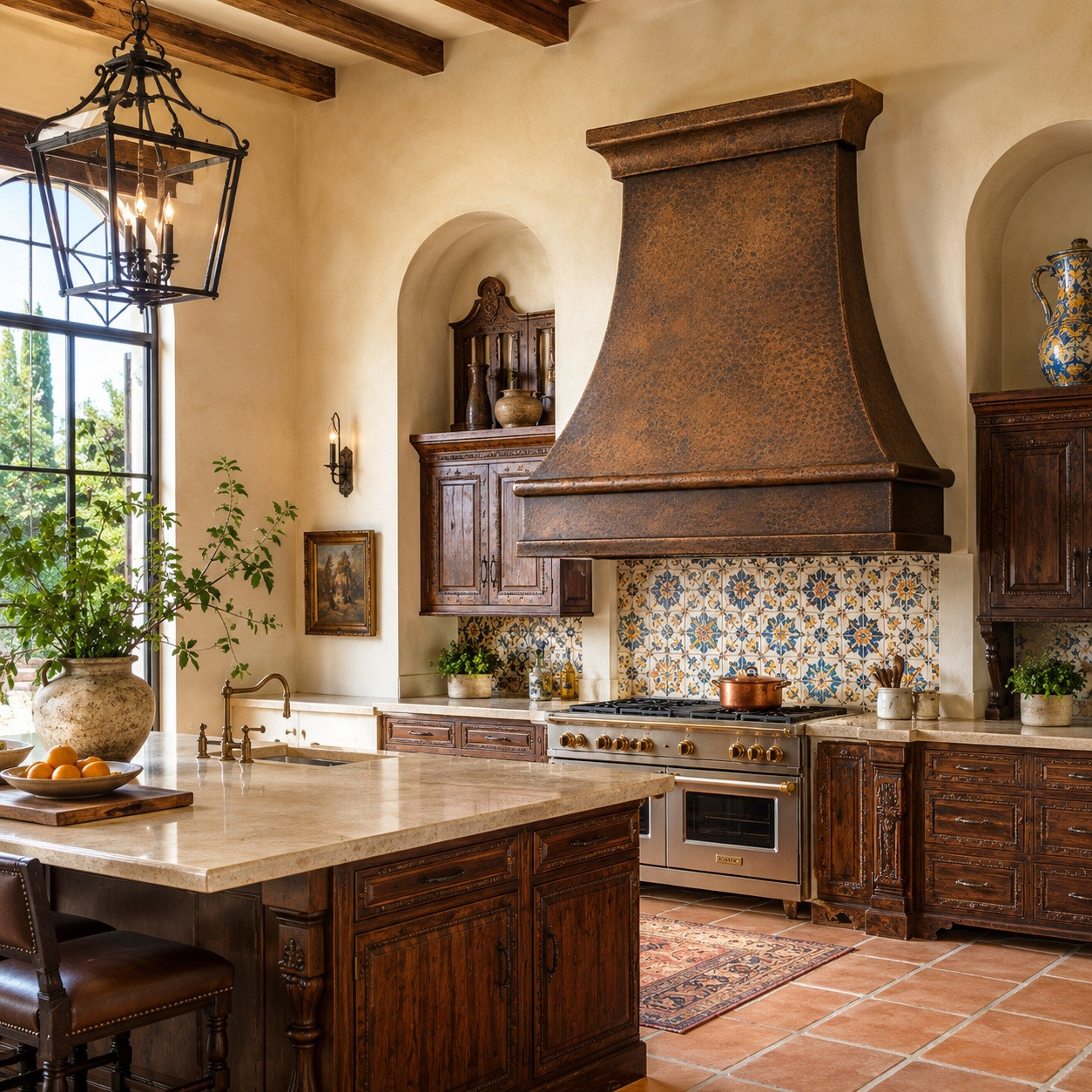
In a Spanish Colonial kitchen, the hammered copper bell hood works naturally with plaster walls, Talavera tile, dark wood, iron lighting, stone counters, arched details, and warm flooring. Spanish Colonial interiors often use strong architectural materials and handcrafted surfaces, so the hood’s hammered copper finish and layered silhouette feel appropriate above the range.
The bell shape connects well with rounded openings and masonry-inspired range walls. The layered crown gives the hood a finished architectural top, while the apron adds visual weight at the lower edge. This makes the hood feel like part of the room’s structure rather than a plain appliance cover. The warm copper patina can coordinate with bronze hardware, dark iron, clay tile, and carved wood. For related regional inspiration, review the Spanish-style copper range hoods guide.
Mediterranean Kitchen Image
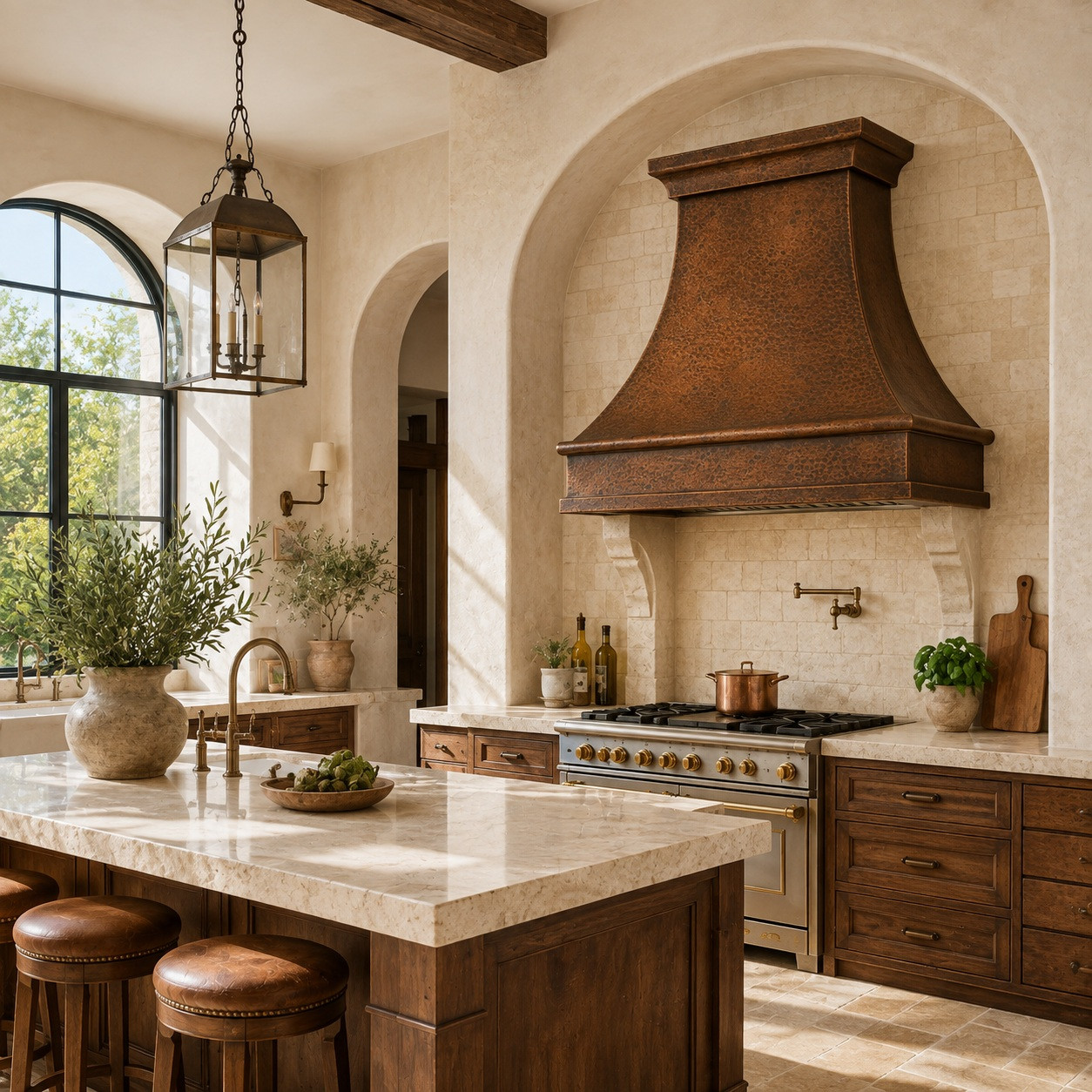
In a Mediterranean kitchen, the hood brings warmth, depth, and handcrafted metal character to stone, plaster, walnut, travertine, limestone, bronze hardware, and handmade tile. Mediterranean interiors often depend on material richness rather than bright decoration. The hammered copper surface supports that approach by adding texture and movement without needing applied scrollwork or contrasting metal straps.
The layered crown and apron help the hood hold its own above a substantial range, masonry backsplash, or cooking alcove. The bell body softens the range wall, while the copper patina adds a warm focal point against cream plaster, pale stone, and natural wood. This setting is especially successful when the hood is paired with aged surfaces and soft lighting. For broader old-world copper context, review the Hacienda copper range hood buying guide.
Rustic European Kitchen Image
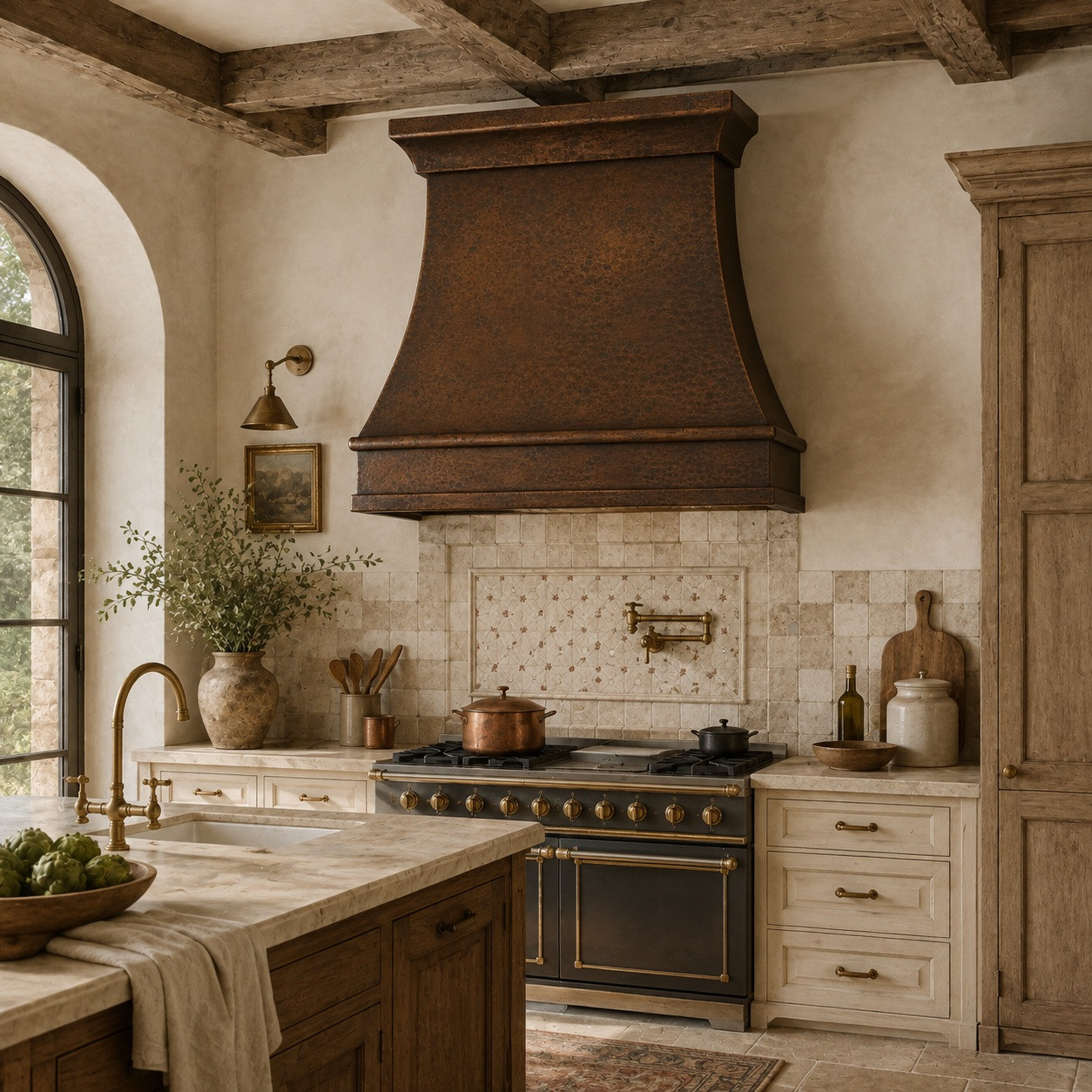
In a rustic European kitchen, the copper bell hood feels substantial, aged, and architectural. Rustic European interiors often combine limestone, reclaimed beams, plaster walls, stone counters, inset cabinetry, handmade tile, and unlacquered brass or iron hardware. The hood’s hammered copper finish works well with those materials because it has natural variation, warmth, and visible handwork.
The formal crown, curved body, and deep apron pair especially well with old-world cabinetry and masonry-style range walls. At the same time, the front remains relatively clean, so the design does not become overly ornate. This balance allows the hood to support European character without overwhelming the room. The copper surface can deepen the effect of aged timber, stone, and plaster while remaining the central focal point above the cooking area. For related style planning, review the old European copper range hood guide.
French Country Kitchen Image
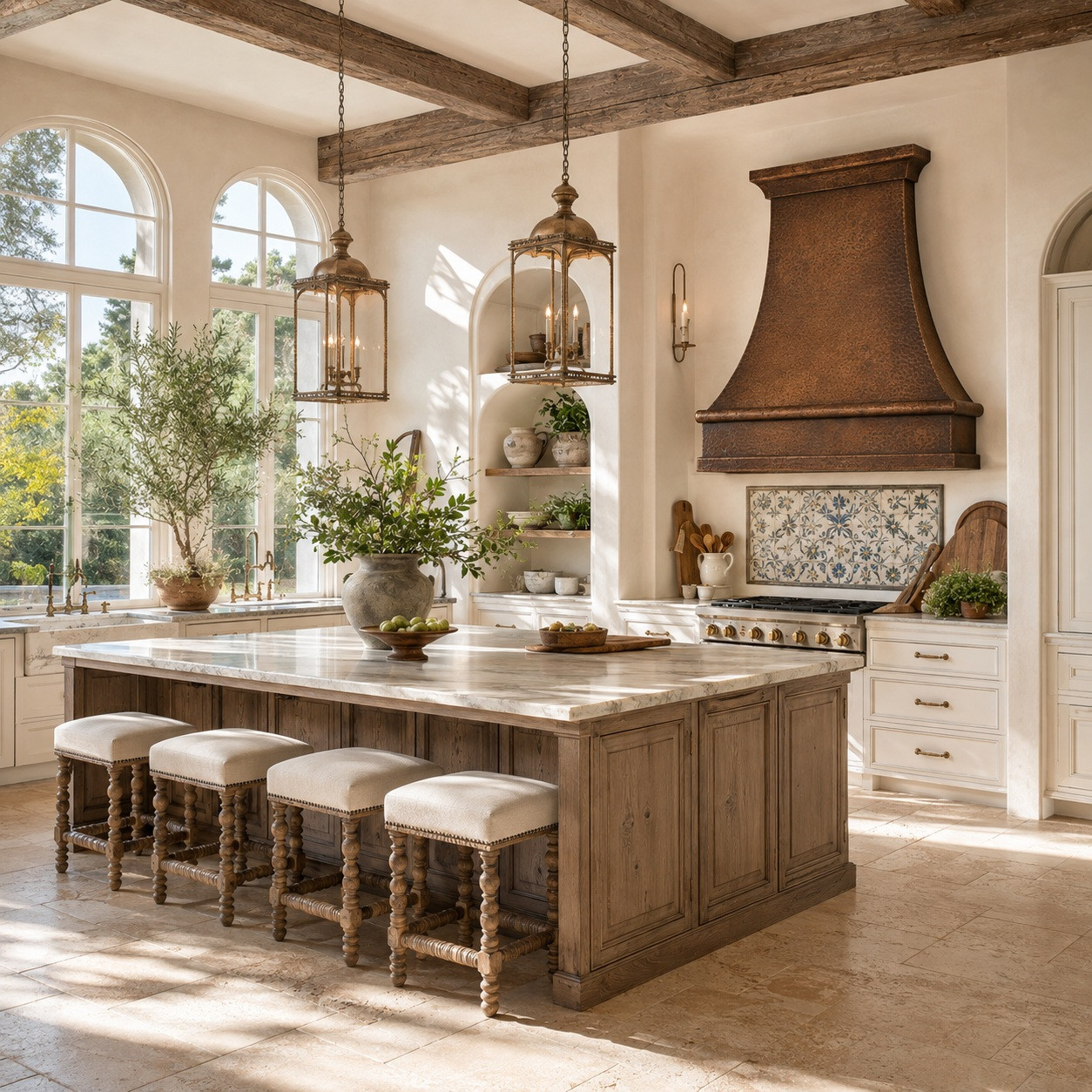
In a French country kitchen, the hood brings warmth and shaped architectural character to painted cabinetry, limestone counters, wood floors, handmade tile, soft neutral colors, and aged metal fixtures. French country interiors often combine elegance with relaxed material texture, so the hood’s curved bell body and layered crown feel natural without appearing too formal.
The apron gives the lower edge of the hood a finished presence above the range, while the hammered copper surface softens the light and adds depth. The warm patina can complement cream, putty, sage, blue-gray, walnut, and natural stone finishes. Because the design does not rely on heavy straps or riveted grids, it can work in French country rooms where cabinetry, lighting, stone, or tile already provide decorative detail. For more related inspiration, review the French-style copper range hoods guide.
Transitional Kitchen Image
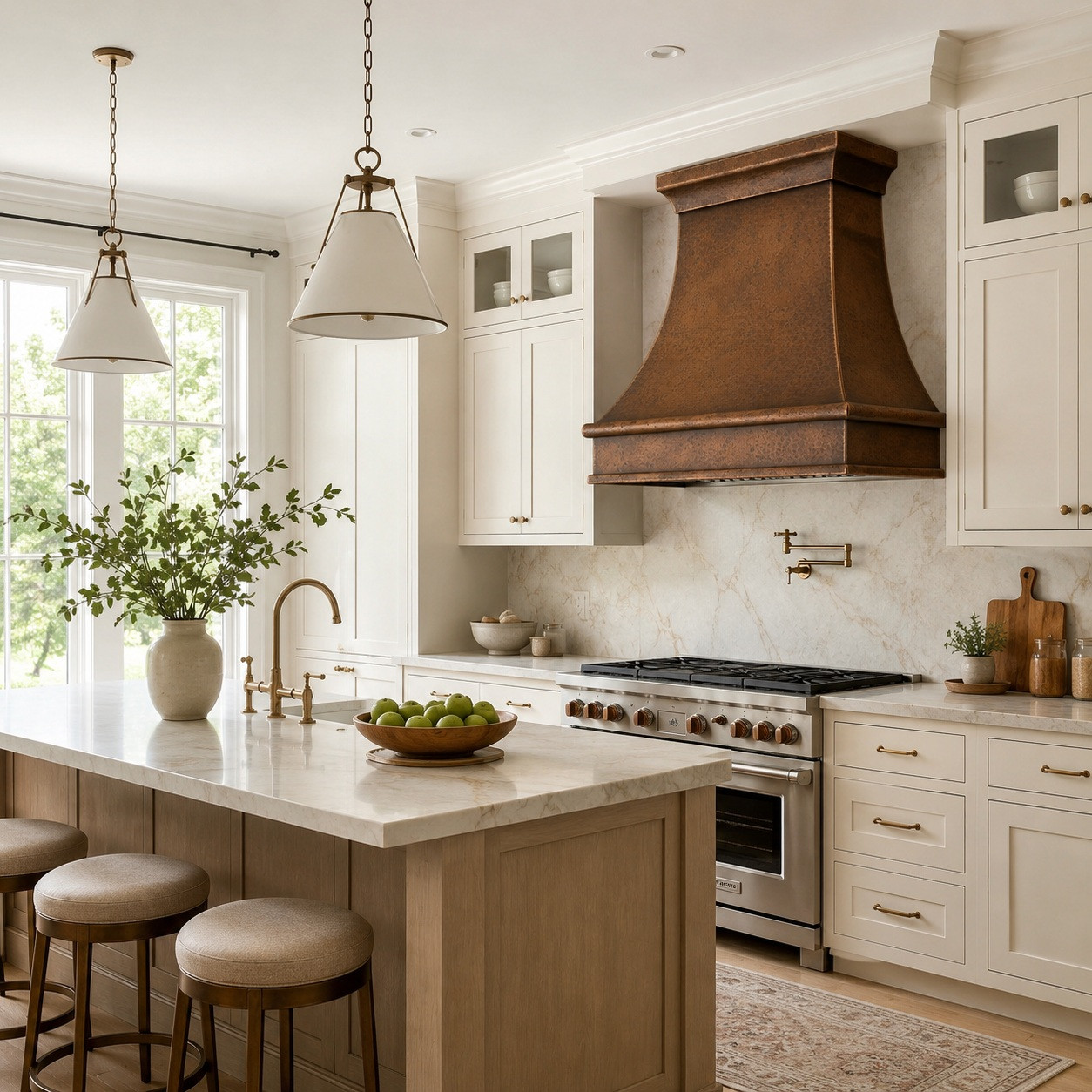
In a transitional kitchen, the hood can introduce warmth and handcrafted texture into a room with simplified cabinetry, quiet stone surfaces, contemporary appliances, and balanced traditional details. Transitional interiors often need one custom focal point that feels warmer than stainless steel but cleaner than heavily decorative old-world metalwork. This hood fits that need through shape, material, and proportion.
The bell body and layered crown connect with traditional range hood architecture, while the simpler hammered copper face keeps the overall appearance restrained. The apron adds enough definition to frame the cooking area, but it does not make the hood feel overly rustic. The copper can soften white, gray, taupe, black, navy, or natural wood cabinetry. For finish comparison, review the copper patina finish options guide.
Bell Shape and Crown Detail
The bell shape gives this hood its main visual movement. The canopy curves outward as it descends, creating a softer profile than a straight tapered hood or rectangular box hood. This shape works well in kitchens that need a warm traditional focal point with enough movement to soften the range wall.
The layered crown is equally important. It finishes the top of the hood with architectural detail and helps the hood coordinate with cabinet molding, ceiling trim, beams, or framed range-wall elements. The crown also gives the hood more formality, making it suitable for Spanish Colonial, Mediterranean, rustic European, and French country interiors.
Structured Apron
The apron gives the lower portion of the hood visual weight. It frames the range area and makes the copper body feel grounded above the cooking surface. Without the apron, the hood would feel lighter and more minimal. With it, the design gains substance, traditional character, and a stronger range-wall presence.
This detail is especially useful in kitchens with large cooking alcoves, stone backsplashes, or wide ranges. The apron creates a defined horizontal base while the bell body rises above it in a softer curve. Together, these elements create a balanced composition.
Hammered Copper Finish
The hammered copper finish gives the hood warmth, depth, and handmade variation. Each hammer mark catches light differently, creating subtle highlights and darker low points across the curved body, apron, and crown. This texture helps the hood feel artisan-made rather than flat or manufactured.
Small differences in hammering, copper tone, patina movement, seam detail, crown shaping, apron proportion, and artisan finishing should be expected in handmade copper work. These variations are not defects. They are part of the handcrafted character that makes each hood visually individual.
Style Compatibility
This hood works across several kitchen styles because it combines traditional shape with restrained detailing. In Spanish Colonial kitchens, it supports plaster, tile, wood, and iron. In Mediterranean rooms, it adds warmth to stone and masonry-inspired finishes. In rustic European kitchens, it coordinates with beams, limestone, and handcrafted cabinetry. In French country kitchens, it adds gentle elegance and aged copper depth. In transitional interiors, it provides warmth without overwhelming cleaner cabinetry.
The design is strongest when the kitchen lets the hood remain the central feature. Stone backsplashes, warm lighting, balanced cabinetry, and carefully chosen hardware help the copper body, layered crown, and apron read as intentional parts of the range wall.
Conclusion
The hammered copper bell range hood with layered crown and apron brings a curved bell body, warm patina, hand-hammered texture, formal crown detail, and structured lower apron into the kitchen. These lifestyle images show how the hood adapts to Spanish Colonial, Mediterranean, rustic European, French country, and transitional interiors while keeping its design warm, architectural, and handcrafted.