 US Dollar
 Euro
Euro
 Australian Dollar
 Canadian Dollar
 Polish Zloty
 British Pound


Real bathroom installations show how a handcrafted copper bathtub changes character once surrounded by stone, tile, wood, natural light, and personal furnishings. This gallery focuses on hammered copper bathtubs photographed in finished residential spaces, highlighting how patina, texture, tub shape, faucet placement, and surrounding materials work together. For more detailed information about shapes, sizing, finishes, installation planning, and maintenance, see our hammered copper bathtub guide. The images below provide visual inspiration for rustic, traditional, spa-inspired, and contemporary bathrooms while showing how individually handcrafted copper develops a distinctive presence in different interiors.
Blog Summary
- Gallery: Real bathroom installations
- Texture: Hand-hammered copper
- Patina: Light to deep brown
- Styles: Rustic to contemporary
- Fixtures: Bronze and copper accents
- Lighting: Natural and ambient
- Details: Artisan variation
- Planning: Visual bathroom inspiration
Hammered Copper Bathtubs in Real Bathrooms
Seeing a copper bathtub in a completed room provides a different perspective than viewing the fixture alone. Wall color, flooring, windows, lighting, faucet finish, textiles, and surrounding furniture can make the same material appear rustic, refined, dramatic, or understated. These customer spaces illustrate several approaches to incorporating hammered copper without requiring every element in the room to match the tub.
Antique Copper Bathtub with Warm Lighting

This antique-inspired installation combines a hand-hammered tub with warm ambient lighting and traditional fixtures. The darker patina gives the copper visual depth while rolled towels and soft neutral finishes keep the room relaxed rather than overly formal. The installation demonstrates how aged copper can work as the strongest material accent while the rest of the bathroom remains comparatively restrained.
Rustic Farmhouse Copper Bathtub
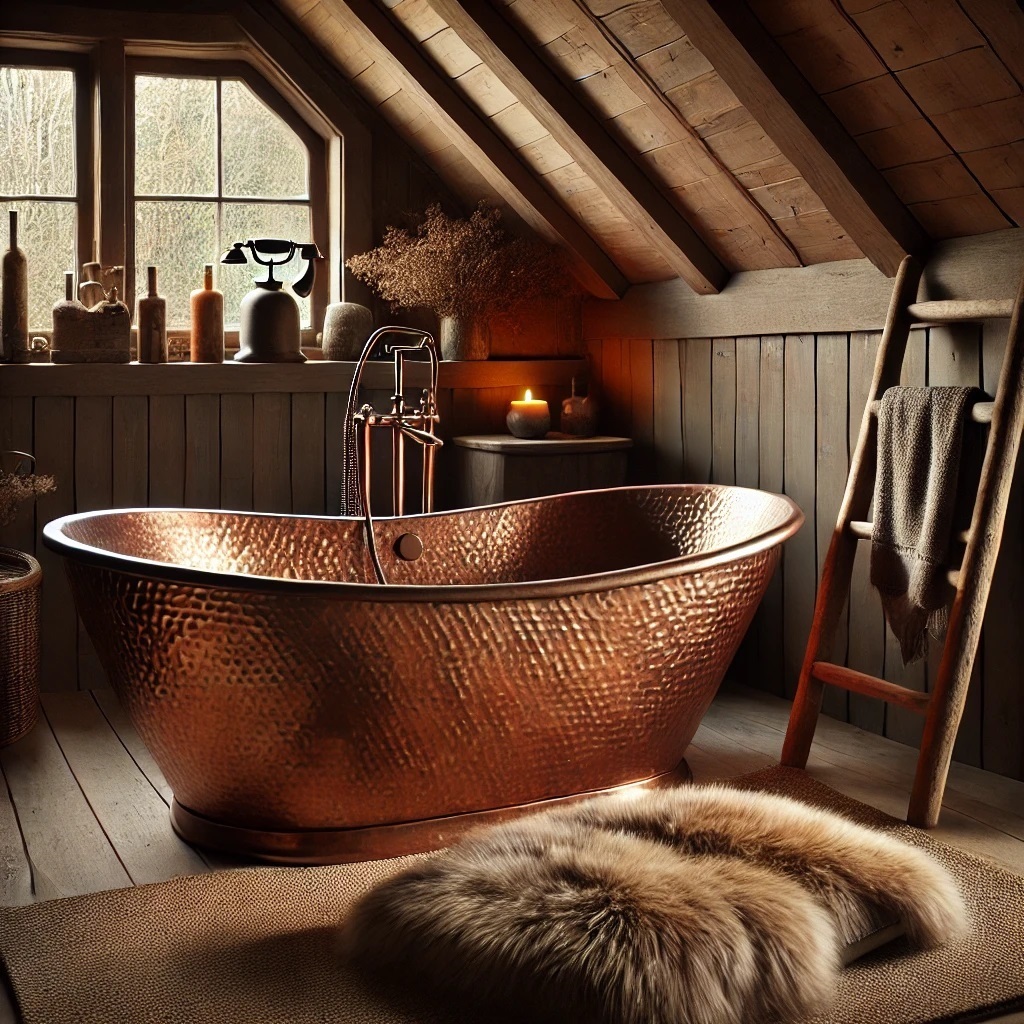
A deeper copper finish gives this bathroom a grounded farmhouse character. The dark hammered surface is softened by natural wood, a textured rug, and informal accessories. Instead of competing with the tub, these organic materials reinforce its handmade quality. This type of pairing works especially well when the goal is a bathroom that feels collected and comfortable rather than perfectly polished.
Natural Light and Earth-Tone Bathroom
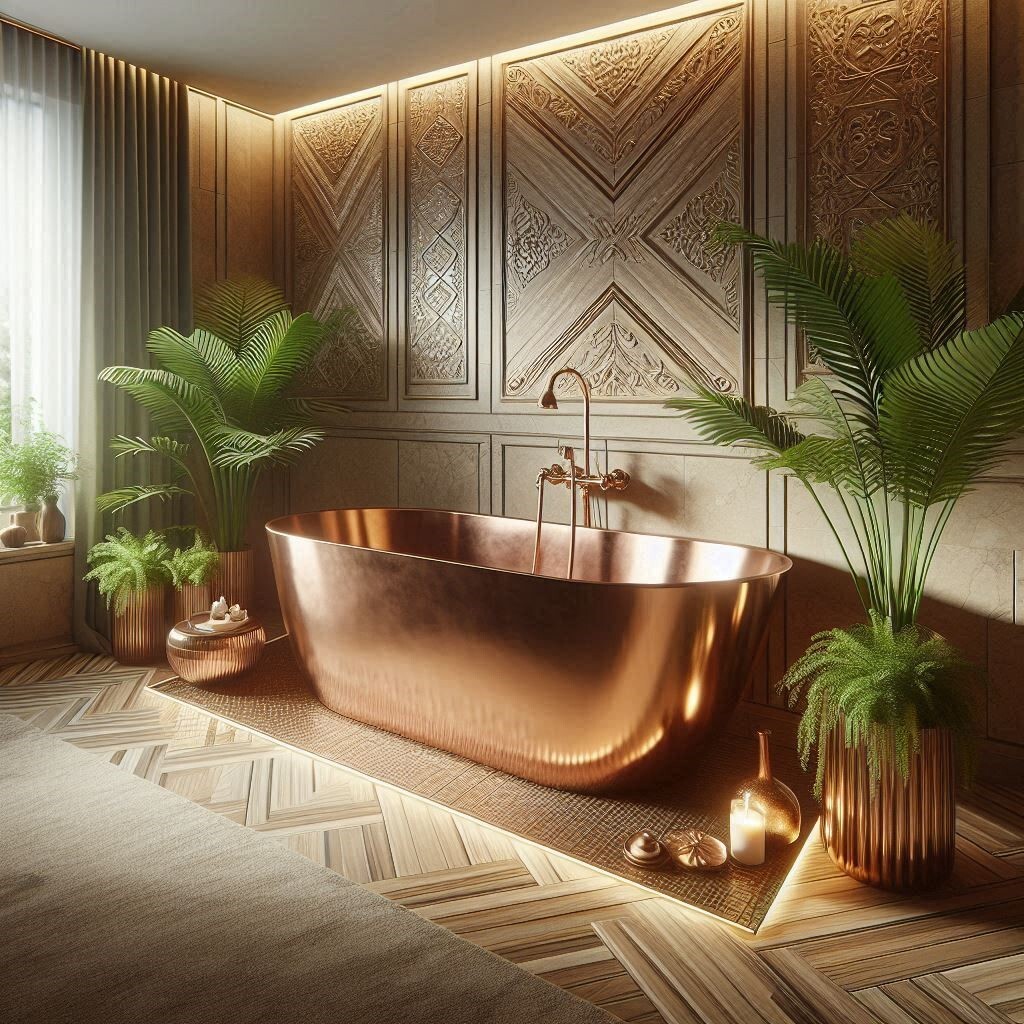
Natural daylight emphasizes variations in the copper surface, particularly where hammered impressions create alternating highlights and shadows. Cream-toned tile and greenery keep the palette soft while allowing the bathtub to remain the visual anchor. This room is a useful example of balancing a strong metal fixture with light surrounding surfaces rather than repeating dark colors throughout the space.
Polished and Patinated Copper Bathtub Collection

This grouping shows how strongly finish selection can change the appearance of similar handcrafted forms. Brighter copper reflects surrounding light and appears more decorative, while darker patinas create a quieter, aged effect. Buyers comparing finish directions can also review the copper patina finish guide before deciding which color range best complements their bathroom materials.
Copper Bathtub with Matching Vessel Sinks
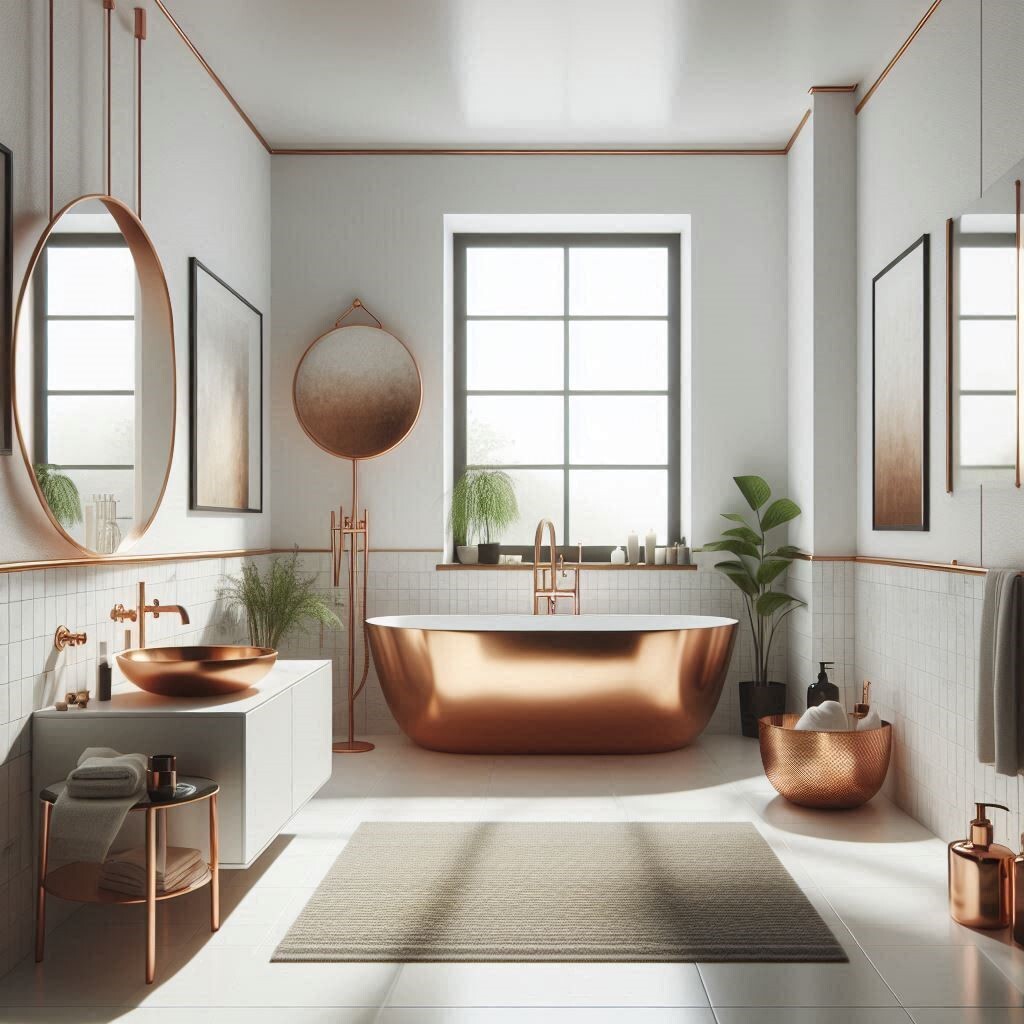
Using matching copper vessel sinks creates a more coordinated metal palette. The bathtub remains the largest visual element, while smaller copper fixtures repeat the material without overwhelming the room. Bronze-toned hardware bridges the copper with neutral walls and cabinetry, showing how related metal finishes can be layered without requiring exact color matching.
Custom Hammered Copper Tub in a Contemporary Retreat
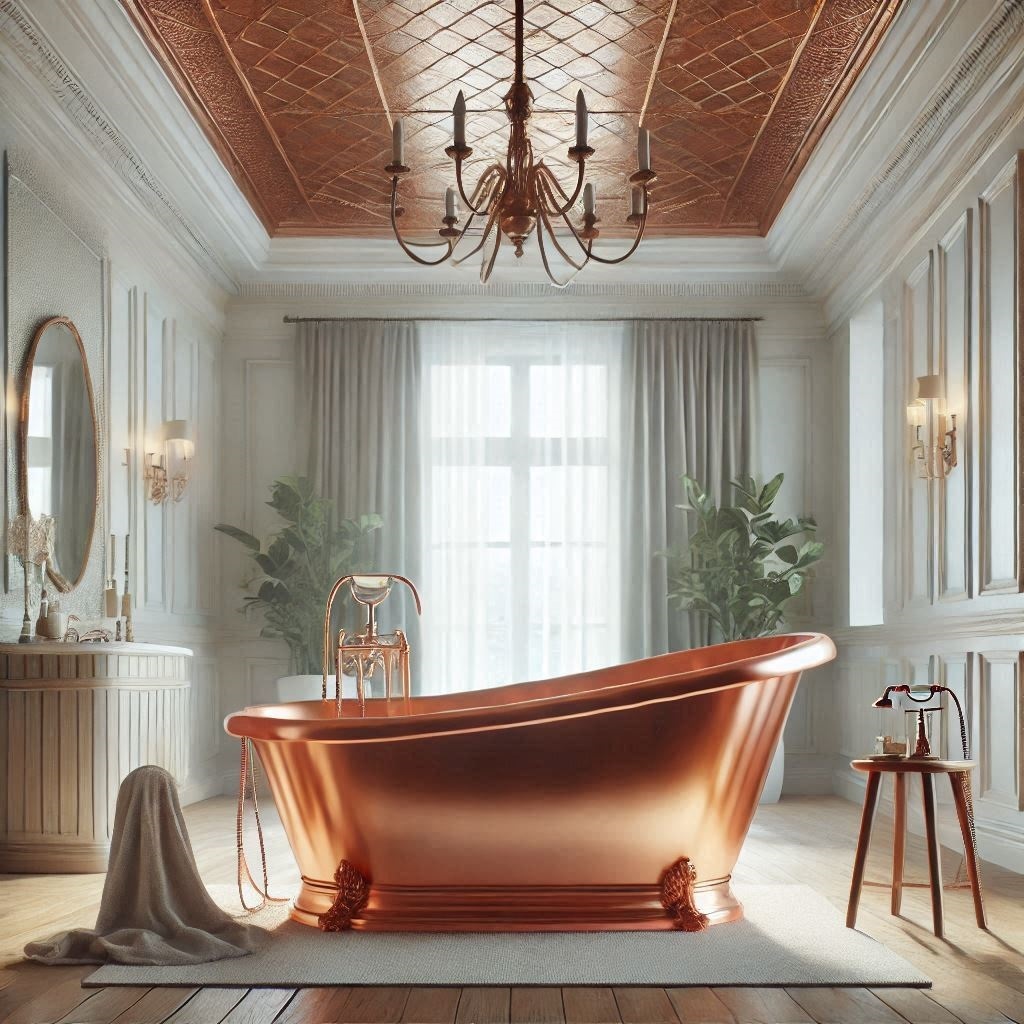
Hammered copper is not limited to rustic interiors. In this contemporary setting, simplified architecture and restrained finishes create contrast with the hand-worked metal surface. The tub introduces warmth and texture while the surrounding room remains visually calm. This contrast can be particularly effective in modern bathrooms where plaster, stone, glass, or minimal cabinetry would otherwise create a cooler material palette.
Freestanding Copper Tub with Bronze Fixtures

Positioning a freestanding tub close to a window gives natural light direct access to the copper surface. The result changes throughout the day as highlights move across the hammered texture. Dark bronze fixtures provide strong definition against the warmer metal while maintaining a traditional connection between the faucet and bathtub.
Hammered Copper Bathtub as a Spa Focal Point
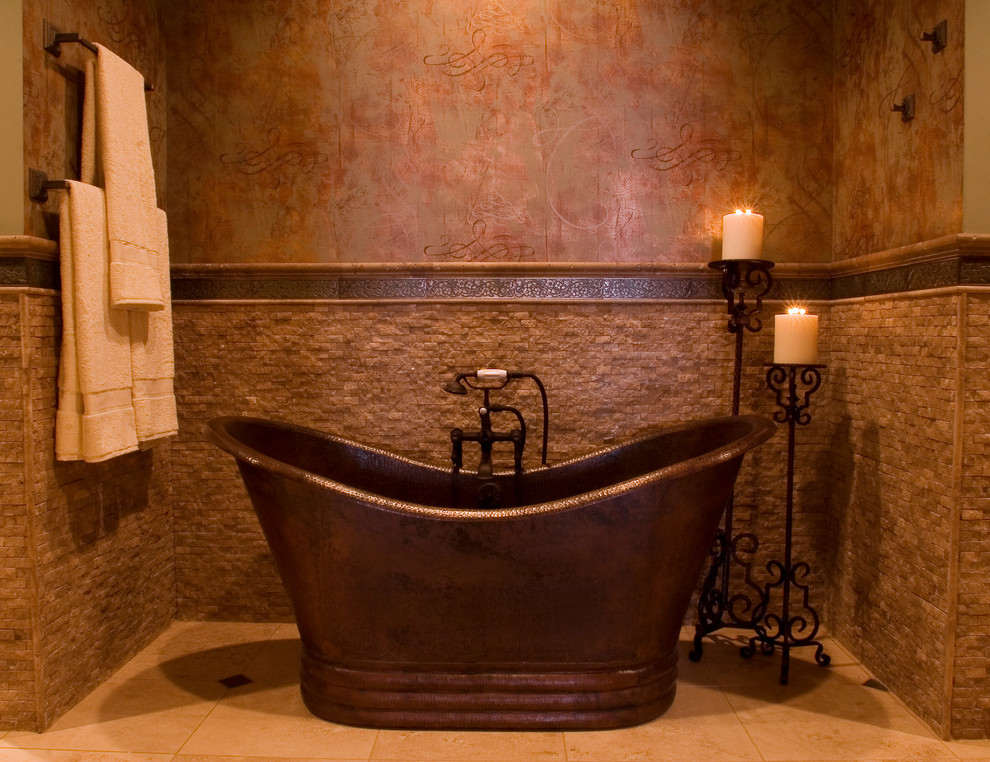
Here the bathtub is treated almost like a sculptural object. Vertical lighting emphasizes its outline, while textured wall finishes, candles, and plants create a layered spa atmosphere. The room demonstrates how indirect lighting can make the hammered surface appear more dimensional without relying on elaborate decorative accessories.
Deep Brown Copper Patina in a Rustic Bathroom
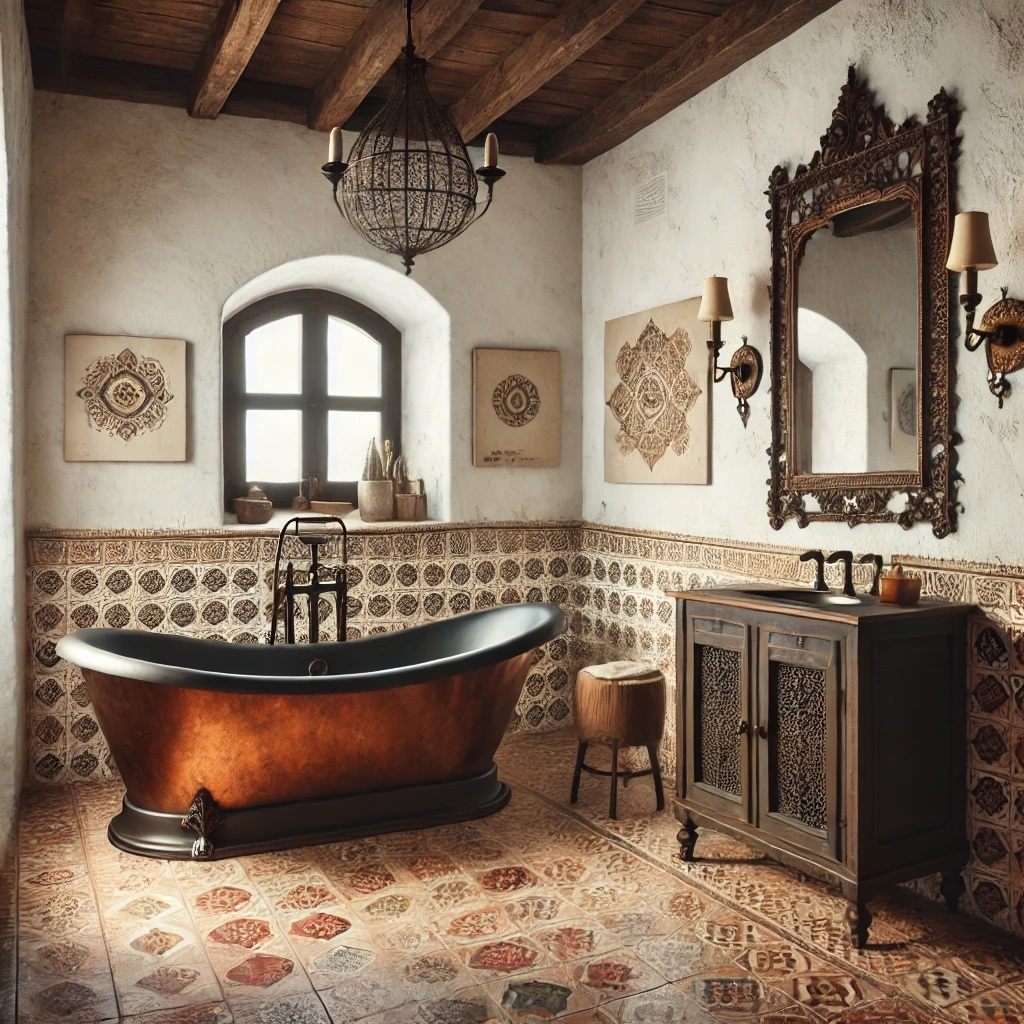
A deep brown patina gives hammered copper a more subdued and established appearance. Instead of displaying bright reddish metal tones, the tub reads as a darker architectural element that pairs naturally with aged wood, stone, warm plaster, and vintage-inspired fixtures. Lighter highlights along the rim and raised hammer impressions prevent the surface from appearing visually flat.
How Hammered Texture Changes in Different Rooms
Hammered copper responds strongly to its environment. Bright windows reveal more individual tool impressions, while low ambient lighting emphasizes broad tonal variation. Dark patinas generally create a heavier, historic appearance, whereas lighter or polished surfaces introduce stronger reflection. The surrounding bathroom materials also influence how the copper is perceived: limestone and plaster soften it, timber reinforces its rustic qualities, and minimal stone or tile can make it appear more contemporary.
The hammering itself is created by hand, so texture should not be expected to repeat with machine-like uniformity. Differences in tool impressions, patina movement, seams, and subtle dimensions are normal characteristics of artisan fabrication. For a closer look at how these surfaces are formed, see the copper hammering techniques article.
Other Bathroom Styles
- Spanish Colonial bathroom
- Old World bathroom
- Mediterranean bathroom
- Organic modern bathroom
Coppersmith Perspective
Once installed, a handcrafted bathtub interacts with materials and lighting in ways that cannot be fully represented by an isolated product photograph. Hammer marks catch natural light differently across curved walls, patina appears warmer or darker depending on surrounding colors, and every handmade tub retains subtle variation from forming and finishing. Those differences are part of what makes copper suitable for bathrooms where the fixture is intended to function as an individual architectural feature rather than a standardized surface.
Visual Inspiration for Your Copper Bathtub
These completed bathrooms show that a hammered copper bathtub does not require one particular decorating style. It can anchor a rustic room filled with timber and textured textiles, introduce warmth into contemporary architecture, coordinate with matching copper sinks, or provide an aged focal point in a traditional bathroom. The most successful spaces generally allow the metal to remain visually prominent while supporting it with complementary materials rather than excessive ornament.
When planning your own installation, compare tub silhouette, patina, natural lighting, faucet finish, floor material, and the amount of open space surrounding the fixture. Browse the complete collection of handcrafted copper bathtubs to explore additional shapes, sizes, finishes, and custom options for your bathroom project.