 US Dollar
 Euro
Euro
 Australian Dollar
 Canadian Dollar
 Polish Zloty
 British Pound


The Hacienda Kitchen Copper Hood - Lifestyle Images Explained post shows how this handcrafted range hood creates a strong focal point in Spanish Revival, farmhouse, Mediterranean, and industrial kitchen settings. The hood’s warm copper surface, riveted strap details, and architectural form help customers imagine how it performs visually in real interiors before ordering. These lifestyle images are useful because they show scale, wall presence, material contrast, and style flexibility across several kitchen designs. The Hacienda copper range hood combines artisan metalwork with a bold rustic character, making it suitable for homes inspired by Spanish Colonial, Old World, and transitional design. Each image below explains how the hood interacts with cabinetry, walls, counters, lighting, and surrounding finishes. Explore artisan details in our hacienda copper hood guide.
Spanish Revival Kitchen
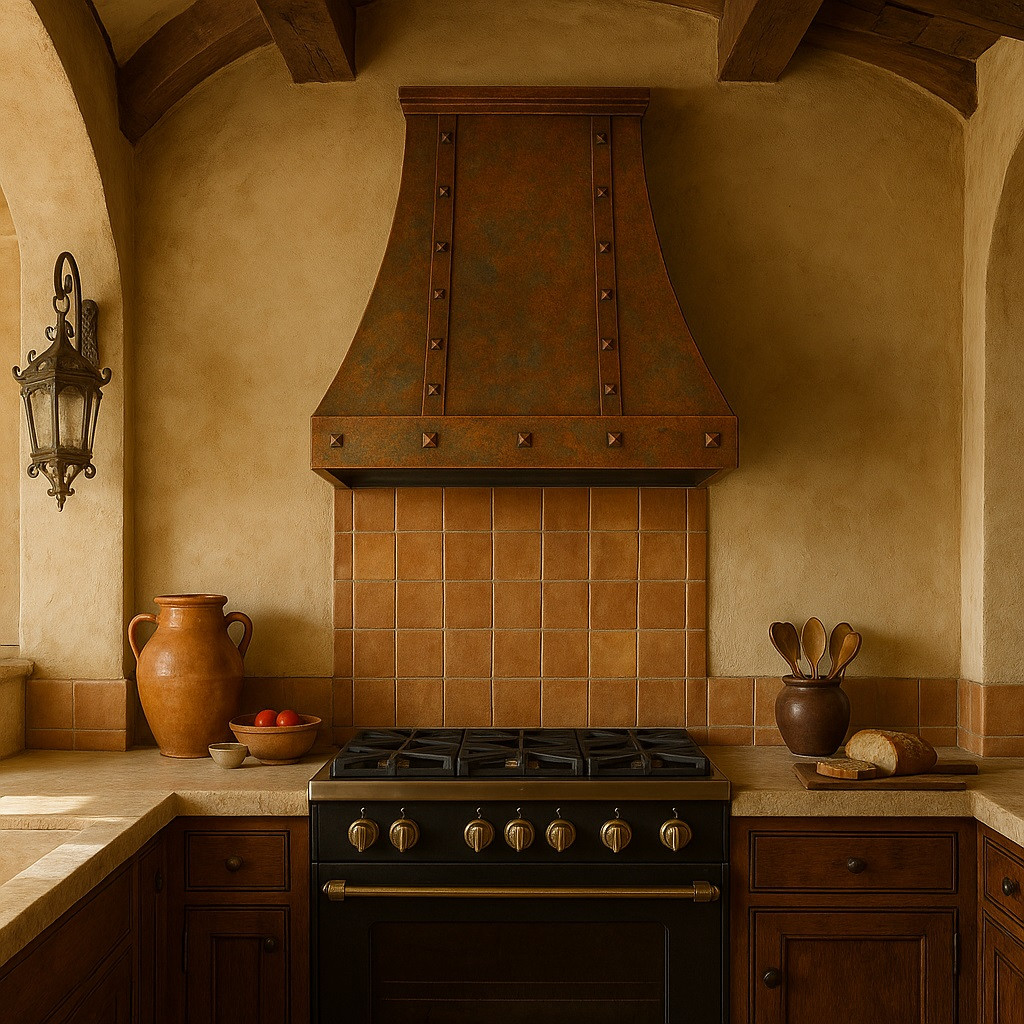
This Spanish Revival kitchen image presents the Hacienda copper hood in one of its most natural design environments. The warm copper finish works beautifully with traditional architectural details, textured surfaces, and the balanced symmetry often found in Spanish inspired interiors. The hood becomes the visual anchor above the cooking area, drawing attention through its rich patina and riveted strap design. Its handcrafted surface adds warmth without making the space feel overly ornate. Customers can use this image to understand how the hood supports arched forms, plaster walls, handmade tile, dark wood, and decorative iron accents. The scene shows the range hood as both a functional ventilation feature and a central expression of Hacienda style.
Riveted Strap Details
The riveted straps shown in this lifestyle image add structure and historical character to the copper body. They frame the hood visually and create a stronger connection to Spanish Colonial metalwork, where iron and copper details often appear together. The rivets provide rhythm across the surface, helping the hood feel handcrafted rather than plain. Their darker tone contrasts with the warmer copper finish, making the silhouette easier to read from a distance. This detail is especially useful in kitchens with heavy cabinetry or textured walls because it gives the hood definition. The image helps customers see why strap placement matters when selecting a custom copper range hood for a Spanish Revival kitchen.
Farmhouse Kitchen
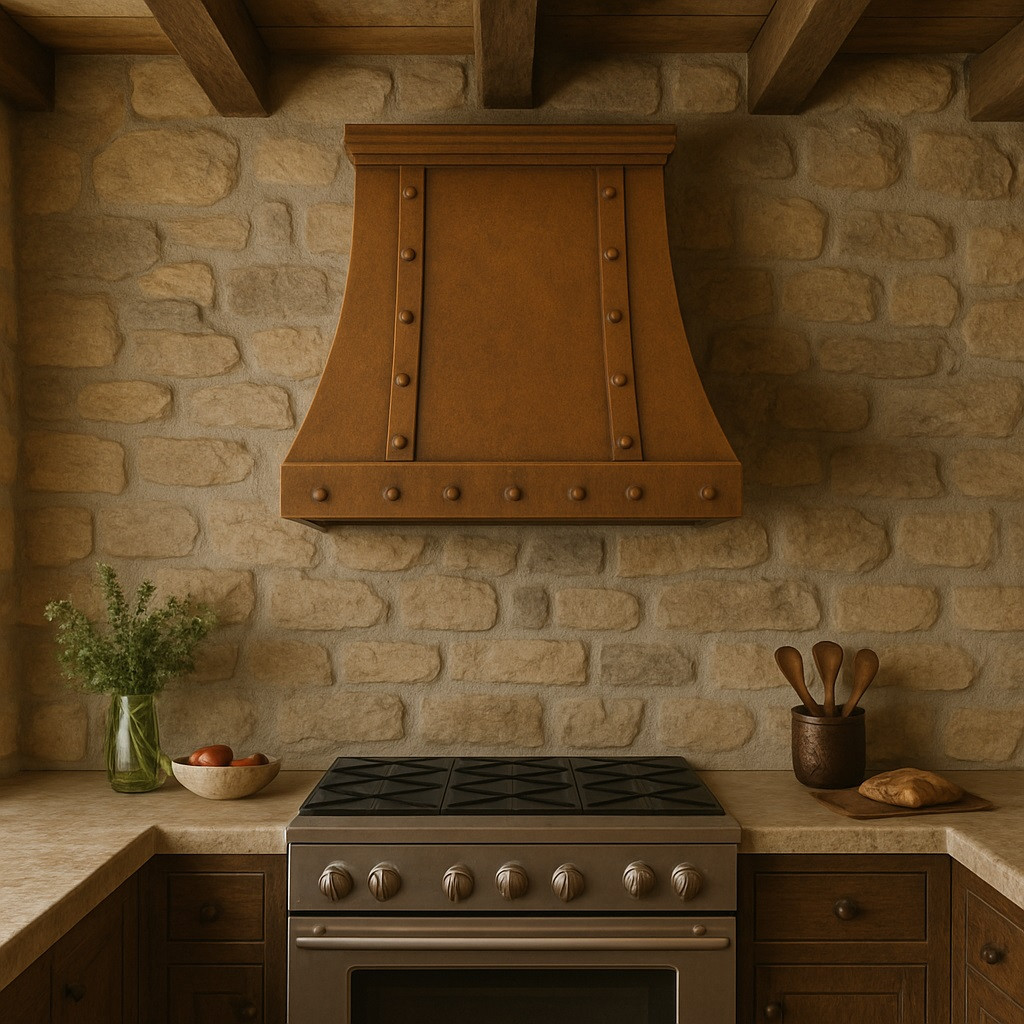
The farmhouse kitchen image shows how the Hacienda copper hood can soften and enrich a welcoming residential space. Farmhouse kitchens often use wood, painted cabinetry, simple walls, and practical layouts, and this hood adds a layer of handmade depth. The copper finish introduces warmth, while the riveted accents give the cooking area a stronger focal point. Instead of feeling overly formal, the hood brings rustic elegance to a comfortable family kitchen. This image helps customers imagine the product above a range where it can coordinate with butcher block, natural wood shelves, stone counters, or warm flooring. It also proves that a Hacienda style hood can work beyond strictly Spanish interiors.
Warm Material Pairing
In farmhouse settings, copper works best when paired with honest materials and relaxed surfaces. This image shows how the hood’s patina can connect with wood tones, handmade finishes, and natural textures without overwhelming the room. The hood brings visual weight to the cooking wall, but its warm color keeps the atmosphere inviting. Customers planning a farmhouse remodel can use this scene as a guide for balancing rustic charm with a more distinctive artisan feature. The hood’s shape remains strong and architectural, while the finish keeps it approachable. More related metal hood styles can be explored through the metal range hoods category.
Mediterranean Kitchen
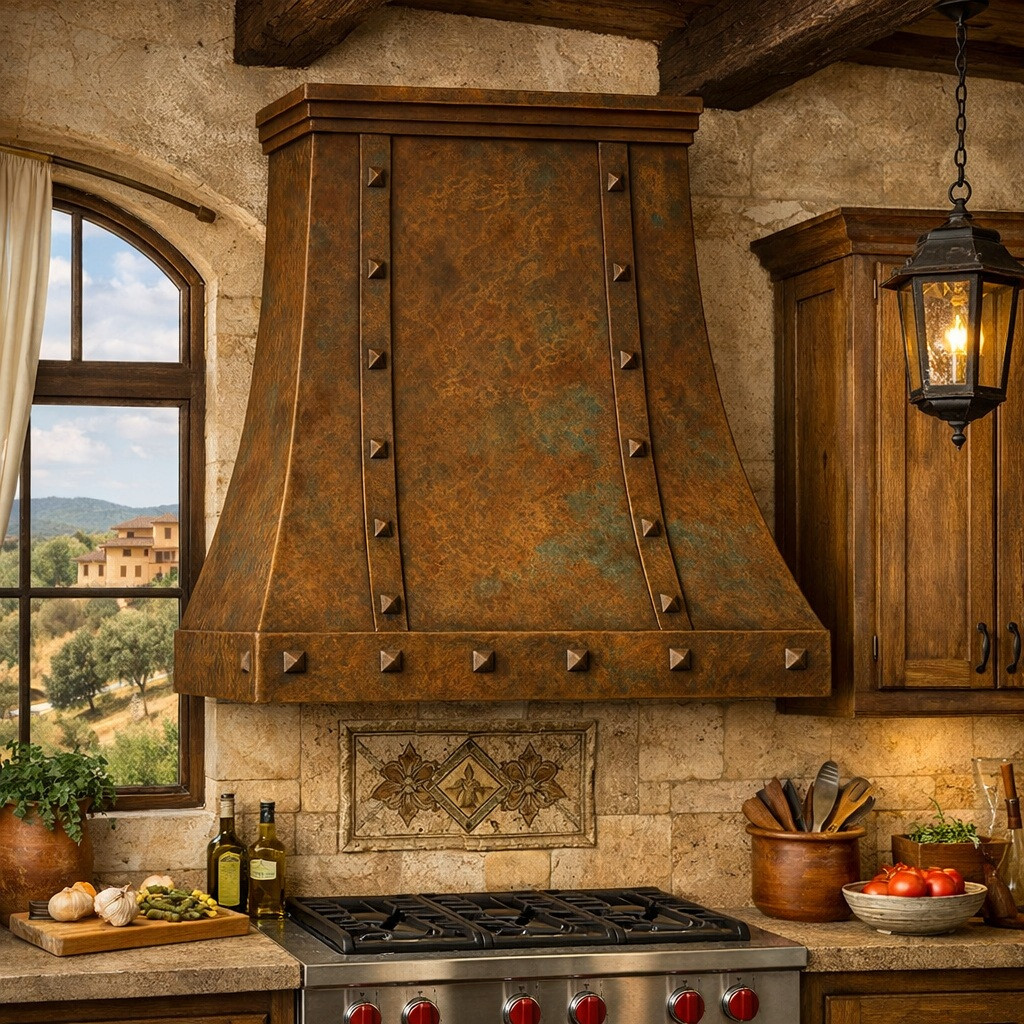
The Mediterranean kitchen image highlights the hood’s connection to warm regional design. Mediterranean interiors often rely on earthy walls, stone, tile, wood, and aged metal, making copper a natural material choice. In this scene, the Hacienda hood feels rooted in the architecture rather than added as an afterthought. Its rich finish echoes sun-warmed surfaces and handmade kitchen traditions, while the riveted straps add a more substantial Old World presence. This image helps customers visualize the hood in kitchens inspired by villas, coastal homes, rustic estates, and traditional European cooking spaces. The design feels decorative, but not excessive, giving the kitchen a balanced and enduring focal point.
Old World Influence
The Old World influence in this image comes from the hood’s shape, copper tone, and visible handmade character. The surface does not appear flat or industrial; instead, it carries depth, warmth, and variation. These qualities make it compatible with Mediterranean materials such as plaster, natural stone, Saltillo tile, wrought iron, and dark wood. Customers can use this image to see how a copper range hood can reinforce the mood of the whole kitchen. The hood’s presence is strong enough to define the cooking area, yet warm enough to blend with surrounding textures. It offers a practical way to introduce artisan metalwork into Mediterranean interiors.
Industrial Kitchen
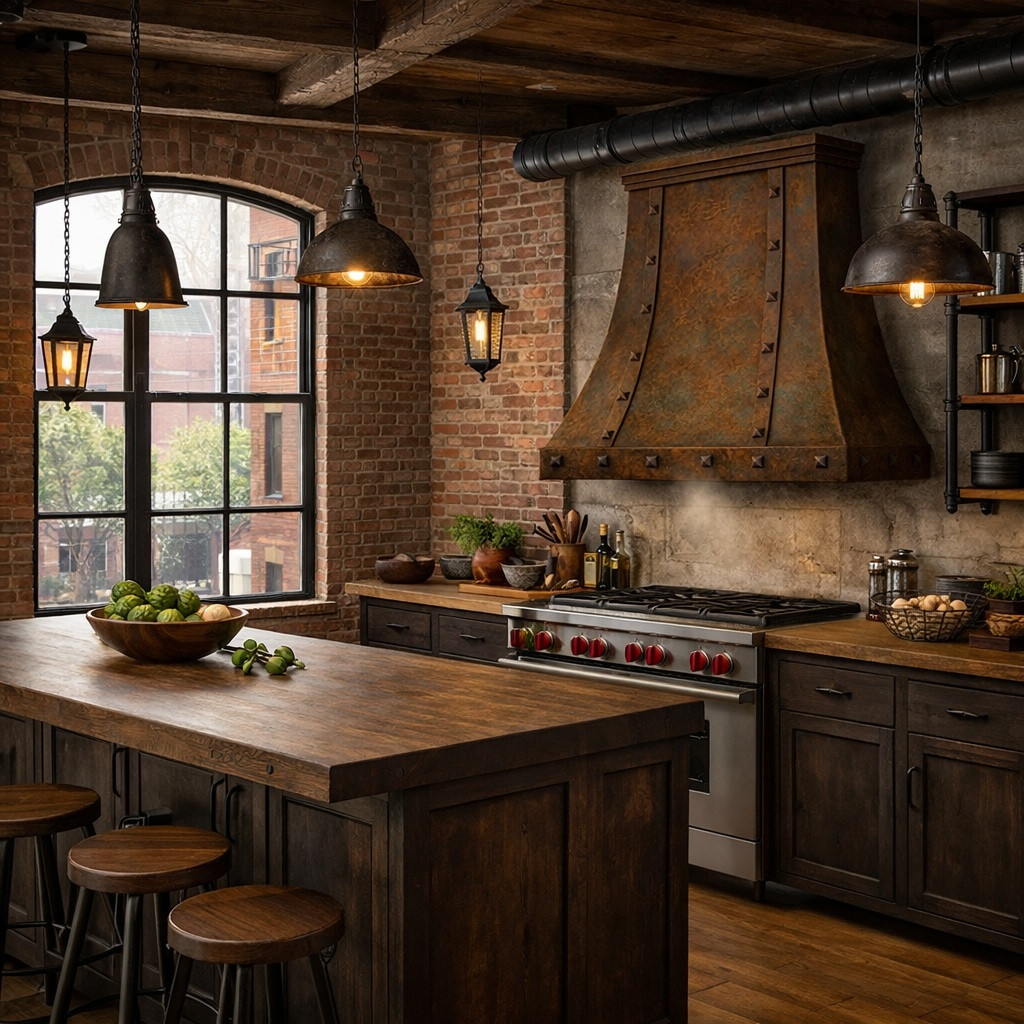
The industrial kitchen image shows a different side of the Hacienda copper hood. In this setting, the riveted straps and darker metal accents become especially important because they connect the hood to stronger architectural materials. Industrial kitchens often include exposed textures, metal fixtures, stone, concrete, or darker cabinetry, and the copper finish adds warmth to that harder environment. The hood becomes a bold centerpiece while still feeling functional and grounded. This image helps customers imagine the product in loft kitchens, restaurant-inspired spaces, or modern rustic homes where metalwork is part of the design language. The copper softens the room while the rivets preserve a strong industrial edge.
Finish and Contrast
The finish contrast in this image helps explain why copper works well in industrial kitchens. Copper provides warmth, while the strap and rivet details introduce a more structured and utilitarian feeling. This combination keeps the hood from appearing too delicate or decorative. The image also shows how a handcrafted copper hood can bring personality into a kitchen dominated by harder surfaces. Customers who want an industrial look without losing warmth can use this scene as a design reference. The hood adds color, texture, and handmade variation, all while maintaining a strong architectural presence above the cooking area.
Design Flexibility
Across these lifestyle images, the Hacienda kitchen copper hood proves that one design can support several interiors. In Spanish Revival and Mediterranean settings, it emphasizes heritage, warmth, and Old World craftsmanship. In farmhouse kitchens, it becomes a welcoming handmade centerpiece. In industrial spaces, it adds contrast, patina, and strength. This flexibility comes from the hood’s balanced combination of warm copper, clear geometry, and riveted detailing. Customers can use the gallery to compare how surrounding materials change the mood of the same product. Light walls make the copper glow, darker finishes make it feel dramatic, and natural textures make it feel deeply rustic.
Image Gallery Summary
The Hacienda Kitchen Copper Hood lifestyle images explain scale, finish, placement, and design compatibility better than a single product photo. Each scene shows how the hood works with different materials, including wood, stone, plaster, tile, metal, and painted cabinetry. The riveted straps give the hood a strong identity, while the copper patina adds warmth and artisan character. Whether the kitchen leans Spanish Revival, farmhouse, Mediterranean, or industrial, the hood remains the central visual feature above the cooking area. Customers comparing styles can also review additional options in the copper range hoods collection.