 US Dollar
 Euro
Euro
 Australian Dollar
 Canadian Dollar
 Polish Zloty
 British Pound

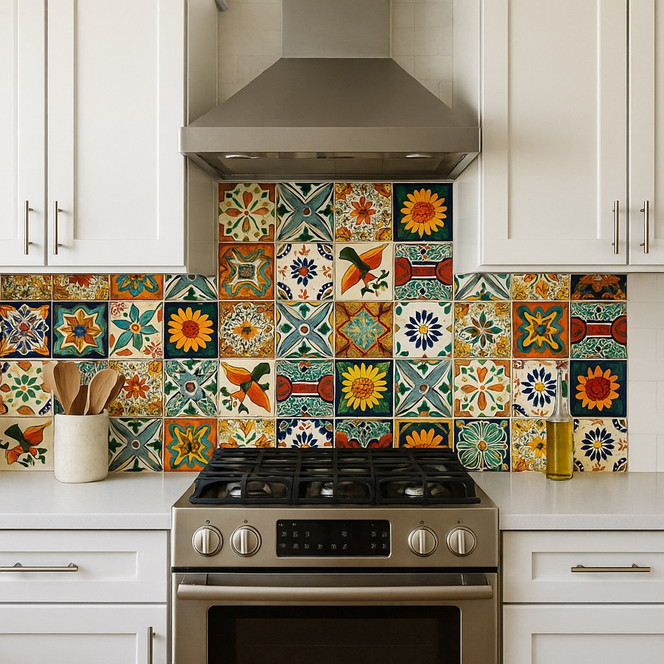
Handcrafted Talavera tiles from Mexico bring centuries of ceramic tradition into kitchens, bathrooms, stairways, courtyards, fountains, fireplaces, and outdoor living areas. Their hand-painted patterns, glossy glazes, slight surface variation, and visible brushwork distinguish them from machine-printed ceramic tile. Each piece contributes colour and texture while preserving the character of Mexican artisan production. Talavera can be used as a complete patterned surface, a decorative border, a focal medallion, or a small accent among neutral materials. This guide explains the history, production, colours, applications, sizing, installation, care, and project planning considerations associated with Mexican Talavera tile. Homeowners, designers, builders, and commercial buyers can also explore the full collection of handcrafted Mexican Talavera tiles to compare available patterns, colours, sizes, and decorative styles.
Guide Summary
- Origin: Handcrafted in Mexico
- Surface: Hand-painted glaze
- Character: Natural variation
- Uses: Walls, stairs and pools
- Planning: Layout before setting
- Care: Mild routine cleaning
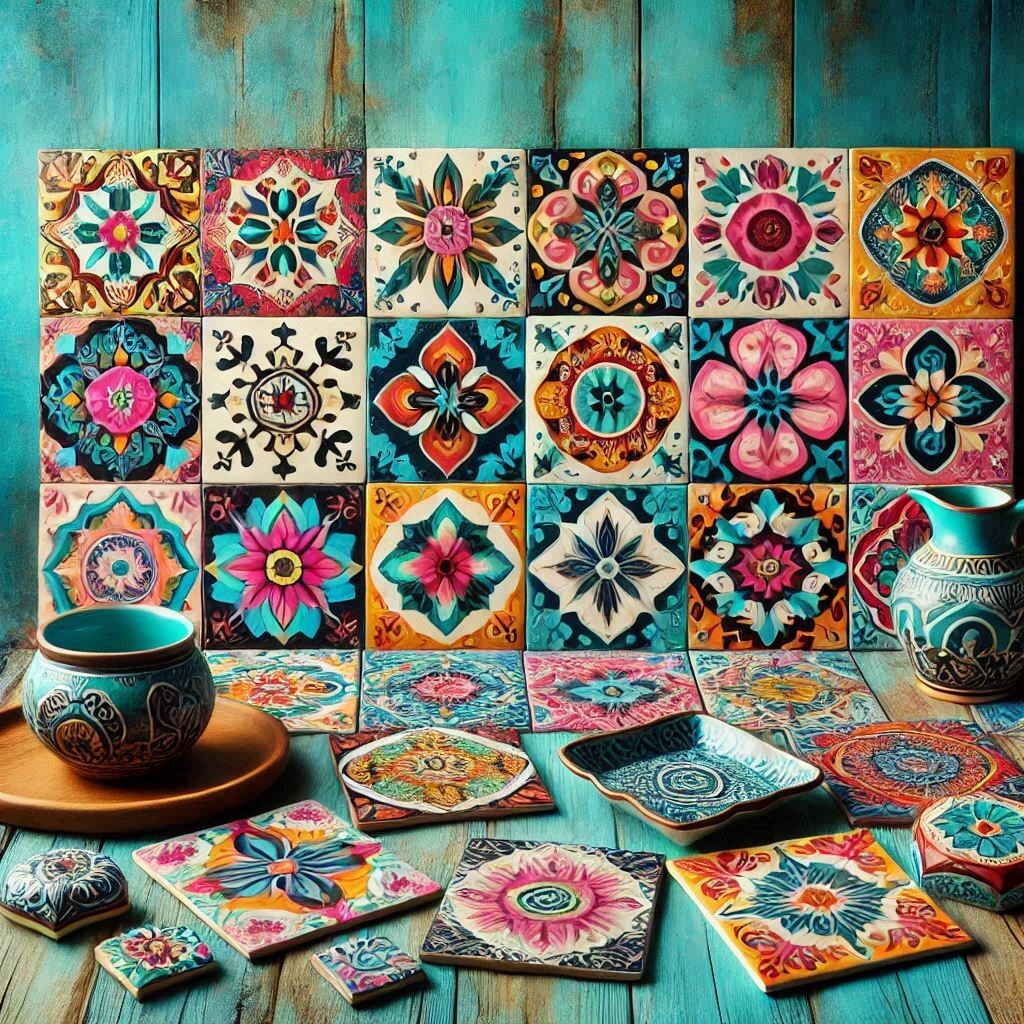
The Heritage of Mexican Talavera
Talavera tile developed through the exchange of Spanish, Moorish, and Indigenous ceramic traditions during Mexico’s colonial period. Spanish potters introduced tin-glazed earthenware techniques, while local artisans incorporated regional colours, floral motifs, birds, suns, geometric patterns, and symbolic forms. Over time, Mexican workshops developed distinctive interpretations that reflected local architecture, domestic life, and religious decoration.
Puebla is closely associated with formal Talavera pottery traditions, while Dolores Hidalgo in Guanajuato became another important centre for colourful decorative ceramics. Workshops in Dolores Hidalgo are especially known for hand-painted tiles, sinks, tableware, planters, and architectural pieces used in rustic, colonial, Spanish Revival, and eclectic interiors.
The continued appeal of Talavera comes from its visible connection to the hand of the maker. Small differences in line thickness, glaze depth, colour placement, and edge shape are expected. These variations should not be treated as manufacturing defects. They are part of the material’s identity and help completed surfaces feel collected rather than mechanically repeated.
How Talavera Tiles Are Made
Forming the Clay Body
Production begins with prepared clay that is pressed or formed into tile shapes. The pieces are dried before the first firing, which hardens the ceramic body and prepares it for glazing. Handmade tiles may show slight differences in thickness, squareness, or edge alignment, so the installer must plan for small adjustments during layout.
Applying the Base Glaze
After the initial firing, the tile receives a pale glazed ground. Traditional designs often use a creamy white background rather than the bright, perfectly uniform white associated with industrial ceramic tile. This softer base gives the painted colours greater warmth and contributes to the historic appearance of the finished surface.
Painting the Pattern
Artisans apply motifs by hand using brushes and mineral-based colours. Cobalt blue, yellow, green, black, orange, and terracotta tones remain common, although contemporary collections may include turquoise, grey, burgundy, brown, or softer neutral variations. Because the pattern is painted individually, repeated tiles will relate closely without appearing completely identical.
Final Firing
The painted tile is fired again to fuse the glaze and colour to the ceramic surface. The finished tile develops a glossy face that reflects light and protects the painted decoration. Fine glaze lines, commonly called crazing, may appear during production or gradually develop with age. This network of delicate lines is often considered desirable in handmade Mexican ceramics because it reinforces the traditional appearance.
Why Choose Handcrafted Talavera?
Talavera tile offers an alternative to flat, highly uniform surfaces. Its hand-painted decoration can introduce movement, colour, cultural character, and a sense of craftsmanship into otherwise simple rooms. It works especially well when the surrounding materials are restrained enough to let the tile remain visible.
- Variation: No two tiles match exactly
- Colour: Rich hand-painted palettes
- Texture: Subtle surface movement
- Flexibility: Many layout options
- Repair: Single tiles can be replaced
- Character: Traditional artisan finish
The broad variety of patterns also makes Talavera suitable for projects ranging from historic restoration to contemporary interiors. A single cobalt pattern may look restrained and architectural, while a mixed collection can create an energetic and informal surface.
Choosing Colours and Patterns
Pattern selection should begin with the size and visual role of the installation. A small backsplash can support stronger colour and greater pattern density than a large room covered from floor to ceiling. In a compact area, repeated motifs create rhythm. In a large installation, mixing field tiles, borders, and quieter designs can prevent the surface from becoming visually overwhelming.
Monochrome Patterns
Blue-and-white or black-and-white Talavera works well in kitchens and bathrooms where the surrounding cabinetry or stone already carries colour. Monochrome designs preserve the handmade character of the tile while creating a calmer and more coordinated appearance.
Two-Colour Combinations
Duotone patterns create controlled contrast. Blue and yellow, green and terracotta, or black and cobalt can be repeated across a backsplash or stairway without creating the complexity of a fully multicoloured arrangement.
Mixed Talavera Layouts
A mixed layout uses several patterns within one installation. Successful mixes usually repeat a shared colour, scale, or border treatment. Before setting the tiles, arrange them on the floor and move individual pieces until the distribution feels balanced. Avoid placing several dominant motifs directly beside one another unless a deliberately random effect is desired.
Kitchen Backsplash Applications
Talavera tile can transform the range wall, sink wall, open shelving area, or a complete kitchen backsplash. One repeated pattern creates a strong traditional statement, while mixed tiles produce a more relaxed and collected character. Neutral grout keeps the focus on the painted surfaces, whereas darker grout can emphasize the grid.
A feature panel behind the cooktop can be framed with border tiles or surrounded by plain field tile. This approach concentrates the strongest pattern in one area and reduces visual competition with cabinetry, countertops, and a decorative range hood.
For readers ready to compare colours and motifs, the Mexican Talavera tile collection provides a broad selection of handcrafted designs for kitchen, bath, stair, and architectural projects.
Bathroom and Shower Design
Talavera tile is frequently used on vanity backsplashes, shower niches, tub surrounds, decorative borders, and accent walls. Its glossy surface reflects light and can make a small bathroom feel more animated. Because hand-painted tile already carries strong visual detail, pairing it with plain plaster, natural stone, or solid-colour field tile often creates the best balance.
Wet installations require proper waterproofing behind the tile. The tile itself is only the visible finish layer and should never be expected to replace a complete moisture-management system. Use a suitable backer, approved waterproofing membrane, compatible mortar, and properly sealed grout according to the installer’s recommendations and local requirements.
Stair Risers and Architectural Accents
Stair risers are one of the most recognisable applications for Mexican tile. Each riser can display a different pattern, or two coordinated motifs can alternate throughout the staircase. Plain stone, wood, concrete, or terracotta treads help the painted risers remain the focal point.
Talavera also works well around fireplaces, inside wall niches, beneath window ledges, along outdoor benches, and as trim around doors or arched openings. In these applications, only a small quantity may be needed to create a noticeable architectural accent.
Pool, Fountain and Outdoor Use
Talavera can add colour to fountains, covered patios, garden walls, and selected pool details. Waterline bands, fountain backs, raised planters, and decorative stair faces are common uses. Outdoor suitability depends on climate, exposure, substrate preparation, waterproofing, and the specific tile selected.
In regions with repeated freeze-and-thaw cycles, confirm the tile’s suitability before installation. Handmade ceramic can absorb moisture, and trapped water may damage tile in freezing conditions. Covered or protected installations generally reduce exposure, but local professional guidance remains important.
Common Sizes and Coverage
Four-inch and six-inch square formats are common because they adapt easily to backsplashes, risers, borders, and mixed layouts. Exact dimensions may vary slightly because of the handmade production process. Measure the actual tiles before establishing grout lines or cutting surrounding materials.
| Planning Detail | Typical Consideration |
|---|---|
| Common formats | 4-inch and 6-inch square |
| Tile variation | Allow for handmade differences |
| Overage | Order extra for cuts and repairs |
| Pattern planning | Dry-lay before installation |
| Wet locations | Use approved waterproofing |
Installation Planning
A successful Talavera installation begins before adhesive is mixed. Open every carton, inspect the tiles, and blend pieces from different boxes. This distributes natural differences in colour and glaze across the project instead of concentrating them in one area.
Prepare the Substrate
The surface should be clean, stable, flat, and suitable for ceramic tile. Uneven substrates can make handmade variation more difficult to manage. Correct movement, moisture, or structural problems before installation.
Create a Dry Layout
Lay out the full pattern or a representative section before setting. Confirm border locations, focal motifs, cut positions, corners, outlets, and transitions. A dry layout is especially important for mixed patterns and stair risers.
Use Appropriate Setting Materials
A white polymer-modified mortar is often preferred because it reduces the possibility of dark setting material affecting the appearance of pale ceramic bodies or grout joints. The installer should select the product according to the substrate, tile, and exposure conditions.
Plan Grout Joints Carefully
Small dimensional differences are normal. Grout joints should be wide enough to absorb variation without making the installation look irregular. The installer may adjust individual tiles slightly to maintain a balanced overall grid.
Cleaning and Maintenance
Routine care is simple. Use a soft cloth or sponge with mild, pH-neutral soap and clean water. Avoid abrasive pads, harsh powders, strong acids, and aggressive chemicals that may damage grout or dull the glaze. Wipe spills promptly, especially around cooking surfaces and vanity areas.
Grout requires more attention than the glazed tile face. In wet or high-use areas, sealing the grout may reduce staining and simplify maintenance. Follow the grout manufacturer’s recommendations regarding sealer type and reapplication schedule.
Care Guidelines
- Cleaner: Use mild neutral soap
- Tools: Choose soft cloths
- Avoid: No abrasive pads
- Grout: Seal when appropriate
- Extras: Store spare tiles
Planning Custom and Commercial Projects
Large residential and commercial installations require careful quantity planning, colour approval, packaging coordination, and installation scheduling. Restaurants, hotels, spas, retail interiors, and public spaces may use Talavera for feature walls, reception desks, bars, fountains, signs, and custom murals.
For large projects, confirm samples and pattern distributions before production. Allow sufficient lead time for handmade work, inspection, packing, international transportation, and delivery. Ordering replacement tiles later may result in normal colour differences between production batches, so retaining extra pieces from the original order is recommended.
Final Design Guidance
Handcrafted Talavera tiles from Mexico offer colour, history, texture, and individual variation that mass-produced tile cannot fully reproduce. They can be used as a complete decorative surface or as a controlled accent within stone, plaster, wood, brick, or neutral ceramic finishes. The most successful projects respect the handmade nature of the material and plan for variation rather than attempting to eliminate it.
Choose patterns according to the size of the installation, coordinate colours with surrounding finishes, dry-lay the design before setting, and use an experienced installer for wet areas or complex layouts. Order additional tiles for cuts and future repairs, protect grout appropriately, and clean the glazed surfaces with mild products. With thoughtful planning, Talavera can create a kitchen backsplash, bathroom wall, stairway, fountain, or courtyard feature that feels connected to Mexican ceramic tradition while remaining practical for contemporary use.