 US Dollar
 Euro
Euro
 Australian Dollar
 Canadian Dollar
 Polish Zloty
 British Pound

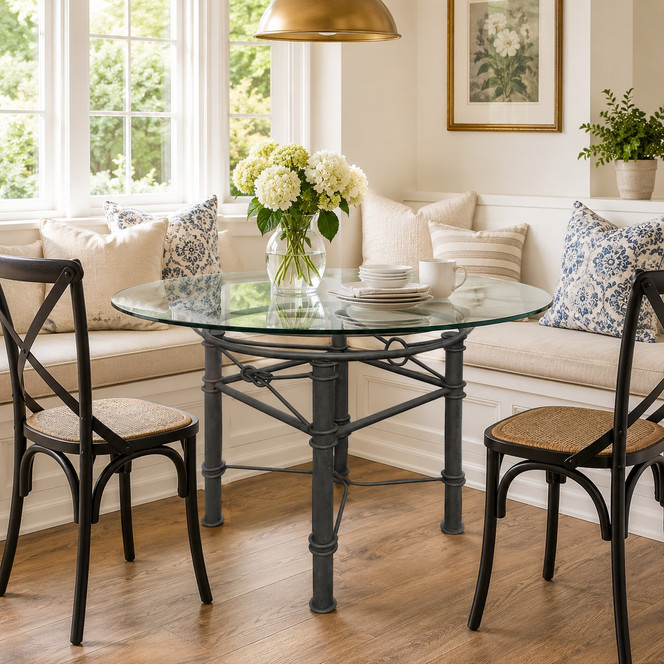
Forged Iron Table Bases & Stands: Hand-Forged Strength and Timeless Elegance
Forged Iron Table Bases & Stands provide a durable and sculptural foundation for dining tables, coffee tables, consoles, kitchen tables, and covered patio furniture. Hand-forged by skilled Mexican blacksmiths, these bases combine structural stability with decorative metalwork inspired by Spanish Colonial, Mediterranean, Hacienda, Italian, rustic, and traditional design. Their dark iron profiles pair beautifully with wood, glass, stone, marble, zinc, and copper tabletops, making them adaptable to residential and commercial interiors. Available in different heights, shapes, finishes, and decorative configurations, a custom iron table base allows the tabletop and supporting structure to become one cohesive piece of artisan furniture.
Blog Summary
- Product: Forged iron table bases
- Material: Hand-forged mild steel
- Styles: Dining, coffee, console, pedestal
- Finishes: Black, rust, bronze, antique
- Customization: Size, height, and ornament

Hand-Forged Foundations for Custom Tables
A table base performs a structural role, but it also influences the visual character of the entire piece. Forged iron can support substantial tabletops while introducing curved lines, scrollwork, rings, braces, twisted bars, and other handmade details beneath the surface.
The result is furniture that looks intentional from top to bottom rather than like a tabletop placed on a generic manufactured frame.
Why Forged Iron Works So Well
Iron provides the strength needed for wood, stone, marble, copper, zinc, and glass tops while allowing blacksmiths considerable freedom in shaping decorative elements.
Its dark color also creates a strong visual anchor beneath lighter or more reflective tabletop materials.
Main Advantages
- Strength: Supports substantial tabletops
- Versatility: Works with many materials
- Customization: Adaptable dimensions and details
- Character: Visible forged craftsmanship
- Style: Traditional or contemporary use
A Tradition Rooted in European Ironwork
Decorative ironwork has been used for centuries in European architecture, appearing in gates, railings, balconies, furniture, lighting, grilles, and architectural hardware.
During the Renaissance, blacksmiths increasingly combined practical structural work with scrolls, curves, leaves, rings, and other ornamental forms.
Spanish and Mediterranean Influence
Spanish and Mediterranean interiors frequently use dark iron beside plaster, stone, terracotta, wood, and colorful ceramic. These material combinations later became strongly associated with Spanish Colonial architecture in the Americas.
Table bases inspired by this heritage translate architectural ironwork into furniture scale.
Mexican Blacksmithing Tradition
Mexican artisans adapted European forging methods to local architectural styles, creating iron gates, chandeliers, balconies, furniture, and decorative accessories for haciendas, churches, courtyards, and homes.
Today, these same techniques continue in individually produced table bases and stands.
Historic Design Influences
- European: Traditional forged construction
- Spanish: Decorative scrollwork
- Mediterranean: Organic curved forms
- Colonial: Architectural iron detailing
- Mexican: Handcrafted regional interpretation
The Hand-Forging Process
The fabrication process begins with mild-steel rods, bars, and tubing selected according to the required dimensions and expected tabletop weight. The metal is heated until it becomes workable and then shaped using hammers, anvils, bending tools, and jigs.
Individual components are assembled into a complete supporting frame before surface preparation and finishing.
Heating and Shaping the Iron
Heating allows rigid steel to be bent into scrolls, curves, rings, twisted bars, and structural braces. The artisan repeatedly heats and works each section until the desired profile is achieved.
Small differences between forged components are natural because every element is worked individually.
Joining the Components
After shaping, the legs, braces, top frame, rings, and decorative pieces are joined through welding and other appropriate metalworking techniques.
The finished structure must balance decorative design with sufficient support beneath the tabletop.
Fabrication Stages
- Cutting: Prepare steel components
- Heating: Make iron workable
- Forging: Shape decorative forms
- Assembly: Join structural sections
- Finishing: Protect and color metal
Visible Marks of Handmade Craftsmanship
Hand-forged furniture can show subtle hammer marks, weld variation, slightly different curves, and individual surface characteristics. These details reflect manual production rather than mechanical repetition.
They are especially visible on bases with twisted rods, broad scrolls, and decorative knots.
Dining Table Bases
Dining bases require enough width and structural support to carry larger tabletops while preserving comfortable seating around the perimeter. Four-leg frames, pedestal systems, trestle designs, and central decorative structures are common solutions.
The final base dimensions should correspond to both tabletop size and chair placement.
Large Dining Table Support
Substantial wood, stone, copper, or marble tops require a base designed specifically for their weight and dimensions. Reinforced frames and cross-bracing can increase rigidity without making the design visually heavy.
Long tabletops may require more than one support point or an elongated base.
Chair Clearance
Decorative legs and scrolls must remain positioned so diners have comfortable knee and foot clearance. A visually impressive base can become impractical if the ornament occupies the seating area.
Chair dimensions should therefore be reviewed before fabrication.
Dining Base Considerations
- Top Size: Determines base footprint
- Weight: Influences structural reinforcement
- Chairs: Preserve comfortable clearance
- Overhang: Maintain balanced proportions
- Height: Coordinate dining seating
Round Table Bases
Round tabletops work particularly well with central pedestal bases or symmetrical four-leg designs. Because chairs may be positioned around the complete circumference, the supporting structure should remain relatively open.
Curved forged details naturally echo the geometry of a round tabletop.
Square Table Bases
Square tops pair well with four-leg structures, cross-braced frames, and centrally organized decorative bases. The iron can follow the strong geometry of the tabletop or introduce contrasting curves beneath it.
Symmetry is especially important because all four sides are equally visible.
Rectangular Table Bases
Rectangular dining tables often require wider or elongated support structures. Two pedestal bases, trestles, or long forged frames distribute weight more effectively across the tabletop.
The base should remain sufficiently inset from the ends to provide chair clearance.
Tabletop Shapes
- Round: Central or radial support
- Square: Balanced four-sided structure
- Rectangular: Extended reinforced base
- Oval: Softened elongated support
- Custom: Adapted to unique tops
Coffee Table Stands
Low forged iron stands provide a strong visual foundation beneath glass, stone, wood, copper, or zinc coffee-table tops. Their reduced height makes decorative details easier to appreciate from above.
Scroll legs, ring bases, simple geometric frames, and low pedestal forms are all appropriate.
Using Glass with Decorative Iron
Glass allows the complete base to remain visible, making it especially useful for highly detailed ironwork. Twists, knots, rings, and curved supports can become the principal decoration rather than remaining partially hidden.
The glass thickness and mounting method should be appropriate for the finished table size.
Copper Coffee Tables
Hammered copper provides a warmer and more substantial surface above black iron. Both materials share an artisan character, yet the lighter reflective metal contrasts clearly with the darker base.
Natural, antique, honey, or coffee copper finishes can substantially change the table’s overall appearance.
Coffee Table Pairings
- Glass: Displays iron structure
- Copper: Adds warm metallic contrast
- Stone: Creates substantial weight
- Wood: Introduces organic texture
- Zinc: Supports industrial character
Console Table Bases
Console bases use a narrow footprint designed for hallways, foyers, dining rooms, and areas behind sofas. Their taller proportions create an opportunity for elongated forged legs and decorative vertical elements.
Because consoles often sit against a wall, the front and side profiles receive the greatest visual attention.
Entryway Applications
A forged console beneath a mirror can create a strong arrival point within a Spanish Colonial, Mediterranean, Hacienda, or traditional foyer.
Stone, wood, copper, or glass tops each produce a different level of visual weight.
Side and Accent Tables
Smaller forged bases can support end tables, plant stands, decorative displays, and accent tables. Compact formats allow highly detailed scrollwork without overwhelming the surrounding furniture.
They also provide an easy way to repeat iron elsewhere in the room.
Console and Accent Uses
- Foyer: Narrow entry table
- Living Room: Sofa console
- Bedroom: Accent furniture
- Dining Room: Serving console
- Hallway: Decorative surface
Pedestal Table Bases
Pedestal stands concentrate support near the center of the tabletop, leaving more open space around the perimeter. This can improve chair placement for café, breakfast, and compact dining tables.
Forged iron pedestals may include radial feet, rings, twisted columns, or decorative transitions.
Café and Bistro Tables
A central iron pedestal works especially well beneath smaller round tops used in breakfast rooms, patios, restaurants, cafés, and wine bars.
The base footprint must remain wide enough to prevent tipping while avoiding interference with diners’ feet.
Decorative Central Columns
Twisted rods, knots, collars, or stacked rings can transform a simple structural column into a decorative feature.
Glass tabletops reveal these details particularly well.
Pedestal Benefits
- Seating: Open chair placement
- Footprint: Centralized support
- Design: Decorative vertical column
- Scale: Excellent for smaller tables
- Style: Bistro to traditional use
Italian-Style Forged Iron Bases
Italian and Mediterranean-inspired table bases often emphasize balanced geometry, scrollwork, rings, twisted central elements, and carefully proportioned structural lines.
These bases work naturally with marble, glass, stone, and copper tops in dining rooms and formal kitchens.
Pairing with Glass Tabletops
A transparent tabletop makes the iron structure completely visible and can give an ornate base a lighter appearance. This pairing is especially effective in Mediterranean and transitional interiors.
The table becomes almost sculptural because the supporting design remains visible from above.
Pairing with Marble
Marble introduces a polished stone surface above the darker forged base. White or cream stone creates strong contrast, while darker marble produces a more dramatic composition.
The base must be engineered for the weight of the stone.
Italian and Mediterranean Pairings
- Glass: Highlights forged detail
- Marble: Adds refined contrast
- Travertine: Warm Mediterranean texture
- Copper: Adds artisan warmth
- Wood: Softens formal ironwork
Spanish Colonial Iron Bases
Spanish Colonial designs often incorporate bold scrolls, dark iron finishes, curved legs, and architectural symmetry. Their visual language relates closely to gates, balconies, chandeliers, and railings.
They pair naturally with rustic wood, copper, stone, and colorful ceramic.
Mexican Hacienda Furniture
Hacienda interiors embrace substantial furniture built from natural and handcrafted materials. A forged iron base gives the table enough visual weight to sit comfortably beside wood beams, plaster, terracotta, stone, and artisan pottery.
Oxidized or matte black finishes both work well in this setting.
Southwestern Interiors
Iron supports a Southwestern palette of leather, stone, reclaimed timber, copper, clay tile, and warm neutral walls. Simpler geometric bases can keep the look rustic without becoming excessively ornate.
Traditional Style Pairings
- Spanish Colonial: Bold architectural scrollwork
- Hacienda: Substantial handcrafted character
- Mediterranean: Elegant curved forms
- Southwestern: Rugged material balance
- Rustic: Natural handmade texture
Modern Farmhouse Applications
Forged iron can provide strong contrast beneath thick wood slabs, reclaimed timber, or simple stone tops in modern farmhouse interiors. Cleaner base designs work especially well when the tabletop already has significant natural character.
Black iron connects easily with windows, hardware, lighting, and plumbing fixtures.
Live-Edge Wood Tabletops
The irregular outline and natural grain of live-edge wood contrast attractively with the disciplined structure of forged iron. An X-frame or straightforward trestle can provide stability without competing with the wood.
Very large slabs should be weighed before finalizing the base construction.
Transitional Interiors
A simple forged base can introduce handmade texture within a room containing clean cabinetry, upholstered furniture, neutral stone, and contemporary lighting.
Restrained scrollwork prevents the table from feeling overly traditional.
Modern Pairings
- Live-Edge Wood: Organic-modern contrast
- Black Iron: Clean structural foundation
- Concrete: Industrial material pairing
- Glass: Visually light composition
- Neutral Stone: Transitional balance
Black Iron Finish
Matte black is one of the most versatile finishes because it creates a clear silhouette and coordinates easily with both traditional and contemporary interiors.
It works especially well with glass, copper, natural wood, white marble, and colorful ceramic surfaces.
Rust Patina
A rust finish introduces warm brown and reddish tones that give the iron an older, weathered appearance. It pairs naturally with copper, terracotta, reclaimed wood, and natural stone.
The protective treatment should correspond to the intended environment.
Oil-Rubbed Bronze
Bronze-toned finishes introduce subtle metallic highlights while keeping the overall base dark. Raised portions may appear slightly lighter than recessed areas.
This finish works particularly well in formal traditional and Mediterranean rooms.
Antique Iron Finish
Antique treatments create layered color and surface variation intended to evoke older architectural ironwork. The effect is less uniform than simple painted black.
Hand-applied finishes may vary between individual pieces.
Finish Options
- Matte Black: Versatile dark finish
- Rust: Warm aged character
- Bronze: Subtle metallic highlights
- Antique Iron: Layered Old World finish
- Custom: Subject to production options
Table Height Options
Forged iron bases can be produced for several furniture heights, from low coffee tables to standard dining, counter, and bar-height applications.
The original specifications describe sizes ranging from approximately 16 inches to 42 inches high.
Coffee Table Height
Low bases around 16 inches can accommodate coffee-table tops depending on tabletop thickness and desired finished height.
The final dimension should be calculated from floor to tabletop surface.
Dining Table Height
Standard dining tables generally require a base height coordinated with chair seat height and the thickness of the tabletop.
Allow sufficient clearance between the chair seat and the underside of the table.
Counter and Bar Height
Taller bases can support breakfast bars, pub tables, restaurant tables, and other elevated surfaces. Counter-height and bar-height stools should be selected according to the completed table height.
Height Planning
- Coffee: Low-profile furniture
- Dining: Standard chair seating
- Counter: Elevated casual dining
- Bar: Up to approximately 42 inches
- Custom: Adapted to project requirements
Choosing the Correct Base Size
The base should normally be smaller than the tabletop so the edge has adequate overhang and chairs can be positioned comfortably. The exact difference depends on top shape, dimensions, base style, and intended seating.
Heavy or unusually large tops may require a wider supporting footprint.
Planning Tabletop Overhang
Overhang affects both appearance and usability. Too little may make the base appear oversized, while excessive overhang can reduce stability.
Review the full dimensions with the fabricator before ordering.
Heavy Stone and Granite Tops
Granite, marble, and other stone surfaces require particular attention to weight distribution. Additional braces or support plates may be required beneath the top.
The stone supplier and base fabricator should coordinate attachment details.
Size Considerations
- Top Width: Determines footprint
- Overhang: Maintain usable edge space
- Weight: Influences reinforcement
- Shape: Affects support layout
- Seating: Preserve chair clearance
Custom Decorative Elements
Made-to-order production allows rings, collars, knuckles, scrolls, twisted bars, central knots, diagonal braces, and other details to be incorporated into selected designs.
The decorative elements should remain proportional to the base rather than interfering with its primary structural role.
Forged Rings
Circular accents can soften square or rectangular frames and introduce visual repetition. Rings are particularly effective inside upper crossbars or between structural braces.
They also reinforce Mediterranean and traditional influences.
Twisted Iron Details
Twisted rods create additional texture and catch light along their edges. They can appear in central supports, horizontal braces, or decorative intersections.
The technique gives simple steel bar a more handcrafted appearance.
Scrollwork
Curved scrolls remain one of the most recognizable forms of decorative ironwork. They can range from restrained C-shaped curves to elaborate symmetrical compositions.
The amount of ornament should correspond to the tabletop and surrounding interior.
Decorative Options
- Rings: Circular geometric accents
- Knuckles: Traditional forged detail
- Twists: Textured metal bars
- Scrolls: Curved architectural ornament
- Braces: Structural and decorative support
Using Forged Bases Outdoors
Iron bases can be used in covered patios and sheltered outdoor dining areas when an appropriate protective finish is selected and routine maintenance is performed.
Direct exposure to rain, standing moisture, and aggressive climates can accelerate corrosion.
Covered Patio Dining
A rust or black iron base beneath teak, stone, copper, or another suitable tabletop can create a substantial patio dining set. Woven seating and greenery soften the darker metal.
Spanish Colonial and Mediterranean courtyards are particularly compatible with forged furniture.
Outdoor Maintenance
Exterior or semi-exterior iron should be checked periodically for damaged coating, scratches, or early corrosion. Prompt touch-up helps prevent exposed steel from deteriorating further.
Keep the base as dry as practical.
Covered Outdoor Pairings
- Teak: Weather-friendly natural wood
- Stone: Durable architectural surface
- Copper: Warm artisan tabletop
- Canvas: Soft outdoor seating
- Greenery: Organic visual balance
Restaurant and Café Applications
Commercial dining spaces can use forged bases to create durable tables with more visual character than standard contract furniture. Pedestal styles work especially well where flexible chair placement is important.
The base footprint should be selected to maintain stability without obstructing guests.
Restaurant Dining Tables
Round and square iron bases can be repeated throughout a dining room while different tabletop finishes introduce variety. Copper, zinc, wood, and stone each create a distinct atmosphere.
Commercial use should be specified when ordering.
Bar-Height Bases
Taller forged stands can support pub tables, tasting counters, and bar-height dining areas. Additional reinforcement may be necessary because a taller table has greater leverage at the base.
Footrests may also be incorporated when appropriate.
Commercial Applications
- Restaurants: Durable artisan furniture
- Cafés: Compact pedestal tables
- Bars: Tall custom stands
- Hotels: Distinctive public-space furniture
- Wineries: Rustic tasting-room tables
Hotel and Hospitality Interiors
Forged iron bases can be incorporated into lobby tables, restaurant furniture, consoles, café seating, and covered terraces. Their handmade character helps boutique properties avoid the uniform appearance of mass-produced furnishings.
Custom finishes can coordinate with lighting, railings, and architectural metalwork throughout the property.
Installing the Tabletop
The method used to attach the tabletop depends on the material. Wood can often be screwed into mounting plates, while stone and glass require different support or adhesive solutions.
The attachment should be designed before the base and top arrive on site.
Pre-Drilled Mounting Points
When mounting plates or flanges are provided, the tabletop attachment locations should align correctly with the base. Do not drill into stone, glass, or other materials without using an appropriate professional method.
Fasteners should be tightened evenly.
Leveling Feet
Adjustable feet can compensate for minor differences in tile, stone, wood, or concrete floors. Proper adjustment eliminates rocking and distributes load more evenly.
The base should be rechecked after the tabletop is installed.
Assembly Checklist
- Floor: Place on level surface
- Alignment: Center tabletop carefully
- Hardware: Use suitable fasteners
- Tightening: Apply pressure evenly
- Levelers: Adjust after assembly
Cleaning Forged Iron
Routine care generally requires dusting with a soft cloth and wiping occasional spills with mild soap and water. Dry the metal after cleaning to avoid prolonged surface moisture.
Harsh acids and abrasive cleaning materials should be avoided.
Protecting the Finish
Scratches that expose bare steel should be addressed promptly, particularly in damp or outdoor environments. Compatible touch-up coatings can help protect vulnerable areas.
The appropriate maintenance method depends on the selected finish.
Wax and Protective Sealants
The supplied guidance recommends periodic wax or protective sealer for outdoor applications. Frequency depends on exposure, climate, finish type, and use.
Always use a product compatible with the existing coating.
Care Recommendations
- Dust: Use a soft cloth
- Spills: Wipe promptly
- Dry: Avoid standing moisture
- Inspect: Watch for scratches
- Protect: Maintain finish as needed
Coordinating Iron with Lighting
Repeating the iron finish in chandeliers, pendant lights, sconces, or cabinet hardware helps the table feel integrated with the surrounding room.
Exact matching is unnecessary; related dark metal tones generally create sufficient continuity.
Adding Textiles
Linen, wool, leather, woven fibers, and upholstered chairs soften the hard surface of forged iron. These materials make dining spaces feel warmer and more comfortable.
Neutral fabrics allow decorative bases to remain visible.
Adding Greenery
Plants provide an organic contrast to black or rusted iron. Olive trees, herbs, succulents, and trailing plants work particularly well in Mediterranean and patio settings.
Protect nearby metal and tabletops from standing water.
Design Integration
- Lighting: Repeat iron accents
- Textiles: Add softness
- Stone: Introduce architectural texture
- Ceramics: Add artisan color
- Plants: Provide natural contrast
Custom Bases for Existing Tabletops
Homeowners who already own a glass, stone, wood, copper, or marble top can order a forged base sized specifically for that piece. Accurate dimensions and weight information are essential.
Photographs of the tabletop and intended room may help determine appropriate proportions.
Measurements to Provide
Confirm the tabletop length, width or diameter, thickness, weight, finished table height, seating plan, and preferred amount of overhang.
Irregular or live-edge tops may require a drawing or template.
Custom Designs from Reference Images
Reference photographs can be used to communicate a preferred style, proportion, scroll pattern, or decorative detail. Handmade interpretation should be expected rather than an exact machine duplication.
The final design must still satisfy structural requirements.
Custom Order Information
- Top Size: Provide exact dimensions
- Thickness: Include finished profile
- Weight: Important for reinforcement
- Height: Specify completed table level
- Style: Share references or drawings
Made-to-Order Production
Forged iron bases require multiple stages of cutting, heating, shaping, welding, finishing, inspection, and packing. Custom dimensions and decorative details naturally require additional fabrication attention.
The supplied content describes a production and delivery timeframe of approximately six to eight weeks.
Planning Around Project Timelines
Order the base before the final installation date becomes dependent on delivery. Stone and custom tabletops may also have separate production schedules that should be coordinated.
Commercial projects should allow additional time for quantity orders and site preparation.
Delivery and Handling
Large forged bases can be substantial in weight and may require freight delivery. Measure doorways, hallways, stairs, elevators, and other access areas before ordering.
Protect finished floors when moving the base into position.
Delivery Planning
- Lead Time: Approximately 6–8 weeks
- Access: Measure delivery route
- Weight: Arrange adequate assistance
- Floor: Protect during installation
- Inspection: Review finish on arrival
Understanding Handmade Variation
Minor differences in dimensions, curves, forged texture, weld appearance, oxidation, and finish tone are normal features of handcrafted ironwork.
These characteristics should be distinguished from structural damage, broken welds, severe deformation, or incorrect dimensions.
Why Hand-Forged Bases Stand Apart
Mass-produced bases often rely on standardized tubing, castings, and repeated components. A hand-forged base shows the shaping, welding, hammering, and finishing decisions of the individual artisan.
That difference becomes particularly important when the table is intended to function as both furniture and a decorative centerpiece.
Ordering and Project Planning
Before ordering, confirm the tabletop material, dimensions, thickness, weight, base footprint, desired finished height, seating arrangement, iron finish, decorative details, mounting method, installation location, and delivery access.
Explore available forged iron table bases and stands or contact Rustica House to discuss a custom size, finish, or base design for your tabletop.
Conclusion
Forged Iron Table Bases & Stands combine structural strength, customizable dimensions, traditional blacksmithing, decorative ironwork, and versatile finishes in handcrafted supports designed for wood, glass, stone, marble, copper, and zinc tabletops. Available for dining, coffee, console, pedestal, counter-height, bar-height, residential, hospitality, and covered patio applications, these bases can complement Spanish Colonial, Mediterranean, Hacienda, Italian, Southwestern, farmhouse, rustic, transitional, and contemporary interiors. With accurate tabletop measurements, appropriate structural reinforcement, proper seating clearance, suitable finish selection, careful assembly, and routine maintenance, a forged iron base can provide a durable foundation while becoming an important part of the table’s overall design.