 US Dollar
 Euro
Euro
 Australian Dollar
 Canadian Dollar
 Polish Zloty
 British Pound

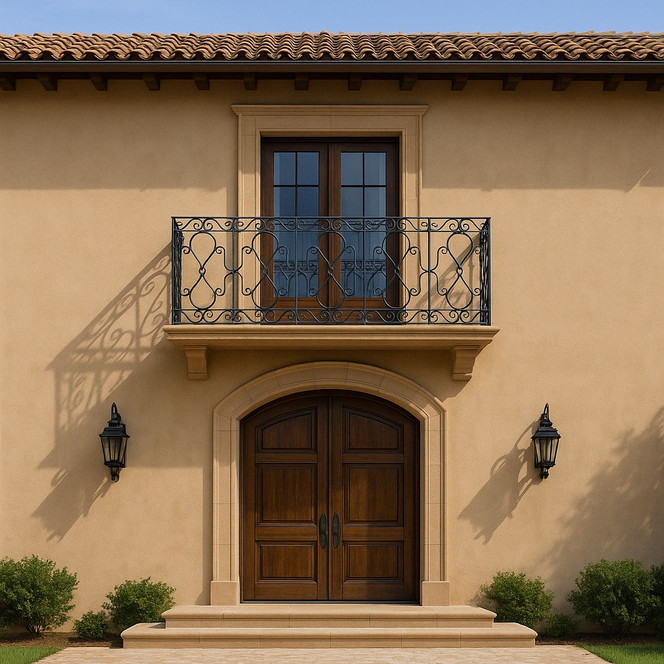
Forged Iron Balconies: Handcrafted Architectural Elegance for Interior and Exterior Spaces
Forged iron balconies combine architectural strength, decorative craftsmanship, and timeless Old World character. Handmade by skilled Mexican blacksmiths, these custom railings transform balconies, staircases, mezzanines, terraces, and exterior façades into distinctive design features while providing essential support and separation. Inspired by Spanish Colonial, Hacienda, Baroque, and Mediterranean ironwork, a handmade forged iron balcony can be customized in size, pattern, finish, and mounting configuration to complement both historic homes and contemporary residential projects.
Blog Summary
- Product: Forged iron balconies
- Best For: Balconies and staircases
- Styles: Colonial to contemporary
- Options: Custom size and finish
- Craft: Handmade in Mexico

The Enduring Appeal of Forged Iron
Forged iron has been used in architecture for centuries because it offers a rare combination of strength and decorative flexibility. Skilled blacksmiths can form heated metal into scrolls, geometric grids, floral elements, quatrefoils, arches, and other ornamental details that provide visual interest without sacrificing structural presence.
Unlike lightweight decorative materials, iron feels permanent and architectural. It adds definition to openings, creates elegant boundaries, and reinforces the character of the building from both near and far.
Handcrafted by Mexican Blacksmiths
Each forged iron balcony is individually fabricated by experienced Mexican artisans using traditional metalworking techniques. Iron components are cut, heated, bent, forged, welded, and finished by hand according to the dimensions and design selected for the project.
This artisan process allows the railing to reflect the proportions of the building rather than forcing the architecture to adapt to a standard prefabricated panel.
Artisan Characteristics
- Hand Forged: Traditional metalwork
- Custom Built: Project dimensions
- Fully Welded: Strong construction
- Hand Finished: Individual character
- Made in Mexico: Artisan production
Spanish Colonial Design Influence
Many forged iron balcony designs draw inspiration from Spanish Colonial architecture, where decorative metalwork was used on balconies, gates, windows, staircases, and courtyard railings. These elements provided practical security while also giving façades rhythm, elegance, and visual depth.
When the tradition reached Mexico, local blacksmiths adapted European forms through regional craftsmanship, creating a distinctive style associated with haciendas, Colonial homes, churches, public buildings, and historic town centers.
Quatrefoil and Geometric Patterns
Quatrefoil motifs are especially common in Spanish Revival and Mediterranean architecture. Their repeated four-lobed form creates a balanced pattern that feels decorative without becoming overly ornate.
Geometric grids, diamonds, circles, and intersecting lines may also be incorporated into the design. These options work well in transitional and contemporary homes where the railing should retain handcrafted character with cleaner visual structure.
Popular Design Motifs
- Quatrefoil: Spanish Revival detail
- Scrollwork: Traditional ornament
- Geometric Grid: Clean structure
- Floral Forms: Decorative elegance
- Simple Bars: Minimal appearance
Outdoor Balcony Applications
On an exterior balcony, forged iron creates a strong architectural outline while preserving open views and airflow. The railing can visually connect upper floors with doors, windows, columns, and surrounding masonry.
Decorative iron is particularly effective on stucco, stone, brick, and plaster façades, where the dark metal provides contrast and reinforces Spanish Colonial, Mediterranean, or Hacienda character.
Interior Balconies and Mezzanines
Interior balconies and mezzanines benefit from iron railings because the open design helps preserve sightlines between floors. Rather than creating a heavy visual barrier, the metalwork defines the edge while maintaining a spacious atmosphere.
This makes forged iron an excellent option for double-height foyers, lofts, upper hallways, libraries, and open living spaces.
Staircase Railings
Forged iron is frequently used for interior and exterior staircases. The material provides visual continuity from the lower level to the upper landing while adding handcrafted detail along the entire route.
Balcony panels and staircase railings can be coordinated through matching scrolls, geometric patterns, posts, and finishes so the entire installation feels intentional.
Common Applications
- Exterior Balcony: Façade accent
- Indoor Balcony: Open upper level
- Staircase: Coordinated railing
- Mezzanine: Loft protection
- Terrace: Decorative boundary
Juliet-Style Balcony Features
A shallow or Juliet-style balcony can add architectural depth to a window or upper-level door without requiring a full projecting platform. Forged iron works especially well for this application because the open pattern creates a decorative façade element while maintaining light and visibility.
Custom dimensions allow the railing to align with the opening and surrounding trim for a balanced appearance.
Custom Sizes for Architectural Openings
Every balcony opening has unique dimensions, wall conditions, and installation requirements. Custom fabrication allows the railing width, height, post spacing, pattern scale, and mounting points to be adapted to the project.
Accurate measurements are essential. The installer or contractor should confirm the finished opening, substrate, attachment surfaces, and applicable code requirements before production begins.
Required Measurements
- Overall Width: Finished opening
- Railing Height: Code compliant
- Mounting Area: Wall or floor
- Post Locations: Structural support
- Pattern Spacing: Safety planning
Natural Iron Finish
A natural iron finish preserves the raw visual character of forged metal. Subtle tonal variation, welding marks, and handcrafted texture remain visible, creating an authentic blacksmith-made appearance.
This finish works especially well in industrial, rustic, farmhouse, and Old World interiors where material honesty is part of the design.
Black Iron Finish
Black iron is one of the most versatile choices because it creates a clean silhouette and coordinates easily with doors, windows, lighting, hardware, and other architectural details.
The dark color adds contrast against white stucco, natural stone, warm plaster, and light wood while remaining suitable for both traditional and contemporary buildings.
Rusted and Oxidized Finishes
An oxidized or rust-inspired finish introduces warm brown and reddish tones that make the railing appear aged and established. This treatment is especially compatible with Hacienda, farmhouse, Southwestern, and rustic architecture.
When specified for exterior use, the finish should include an appropriate protective system to slow further corrosion and preserve the intended appearance.
Finish Options
- Natural Iron: Raw forged look
- Black Iron: Timeless contrast
- Oxidized: Rustic aged character
- Custom Color: Project coordination
- Protective Coat: Added durability
Traditional and Contemporary Styles
Forged iron is not limited to heavily ornamented architecture. While elaborate scrollwork and Baroque patterns suit historic or romantic interiors, simpler vertical bars and geometric panels work well in contemporary construction.
The material remains visually warm even when the design is restrained, making it a useful bridge between modern architecture and traditional craftsmanship.
Pairing Iron with Stucco and Plaster
Dark iron creates a striking contrast against light stucco and plaster walls. This combination is strongly associated with Spanish Colonial, Mediterranean, and Mexican architecture.
The clean background allows the railing pattern to remain visible from a distance while emphasizing the depth of the balcony opening.
Pairing Iron with Stone
Natural stone and forged iron share a sense of permanence and architectural weight. Cantera, limestone, brick, and other masonry materials provide a strong foundation for handcrafted metalwork.
Decorative iron can also coordinate with stone columns, arches, fountains, and fireplace surrounds to create a unified exterior or interior design.
Material Pairings
- Stucco: Strong visual contrast
- Cantera Stone: Colonial elegance
- Brick: Rustic warmth
- Wood: Natural material balance
- Talavera Tile: Colorful detail
Coordinate with Doors and Windows
Balcony railings should feel connected to nearby doors, windows, shutters, and exterior trim. Repeating a curve, geometric shape, or finish can create continuity across the façade.
Iron window guards, gates, and balcony railings may also be designed as a coordinated collection, giving the property a consistent architectural identity.
Residential Applications
Forged iron balconies are suitable for private residences ranging from compact Spanish Revival homes to large Hacienda-inspired estates. They can define upper-floor openings, frame courtyard views, or add elegance to interior stair halls.
Because each railing is made to order, the design can be scaled appropriately for both modest and expansive architectural projects.
Commercial and Hospitality Projects
Boutique hotels, restaurants, wineries, resorts, and event venues frequently use forged iron balconies to reinforce a distinctive architectural theme. Decorative railings can help create memorable guest areas while coordinating with gates, lighting, staircases, and exterior façades.
The handcrafted character adds authenticity that is difficult to achieve with standard prefabricated railing systems.
Commercial Applications
- Hotels: Old World character
- Restaurants: Decorative balconies
- Wineries: Mediterranean appeal
- Resorts: Architectural continuity
- Event Spaces: Custom visual identity
Structural Planning and Safety
A forged iron balcony railing must be designed and installed according to applicable building codes, safety standards, and structural requirements. The decorative appearance should never replace proper engineering or secure attachment.
A qualified contractor, architect, or engineer should confirm railing height, opening limitations, load requirements, anchoring points, and substrate conditions before fabrication and installation.
Mounting Methods
The railing may be mounted to the floor, attached between masonry walls, secured to posts, or integrated into a larger balcony structure. The correct method depends on the building material, location, railing dimensions, and structural design.
Mounting plates, brackets, and connection points should be planned during production rather than added as an afterthought on site.
Installation Planning
- Substrate: Confirm wall or floor
- Anchors: Use rated hardware
- Support: Prepare structure
- Alignment: Verify finished opening
- Installer: Professional required
Exterior Weather Protection
Outdoor iron requires protection from moisture, salt air, and changing weather conditions. A suitable primer, paint, powder coating, wax, or clear protective finish may be used according to the desired appearance and environment.
Coastal areas and locations with heavy rainfall generally require more frequent inspection and maintenance than dry inland climates.
Routine Maintenance
Inspect the railing periodically for scratches, chips, loose hardware, or early signs of corrosion. Clean it with mild soap and water, then dry the surface thoroughly.
Any damaged protective coating should be repaired promptly to prevent moisture from reaching exposed metal.
Care Tips
- Clean: Mild soap and water
- Dry: Remove surface moisture
- Inspect: Check finish regularly
- Repair: Touch up scratches
- Tighten: Verify hardware
Why Handmade Ironwork Stands Apart
Factory-made railing panels prioritize speed and uniformity, while handcrafted ironwork responds to the specific architecture of the project. Pattern scale, dimensions, curves, and decorative details can all be adjusted to create a more integrated result.
Small variations in forged elements also reveal the artisan process, giving the finished installation depth and individuality.
Coordinate with Other Forged Iron Products
Forged balconies can be combined with gates, window guards, lighting, mirrors, furniture, and decorative hardware to create a cohesive architectural language throughout the property.
Explore additional inspiration through handmade wrought iron products and traditional Mexican blacksmithing.
Forged Iron and Farmhouse Design
Although forged iron is strongly associated with Spanish Colonial architecture, simple black or oxidized railings can also complement farmhouse-style homes. Clean vertical bars, restrained scrollwork, and aged finishes pair naturally with wood siding, stone, brick, and rustic lighting.
The key is selecting a pattern that supports the building rather than competing with its architecture.
Outdoor Living and Balcony Design
A well-designed balcony can become an extension of the interior living space. Decorative iron railings preserve views while helping define areas for seating, plants, and outdoor relaxation.
For additional ideas on creating inviting exterior spaces, explore recommendations for beautiful and functional outdoor areas.
Ordering and Project Planning
Before ordering, provide the overall railing dimensions, finished height, pattern preference, finish, mounting conditions, location, and project drawings when available. Photos of the opening and surrounding architecture can also help clarify the design.
Visit the handmade forged iron balcony product page or review more forged iron balcony ideas before finalizing the project.
Conclusion
Forged iron balconies bring together structural presence, decorative craftsmanship, and timeless architectural character. Whether used on exterior façades, interior mezzanines, staircases, terraces, or Juliet-style openings, custom ironwork can be tailored to the dimensions and design of the building. Handmade in Mexico and available in traditional or contemporary patterns, these railings provide lasting beauty while preserving the enduring artistry of hand-forged metalwork.