 US Dollar
 Euro
Euro
 Australian Dollar
 Canadian Dollar
 Polish Zloty
 British Pound

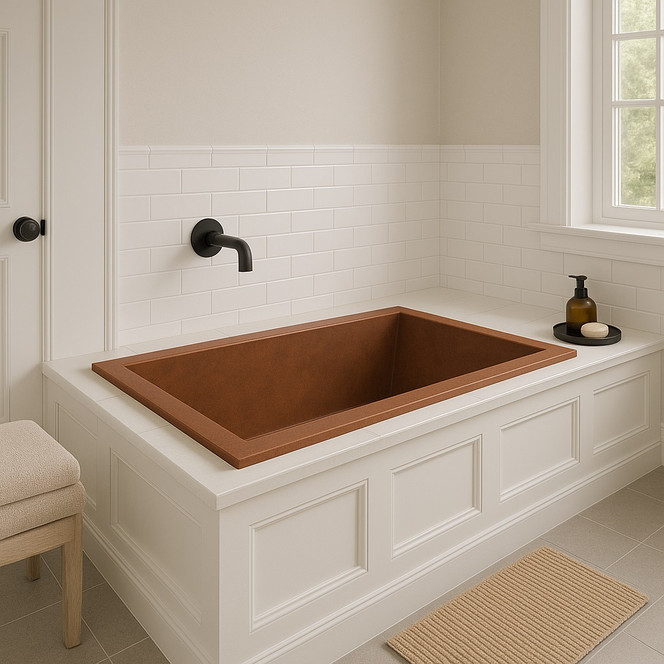
Drop-In and Undermount Copper Bathtubs Guide explains how built-in copper tubs bring handcrafted warmth into bathrooms that need a cleaner, more integrated bathing layout. Unlike freestanding tubs, drop-in and undermount copper bathtubs are designed to work with custom surrounds, framed platforms, stone decks, tile ledges, wood details, or alcove installations. The copper basin becomes the warm focal material, while the surrounding surface helps define the room’s architecture. These tubs work well in rustic, Hacienda, Spanish Colonial, transitional, farmhouse, and spa-inspired bathrooms when the installation is planned carefully. Because each handmade copper bathtub has natural tone movement, hammering variation, rim shaping, patina depth, seam detail, and small artisan irregularities, no two tubs are identical. Those details are part of the handcrafted character, not defects.
Blog Summary
- Type: Built-in copper tubs
- Styles: Drop-in and undermount
- Surrounds: Stone, tile, or wood
- Finish: Smooth or hammered copper
- Planning: Framing and plumbing
- Care: Mild soap and soft cloth
Built-In Copper Tub Planning
A built-in copper bathtub should be planned before framing, plumbing, tile, or stone work begins. Drop-in and undermount tubs depend on the surrounding structure, so dimensions, rim style, support, waterproofing, drain access, faucet placement, and service panels must be confirmed early. These tubs are excellent when the bathroom design calls for a more architectural bathing area rather than a freestanding centerpiece. The copper still brings warmth and artisan texture, but the surrounding materials create a more finished, integrated appearance.
Why Choose Built-In Copper?
Built-in copper tubs are ideal for homeowners who want handcrafted copper without placing a freestanding tub in the center of the room. They work well in alcoves, corners, raised platforms, wet rooms, and custom bathing decks. The surround can provide practical ledge space for towels, bath products, candles, or decorative objects. It can also connect the tub visually to the rest of the bathroom through repeated stone, tile, plaster, concrete, or wood materials. Browse the copper bathtub collection to compare built-in and freestanding possibilities.
Custom Tub Specifications
- Material: Handmade copper
- Installations: Drop-in or undermount
- Texture: Smooth or hammered copper
- Finishes: Antique, natural, coffee
- Surrounds: Tile, stone, wood
- Drain: Custom layout options
- Faucets: Deck, wall, or floor
- Use: Built-in soaking areas
- Planning: Framing required
- Care: Gentle routine cleaning
What Is a Drop-In Tub?
A drop-in copper bathtub is designed to be lowered into a framed platform, surround, or deck. The tub rim rests visibly on the top surface, allowing the copper edge to remain part of the design. This installation works especially well when the surround material is meant to frame the copper basin. Stone, tile, sealed wood, plaster, or concrete can create a strong visual border around the tub. The result feels more built-in than freestanding, but still shows the handmade copper rim and interior.
Drop-In Design Benefits
Drop-in copper tubs provide useful design flexibility. They can be placed in corners, alcoves, raised decks, or large bathing platforms. The surrounding ledge can provide space for bathing accessories while visually connecting the tub to flooring, walls, or vanity materials. A drop-in design can also make the bathroom feel more grounded and architectural. It is often easier to coordinate with deck-mounted faucets because the tub surround can help support fixture placement.
What Is an Undermount Tub?
An undermount copper bathtub is installed below the surrounding deck surface, hiding the rim and showing mainly the copper basin interior. This creates a cleaner, more subtle profile than a drop-in installation. The surrounding material becomes the top visual plane, while the copper appears inside the opening. Undermount copper tubs are especially useful in high-end spa bathrooms, transitional spaces, and modern rustic bathrooms where the goal is a smooth surface with artisan warmth inside the bathing area.
Undermount Design Benefits
Undermount tubs create a sleek, integrated look. Because the rim is hidden beneath stone, tile, or another finished deck material, the design feels more minimal and continuous. This can be useful when the bathroom already has strong material features such as marble slabs, limestone, travertine, sealed concrete, or large-format tile. The copper interior adds warmth without interrupting the clean surround line. This installation must be planned carefully because the deck opening, support, waterproofing, and access must match the tub precisely.
Drop-In vs. Undermount
The best choice depends on how much copper should be visible. A drop-in tub shows the rim, making the copper more prominent. An undermount tub hides the rim, creating a quieter and more refined appearance. Drop-in tubs often feel more rustic, traditional, or decorative because the copper edge becomes part of the composition. Undermount tubs often feel more spa-like, transitional, or contemporary because the surround surface remains visually dominant. Both styles can be handcrafted, comfortable, and customized.
Surround Material Choices
The surround material has a major effect on the final look. Travertine, cantera stone, limestone, marble, slate, ceramic tile, handmade tile, sealed concrete, plaster, and wood can all work with copper when properly installed. Stone creates a luxury spa effect. Handmade tile can support Spanish Colonial or Hacienda character. Wood can create a warm rustic or farmhouse look, but it must be sealed correctly for bathroom moisture. Concrete can make the copper feel more modern or industrial.
Framing and Support
Drop-in and undermount copper tubs require a strong supporting structure. The surround must carry the tub properly and provide stable support once the tub is filled with water. Framing should be planned by a qualified contractor who understands the tub’s size, weight, filled weight, rim condition, deck material, and access needs. This is especially important for upper-floor bathrooms, large tubs, stone surrounds, or raised platform installations. Structural planning protects the tub, the surround, and the bathroom floor.
Waterproofing and Access
Built-in tub installations need excellent waterproofing. Water can reach the surround, seams, deck openings, grout lines, faucet penetrations, and access areas. A contractor should plan waterproof membranes, sealed surfaces, proper drainage, and service access before finishing the surround. Access panels are especially important for plumbing, drains, faucets, and any future maintenance. A beautiful installation can become difficult to repair if the tub is completely enclosed without service access.
Faucet Compatibility
Drop-in and undermount copper tubs can support different faucet layouts depending on the surround and tub design. Deck-mounted faucets are common because the surrounding platform can provide a stable place for fixtures. Wall-mounted faucets work when the tub is close enough to the wall for proper spout reach. Floor-mounted faucets may also work in open layouts, although they are more common with freestanding tubs. Confirm faucet reach, supply line location, handle clearance, drain position, and splash control before installation.
Drain and Overflow Planning
Drain location should be confirmed before framing begins. A center drain may work well for symmetrical soaking, while a left or right drain can suit existing plumbing or one-direction reclining. Overflow planning also matters because the surround must allow proper access and alignment. If the bathroom remodel requires moving plumbing, that cost and timing should be discussed early. The tub, drain, faucet, surround, and floor structure must work together as one system.
Smooth or Hammered Copper
Smooth copper creates a cleaner, more refined look and can work well in modern, transitional, or spa-style bathrooms. Hammered copper creates stronger artisan texture and feels more rustic or traditional. Hammering also adds visual depth by breaking light across the copper surface. In a built-in tub, hammered copper can be especially attractive because the surround remains structured while the basin interior adds handcrafted movement. Learn more through the hammered copper finishes guide.
Copper Patina Options
Patina selection should match the bathroom mood. Antique copper creates a darker aged look. Natural copper feels warm and can evolve more visibly over time. Coffee patina offers deeper brown tones for rustic, Hacienda, or traditional rooms. A brighter finish can add glow to stone or plaster bathrooms. Because copper is a living material, every patina may continue to change through water exposure, cleaning habits, humidity, light, and touch. This natural movement should be expected before ordering.
Spanish Colonial Bathrooms
Spanish Colonial bathrooms can use drop-in or undermount copper tubs with handmade tile, plaster walls, dark wood, carved details, wrought iron lighting, and warm stone. A drop-in tub with a visible copper rim often works especially well in this style because the exposed edge adds handmade character. Coffee, antique, or natural copper finishes can coordinate with terracotta, Saltillo tile, cantera stone, and traditional decorative surfaces.
Hacienda Bathrooms
Hacienda-style bathrooms can support built-in copper tubs through rustic stone, heavy timber, plaster, iron fixtures, arched openings, and warm earth tones. A copper basin set into a tiled or stone deck can feel substantial and traditional. The surround can be wide enough to function as a bathing ledge, while the copper interior adds warmth and artisanal depth. Hammered texture is especially effective in this type of room.
Modern Rustic Bathrooms
Modern rustic bathrooms can use an undermount copper tub to balance clean architecture with natural materials. Large-format stone, sealed concrete, white oak, limestone, plaster, and black metal fixtures can frame the copper without making the room feel overly decorative. The copper interior becomes a warm contrast inside a cleaner bathing structure. A smooth or softly hammered finish can work well in this setting.
Transitional Bathrooms
Transitional bathrooms can use drop-in or undermount copper tubs when the design combines classic materials with cleaner lines. Marble, quartzite, painted cabinetry, white oak, polished nickel, aged brass, and quiet tile can all support copper. An undermount installation may be best when the bathroom needs a smoother look, while a drop-in installation may work better when the copper rim should remain visible as a design accent.
Other Compatible Bathroom Styles
- Farmhouse bathrooms
- Mediterranean bathrooms
- Organic modern bathrooms
- Spa-inspired bathrooms
Cleaning and Maintenance
Copper tubs are simple to maintain when cleaned gently. Use mild soap, warm water, and a soft cloth for routine cleaning. Rinse thoroughly after bathing and dry the surface when possible, especially in hard-water areas. Avoid abrasive pads, steel wool, bleach, ammonia, acidic cleaners, and harsh chemicals because they can scratch copper or disturb the patina. For deeper guidance, read the copper bathtub cleaning guide.
Patina Care
Some homeowners want to preserve a darker or more even patina, while others enjoy natural aging. Occasional copper-safe wax may help slow patina change when used correctly on a clean, dry surface. However, wax should be tested first and used only when compatible with the finish. If the tub has a natural or living finish, color movement over time is normal. Raised hammered areas, rims, and high-touch spots may develop lighter highlights with use.
When to Choose Built-In
Choose a drop-in or undermount copper bathtub when the bathroom design depends on a custom surround. Built-in tubs are useful when you want a deck surface around the tub, a cleaner alcove installation, a stone or tile platform, or a bathing area that feels integrated into the room. They are also useful when a freestanding tub would not fit the layout or when the homeowner prefers a more architectural presentation.
Measurements Before Ordering
Before ordering, confirm tub length, width, depth, rim shape, drain location, overflow requirements, faucet type, platform height, surround thickness, deck opening, floor support, plumbing access, service panel location, and delivery path. Measure doorways, hallways, stairs, and turns. If the tub is installed on an upper floor, ask a qualified professional to review the structure. Built-in installations depend on accuracy, so small measurement errors can affect the entire project.
Common Questions
What is a drop-in copper bathtub?
A drop-in copper bathtub is lowered into a framed surround, with the tub rim resting visibly on the deck surface.
What is an undermount copper bathtub?
An undermount copper bathtub is installed beneath the deck surface, hiding the rim and showing mainly the copper basin interior.
Which style looks cleaner?
An undermount tub usually looks cleaner because the deck surface continues over the rim for a more seamless profile.
Which style shows more copper?
A drop-in tub shows more copper because the rim remains visible above the stone, tile, wood, or deck surround.
Can these tubs go upstairs?
Yes, but the floor structure should be reviewed because the filled tub, surround, water, and user weight must be supported.
Do built-in copper tubs need framing?
Yes. Drop-in and undermount tubs require a properly built support structure, waterproofing, and plumbing access.
What surrounds pair well with copper?
Cantera stone, travertine, limestone, marble, handmade tile, sealed concrete, plaster, and wood can all pair well with copper.
Can I use deck-mounted faucets?
Yes. Deck-mounted faucets are common with built-in tubs when the surround has enough space and structural support.
Will copper patina affect tile?
Properly installed copper should not transfer patina to surrounding surfaces, but cleaning habits and moisture control still matter.
How do you clean built-in copper tubs?
Use mild soap, warm water, and a soft cloth. Avoid abrasives, bleach, ammonia, strong acids, and steel wool.
Final Design Guidance
Drop-In and Undermount Copper Bathtubs Guide shows how built-in copper tubs combine artisan warmth with architectural bathroom design. Choose a drop-in tub when you want the copper rim visible above the surround. Choose an undermount tub when you want a cleaner, more seamless deck surface with the copper basin set below. Confirm framing, waterproofing, support, faucet location, drain placement, access panels, surround thickness, and delivery clearance before ordering. Pair the tub with stone, tile, plaster, sealed concrete, or wood to create a warm and durable bathing area. Explore the handmade copper bathtub collection, review hammered copper finishes, and plan a built-in tub that fits your bathroom layout and design goals.