 US Dollar
 Euro
Euro
 Australian Dollar
 Canadian Dollar
 Polish Zloty
 British Pound

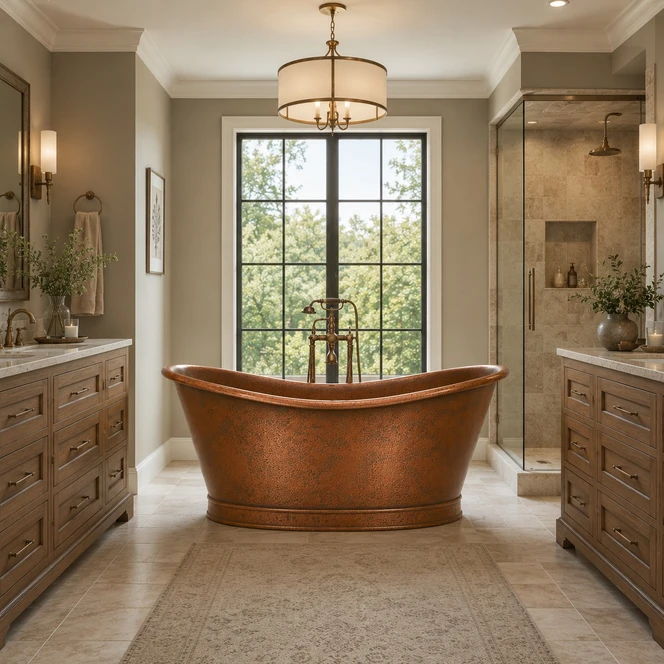
Double Slipper Copper Bathtub for Two Guide explains how a handcrafted two-person copper soaking tub can bring comfort, symmetry, warmth, and sculptural presence into a luxury bathroom. This double slipper copper bathtub for two features raised ends on both sides, a centered soaking profile, hand-shaped copper construction, and a naturally warm surface that can become the focal point of a primary suite, rustic spa bathroom, Hacienda retreat, or Mediterranean-inspired bath. Because each copper bathtub is handmade, natural tone movement, hammering variation, rim shaping, patina depth, surface marks, seam details, and small artisan irregularities should be expected. No two pieces are identical, and those differences are part of the tub’s handcrafted beauty rather than defects. Explore completed bathrooms showcasing the double-slipper form and handcrafted copper construction in our two-person double-slipper copper bathtub bathroom images.
Blog Summary
- Style: Double slipper copper tub
- Use: Soaking tub for two
- Ends: Raised rims on both sides
- Material: Handcrafted copper
- Finish: Copper patina options
- Care: Mild soap and soft cloth
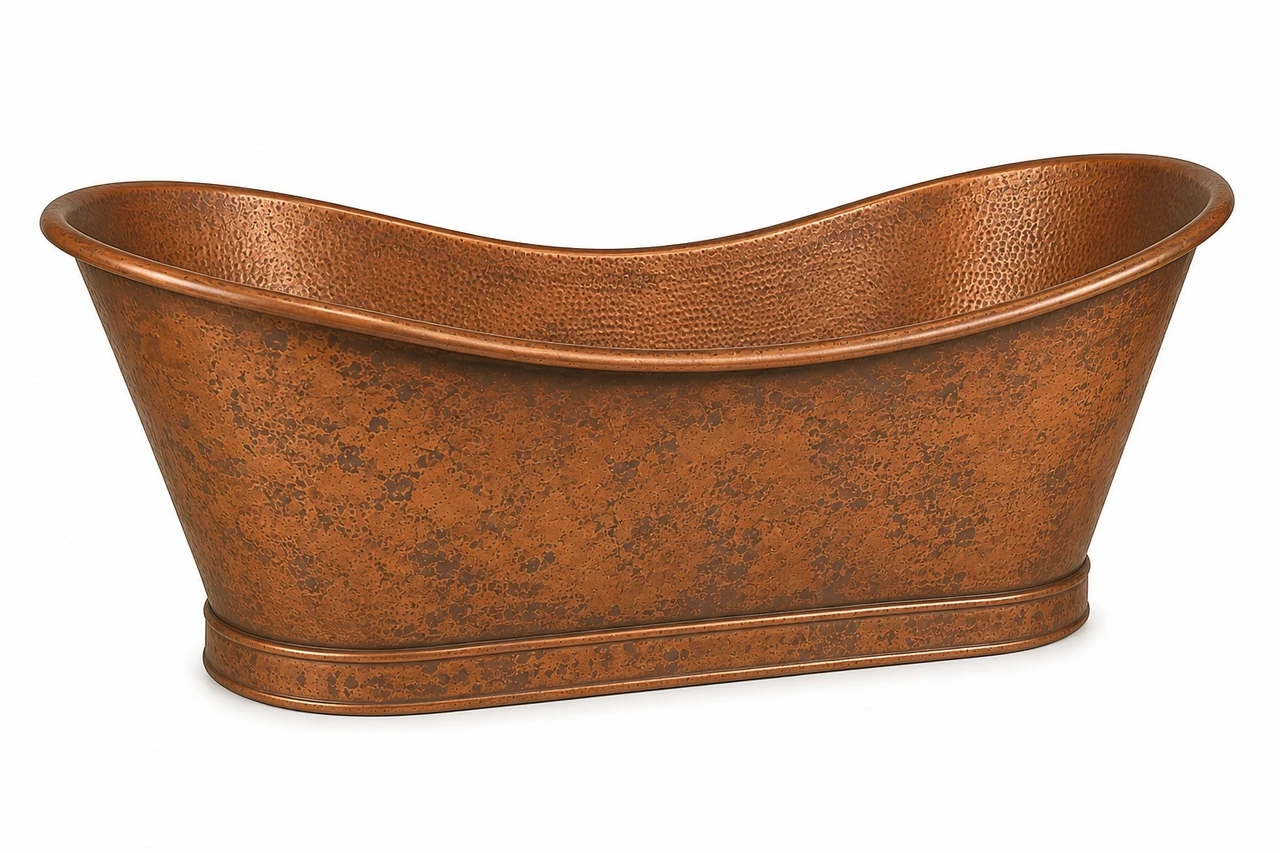
Planning a Copper Bathtub for Two
A copper bathtub for two should be planned around comfort, room size, drain location, faucet placement, floor support, and delivery access. A double slipper shape has raised ends on both sides, so it works best when the tub has enough space to show its curved silhouette clearly. In many bathrooms, this type of tub becomes the main design feature rather than a secondary fixture. Buyers comparing related options can review the broader copper bathtubs category and the freestanding copper bathtubs collection.
Why Choose Double Slipper?
The double slipper form is chosen for symmetry and soaking comfort. Unlike a single slipper tub with one raised end, this design provides reclining support from both sides. That makes it especially useful for shared bathing, centered bathroom layouts, and spaces where the bathtub will be viewed from several angles. The raised ends create visual movement, while the lower center section keeps the profile graceful and functional. In copper, the shape gains additional warmth because the patina, curves, and handmade surface reflect light in a natural way.
Custom Tub Specifications
- Material: Handmade copper
- Shape: Double slipper profile
- Use: Two-person soaking
- Ends: Raised reclining rims
- Texture: Smooth or hammered copper
- Finish: Natural, coffee, antique
- Option: Honey copper patina
- Length: Custom size options
- Width: Two-person comfort planning
- Care: Gentle routine cleaning
Two-Person Soaking Comfort
A two-person copper bathtub should provide enough length, width, and interior room for comfortable shared use. The raised ends support reclining from both directions, while the lower center section helps define the shared soaking zone. This layout is especially practical when the drain is centered or placed away from the reclining areas. The exact comfort level depends on the selected size, interior slope, rim height, soaking depth, and user height. Before ordering, confirm whether the tub will be used mostly by one person, two people, or both.
Raised End Design
The raised ends are the defining feature of a double slipper bathtub. They create ergonomic support for the back, neck, and shoulders while giving the tub a balanced profile. In a bathroom, this shape looks especially attractive when placed under a window, beneath a chandelier, beside a stone wall, or in an open bathing area. The form feels traditional without being overly ornate. Copper adds handmade warmth, while the raised silhouette gives the tub a sense of luxury and permanence.
Freestanding Placement
A double slipper copper tub often works best as a freestanding centerpiece. This placement allows the raised ends, side profile, patina, and handcrafted surface to be seen from multiple angles. Freestanding placement also gives the bathroom a more open and intentional look. However, the tub needs enough clearance for cleaning, entry, faucet access, and visual balance. A tub placed too close to walls, vanities, shower glass, or storage can lose the elegant effect that makes the double slipper shape desirable.
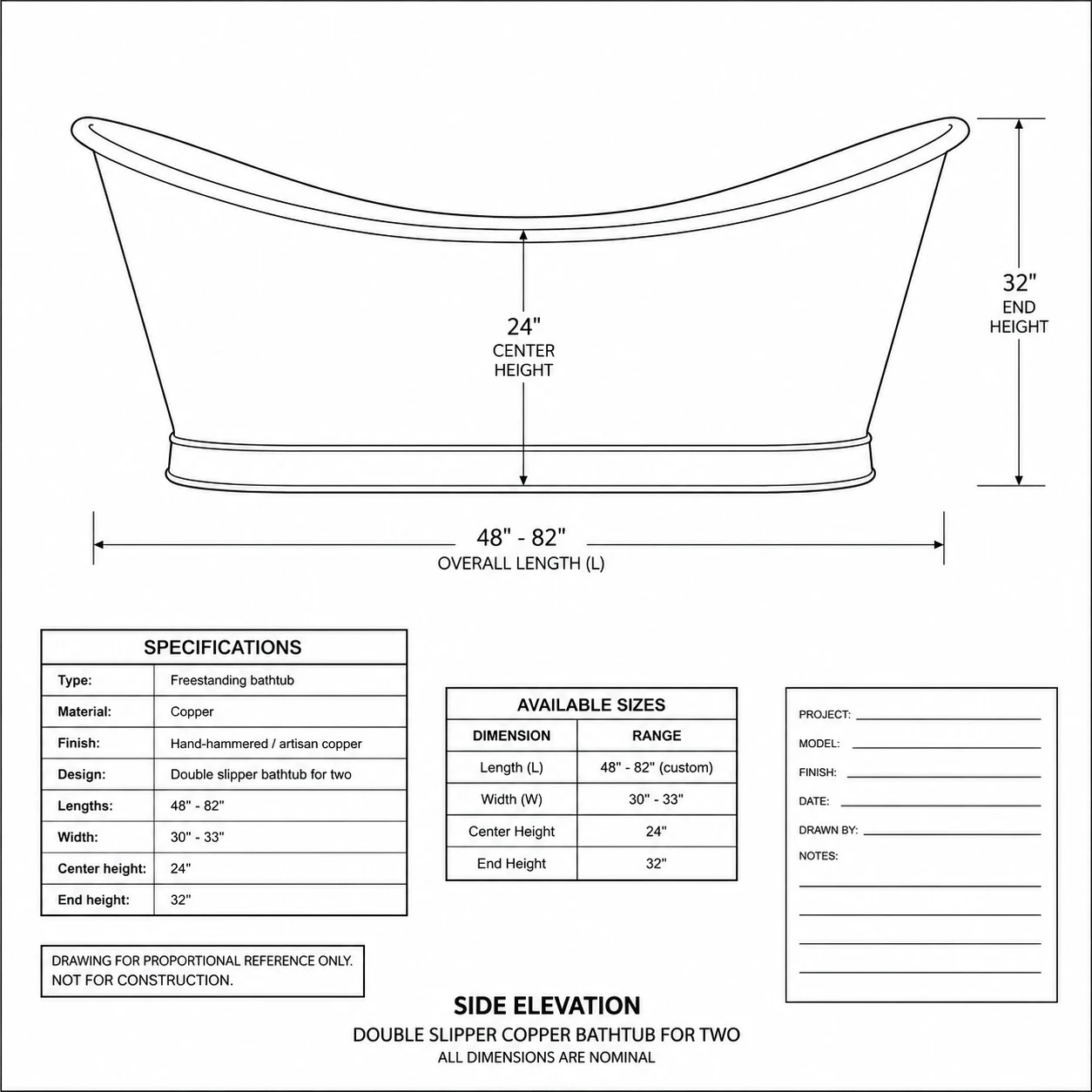
Bathtub Dimensions and Drawing
The technical drawing helps confirm proportion before ordering. Length, width, center height, end height, rim profile, and base shape all affect how the tub will fit in the bathroom. A double slipper copper bathtub for two is usually selected for larger primary bathrooms, spa-inspired suites, and rooms where comfort matters as much as appearance. Always compare exterior dimensions with usable interior space because thick rims, curved walls, and raised ends can change the soaking experience. The tub should fit the room physically and visually.
How to Size the Tub
Size planning should begin with the bathroom floor area and the people who will use the tub. A longer tub generally provides better reclining comfort, while a wider tub can make shared soaking more practical. The height of the raised ends affects entry, appearance, and faucet reach. A two-person tub should not be selected only by overall length. Review interior space, soaking depth, rim width, drain location, and the angle of the reclining ends. If the bathroom is tight, the tub may look oversized even if it technically fits.
Bathroom Clearance
Clearance around the tub affects daily use and maintenance. Leave enough space for safe entry, towel access, faucet operation, and cleaning around the exterior. In a large bathroom, the tub can sit centered or slightly angled for stronger visual impact. In a narrower room, placing it near a wall may work if faucet reach and cleaning access remain practical. A freestanding copper tub should feel intentional, not crowded. Painter’s tape or cardboard can help mark the footprint before ordering.
Drain Location Planning
A double slipper tub for two often works best with a centered drain because both ends are designed for reclining. A centered drain helps keep hardware away from either bather’s back and supports the tub’s symmetrical appearance. However, final drain placement should match the bathroom’s plumbing plan. If existing plumbing is located to one side, moving the drain may increase remodeling cost. Review the drain location with the plumber before finalizing size, faucet placement, and tub orientation.
Faucet Compatibility
Faucet planning should happen before the tub is ordered. Floor-mounted faucets often work well with freestanding double slipper tubs because they preserve the open look. Wall-mounted faucets can work when the tub is placed close enough to the wall for proper spout reach. Deck-mounted faucets may require a nearby platform or compatible rim condition. Confirm spout reach, water supply location, handle clearance, drain alignment, overflow planning, and service access before installation begins.
Floor Support
A two-person copper bathtub should be reviewed for filled weight, not only empty weight. Water, tub size, user weight, floor structure, and surrounding flooring materials all matter. Large tubs, second-floor bathrooms, stone floors, and older homes may require professional review before installation. Copper can be lighter than cast iron, but a large filled soaking tub still creates a significant load. Proper floor planning helps protect the bathroom, plumbing connections, and long-term use.
Delivery Access
Measure the full delivery path before ordering. Check exterior doors, interior doors, hallways, staircases, landings, turns, ceiling height, and bathroom entry. A tub that fits the bathroom floor plan may still be difficult to move through the home. Raised ends and packaging can make handling more complex. Doors may need to be removed, and flooring or walls may need protection during delivery. Careful access planning reduces the risk of delays and damage.
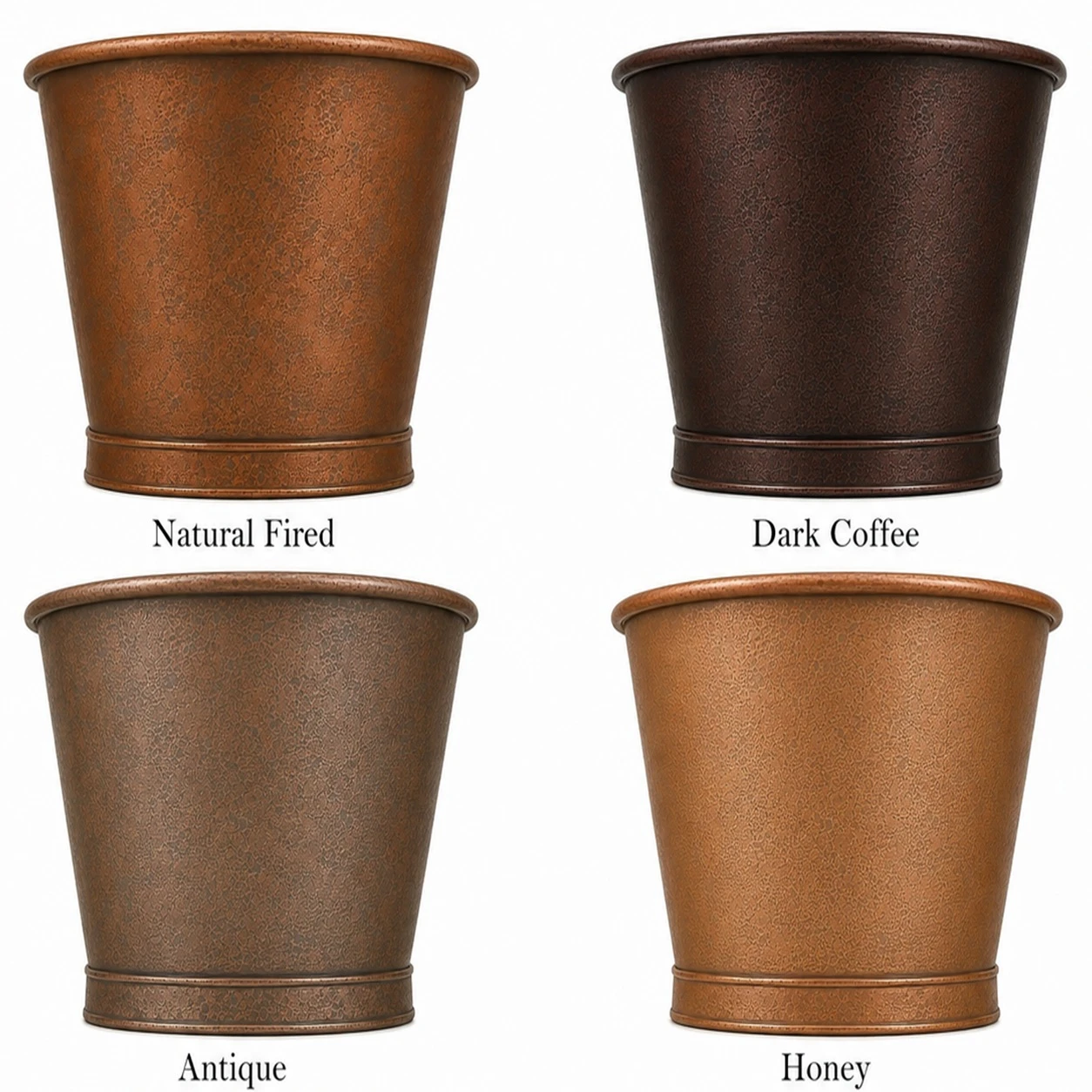
Copper Patina Options
Patina selection changes the mood of the tub. Natural copper tones feel warm and lively. Coffee and antique finishes create deeper old-world character. Honey patina can brighten a bathroom while keeping the copper soft and warm. A darker finish can feel more grounded in rustic or Hacienda interiors. A brighter finish can add more glow in a spa bathroom or transitional space. Because patinas are handmade, product photos and finish images should be treated as guides rather than exact promises.
Natural Copper Aging
Copper is a living material, so its finish may shift over time. Water quality, humidity, bath products, cleaning habits, handling, and air exposure can all affect patina movement. Raised areas may develop lighter highlights, while recessed areas may appear deeper. This natural aging is one of the reasons copper tubs feel personal and authentic. Buyers who want a more consistent finish may choose copper-safe wax, while homeowners who enjoy natural aging can allow the patina to evolve.
Smooth or Hammered Copper?
Smooth copper gives the tub a quieter, more refined appearance. Hammered copper adds stronger artisan texture and can help small marks blend into the surface. For a two-person tub, texture can also change how light moves across the large curved body. Hammered copper feels rustic, traditional, and handcrafted, while smoother copper can feel cleaner and more transitional. Buyers who want to compare surface character can review hammered copper bathtubs for related handmade options.
Spanish Colonial Bathrooms
A double slipper copper bathtub for two works beautifully in Spanish Colonial bathrooms. Pair it with plaster walls, arched openings, dark wood, wrought iron lighting, Saltillo floors, cantera stone, and handmade tile. The raised ends reinforce the traditional shape, while copper adds warmth and depth. Antique, coffee, or natural copper finishes can all coordinate with the earthy materials common in this style. The tub can sit beneath a window or inside a defined bathing alcove for strong symmetry.
Hacienda Bathrooms
Hacienda-style bathrooms can use this tub as a generous soaking centerpiece. Heavy timber, stone floors, plaster walls, iron hardware, rustic vanities, terracotta, and warm lighting all support the copper surface. A two-person tub fits the relaxed character of a Hacienda bathroom, especially when the room has enough space to show the full profile. Coffee and antique patinas often work well because they coordinate with aged wood, stone, and iron details.
Mediterranean Bathrooms
Mediterranean bathrooms can pair a double slipper copper tub with limestone, travertine, textured plaster, carved details, bronze fixtures, arched niches, and mosaic tile. The raised ends echo softer architectural forms, while the copper finish warms stone-heavy spaces. A natural or honey tone can brighten the room, while an antique finish can create a more old-world effect. Keep surrounding patterns balanced so the tub remains the main focal point.
Rustic Spa Bathrooms
Rustic spa bathrooms can use this tub to combine relaxation and handcrafted material character. Pair it with natural stone, white oak, plaster, soft lighting, simple linens, handmade tile, and black or bronze fixtures. The tub should have enough open space to feel calm and comfortable. A hammered surface can add texture, while a smoother surface can make the bathing area feel quieter. The goal is to create a warm retreat without overcrowding the design.
Other Compatible Bathroom Styles
- Traditional primary bathrooms
- Transitional bathrooms
- Tuscan bathrooms
- Luxury lodge bathrooms
Matching Bathroom Fixtures
A two-person copper tub can be paired with other copper fixtures, but restraint is important. Matching copper sinks can create continuity when spaced across the room, while small copper accents can repeat the metal tone without overwhelming the design. In many bathrooms, the tub should remain the dominant copper feature. If you want coordinated basins, review the copper bathroom sinks category for compatible shapes and finishes.
Care and Cleaning
Copper bathtub care is simple when the surface is treated gently. Rinse after use, clean with mild soap and warm water, then dry with a soft cloth. Avoid abrasive pads, steel wool, bleach, ammonia, acidic cleaners, and harsh bathroom chemicals because they can scratch copper or disturb patina. Drying is especially helpful in hard-water areas and around the drain, rim, and lower basin. For detailed maintenance, read the copper bathtub care guide.
Wax and Finish Care
Copper-safe wax can be used when the goal is to slow patina movement or preserve a brighter appearance. Apply wax only to a clean, dry surface and follow the product instructions. Some homeowners prefer not to wax because they enjoy natural aging. Both approaches can work. The important point is to avoid aggressive polishing unless the finish is intended to be bright. Darker patinas can be damaged by harsh cleaning, leaving uneven light spots.
Measurements Before Ordering
Before ordering, confirm tub length, width, center height, raised end height, soaking depth, rim shape, drain location, overflow requirements, faucet type, floor support, delivery access, doorway width, stair clearance, hallway turns, bathroom placement, and desired finish. Photos of the bathroom can help determine whether the tub should sit centered, angled, near a wall, under a window, or inside a defined soaking area. If custom sizing is requested, review final dimensions carefully before production begins.
Common Questions
What is a double slipper copper bathtub?
It is a copper soaking tub with raised ends on both sides, allowing reclining comfort from either direction.
Is this tub good for two people?
Yes. It is designed for shared soaking when the selected length, width, drain location, and faucet placement are planned well.
Where should the drain be?
A center drain is often preferred because both raised ends are used for reclining, but final placement depends on plumbing.
What faucet works best?
Floor-mounted faucets are common for freestanding layouts, while wall or deck-mounted faucets may work with proper reach and access.
Can the size be customized?
Yes. Length, width, height, soaking depth, finish, texture, and drain location may be planned before production.
What finishes are available?
Common options include natural copper, honey, coffee, antique, and other patina tones depending on the selected design.
Should I choose hammered copper?
Choose hammered copper for stronger handmade texture and light movement. Choose smooth copper for a cleaner, quieter look.
Will the patina change?
Yes. Copper can change with moisture, air, touch, bath products, cleaning habits, and time.
How do you clean the tub?
Use mild soap, warm water, and a soft cloth. Avoid abrasives, bleach, ammonia, acidic cleaners, and steel wool.
What bathroom styles fit this tub?
It works well in Spanish Colonial, Hacienda, Mediterranean, rustic spa, traditional, transitional, Tuscan, and lodge bathrooms.
Final Design Guidance
Double Slipper Copper Bathtub for Two Guide shows how raised ends, two-person soaking comfort, handcrafted copper, patina selection, floor support, faucet planning, drain location, and bathroom style coordination work together. Choose this tub when the bathroom needs a warm, symmetrical centerpiece designed for comfort and artisan presence. Confirm room size, delivery path, floor structure, drain placement, faucet reach, soaking depth, and finish expectations before ordering. Pair it with stone, plaster, handmade tile, wood, bronze, brass, iron, soft lighting, and warm neutral walls. Explore the double slipper copper tub, compare freestanding copper bathtubs, and review the copper bathtub care guide before finalizing your bathroom plan.