 US Dollar
 Euro
Euro
 Australian Dollar
 Canadian Dollar
 Polish Zloty
 British Pound

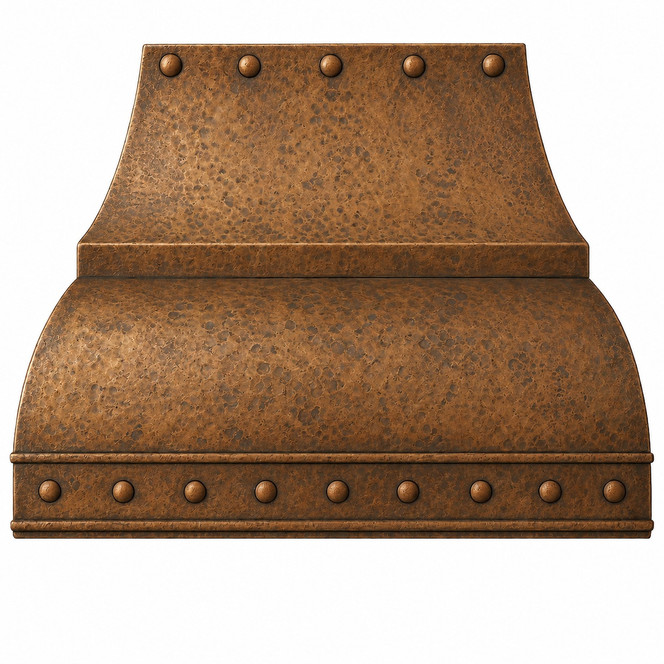
The Double Curved Copper Range Hood with Riveted Apron is shown in these lifestyle images as a sculptural handcrafted focal point for French country, old-world Tuscan, rustic transitional, European farmhouse, and Mediterranean kitchens. Its double-curved copper body, short concave neck, broad convex lower canopy, thick collar, deep boxed apron, rounded bead moldings, and oversized rivets give the hood strong architectural presence above the range. The design feels more dimensional than a simple bell hood and more decorative than a plain tapered canopy, making it useful for kitchens that need copper warmth, visible craft, and old-world character. Explore the double curved copper range hood with riveted apron to compare its profile, apron, rivets, and finish options. For product-specific planning details, read the double curved copper range hood riveted apron guide.
Blog Summary
- Focus: lifestyle image guide
- Product: double curved copper hood
- Shape: sculptural curved canopy
- Feature: riveted boxed apron
- Styles: five kitchen scenes
- Finish: hammered copper patina
Double Curved Copper Hood Images
Lifestyle images help show how this double curved copper range hood looks inside finished kitchens rather than as a product photo alone. Cabinet color, backsplash material, ceiling height, stone selection, lighting, flooring, and hardware all affect how the curved copper body appears. In one room, the hood may feel French country and refined. In another, it can read as Tuscan, Mediterranean, European farmhouse, or rustic transitional.
This hood stands out because the silhouette has two distinct movements. The upper neck curves inward, then the lower canopy expands outward into a broad apron. That layered volume gives the range wall depth and makes the hood feel more custom and architectural. For broader silhouette comparison, review the copper range hood shapes guide.
Design Highlights
- double curved copper profile
- short concave upper neck
- broad convex lower canopy
- thick collar transition
- deep boxed riveted apron
- rounded bead moldings
- old-world handmade character
French Country Kitchen Image
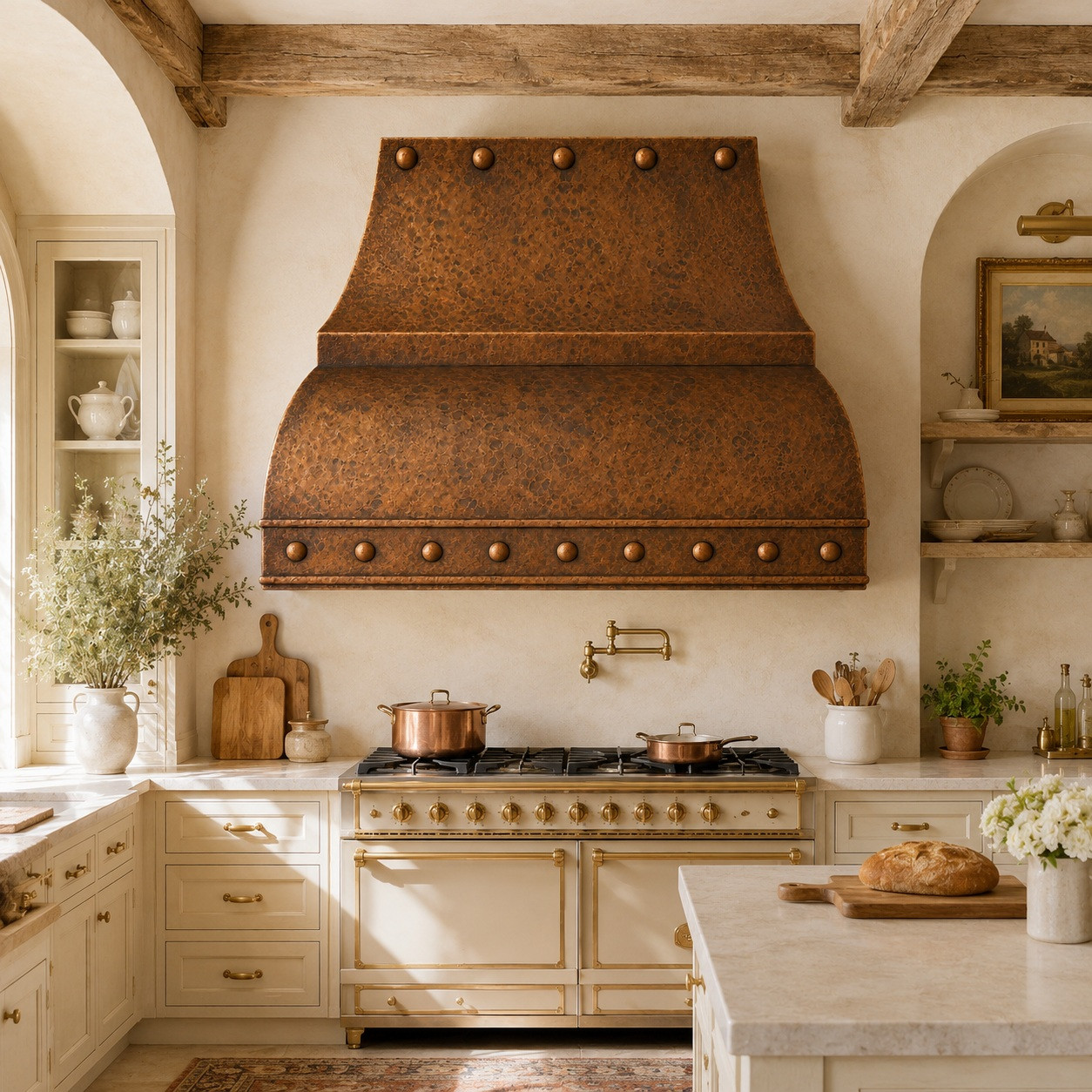
In a French country kitchen, the double curved copper hood feels graceful, warm, and architectural. French country interiors often include painted cabinetry, carved wood, limestone, marble, soft cream tones, muted gray-green finishes, antique-style faucets, and classic tile. The hood’s curved lower canopy softens the range wall, while the boxed apron and rivets provide enough structure to keep the design from feeling too delicate. The copper patina adds warmth against pale cabinetry and stone, making the hood the main handcrafted feature in the room. The thick collar and bead moldings also suit French-inspired interiors because they echo furniture details without becoming overly ornate. This scene works best when the surrounding materials support the hood with soft texture, natural stone, warm metal accents, and traditional craftsmanship. For related style context, review the French-style copper range hoods guide.
Old-World Tuscan Kitchen Image

In an old-world Tuscan kitchen, the hood feels substantial and grounded. Tuscan interiors often use travertine, warm plaster, carved wood, dark beams, wrought iron, stone counters, textured tile, and aged bronze hardware. The double curved body suits this setting because it has the visual weight needed for a large range wall, while the rounded canopy keeps the shape from becoming rigid. The riveted boxed apron adds a strong lower edge, making the hood feel anchored above the cooking area. Hammered copper works especially well with Tuscan materials because it reflects warm light and coordinates with earth-toned surfaces. The apron rivets can connect with iron chandeliers, dark cabinet pulls, forged brackets, and rustic hardware. For broader style comparison, review the Tuscan-style range hoods guide.
Rustic Transitional Kitchen Image
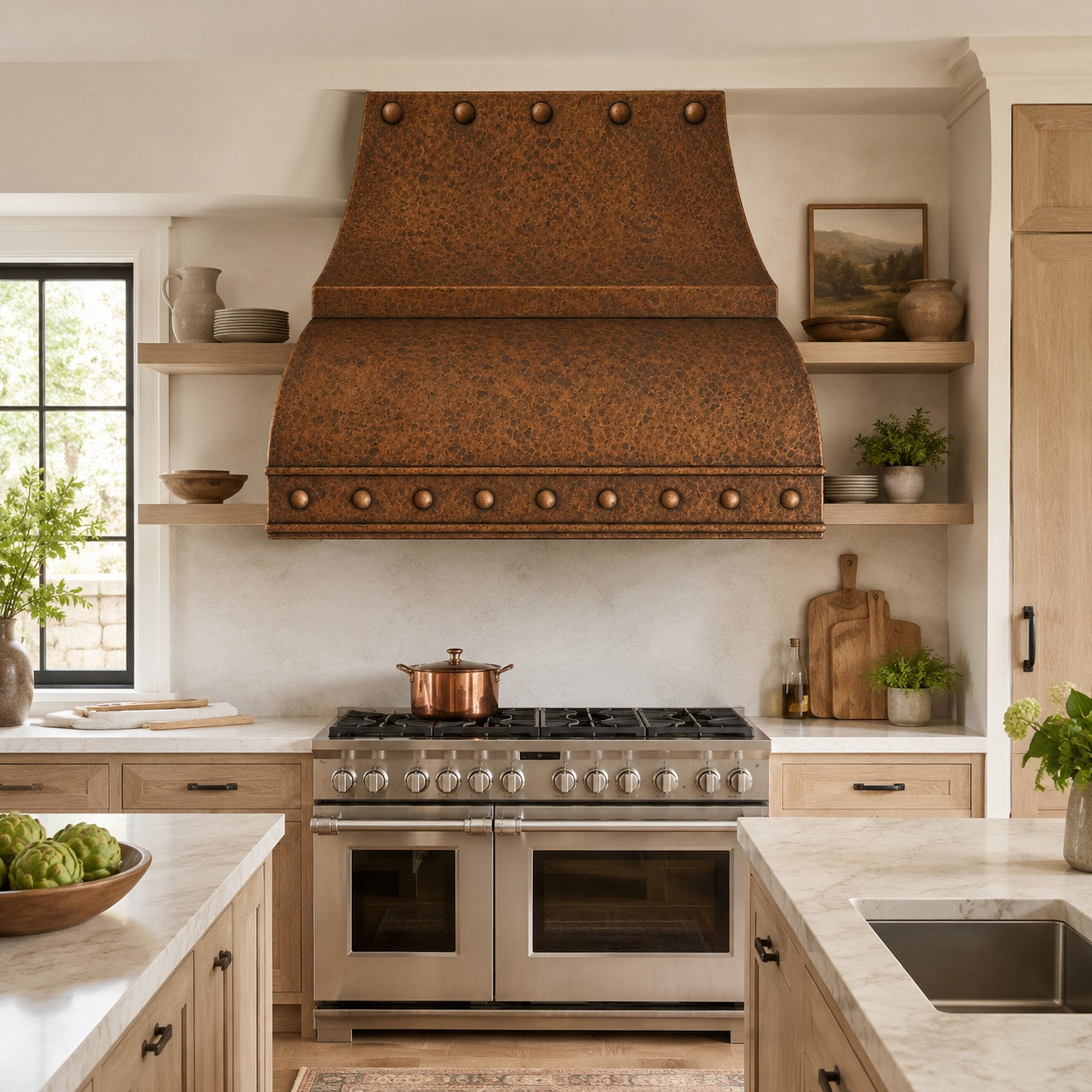
In a rustic transitional kitchen, the hood bridges handcrafted warmth and cleaner design restraint. Transitional interiors often use simple cabinetry, stone counters, neutral colors, controlled lighting, and limited ornament, while rustic elements may include wood beams, handmade tile, natural textures, and aged metal. This hood works because the profile is sculptural but not overloaded with scrolls or raised relief. The riveted apron adds character, yet the main visual impact comes from the curved copper volume. The hammered finish softens straight cabinet lines and polished stone surfaces, giving the room a more collected and handmade feeling. The hood can coordinate with white oak, painted shaker cabinetry, lightly veined stone, bronze fixtures, black hardware, and plaster-style walls. This scene shows how a traditional copper form can still work in a cleaner, updated kitchen when surrounding details are edited carefully.
European Farmhouse Kitchen Image
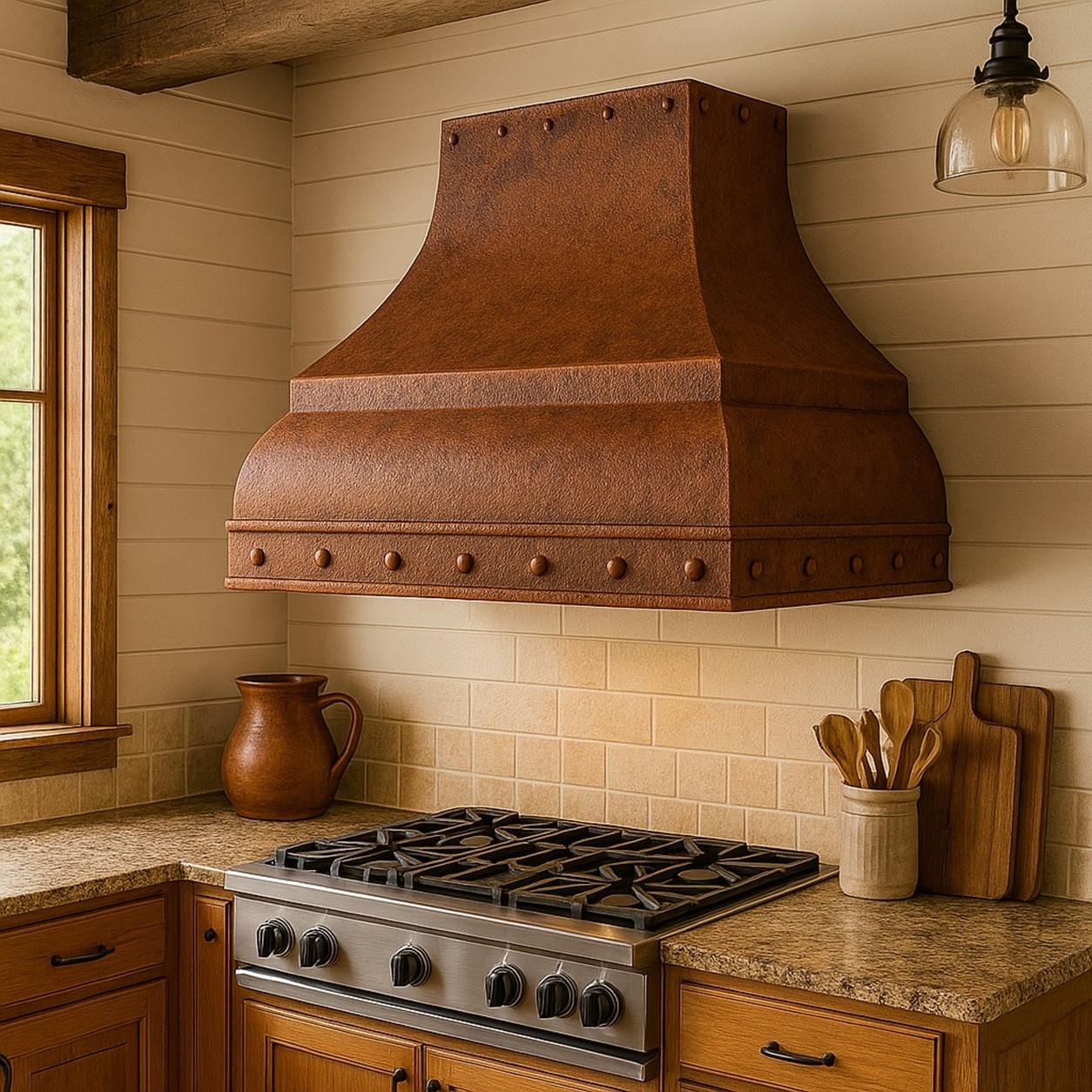
In a European farmhouse kitchen, the double curved copper hood adds artisan depth to a room built around natural materials and practical elegance. European farmhouse interiors may include limewashed walls, rustic beams, stone floors, inset cabinetry, open shelves, handmade tile, antique wood, and quiet metal finishes. The hood’s broad lower canopy gives the range area a hearth-like presence, while the concave neck and thick collar add a more refined architectural transition above it. The riveted apron provides a strong handcrafted detail without overwhelming the kitchen’s relaxed character. Copper works well in this setting because it brings warmth to stone, plaster, wood, and painted cabinetry. The hammered surface also helps the hood feel aged and authentic rather than new and glossy. For more old European range-wall context, review the old European copper range hood guide.
Mediterranean Kitchen Image

In a Mediterranean kitchen, the hood supports warm architecture, curved forms, handmade surfaces, and layered natural materials. Mediterranean interiors often combine plaster, limestone, travertine, patterned tile, walnut, iron lighting, bronze hardware, and sun-washed neutral colors. The double curved canopy feels appropriate because it has movement and volume, while the boxed apron gives the lower edge a clear architectural stop. The hammered copper finish brings warmth to cream, beige, terracotta, blue tile, stone, and dark wood. Rivets add small points of shadow that can coordinate with iron details, lantern lighting, and aged hardware. The hood is decorative enough to become the main focal point, but its ornament is concentrated in the apron and profile rather than spread across the whole face. For broader copper hood context, explore the Rustica House copper range hoods guide.
Riveted Apron Detail
The riveted apron is the strongest decorative feature of this hood. It grounds the lower edge, creates shadow, and gives the canopy a more substantial handcrafted identity. The oversized rivets add rhythm across the apron and help the hood feel assembled by hand rather than pressed or appliance-like.
This detail works especially well with wrought iron, bronze hardware, carved wood, stone counters, handmade tile, and old-world lighting. It can also give a transitional kitchen one strong artisan element when the surrounding cabinetry and backsplash are more restrained.
Double Curved Shape
The double curved shape gives this hood its sculptural personality. The concave upper neck pulls inward before the body expands into the broad convex canopy below. That movement creates depth, especially when the hood is viewed from an angle or installed in a kitchen with strong side lighting.
Because the shape already has presence, it does not need excessive ornament. The collar, apron, rivets, and hammered surface provide enough detail while allowing the curved copper body to remain the main design statement.
Hammered Copper Finish
The hammered copper surface gives the hood warmth, texture, and natural variation. Each mark catches light differently, creating small highlights and deeper low points across the curved body and apron. This makes the hood look handmade and helps the copper surface feel alive inside the kitchen.
Patina choice changes the mood of the hood. A darker finish can feel more old-world and dramatic, while a lighter or hand-polished finish can feel brighter and more refined. For finish comparison, review the copper patina finish options guide before choosing the final look.
Frequently Asked Questions
What makes this copper hood different?
This hood combines a short concave neck, broad convex lower canopy, thick collar, boxed riveted apron, rounded bead moldings, and hammered copper texture. The result is sculptural, dimensional, and handcrafted.
Which kitchen styles fit this hood?
This hood works well in French country, old-world Tuscan, rustic transitional, European farmhouse, Mediterranean, traditional, villa-style, and warm custom kitchens.
Is every hood exactly identical?
No. Each hood is handmade, so hammering, patina tone, rivet placement, apron detail, curvature, seams, and small artisan marks may vary. These differences are part of the handcrafted character.
Conclusion
The double curved copper range hood with riveted apron brings sculptural copper volume, rounded moldings, a deep boxed apron, visible rivets, and handmade surface movement into the kitchen. These lifestyle images show how the hood adapts to French country, old-world Tuscan, rustic transitional, European farmhouse, and Mediterranean interiors while keeping its artisan copper identity warm, architectural, and visually memorable.