 US Dollar
 Euro
Euro
 Australian Dollar
 Canadian Dollar
 Polish Zloty
 British Pound

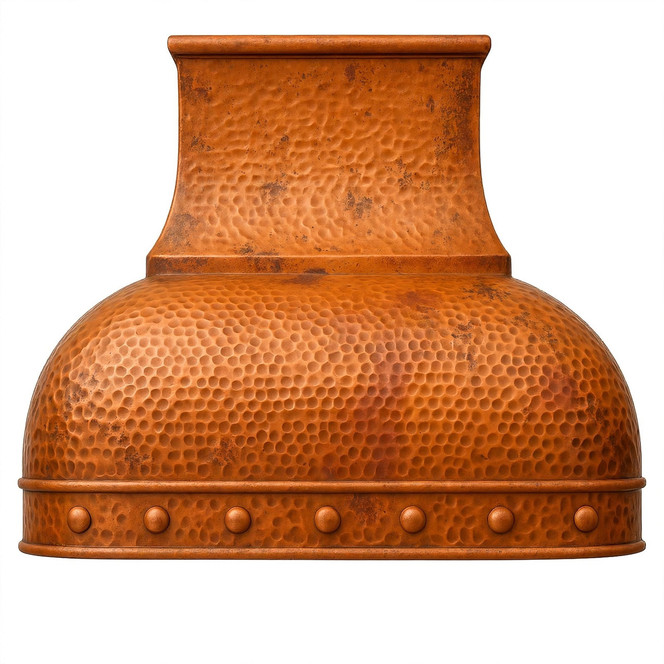
Dome Bell Copper Range Hood with Riveted Apron Lifestyle Guide shows how a rounded handcrafted copper hood can shape Egyptian Revival, Moorish transitional, Portuguese, Marrakech, and Venetian kitchen interiors. This made-to-order dome bell hood combines a curved copper canopy, riveted lower apron, hammered surface, chimney, crown, and warm patina for a dramatic architectural focal point above the range. Each hood has rustic handmade character, so patina movement, hammering variation, tool marks, rivet differences, and small artisan irregularities should be expected. No two copper hoods are identical, and those details are part of the product’s authenticity. Explore the dome bell copper range hood to review custom sizing, finish choices, and insert preparation.
Blog Summary
- Shape: Rounded dome bell body
- Apron: Riveted lower detail
- Texture: Hammered copper surface
- Styles: Global heritage kitchens
- Character: Handmade variation
Lifestyle Guide Overview
A dome bell copper range hood with riveted apron is especially effective in kitchens that use historic, Mediterranean, North African, Iberian, and Old World design influences. The curved copper body adds softness above the cooking surface, while the riveted apron gives the lower edge a stronger handcrafted metalwork detail. This hood can feel traditional, dramatic, or refined depending on the room palette, tile, cabinetry, plaster, stone, and lighting. For a full product planning overview, review the dome bell hood guide before choosing the final kitchen direction.
Egyptian Revival Kitchen
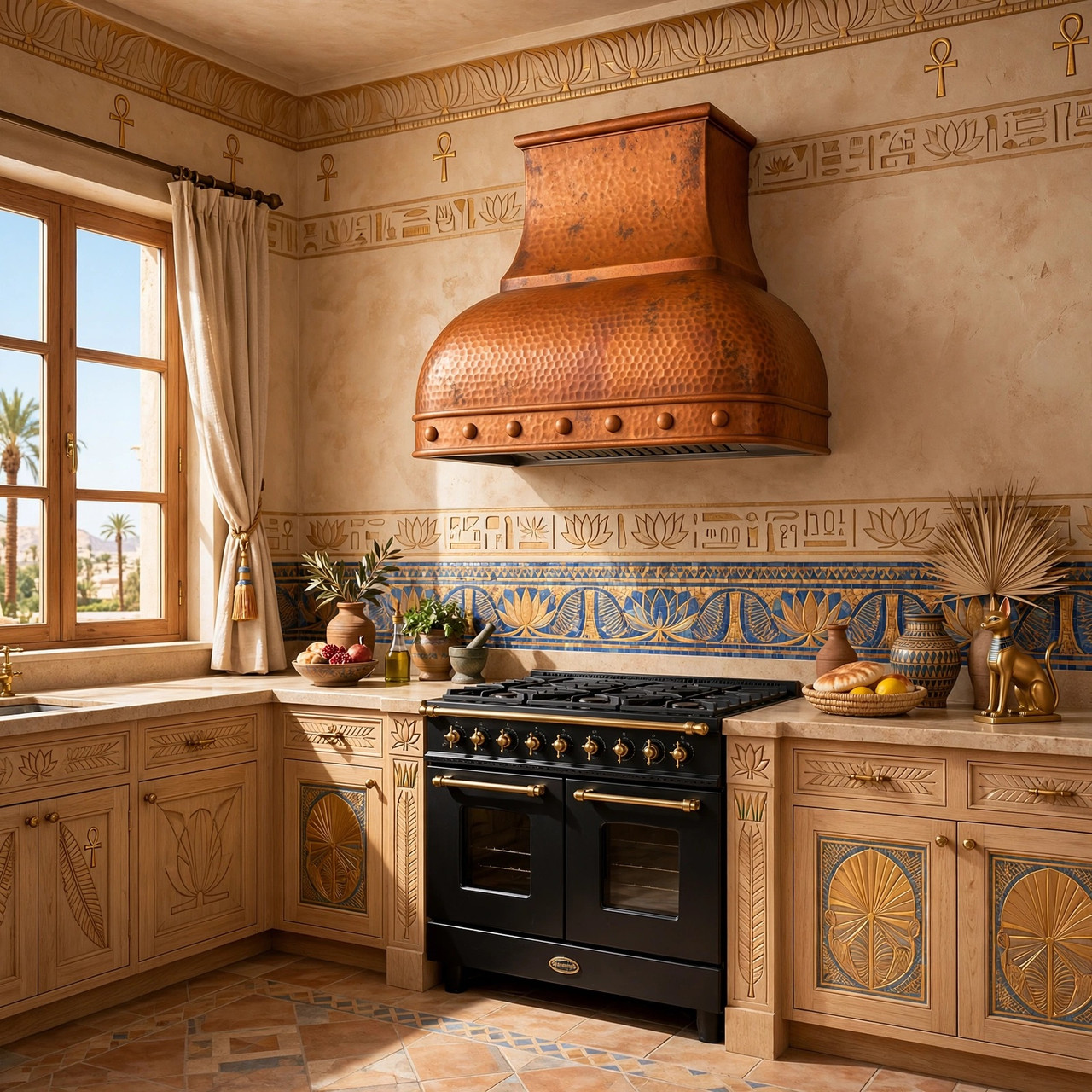
In an Egyptian Revival kitchen, the dome bell copper hood can become a strong ceremonial focal point above the range. The rounded canopy works well with geometric tile, warm stone, plaster walls, dark wood, black metal accents, and gold or bronze details. The riveted apron adds a crafted border that can echo ancient metalwork, architectural banding, and decorative hardware. A darker antique or coffee patina can deepen the hood and make the copper feel historic, while natural copper can brighten the room. Because each hood is handmade, slight finish variation and hammering differences add the aged character that suits this style.
Egyptian Pairings
- Tile: Geometric border patterns
- Stone: Warm limestone tones
- Metal: Bronze or black accents
- Wood: Dark cabinet finish
- Light: Warm dramatic glow
Moorish Style Kitchen

A Moorish transitional kitchen can use this copper hood to bridge traditional ornament and cleaner modern proportions. The dome bell shape supports arched openings, patterned tile, plaster walls, carved details, and warm metal accents, while the riveted apron gives the hood a structured lower edge. In a transitional setting, keep cabinetry and counters controlled so the copper and tile do not compete. The hood works especially well with zellige tile, stone counters, warm white walls, dark hardware, and brass or bronze fixtures. For broader shape comparison, the copper hood shapes guide helps explain how curved, bell, and apron profiles differ.
Moorish Pairings
- Walls: Plaster or limewash
- Tile: Zellige or patterned field
- Arch: Curved architectural forms
- Hardware: Bronze or black iron
- Cabinets: Clean transitional lines
Portuguese Kitchen
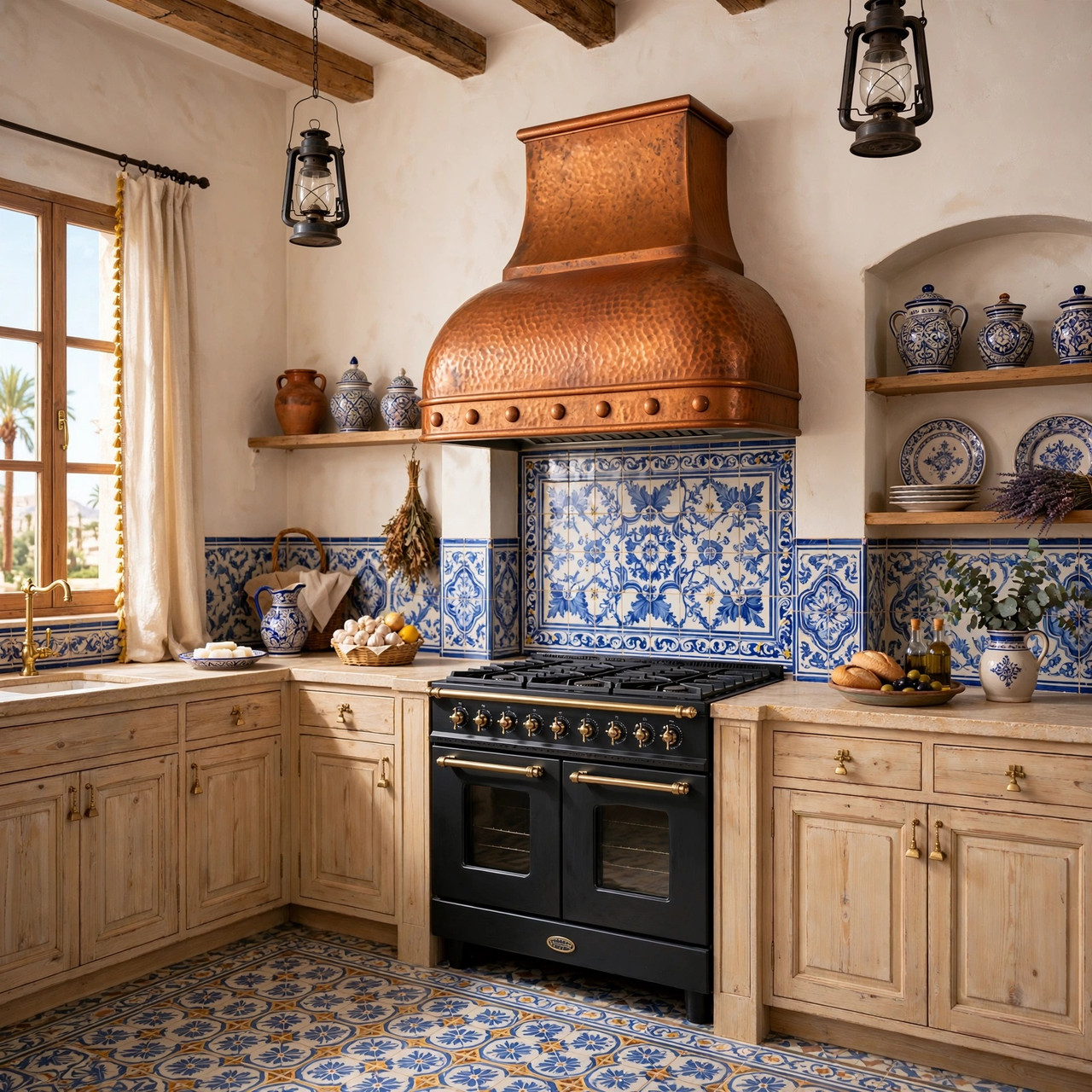
In a Portuguese-inspired kitchen, the dome bell copper hood pairs naturally with patterned tile, blue-and-white ceramics, stone floors, painted cabinetry, and warm metal hardware. The copper surface adds contrast to cooler tile palettes, while the rounded canopy softens the range wall. The riveted apron can act like a metal border between the hood body and backsplash, helping the hood feel grounded above the cooking area. A natural or antique patina can work well depending on the cabinet color and tile intensity. To compare related curved profiles, browse bell-shaped copper range hoods.
Portuguese Pairings
- Tile: Blue-and-white pattern
- Cabinets: Painted wood fronts
- Stone: Limestone or terracotta
- Metal: Aged brass or bronze
- Finish: Natural or antique copper
Marrakech Kitchen

A Marrakech kitchen can use the dome bell copper hood as a warm metal centerpiece among patterned tile, plaster walls, carved wood, brass lighting, and saturated earth tones. The rounded canopy feels compatible with arched openings and softened architectural lines, while the riveted apron adds handmade rhythm at the lower edge. Copper patina is important in this style because it can either blend with warm clay tones or stand out against blue, green, or white tile. If the backsplash is highly decorative, choose a finish that supports the palette without overwhelming it. Handmade variation gives the hood a naturally aged and collected appearance.
Marrakech Pairings
- Tile: Patterned Moroccan field
- Walls: Warm plaster finish
- Wood: Carved or dark detail
- Metal: Brass and copper accents
- Color: Clay, blue or green
Venetian Kitchen
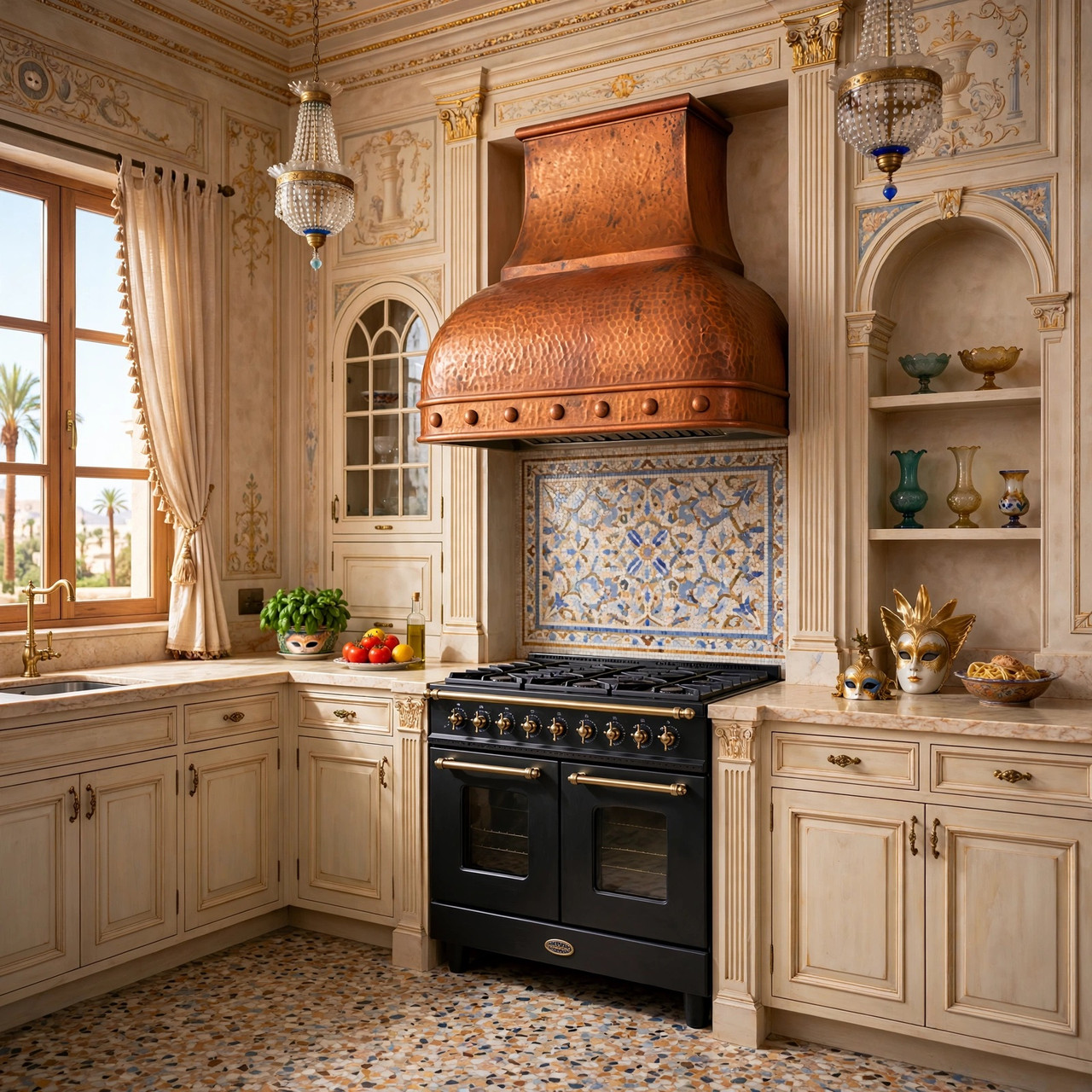
In a Venetian kitchen, this dome bell copper hood can feel elegant, aged, and architectural. The rounded form pairs well with plaster, marble, limestone, muted tile, painted cabinetry, antique brass, and warm lighting. The riveted apron gives the hood a subtle historic metalwork detail without making it overly heavy. A deeper patina can create an old palazzo mood, while natural copper can brighten the range wall. Venetian-inspired interiors often rely on layered surfaces, so the backsplash should be chosen carefully. The copper hood should remain visible as the central handcrafted feature above the range.
Venetian Pairings
- Stone: Marble or limestone
- Walls: Soft plaster surface
- Cabinets: Painted or aged wood
- Hardware: Antique brass
- Light: Warm reflective glow
Bell Hood Character
The bell shape is one of the most adaptable copper hood profiles because it creates movement without sharp geometry. This dome bell version feels especially warm because the canopy is rounded and substantial, while the riveted apron adds a crafted lower border. Compared with a simple plain bell hood, this model has more rustic metal detail. Compared with highly decorative apron hoods, it stays more restrained. For more design context, read the bell shape copper hood guide.
Curved Apron Comparison
Buyers who like the riveted lower edge may also compare this design with curved apron copper hoods. A curved apron hood usually emphasizes the lower apron shape as the main design feature, while this dome bell hood emphasizes the rounded canopy and uses the riveted apron as a supporting detail. The difference matters when choosing a range wall focal point. A curved apron design can feel more architectural or sculptural, while the dome bell form feels softer and more traditional. To compare those silhouettes, browse curved apron copper range hoods.
Handcrafted Copper Variation
This hood is made by artisans, not stamped by machine, so the finished piece will carry signs of handwork. Hammer marks may vary across the canopy, rivets may show slight placement differences, seams may have small irregularities, and patina may shift in tone across curves and edges. Those details are normal for rustic copper work. They should be seen as part of the hood’s charm and authenticity, not as defects. In global heritage kitchens, this variation supports the look of a collected, handmade, and time-worn interior.
Handmade Details
- Hammering: Natural surface variation
- Patina: Tonal movement
- Rivets: Artisan placement
- Seams: Handmade construction
- Result: No identical hoods
Finish and Patina
Finish selection changes how the hood reads in each lifestyle setting. A coffee or antique patina can support Egyptian Revival, Marrakech, Venetian, and Old World looks by adding depth and age. Natural copper can brighten Portuguese kitchens with patterned tile or lighter cabinetry. Honey copper can soften Moorish transitional and Mediterranean-inspired spaces. Oxidized accents can work when the room already includes green, blue, or aged metal tones. Because the dome body is curved, patina variation may appear stronger along highlights, apron edges, rivets, and crown transitions.
Backsplash Planning
The backsplash should support the copper hood without hiding its riveted apron. Patterned tile can work beautifully in Egyptian Revival, Portuguese, Moorish, and Marrakech kitchens, but it should be coordinated with the copper finish so the wall does not feel crowded. A quieter plaster, stone slab, limestone, or marble surface may work better in Venetian or transitional kitchens. If the backsplash is colorful, let the copper patina repeat one warm tone from the palette. If the backsplash is neutral, the hood can carry more visual warmth and texture.
Cabinet and Hardware
Cabinet finish should support the copper rather than compete with it. Painted cabinets can create a softer European look, while dark wood gives the hood a stronger historic presence. White oak, walnut, cream, taupe, green, and blue cabinetry can also work when coordinated with patina and tile. Hardware should connect with the copper through bronze, antique brass, black iron, or aged metal finishes. In more decorative rooms, keep cabinet profiles controlled so the dome canopy and riveted apron remain the main handcrafted elements.
Hardware Pairings
- Bronze: Warm aged connection
- Brass: Venetian or Moroccan glow
- Iron: Spanish and Moorish depth
- Copper: Repeated metal warmth
- Black: Strong architectural contrast
Project Background
Rustica House focuses on handcrafted architectural products influenced by traditional artisan methods, rustic design, and custom metalwork. That background matters for this hood because the appeal comes from material character, handmade texture, and design variation rather than perfect factory uniformity. Buyers who want to understand the company’s history, production approach, and custom product focus can read the Rustica House story before planning a made-to-order hood.
Custom Planning Support
Before ordering a dome bell copper hood, buyers should prepare measurements, photos, ceiling height, range width, cabinet layout, backsplash material, mounting preference, duct route, and insert information. Lifestyle images can help define the desired atmosphere, but the final hood must be planned for the actual kitchen. This is especially important when the backsplash uses patterned tile or when the hood will be installed in an island layout. For custom questions, finish guidance, sizing support, or insert preparation, contact Rustica House.
Design Summary
A dome bell copper range hood with riveted apron can adapt to many global heritage kitchen styles because it combines rounded form, warm metal, rustic handwork, and a structured lower detail. Egyptian Revival kitchens can emphasize geometry and bronze depth. Moorish transitional spaces can balance arches and clean cabinetry. Portuguese kitchens can pair copper with patterned ceramics. Marrakech kitchens can use rich color and plaster texture. Venetian kitchens can use stone, painted cabinetry, and antique brass. Across all styles, the hood’s handmade variation ensures each piece feels individual.
Final Design Guidance
Dome Bell Copper Range Hood with Riveted Apron Lifestyle Guide shows how one handcrafted copper hood can shift across Egyptian Revival, Moorish transitional, Portuguese, Marrakech, and Venetian kitchens. Choose this design when the kitchen needs a rounded copper focal point with more rustic detail than a plain bell hood. Pair it with plaster, patterned tile, stone, painted or dark wood cabinets, bronze hardware, antique brass, black iron, and a patina that supports the room palette. Confirm width, height, depth, insert preparation, mounting type, backsplash conditions, and finish choice before production.