 US Dollar
 Euro
Euro
 Australian Dollar
 Canadian Dollar
 Polish Zloty
 British Pound

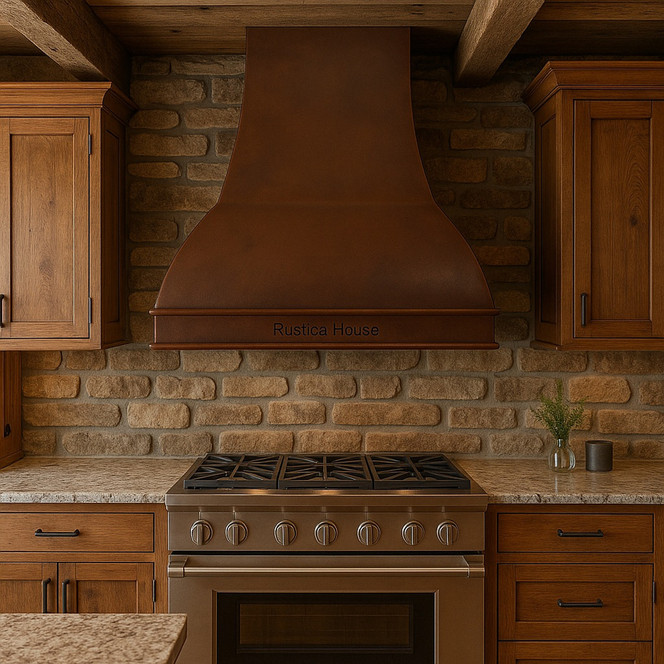
Hammered Copper Range Hood with Smooth Bell Silhouette Guide explains how proportion, texture, patina, construction, and ventilation shape this refined kitchen centerpiece. The gently swelling bell canopy transitions into a squared apron, while the tapered chimney gives the composition height and visual order. Light hammering and an espresso patina add artisan depth without making the surface feel overly rustic. This design suits traditional, Spanish Revival, Tuscan, Hacienda, and transitional kitchens. Explore the hammered copper bell hood to compare its silhouette, finish, customization, and ventilation options.

Bell Silhouette Overview
The bell silhouette gives this copper range hood its calm and recognizable form. The lower canopy begins narrow near the chimney, expands gently through the center, and settles into a squared apron. This gradual curve avoids abrupt changes and allows the hood to feel sculptural without becoming ornate. The shape creates a substantial focal point above the range while preserving softness. It works especially well in kitchens with framed cabinetry, plaster walls, handmade tile, stone backsplashes, or architectural woodwork. Buyers should evaluate the curve, apron height, chimney taper, and overall scale before selecting final dimensions.
Why the Form Endures
A successful bell hood feels timeless because its visual strength comes from proportion rather than trend-driven decoration. The smooth curve introduces movement, while the straight chimney gives the eye a stable vertical reference. Together, these elements create a balanced composition that remains readable from across the room. The design can support traditional interiors, yet its restrained detailing also fits transitional kitchens. It does not depend on scrollwork, heavy straps, or elaborate embossing. Instead, the form relies on carefully controlled lines, material depth, and a warm finish to create lasting architectural presence.
Silhouette Benefits
- Creates a calm focal point
- Softens straight cabinetry
- Supports classic interiors
- Fits transitional kitchens
- Highlights copper texture
Tapered Chimney Design
The tapered chimney organizes the hood and gives the composition visual lift. Its straight sides contrast with the curved canopy below, preventing the design from feeling too soft. As the chimney narrows upward, it reduces visual weight near the ceiling and helps the hood feel proportionate in taller rooms. Clean chimney planes also allow the copper finish to display subtle light gradients. In kitchens with limewashed plaster, stone, or simple tile, the chimney becomes a strong architectural line. Its final height should respond to ceiling conditions, cabinet proportions, and the mounting position above the cooktop.
Squared Apron Structure
The apron creates the visual foundation of the hood. Its squared form gives the curved canopy a stable lower edge and helps frame the cooking surface. A double beaded molding adds shallow relief and a controlled shadow line without making the apron feel heavily decorated. The beads reinforce the perimeter and give the lower edge a more finished appearance. This detail works well in kitchens that favor craftsmanship over ornament. Buyers can coordinate the apron with cabinet rails, counter edges, or nearby trim. The apron should remain proportionate so it supports the bell shape rather than overpowering it.
Apron Design Details
- Squared lower profile
- Double beaded molding
- Controlled shadow depth
- Strong cooking zone frame
- Restrained artisan detail
Light Hammered Texture
The hammered texture is intentionally refined. Instead of deep, irregular dimples, the surface uses light and even hammering to create subtle movement. Small impressions catch light across the copper without producing a heavily rustic appearance. This treatment allows the bell silhouette and espresso patina to remain the primary features. Light hammering is especially useful in transitional kitchens, where handmade character must coexist with clean cabinetry and quiet stone surfaces. It also strengthens the visual richness of the metal while avoiding competition with pronounced wood grain, patterned tile, or heavily veined countertops.
Espresso Patina Selection
The dark coffee to espresso patina gives the hood warmth, depth, and an aged appearance. Brown tonal movement creates gentle clouds across the hammered surface, while darker areas often gather near moldings, edges, and seams. This natural gradient helps define the bell form. Espresso copper pairs beautifully with cream plaster, light limestone, warm wood, antique brass, and dark iron. In daylight, the surface reveals more color variation. Under warm evening light, it appears deeper and more grounded. Buyers should review patina samples in the kitchen’s actual lighting before confirming the finish.
Patina Pairing Ideas
- Cream plaster walls
- Warm oak cabinetry
- Antique brass hardware
- Dark iron lighting
- Honed limestone counters
Material and Structure
A quality copper hood needs more than an attractive exterior. The metal should have enough substance to resist visible distortion during heating and cooling cycles. Internal framing supports the canopy, chimney, and ventilation insert while helping the hood remain aligned during installation. Seams should be carefully joined and finished so the silhouette reads as one continuous form. Strong construction also helps limit vibration from higher-powered blowers. Before ordering, buyers should ask about copper thickness, internal support, mounting requirements, insert weight, and installation blocking. Good structure protects both performance and appearance.
Ventilation Insert Planning
The decorative copper shell must be designed around the ventilation insert. The insert controls airflow, filters, lighting, fan speeds, and maintenance access. Choose the system according to cooktop size, fuel type, heat output, cooking habits, and duct configuration. High-output gas ranges may require stronger airflow than electric or induction cooktops. The curved canopy can support effective capture when the insert is positioned correctly. Baffle filters are often practical because they are durable and easy to clean. Select the insert before production so the hood can be fabricated around exact dimensions and mounting points.
Insert Planning Checks
- Confirm cooktop output
- Select blower strength
- Review filter access
- Check insert dimensions
- Plan the duct route
Choosing Hood Width
Hood width affects capture performance and visual balance. Common widths include 30, 36, and 42 inches, but custom sizes can accommodate larger cooking surfaces. Many buyers choose a hood slightly wider than the range to help collect steam and smoke escaping from side burners. This is especially useful in open kitchens and high-heat cooking environments. The width should also relate to adjacent cabinets, shelves, windows, and backsplash boundaries. A hood that is too narrow may look weak, while one that is unnecessarily wide can dominate the wall. Accurate measurements should be confirmed before fabrication.
Height and Depth
Overall height should respond to the ceiling, chimney proportion, apron size, and recommended mounting clearance. Taller kitchens often benefit from a longer chimney, while lower ceilings need a more compact composition. Depth should provide adequate coverage over the cooking surface without projecting awkwardly into the room. Standard wall installations often align the hood with the range and cabinetry, while deeper professional appliances may require custom depth. Island configurations generally need broader capture because air can approach from every side. Final dimensions should be coordinated with the installer, cabinet plan, and selected ventilation system.
Dimension Planning
- Measure range width
- Confirm ceiling height
- Check cabinet spacing
- Review mounting clearance
- Match cooktop depth
Wall and Island Options
A wall-mounted version places the hood against the backsplash and makes the front silhouette the dominant view. This configuration works well between cabinets or on an open cooking wall. An island hood must be fully finished because it can be seen from every direction. Its canopy may also need increased depth or width for effective capture. Island installation requires secure ceiling support and early duct planning. The smooth bell form can work in either configuration, but proportions should be adjusted to the setting. Buyers should choose the mounting style before production begins.
Backsplash Coordination
The backsplash should complement the gentle curves and dark copper finish. Limewashed plaster creates a soft background that highlights tonal depth. Handmade subway tile or zellige adds surface movement without competing with the hood. Honed limestone brings a relaxed classical quality, while simple ceramic field tile keeps the copper as the main focal point. Strong mosaics or highly contrasting patterns can overwhelm the smooth bell silhouette. If decorative tile is desired, keep the palette controlled or use it as a framed accent. The hood and backsplash should read as one coordinated range-wall composition.
Backsplash Options
- Limewashed plaster
- Handmade subway tile
- Quiet zellige surfaces
- Honed limestone slabs
- Simple ceramic fields
Cabinetry and Hardware
Frame-and-panel cabinetry reinforces the hood’s traditional character, while shaker cabinets create a more transitional interpretation. Dark espresso patina works naturally with oil-rubbed bronze, antique brass, and black iron hardware. Lighter cabinets create contrast and help the hood stand out, while dark wood produces a deeper, more enveloping palette. Hardware should support the hood without copying every detail. A few repeated warm metal tones are enough to create continuity. Avoid too many competing finishes around the range wall. The copper should remain the dominant material while nearby accents provide balance.
Lighting the Copper
Lighting changes the way hammered copper and espresso patina appear throughout the day. Warm LEDs bring out brown and reddish undertones, while cooler daylight emphasizes darker gray-brown movement. Task lights should be positioned to illuminate the cooktop without creating harsh glare on the canopy. Dimmers are useful because they allow the kitchen mood to shift from cooking brightness to softer evening light. Ribbed glass pendants, iron chandeliers, or simple recessed fixtures can all work. The goal is to reveal the copper texture gently rather than produce bright reflections that flatten the patina.
Counter and Floor Pairings
Soapstone supports the hood with dark, velvety depth. Honed marble introduces cooler contrast without excessive shine. Limestone creates a warm and relaxed Old World atmosphere. Quiet quartz can work in transitional kitchens when the veining remains restrained. Reclaimed oak floors add warmth, while terra-cotta tile strengthens Spanish Revival or Hacienda character. Patterned cement tile can also work if the colors remain earthy and controlled. The surrounding materials should create layers of texture without competing with the hammered copper. Balance is more important than repeating every rustic feature.
Material Companions
- Honed marble counters
- Dark soapstone surfaces
- Reclaimed oak floors
- Terra-cotta floor tile
- Warm limestone details
Daily Use and Ergonomics
The hood should be mounted at the height recommended for the selected insert and cooking appliance. Proper clearance supports capture, visibility, headroom, and safe operation. Controls should remain easy to reach, while filters should be removable without special tools. A remote blower can reduce kitchen noise when the duct layout allows it. Quiet ventilation encourages regular use and helps protect cabinets, fabrics, and finishes from grease and odors. The hood should be beautiful, but daily comfort and maintenance access are equally important. Good planning makes the design easier to enjoy.
Care and Maintenance
Use mild soap, warm water, and a soft cloth to clean the copper surface. Avoid abrasive pads, acidic products, harsh chemicals, and aggressive degreasers because they can alter the patina unevenly. Dry the metal after cleaning to reduce streaks and water marks. A suitable neutral wax may help protect the finish when recommended. Expect some natural patina evolution over time because copper is a living material. Clean the filters according to cooking frequency and manufacturer guidance. Periodic duct inspection also supports safe and efficient ventilation.
Care Guidelines
- Use mild soap only
- Avoid abrasive pads
- Dry the copper surface
- Clean filters regularly
- Protect the patina
Customization Options
The bell silhouette can be customized while preserving its calm design. Buyers may adjust hood width, overall height, depth, apron proportion, bead profile, surface texture, and patina range. Discreet straps or rivets can add heritage character, although excessive decoration may interrupt the smooth form. Pot rails can be included when they serve a practical purpose. The hood can also be coordinated with copper sinks, faucets, lighting, or table accents elsewhere in the kitchen. Custom details should reinforce the composition rather than compete with the bell canopy and tapered chimney.
Buying Guide Checklist
- Confirm copper thickness
- Review internal framing
- Request patina samples
- Select the insert early
- Measure burner spread
- Plan minimal duct bends
- Confirm filter access
- Review apron proportions
- Document care guidance
Installation Planning
Installation should be coordinated with cabinetry, electrical work, ducting, counters, and backsplash construction. Wall blocking and ceiling support must be completed before final finishes. The hood should be dry fitted to confirm alignment, mounting points, and insert access. Protect the copper patina during nearby construction. Test the blower and lighting before the backsplash is fully completed. Exterior duct penetrations should be sealed carefully, and the installed system should be tested for capture and airflow. Keep product details, insert information, and service contacts available for future maintenance.
Value and Longevity
Handcrafted copper range hoods reflect skilled labor, custom fabrication, quality materials, and specialized finishing. A well-built hood can remain a major kitchen feature for decades when maintained properly. Copper can also be professionally repaired or refinished if needed. Its long service life makes it more than a temporary decorative purchase. Lower-cost imitations may compromise metal thickness, framing, joinery, or finish consistency. Those differences often become visible through distortion, vibration, difficult installation, or premature wear. Investing in sound construction protects the design, ventilation system, and long-term value of the kitchen.
Final Design Guidance
Hammered Copper Range Hood with Smooth Bell Silhouette Guide shows how shape, proportion, hammering, patina, construction, ventilation, and surrounding materials work together. The gently curved canopy brings calm movement, while the tapered chimney adds visual order. A squared apron and double beading provide restrained architectural depth. Light hammering keeps the surface refined, and espresso patina creates warmth without excessive brightness. Visit our hood category for all Rustica House copper range hood designs. When specified with quality framing, an appropriate insert, accurate dimensions, and a coordinated backsplash, this hood becomes a functional focal point designed to serve the kitchen beautifully for many years.