 US Dollar
 Euro
Euro
 Australian Dollar
 Canadian Dollar
 Polish Zloty
 British Pound

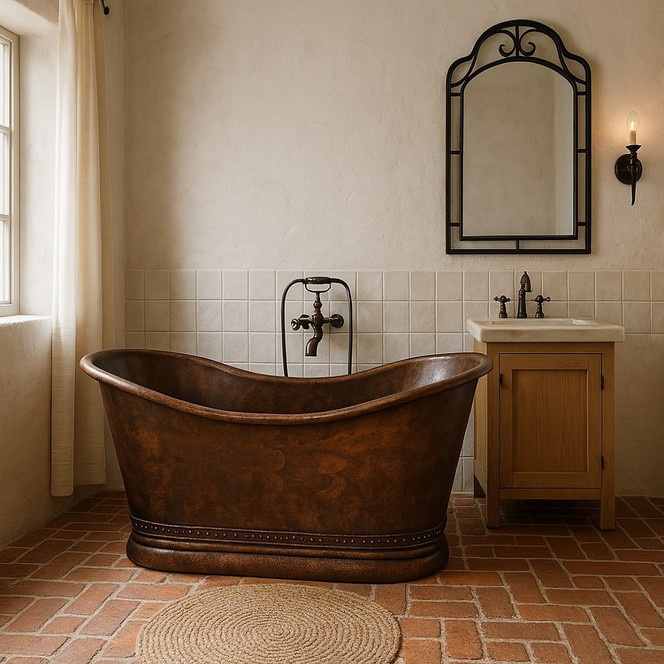
Where to Buy a Deep Copper Bathtub: Custom Soaking Tubs Made for Comfort
Knowing where to buy a deep copper bathtub begins with finding a manufacturer that can customize the tub around your body, bathroom dimensions, preferred installation, and soaking requirements. Unlike fiberglass, acrylic, cast iron, or molded stone tubs, handcrafted copper bathtubs are formed individually from metal sheets, making it possible to adjust the length, width, depth, silhouette, drain location, and finish. A custom deep tub can provide a more immersive soaking experience while becoming a warm architectural centerpiece for farmhouse, Spanish Colonial, rustic, transitional, or luxury bathrooms. Explore handcrafted patina copper bathtubs when standard retail dimensions do not provide the depth or character required for your project.
Blog Summary
- Product: Deep copper bathtub
- Best For: Full-body soaking
- Options: Custom depth and dimensions
- Styles: Freestanding or drop-in
- Craft: Handmade in Mexico

What Makes a Bathtub Deep?
A deep bathtub allows the water level to cover more of the body than a conventional shallow tub. The useful soaking depth depends on the distance between the tub floor and the overflow opening or upper rim, depending on the plumbing configuration.
Overall exterior height alone does not determine soaking depth. Pedestals, feet, decorative bases, rim thickness, interior slope, and drain placement can all affect the amount of usable water inside the basin.
Why Standard Bathtubs May Not Be Deep Enough
Many mass-produced bathtubs are manufactured in fixed molds. Their length, width, interior depth, and slope are predetermined, leaving homeowners with limited flexibility when they need a deeper or more spacious bathing area.
Changing a molded fiberglass, acrylic, cast-iron, or stone design may require completely new tooling, which often makes one-off customization impractical or expensive.
Why Copper Is Ideal for Custom Depth
A copper bathtub is formed from individual metal sheets rather than a rigid production mold. Artisans can cut and shape the copper according to the requested dimensions, making it easier to increase the wall height or modify the interior profile.
This fabrication method allows the tub to be tailored to the bathroom and the person who will use it instead of forcing the homeowner to choose from a limited set of factory sizes.
Customizable Features
- Length: Adjusted to room size
- Width: Personalized for comfort
- Depth: Increased for soaking
- Shape: Oval or custom profile
- Drain: Center or selected location
Handcrafted Copper Versus Molded Materials
Acrylic and fiberglass tubs are lightweight and widely available, but their dimensions are generally limited to existing molds. Cast iron is durable but extremely heavy and difficult to customize. Stone offers substantial visual impact but requires significant structural support and specialized fabrication.
Handmade copper provides a balance of customization, durability, manageable weight, and artisan character that is especially valuable for deep soaking tub projects.
Freestanding Deep Copper Bathtubs
A freestanding copper bathtub displays the complete exterior and can become the visual center of the bathroom. These tubs may be placed against a wall, near a window, or within an open bathing area, depending on plumbing and circulation requirements.
Explore freestanding copper tubs when the bathroom has enough floor space to appreciate the metalwork from several angles.
Freestanding Benefits
- Full Visibility: Exposed copper exterior
- Flexible Placement: Multiple room layouts
- Statement Design: Strong focal point
- Custom Shape: Artisan silhouette
- Easy Access: Open surrounding space
Drop-In Deep Copper Bathtubs
A drop-in copper bathtub is installed within a platform or framed surround. This configuration allows the surrounding structure to provide a convenient ledge for toiletries, towels, candles, or decorative objects.
A deeper drop-in model may be easier to enter when the platform is carefully designed with steps, grab bars, or an appropriate deck height. Review additional drop-in copper bathtub ideas when planning a built-in soaking area.
Why Pedestal and Clawfoot Tubs Require Careful Planning
Pedestal bases and claw feet elevate the basin above the finished floor. When extra depth is added to the tub itself, the total step-over height may become uncomfortable or difficult for some users.
These elevated styles can still be produced as deep tubs, but entry, exit, balance, and accessibility should be evaluated carefully before ordering.
Height Considerations
- Basin Depth: Interior soaking area
- Base Height: Additional elevation
- Rim Height: Entry clearance
- User Mobility: Safe access planning
- Steps: Optional assistance
Floor-Mounted Tub Designs
Tubs that rest directly on their lower body or flat base often provide a more practical foundation for deep soaking designs. They reduce unnecessary elevation and can simplify entry compared with highly raised clawfoot or pedestal models.
This configuration works well in farmhouse, transitional, contemporary, and Spanish Colonial bathrooms where the tub should feel substantial but not overly ornate.
Choosing the Right Interior Depth
The ideal depth depends on the user’s height, preferred posture, mobility, and desired water coverage. A taller person may need additional length as well as depth to avoid sitting too upright or bending the knees excessively.
Before production, consider the shoulder position, back slope, interior floor length, and expected water level rather than focusing only on the exterior tub height.
Measure the User, Not Only the Bathroom
Room dimensions determine whether the tub will fit, but the user’s body determines whether it will be comfortable. Seated hip-to-shoulder height, leg length, shoulder width, and preferred reclining angle can all influence the final specifications.
A custom tub should provide enough room to soak comfortably without making entry, exit, or cleaning unnecessarily difficult.
Comfort Measurements
- Seated Height: Water coverage goal
- Leg Length: Interior floor space
- Shoulder Width: Comfortable basin width
- Back Angle: Reclining support
- Step-Over: Safe rim height
Bathroom Space Requirements
A deep tub requires more than enough space for the exterior shell. The bathroom must also accommodate plumbing, faucet placement, circulation, cleaning access, and safe entry.
Measure doors, hallways, staircases, elevators, and narrow corners to confirm that the finished tub can reach the installation area after delivery.
Floor Support and Water Weight
A deeper bathtub holds more water than a standard model. Water weight, the copper shell, the bather, and any surrounding platform must all be considered when evaluating the floor structure.
A contractor or structural professional should confirm that the bathroom floor can safely support the completed installation, especially on upper levels or in older homes.
Structural Loads
- Tub: Finished copper weight
- Water: Increased soaking volume
- User: Occupant weight
- Platform: Drop-in structure
- Floor: Verified support capacity
Water Capacity and Plumbing
Increasing the tub depth also increases its water capacity. Homeowners should confirm whether the water heater can provide enough hot water for the intended fill level.
The plumbing system must also support the selected filler flow rate, drain size, overflow configuration, and total water volume.
Drain Location
Deep copper tubs may be produced with a center, end, or custom drain location, depending on the model and plumbing plan. Double-ended tubs frequently use a center drain so either side can be used for reclining.
The final drain position should be coordinated with the plumber before production to avoid expensive changes after delivery.
Overflow Planning
An overflow may limit the maximum water level but provides protection against accidental overfilling. Some custom copper tubs are ordered without an overflow to preserve a cleaner appearance or maximize soaking depth.
This decision should be reviewed with the plumber and local building requirements before the tub is fabricated.
Plumbing Decisions
- Drain: Center or end location
- Overflow: Optional by design
- Filler: Floor, wall, or deck mount
- Water Heater: Confirm capacity
- Access: Preserve service area
Wall-Mounted and Floor-Mounted Faucets
A wall-mounted tub filler can preserve open floor space when the tub is installed near a wall. A floor-mounted filler provides greater placement flexibility for freestanding tubs located away from surrounding surfaces.
The spout must extend far enough over the rim to direct water into the basin without splashing against the edge.
Deck-Mounted Tub Fillers
Drop-in copper tubs may use deck-mounted faucets installed through the surrounding platform. The deck must provide enough structural support and access for plumbing connections.
Faucet holes should not be cut into the copper tub unless the design and reinforcement have been planned specifically for that installation.
Double-Ended Deep Copper Tubs
A double-ended tub rises at both ends, allowing the user to recline in either direction. This balanced configuration often places the drain near the center and works well as a freestanding centerpiece.
The interior length and slope should be customized carefully so the increased depth remains comfortable rather than excessively upright.
Single-Slipper and Double-Slipper Designs
A single-slipper tub has one raised reclining end and one lower end, creating an asymmetrical profile. A double-slipper model raises both ends and offers a more dramatic silhouette.
Both can be produced with increased depth, but the total rim height and entry point must remain practical.
Deep Tub Styles
- Double-Ended: Balanced reclining
- Single Slipper: One elevated end
- Double Slipper: Two raised ends
- Farmhouse: Simple deep basin
- Drop-In: Built-in soaking design
Copper Thickness and Gauge
Copper gauge describes the thickness of the metal. A standard handcrafted tub may be formed from 16-gauge copper, while a heavier 14-gauge construction may be considered for projects requiring additional material thickness.
Heavier copper increases the weight and material cost, so the decision should be based on the tub size, design, installation, and project requirements rather than appearance alone.
Hammered Copper Texture
Hand hammering creates the traditional dimpled surface associated with Mexican copperwork. The texture reflects light across the tub body and helps the finished piece feel warm, varied, and unmistakably handmade.
Hammering is also part of the forming process used to shape the metal into the required basin and silhouette.
Smooth Copper Options
A smoother surface may be requested for transitional or contemporary bathrooms where the silhouette should remain more prominent than the texture.
Because the tub is still made by hand, subtle forming marks and surface variation may remain visible even on a smoother finish.
Surface Choices
- Hammered: Traditional artisan texture
- Smooth: Cleaner contemporary look
- Light Hammering: Subtle variation
- Deep Hammering: Strong rustic character
- Custom: Project-specific surface
Choosing the Copper Patina
Copper tubs are available in several finish directions, from lighter natural copper to deep coffee and antique brown tones. The patina influences how the tub coordinates with tile, wood, stone, plumbing fixtures, and surrounding lighting.
Because patina is created by hand, exact uniformity should not be expected across the entire surface.
Popular Patinas
- Natural: Reddish copper warmth
- Antique: Traditional aged tone
- Honey: Golden lighter finish
- Coffee: Rich brown character
- Dark Coffee: Dramatic depth
Understanding a Living Finish
Copper reacts naturally to air, water, minerals, soaps, oils, and cleaning products. The patina may darken, lighten, or develop tonal variation with use.
This evolving appearance is one of the defining characteristics of genuine copper and gives the bathtub greater individuality over time.
Heat Retention and Bathing Comfort
Copper responds quickly to warm water and helps maintain a comfortable bathing environment. The tub surface gradually warms during filling, reducing the cold sensation associated with some other materials.
Actual heat retention also depends on water volume, room temperature, insulation, tub shape, and bathing duration.
Bath Salts and Copper Patina
Bath salts and mineral products may react with the copper finish and create temporary or permanent tonal changes. The exact reaction depends on the product ingredients, patina, water chemistry, and duration of contact.
Homeowners who want to preserve a specific finish should use bath additives cautiously and rinse the tub thoroughly after use.
Bath Product Guidance
- Bath Salts: May alter patina
- Oils: Rinse after use
- Acids: Avoid prolonged contact
- Cosmetics: Remove residue
- Water: Dry to reduce spotting
Natural Patina Recovery
Some altered areas may gradually darken or blend back into the surrounding finish as the copper continues reacting with the environment. However, the result and timing cannot be predicted precisely.
A living finish should be appreciated for its gradual change rather than treated like a permanently uniform painted surface.
Daily Cleaning
Clean the bathtub with mild soap, warm water, and a soft cloth or sponge. Rinse the interior thoroughly and dry it when practical to reduce mineral spotting.
Avoid abrasive pads, bleach, ammonia, strong acids, and aggressive metal polish that may damage or remove the patina.
Copper Tub Care
- Clean: Mild soap and water
- Rinse: Remove bath residue
- Dry: Use a soft cloth
- Avoid: Harsh chemicals
- Patina: Expect natural variation
Accessibility and Safe Entry
A deeper tub may provide a better soak but can also create a higher entry threshold. Consider the user’s balance, flexibility, mobility, and future needs before finalizing the dimensions.
Grab bars, steps, non-slip flooring, and nearby support may improve safety when they are properly designed and installed.
Planning for Larger Users
A taller or larger person may benefit from increased interior length, shoulder width, floor space, and depth. Simply raising the tub walls without adjusting the other dimensions may not create a comfortable bathing position.
A proportional custom design should consider the complete body and the preferred soaking posture.
Primary Bathroom Design
A deep copper tub works especially well in a primary bathroom where there is enough room to create a dedicated bathing zone. Natural stone, plaster, wood, tile, and handcrafted lighting can reinforce the warmth of the metal.
The tub should remain the focal point without preventing comfortable circulation around the vanity, shower, and storage areas.
Farmhouse and Rustic Bathrooms
Hammered copper complements reclaimed wood, stone floors, apron-front vanities, vintage lighting, and exposed beams. A simple deep tub resting directly on its base often works better in farmhouse settings than a highly ornate pedestal model.
The material adds authenticity and warmth without relying on decorative trends.
Compatible Bathroom Styles
- Farmhouse: Warm practical character
- Rustic: Handcrafted texture
- Spanish Colonial: Old World elegance
- Transitional: Traditional-modern balance
- Contemporary: Sculptural metal focal point
Pairing Copper with Tile
Talavera tile, terracotta, limestone, marble, and neutral ceramic all complement copper. Colorful tile creates a stronger Hacienda or Spanish Colonial appearance, while restrained stone and plaster support a transitional design.
The finish of the tub should be selected together with the tile palette to create a balanced composition.
Pairing Copper with Wood and Stone
Wood introduces additional warmth, while stone provides a substantial architectural foundation. Walnut, oak, Cantera, travertine, limestone, and marble can all work around a deep copper tub.
Combining several natural materials creates a bathroom that feels layered, calm, and connected to traditional craftsmanship.
Where to Buy a Custom Deep Copper Tub
The best source is a manufacturer or retailer that works directly with artisans and accepts custom dimensions before production. The supplier should be able to review the selected model, confirm whether additional depth is practical, and prepare the tub around the project specifications.
Standard online marketplaces may offer attractive copper tubs, but not every seller can change the interior depth, drain position, slope, gauge, or installation configuration.
Supplier Questions
- Customization: Can depth be changed?
- Material: What copper gauge is used?
- Drain: Can location be modified?
- Finish: Which patinas are available?
- Shipping: How is the tub protected?
Review the Exact Tub Model
Not every silhouette is equally suitable for substantial depth changes. Before ordering, provide the product link or model reference so the manufacturer can review the shape, base, rim, and overall proportions.
Some designs may require adjustments beyond simply increasing the side-wall height to remain comfortable and visually balanced.
Request Written Specifications
The order should clearly state the exterior length, width, height, interior depth, drain position, overflow preference, patina, surface texture, and any decorative features.
Written specifications reduce misunderstandings and give the artisan a clear production reference.
Production Time and Customization
Custom depth generally becomes part of the normal handcrafted production process because each copper tub is made individually. The modification may increase the price due to the additional metal and labor required.
Lead time should be confirmed before ordering, especially when the bathroom renovation depends on the tub dimensions for plumbing or platform construction.
Shipping a Deep Copper Bathtub
A deep custom tub requires a substantial crate and careful freight handling. Confirm whether delivery is curbside, whether the crate will fit through the property, and how the tub will be moved into the bathroom.
The receiving team should inspect the packaging promptly and follow the seller’s damage-reporting procedures if any freight issue is visible.
Delivery Planning
- Crate Size: Confirm access route
- Freight: Review delivery method
- Helpers: Arrange safe handling
- Inspection: Check upon arrival
- Storage: Protect before installation
Measure Before Ordering
Verify the bathroom dimensions, doorway widths, hallway turns, staircase clearance, elevator size, and final placement. The complete tub must reach the room without damaging the finish or surrounding property.
For drop-in installations, the platform should be built around the finished tub or a verified fabrication drawing rather than a generic assumption.
Professional Installation
A qualified plumber and contractor should install the bathtub, faucet, drain, overflow, and structural support. The team should also confirm floor loading, waterproofing, service access, and local code requirements.
Custom copper fabrication does not replace the need for proper local plumbing and construction planning.
Pre-Order Checklist
- Model: Select exact tub design
- Dimensions: Confirm length and width
- Depth: Specify soaking requirement
- Plumbing: Finalize drain and faucet
- Access: Measure delivery route
Why Choose Handmade Copper?
A handmade copper tub can be designed around the room and bather rather than purchased as a fixed compromise. The depth, dimensions, surface, patina, and plumbing configuration can all be considered together.
Each tub also carries subtle hammer marks and finish variations that make it a functional fixture and a permanent example of artisan metalwork.
Ordering and Project Planning
Before placing an order, review the desired bathtub model with the supplier and confirm whether the requested depth is appropriate for its base, silhouette, and intended user. Provide complete measurements, photographs, plumbing information, and finish preferences.
Explore more deep bathtub design considerations, compare freestanding copper bathtubs, and review drop-in copper bathtub options before selecting the final configuration.
Conclusion
Understanding where to buy a deep copper bathtub means looking beyond standard dimensions and choosing a source capable of genuine custom fabrication. Handmade copper allows the length, width, depth, drain, finish, texture, and installation style to be adapted to the user and bathroom. With careful attention to entry height, water capacity, floor support, plumbing, delivery access, and professional installation, a custom deep copper tub can provide a comfortable soaking experience and a timeless architectural centerpiece built specifically for the home.