 US Dollar
 Euro
Euro
 Australian Dollar
 Canadian Dollar
 Polish Zloty
 British Pound

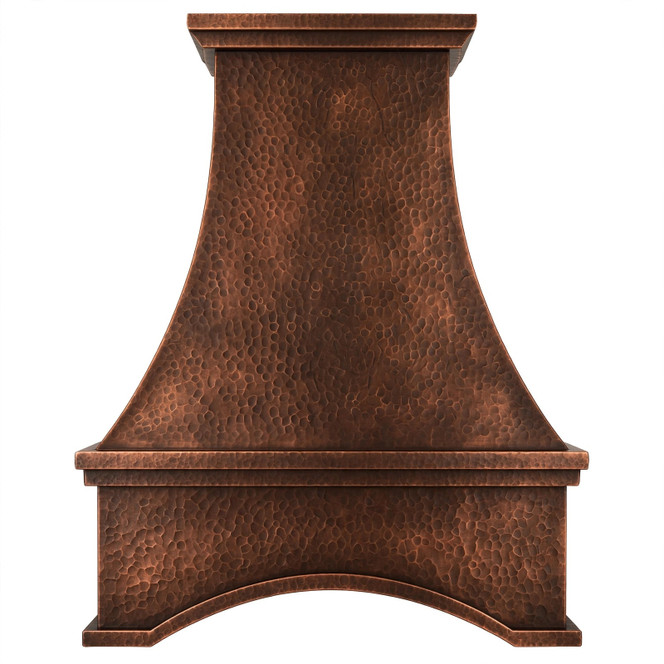
The Deep Concave Apron Copper Range Hood is shown in these lifestyle images as a sculptural copper focal point for luxury contemporary, European country, French country, organic modern, Spanish Revival, and refined transitional kitchens. Its deep concave lower apron, inward-curving shoulders, tall tapered body, stepped crown, and warm copper patina create a dramatic architectural presence above the range. Unlike flatter apron hoods, this design uses its recessed curved apron as the main visual feature, giving the hood depth, shadow, and movement without straps, rivets, scrollwork, or heavy decorative relief. Explore the deep concave apron copper range hood to compare its shape, finish, proportions, and kitchen style applications. For more product-specific planning details, read the deep concave apron copper range hood guide.
Blog Summary
- Focus: lifestyle image guide
- Product: concave apron hood
- Shape: recessed curved apron
- Style: sculptural copper design
- Images: six room examples
- Finish: warm copper patina
Concave Apron Hood Images
Lifestyle images help show how a deep concave apron copper hood looks inside a complete kitchen rather than as a standalone product. Cabinet style, ceiling height, backsplash material, wall texture, lighting, countertop tone, flooring, and hardware all influence how the copper surface appears. In one room, the hood may look formal and architectural. In another, the same concave apron may feel softer, more organic, or more European.
This hood stands out because the lower apron curves inward and creates a recessed sculptural shape. The concave profile adds shadow and depth below the tapered body, giving the range wall a more dimensional appearance. The copper finish adds warmth and artisan surface character, while the clean design avoids heavy decoration.
Design Highlights
- deep concave apron copper hood
- recessed curved lower apron
- tall tapered body profile
- inward-curving shoulder lines
- warm copper patina finish
- clean sculptural range wall design
- custom metal hood focal point
The concave apron is the defining feature of this hood. It gives the lower section a formal recessed curve that creates depth below the main body. This shape works well in kitchens that need a custom copper focal point with more movement than a plain tapered hood, but less surface ornament than a strapped or riveted design.
Luxury Contemporary Kitchen Image

In a luxury contemporary kitchen, the deep concave apron copper hood creates a sculptural focal point without relying on extra ornament. Luxury contemporary interiors often use stone slabs, refined cabinetry, integrated appliances, clean lighting, and carefully balanced materials. The hood fits this setting because its shape feels custom and architectural, while the copper finish adds warmth and depth.
The concave apron is especially effective in this style because it creates shadow and movement below the main body. The recessed curve gives the hood a more dimensional appearance, but the overall design remains controlled. This helps the hood stand out in a polished kitchen without competing with stone surfaces, custom cabinetry, or modern lighting.
This lifestyle image shows how copper can bring warmth to a contemporary kitchen while still looking refined. The hood becomes the main crafted element above the range, but its clean sculptural shape keeps the room elegant and balanced.
European Country Kitchen Image

In a European country kitchen, the deep concave apron copper hood feels connected to old-world materials and architectural tradition. European country interiors often include stone floors, plaster walls, carved wood, warm cabinetry, antique-style hardware, and natural surfaces. Copper works well in this setting because its patina feels aged, warm, and handcrafted.
The concave apron gives the hood a more formal silhouette than a plain rustic canopy. It adds depth and shape while still allowing the copper surface to remain the main feature. This makes the hood useful in kitchens that need old-world character, but also need a cleaner and more tailored profile.
For kitchens with wide sight lines or connected rooms, review the copper range hood for open kitchen guide. Open layouts make hood shape especially important because the range wall is often visible from dining and living areas.
French Country Kitchen Image

In a French country kitchen, the copper hood adds warmth, elegance, and handcrafted character. French country interiors often combine painted cabinetry, natural stone, wood accents, soft neutral colors, antique-style hardware, and graceful architectural details. The copper finish supports this palette because it brings depth without looking overly polished.
The concave apron works well with French country design because it feels shaped and refined. It is not plain, but it is also not heavily decorated. The recessed lower curve creates a graceful shadow line above the range, while the tapered body keeps the hood proportional and architectural.
This lifestyle image shows how the hood can add a warm metal accent to a softer kitchen palette. It can coordinate with cream cabinetry, stone counters, brass or bronze hardware, and natural wood while remaining the main focal feature of the cooking wall.
Organic Modern Kitchen Image
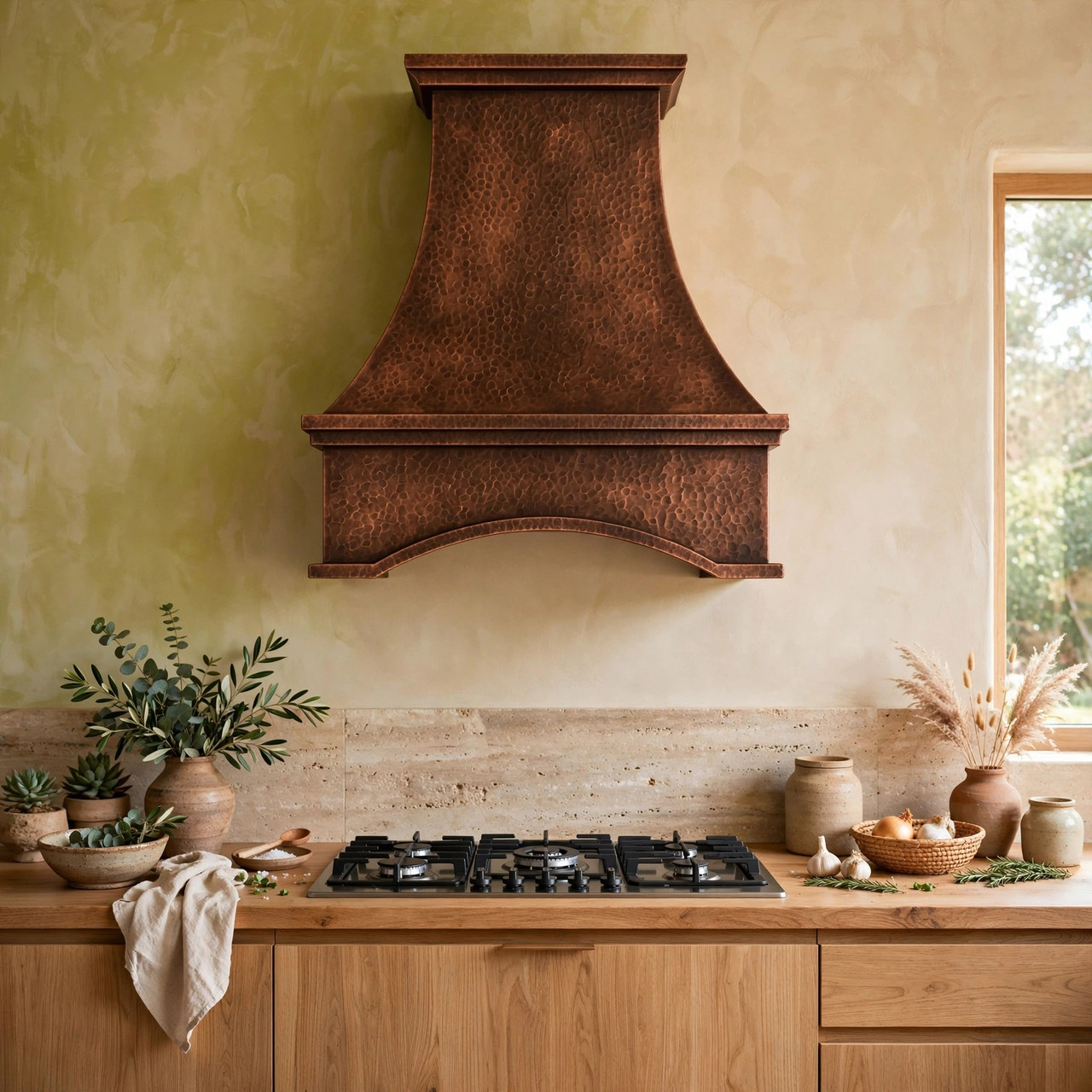
In an organic modern kitchen, the deep concave apron copper hood adds warmth, texture, and a sculptural material presence. Organic modern interiors often use natural wood, plaster, stone, soft neutral colors, simple cabinetry, and relaxed surfaces. Copper works well in this setting because its living finish feels warm and natural rather than sterile.
The curved apron supports the organic side of the design by adding movement and softness to the range wall. At the same time, the tall tapered body keeps the hood structured and contemporary. This balance allows the hood to feel both modern and grounded, especially when paired with wood cabinetry, stone backsplashes, plaster walls, or matte black hardware.
For kitchens with tall rooms or raised ceilings, review the copper range hood for high ceiling kitchen guide. A taller room can change the ideal hood height, chimney proportion, and visual balance above the range.
Spanish Revival Kitchen Image
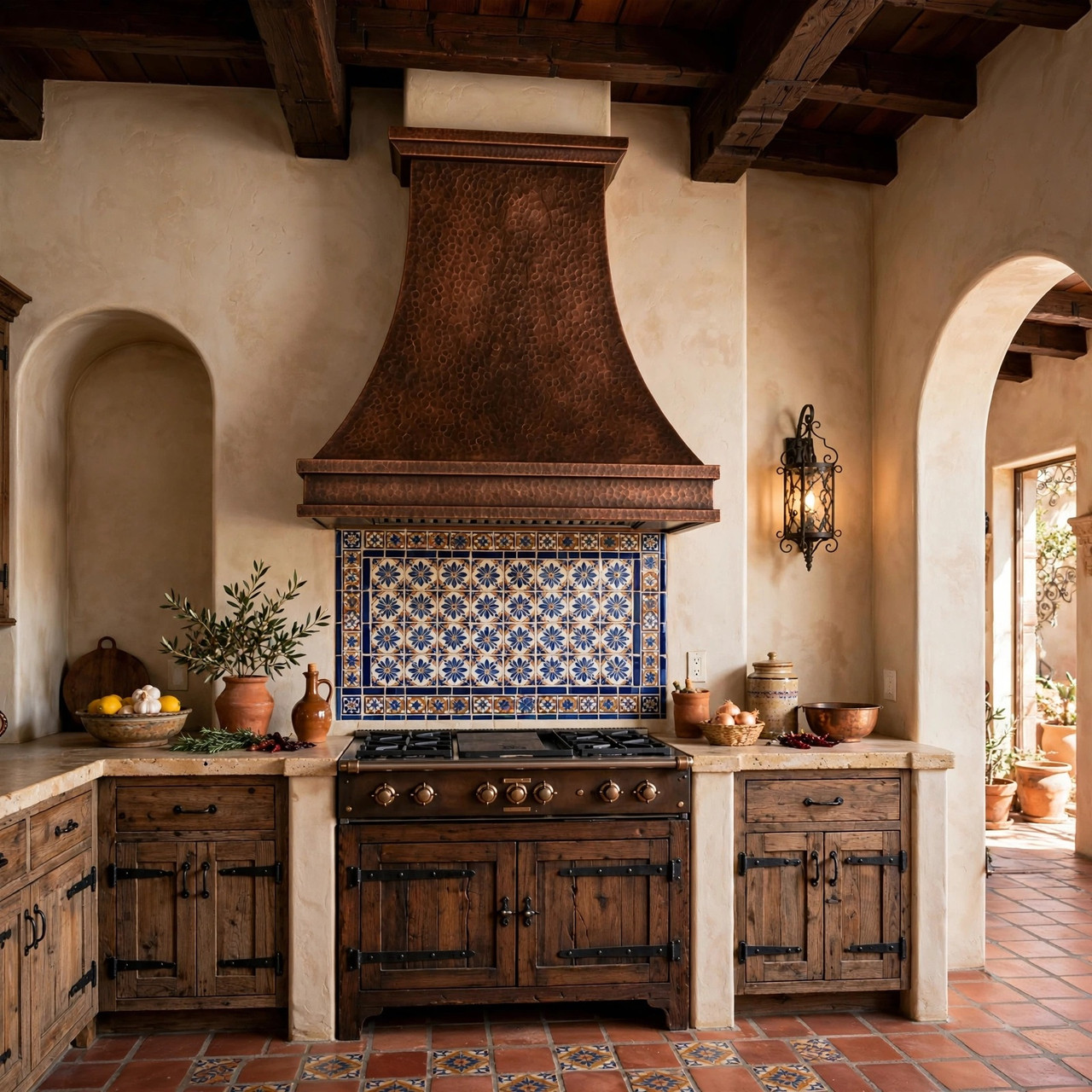
In a Spanish Revival kitchen, the deep concave apron copper hood supports arched forms, plaster walls, handmade tile, carved wood, and aged metal accents. The warm patina feels appropriate for this style because it echoes traditional metalwork and historic architectural finishes. The sculptural lower apron adds depth without needing scrollwork or heavy decorative relief.
The inward curve of the apron works especially well with Spanish Revival interiors because the style often includes arches, niches, and shaped plaster details. The hood feels architectural rather than simply decorative. Its copper surface brings warmth, while the concave apron gives the cooking wall a shaped focal point.
This lifestyle image shows how the hood can feel connected to Spanish-inspired architecture while still remaining clean. It can pair with Talavera tile, Saltillo floors, plaster walls, dark wood, bronze hardware, and iron lighting.
Refined Transitional Kitchen Image
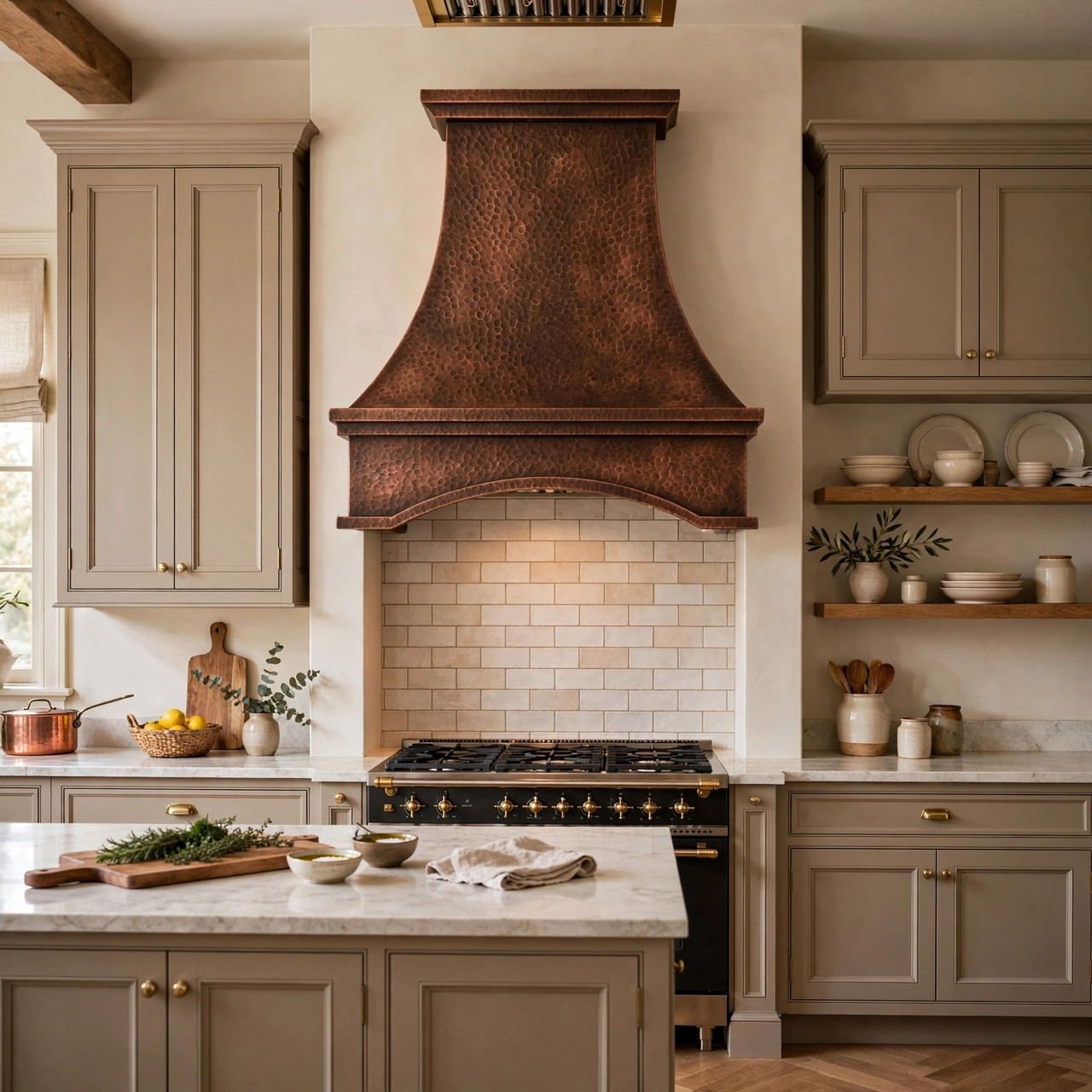
In a refined transitional kitchen, the deep concave apron copper hood adds warmth and architectural character without making the room feel rustic. Refined transitional interiors often combine simple cabinetry, stone counters, polished lighting, neutral colors, and controlled decorative details. The hood fits this setting because the concave apron provides shape, while the overall surface remains clean.
The tapered body and stepped crown help the hood feel tailored above the range. The copper patina softens the surrounding materials, while the deep apron creates a visual shadow line that gives the cooking wall depth. This makes the hood useful for kitchens that need one expressive feature while keeping the rest of the room calm and balanced.
For general selection help, read the choosing the right copper range hood for a kitchen guide. It can help compare shape, finish, size, style, and placement before choosing a custom copper hood.
Deep Concave Apron
The deep concave apron gives this hood its most recognizable profile. The lower section curves inward, creating a recessed shape that adds shadow and sculptural depth above the range. This feature makes the hood more dramatic than a flat apron design while staying cleaner than heavily decorated copper hoods.
The apron also gives the hood a formal architectural base. In contemporary and transitional kitchens, it adds controlled movement. In European country, French country, and Spanish Revival kitchens, it supports old-world shape and craftsmanship. This flexibility allows the hood to work across both refined and traditional interiors.
Tapered Body Profile
The tall tapered body gives the hood vertical movement. It narrows toward the chimney and helps guide the eye upward, making the cooking wall feel taller and more complete. This shape works especially well when the hood needs to stand out without using straps, rivets, or decorative bands.
The tapered profile also helps balance the deep apron. The apron creates strong lower depth, while the upper body keeps the overall hood from looking too heavy. Together, these shapes create a sculptural copper hood with clear proportion and visual hierarchy.
Copper Finish Character
The copper finish gives the hood warmth, depth, and natural variation. Depending on kitchen lighting, the surface can show bronze, reddish-brown, amber, and darker aged tones. This variation helps the hood feel handcrafted and keeps the surface from looking flat.
The warm patina can coordinate with stone, plaster, wood, tile, bronze, black hardware, brass accents, and painted cabinetry. It may appear darker in low light or brighter in sunlit kitchens. This makes the hood adaptable across luxury contemporary, European country, French country, organic modern, Spanish Revival, and refined transitional interiors.
Island and Wall Planning
This hood can be planned for wall-mounted or island kitchen installations depending on the room layout. A wall-mounted installation usually creates a strong focal point against cabinetry, tile, stone, or plaster. An island installation can make the hood visible from several sides, which makes proportion and finish selection especially important.
For island layouts, review the kitchen island copper range hood guide. Island hoods require careful planning for ceiling height, duct route, viewing angles, insert size, and how the hood will look from open living areas.
Ventilation Planning
A copper range hood should be planned around both appearance and performance. The visible copper shell creates the focal point, while the insert, blower, filters, ducting, and lighting determine how the hood functions. Range width, cooking habits, ceiling height, cabinet clearance, and installation type should all be reviewed before ordering.
Rustica House can supply the 200 CFM insert only. Any other insert must be supplied by the buyer, and Rustica House will make the hood ready for that buyer-supplied insert when the insert details are provided.
Frequently Asked Questions
What makes this copper hood different?
This hood uses a deep concave lower apron as its main visual feature. The recessed curved apron creates shadow, depth, and sculptural movement without using straps, rivets, scrollwork, or heavy decoration.
Which kitchen styles fit this hood?
This hood works well in luxury contemporary, European country, French country, organic modern, Spanish Revival, refined transitional, and custom old-world kitchens. It pairs well with stone, plaster, wood, tile, bronze, black accents, and warm neutral palettes.
Is the concave apron only decorative?
The concave apron is mainly a visual design feature, but it strongly affects the hood’s character. It gives the lower section depth, creates shadow, and helps the hood feel sculptural and architectural above the range.
Conclusion
The deep concave apron copper range hood brings warm patina, a recessed curved apron, inward shoulder lines, a tapered body, and a sculptural architectural profile into the kitchen. These lifestyle images show how the hood adapts to luxury contemporary, European country, French country, organic modern, Spanish Revival, and refined transitional interiors while keeping its handcrafted copper identity. With the right surrounding materials and proportions, it can become the defining focal point above the cooking area.