 US Dollar
 Euro
Euro
 Australian Dollar
 Canadian Dollar
 Polish Zloty
 British Pound

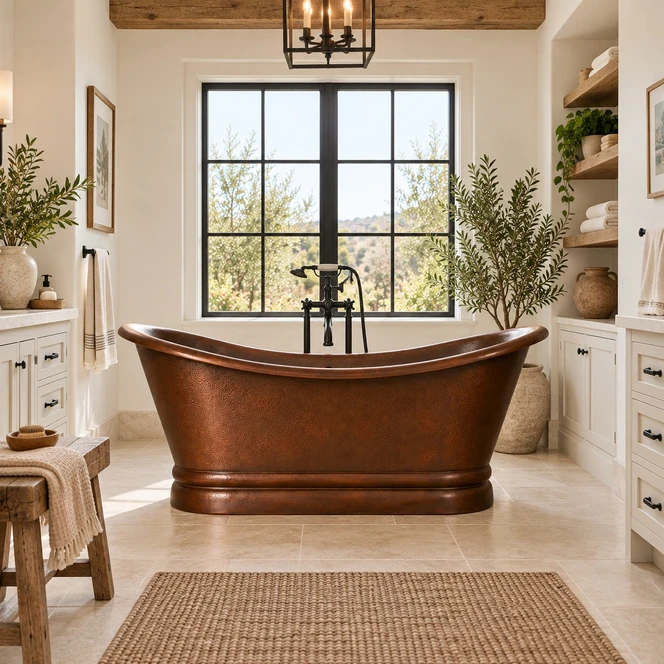
Dark Patina Copper Soaking Bathtub Guide explains how a handcrafted copper tub with a deep coffee-toned finish, rolled rim, raised reclining ends, and generous soaking profile can become the focal point of a luxury bathroom. This dark patina copper soaking bathtub combines old-world warmth with sculptural comfort for Spanish Colonial, Tuscan, transitional, modern farmhouse, and spa-inspired interiors. Its dark copper surface highlights the hammered texture while adding depth, contrast, and artisan character. Because each copper bathtub is handmade, natural tone movement, hammering variation, rim shaping, patina depth, seam character, and small artisan irregularities should be expected. No two pieces are identical, and those differences are part of the tub’s handcrafted beauty. See how the dark copper patina works with stone, tile, wood, and surrounding bathroom finishes in our dark patina copper bathtub bathroom images.
Blog Summary
- Material: Handcrafted copper
- Finish: Dark coffee patina
- Shape: Raised-end soaking tub
- Rim: Wide rolled upper edge
- Texture: Hand-hammered surface
- Planning: Custom bathroom sizing
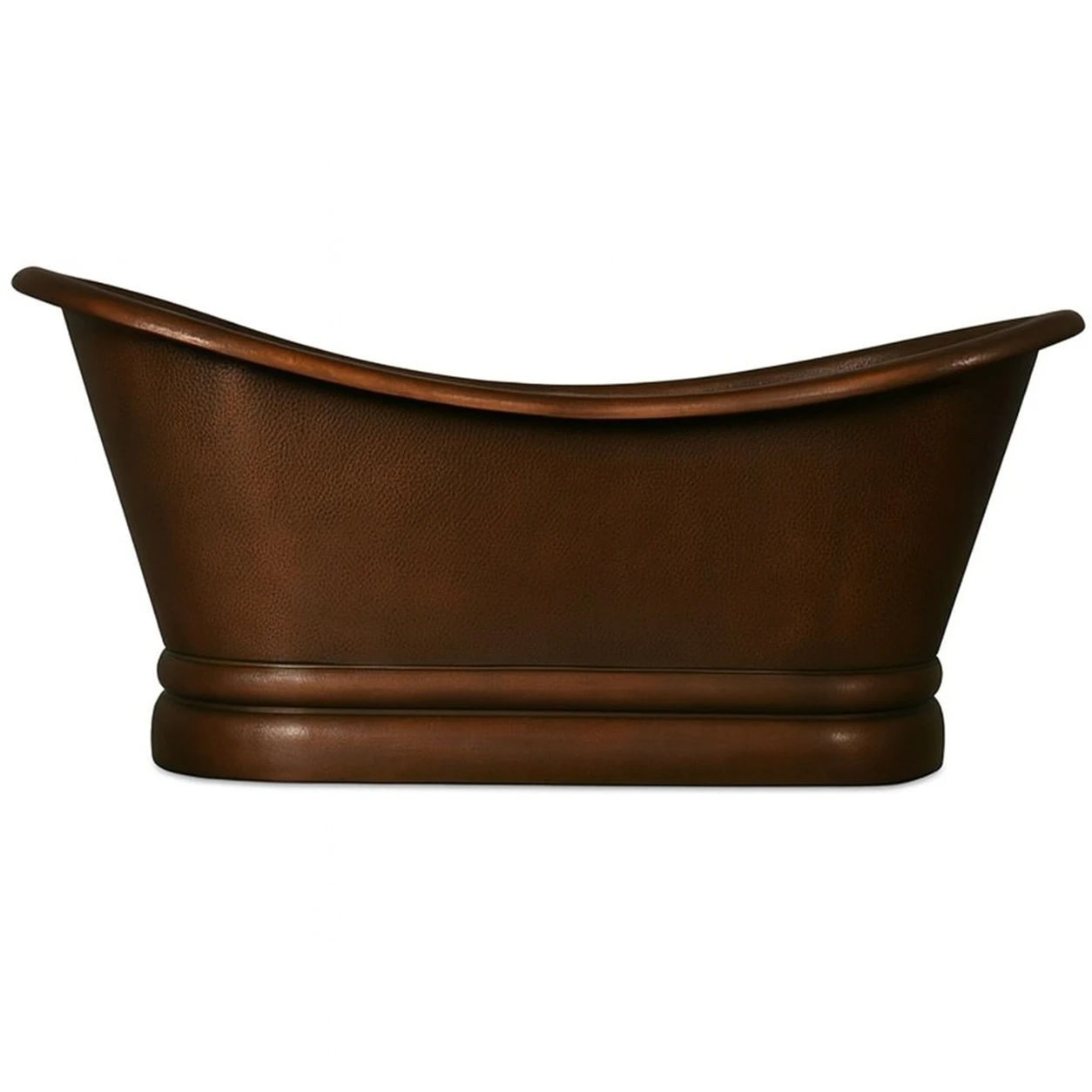
Planning a Dark Patina Copper Bathtub
A dark patina copper bathtub should be planned as both a soaking fixture and a major design feature. The deep coffee finish gives the tub visual weight, while the rolled rim and raised ends create a strong sculptural profile. Before ordering, confirm the bathroom footprint, tub length, width, end heights, center height, drain location, faucet placement, delivery path, and floor support. Buyers comparing other handmade shapes can review the broader copper bathtubs category and the freestanding copper bathtubs collection.
Why Choose Dark Patina?
A dark copper patina gives the bathtub a grounded, aged, and luxurious character. Unlike brighter copper finishes, the coffee-toned surface feels deeper and more dramatic. It can pair beautifully with plaster walls, natural stone, carved wood, limestone, travertine, black fixtures, bronze hardware, and warm lighting. The dark finish also emphasizes the hand-hammered texture by creating subtle highlights on raised areas and deeper shadows in recessed areas. This makes the tub feel rich and handmade without needing decorative feet, rings, or excessive ornament.
Custom Tub Specifications
- Material: Handcrafted copper
- Finish: Dark coffee patina
- Texture: Hand-hammered copper
- Shape: Asymmetrical soaking profile
- Rim: Wide rolled edge
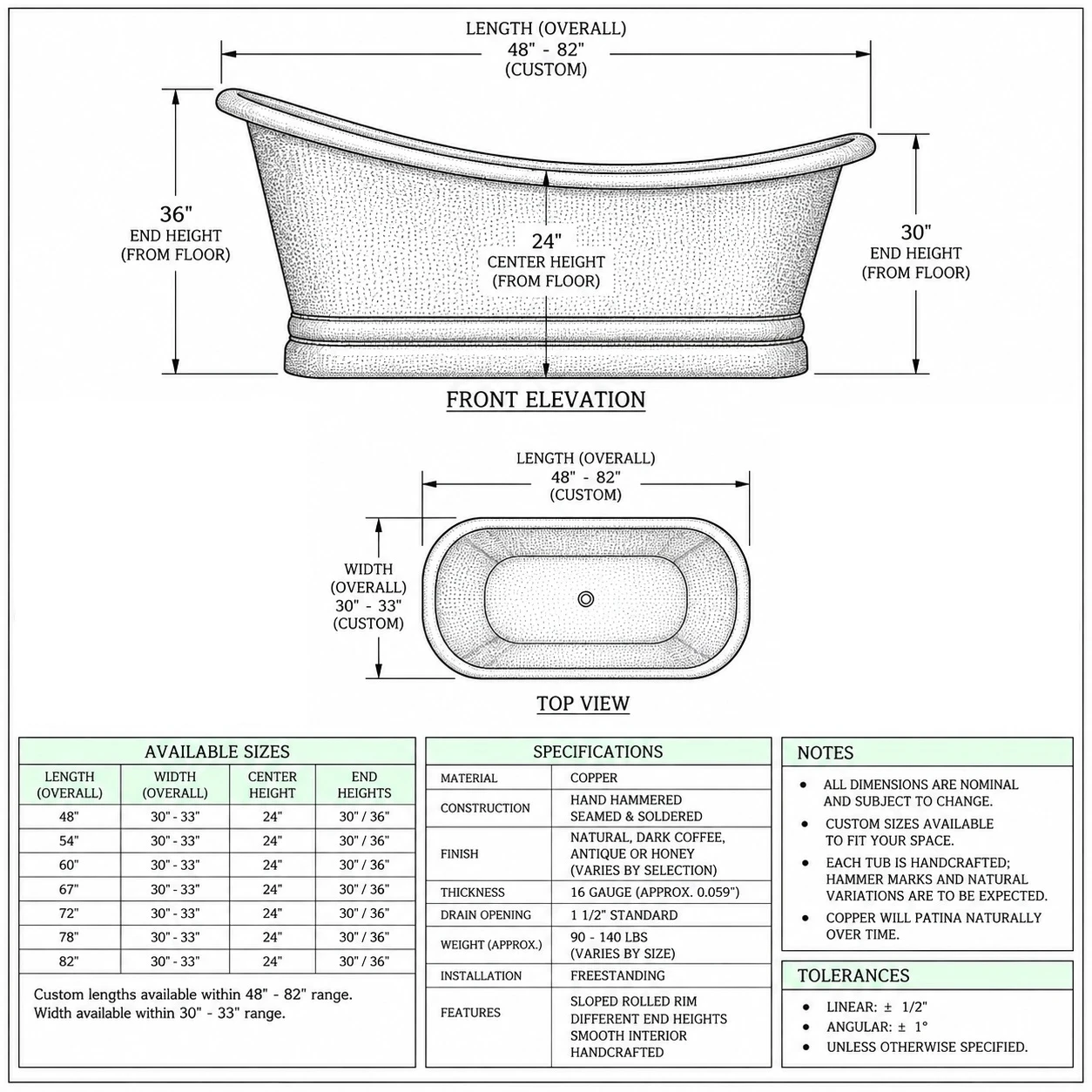
- Length: 48 to 82 inches
- Width: 30 to 33 inches
- Center height: 24 inches
- End heights: 30 and 36 inches
- Install: Freestanding bathtub
Soaking Tub Design
The design is based on a freestanding soaking form with a lower center height and raised ends. One end rises higher than the other, creating a comfortable reclining profile and a distinctive side silhouette. The rolled rim frames the opening and gives the tub a finished handmade edge. This combination works well when the bathtub is placed where the side view can be appreciated, such as near a window, in front of a plaster wall, beside stone, or within an open bathing area.
Raised End Comfort
The raised ends help support reclining and make the tub feel more comfortable than a simple straight oval basin. The center remains lower for easier entry and a more graceful profile, while the higher end creates stronger visual movement. This asymmetrical shape can be especially effective in primary bathrooms where the bathtub should feel relaxing, substantial, and custom. Before ordering, consider user height, soaking depth, faucet placement, and drain location so the tub supports both comfort and layout.
Rolled Rim Detail
The rolled rim gives the bathtub a soft, substantial upper edge. It makes the tub feel more finished and adds strength to the silhouette. A rolled rim also catches light differently than the side walls, creating a subtle highlight around the opening. Since the rim contributes to the outside dimensions, buyers should review full exterior measurements before ordering. The rim should fit the bathroom plan while leaving enough space for faucet reach, safe entry, towel access, and cleaning around the tub.
Hand-Hammered Texture
Hand-hammered copper gives the bathtub its tactile surface character. The hammer marks help the dark patina feel alive by catching light in small, irregular highlights. This texture also reinforces the artisan nature of the tub and helps small marks blend naturally into the finish over time. Handmade hammering will not look perfectly uniform, and that is part of the material’s appeal. For related surface styles, browse hammered copper bathtubs.
Bathtub Dimensions and Drawing
The technical drawing helps confirm the bathtub’s length, width, center height, raised end heights, rolled rim, base shape, and overall side profile. This model can be planned in standard lengths from 48 to 82 inches or made with custom dimensions. Width commonly ranges from 30 to 33 inches. The center height is 24 inches, while the ends rise to approximately 30 and 36 inches. These proportions create a dramatic soaking silhouette while keeping the tub functional for freestanding bathroom placement.
How to Size the Tub
Size planning should begin with the bathroom footprint and the desired soaking experience. A shorter tub can work in compact bathrooms, while a longer size provides more reclining comfort and stronger visual presence. Width affects both comfort and placement, especially when the tub is located between vanities, near a shower, or close to a wall. Review the full exterior size, interior soaking room, rim width, center height, end heights, and delivery path before choosing the final dimensions.
Top View Planning
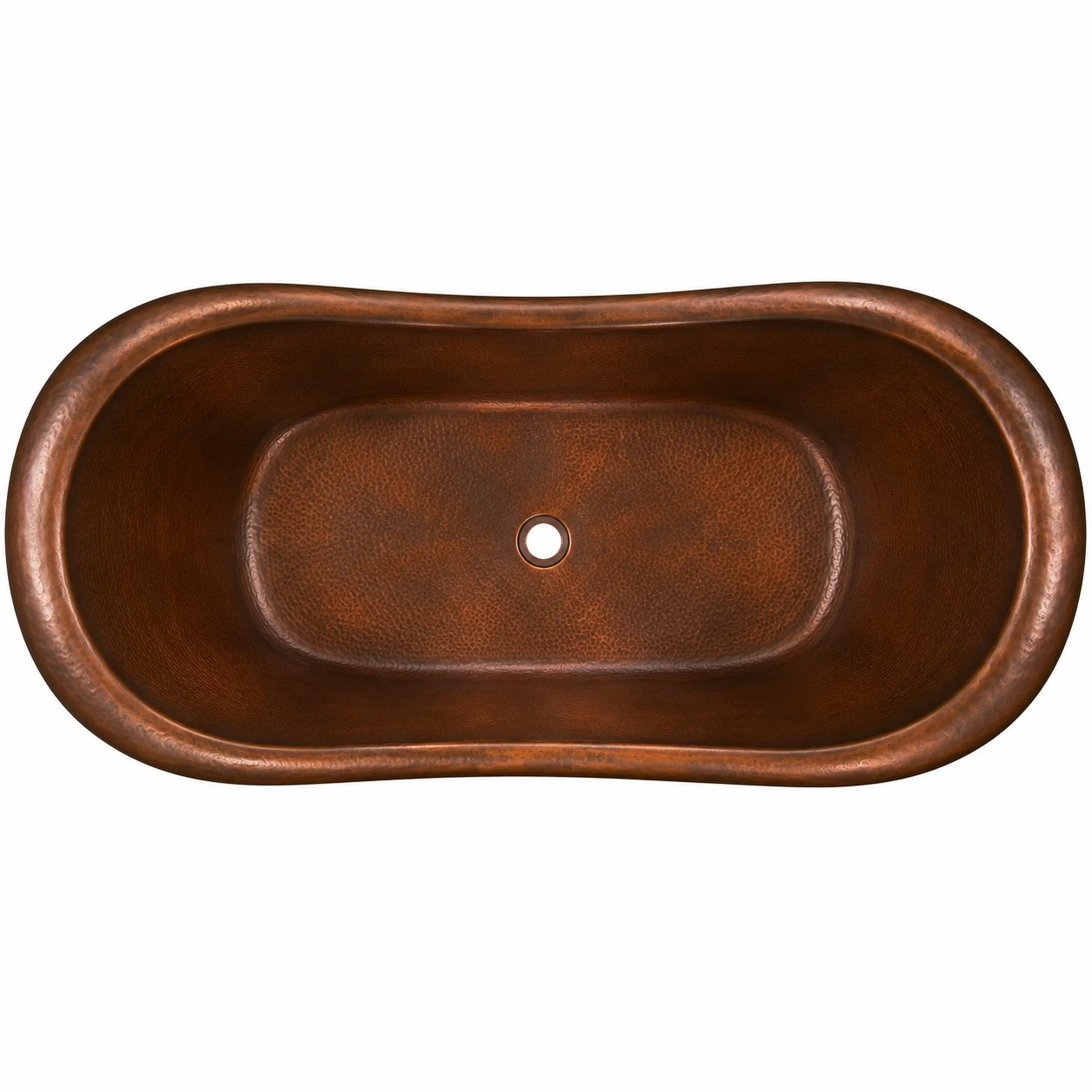
The top view helps show the tub’s oval opening, rolled rim, interior basin, and overall footprint. From above, the bathtub reads as a generous soaking form with softened ends and a warm hammered surface. This view is important for planning faucet placement and drain alignment. It also helps determine whether the tub should sit centered, angled, near a wall, under a window, or within a defined bathing zone. The tub should have enough surrounding space to look intentional rather than crowded.
Bathroom Clearance
Clearance around the bathtub affects comfort, cleaning, faucet operation, and visual balance. A freestanding copper tub should have enough room for safe entry, towel access, and maintenance around the exterior. In a large bathroom, the tub can sit as a centered focal point. In a smaller room, it may sit closer to a wall when faucet reach and cleaning access remain practical. Marking the footprint on the floor before ordering can help confirm scale.
Drain Location Planning
Drain location should be reviewed before production and installation. The drain must coordinate with the tub orientation, plumbing location, floor structure, faucet position, and user comfort. A centered or carefully placed drain can help preserve the soaking experience, while an inconvenient drain location can interfere with reclining. Existing plumbing may influence the layout, especially during remodels. Confirm drain placement, waste connection, overflow preference, and service access with the plumber before finalizing the order.
Faucet Compatibility
Freestanding copper bathtubs can work with floor-mounted, wall-mounted, or platform-mounted faucets depending on the bathroom layout. Floor-mounted faucets often work well when the tub sits away from walls. Wall-mounted faucets can work when the tub is close enough for proper spout reach. Platform-mounted faucets may be useful when a deck or nearby ledge is planned. Confirm spout reach, handle clearance, water supply location, drain alignment, and maintenance access before installation.
Floor Support
Floor support should be reviewed by filled weight, not only empty tub weight. Water, tub size, user weight, flooring material, and framing all contribute to the load. Copper can be lighter than cast iron, but a large soaking tub filled with water still requires proper structural planning. Second-floor bathrooms, older homes, stone floors, and oversized custom tubs may need professional review. Proper support protects the flooring, plumbing, and long-term performance of the bathroom.
Delivery Access
Measure the full delivery path before ordering. Check exterior doors, interior doors, stairways, landings, hallway turns, bathroom entry, ceiling height, and any tight corners. A tub that fits the bathroom footprint may still be difficult to move through the house. The raised ends and rolled rim can make handling more demanding. Doors may need to be removed, and flooring or walls may need protection. Careful access planning reduces installation delays.
Copper Finish Options
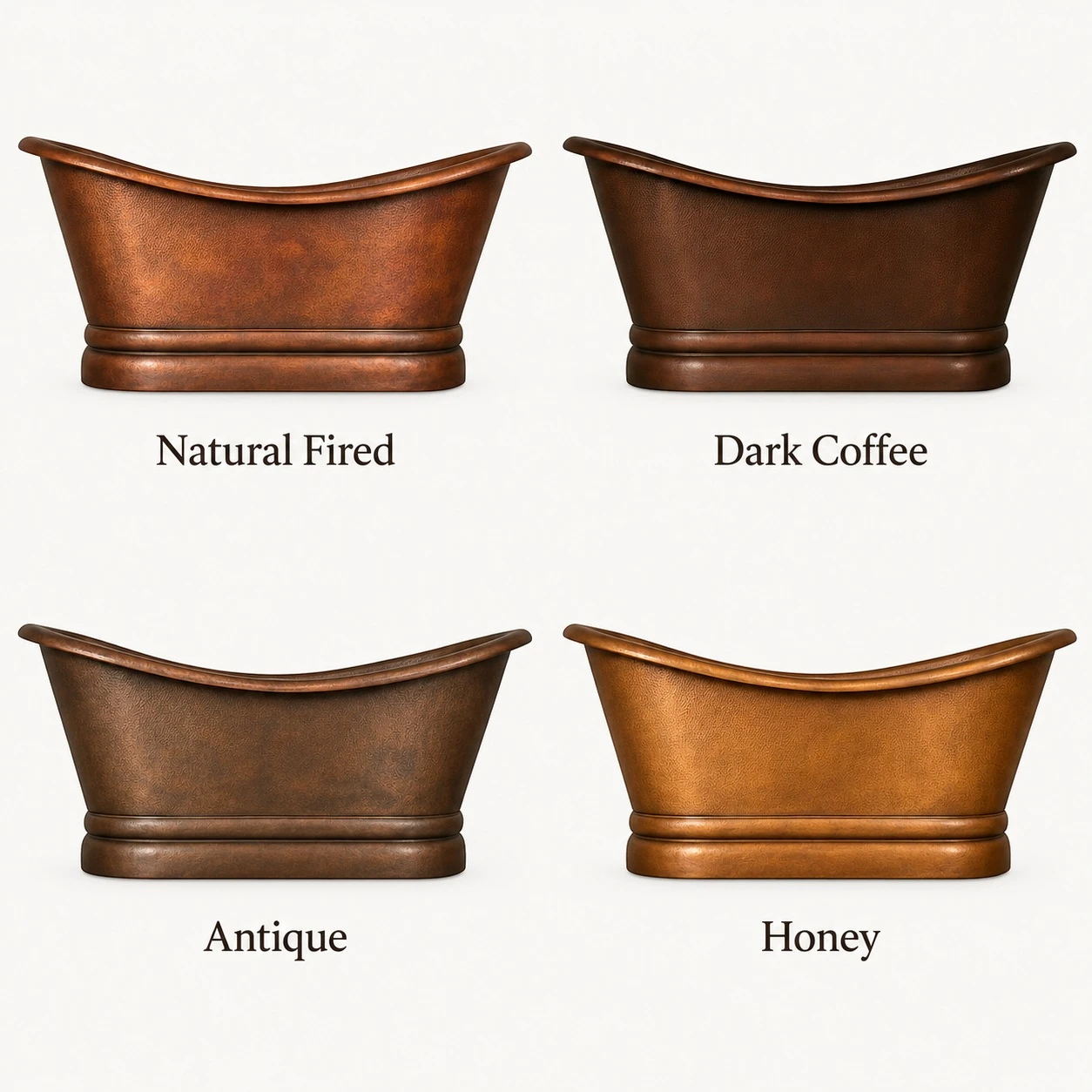
The finish options image helps compare how this soaking tub changes across different copper patinas. Natural Fired offers warmer color movement. Dark Coffee creates the deep finish shown on the main product. Antique adds aged old-world character. Honey provides a softer golden warmth. Each finish changes the way the hammering, rolled rim, and raised ends appear in the room. Because patinas are handmade, product images and finish panels should be treated as guides rather than exact promises.
Natural Copper Aging
Copper is a living material, so the surface can change with moisture, air, bath products, humidity, handling, cleaning habits, and time. Dark patina may develop lighter highlights on raised hammered areas and deeper tone in protected areas. This movement can make the tub feel more personal and authentic. Buyers who want to slow finish changes may use copper-safe wax, while homeowners who enjoy natural aging can allow the patina to evolve gradually.
Spanish Colonial Bathrooms
Spanish Colonial bathrooms can pair this tub with white plaster walls, Talavera tile, cantera stone, wrought iron lighting, dark wood, arched openings, and bronze fixtures. The dark coffee patina brings depth against light plaster and coordinates naturally with traditional iron and wood details. The rolled rim and raised soaking profile add handmade presence without making the bathroom feel overly ornate. The tub works well beneath a window or inside a defined soaking alcove.
Transitional Bathrooms
Transitional bathrooms can use this bathtub as a warm focal point against cleaner architectural surfaces. Neutral stone flooring, quiet cabinetry, brushed metal fixtures, simple millwork, and restrained lighting allow the dark copper to stand out. The tub’s raised ends add shape, while the hammered surface adds texture. A transitional room should avoid too many competing metal finishes so the copper remains the primary visual feature.
Modern Farmhouse Bathrooms
Modern farmhouse bathrooms can combine this tub with painted cabinetry, natural oak, limestone floors, black fixtures, handmade tile, and warm wood accents. The dark patina creates contrast against light walls and cabinetry, while the rolled rim softens the strong soaking shape. The tub can make the room feel more custom than a standard white freestanding bathtub. Keep surrounding surfaces simple so the copper finish remains prominent.
Tuscan Bathrooms
Tuscan bathrooms can support the dark copper finish with travertine, textured plaster, rustic timber beams, forged iron hardware, stone floors, and warm lighting. The coffee patina reinforces an aged old-world feeling, while the hammered copper surface connects with artisan material traditions. Raised ends and a rolled rim make the tub feel substantial and comfortable. Use warm stone and muted walls so the tub feels integrated into the room.
Luxury Spa Bathrooms
Luxury spa bathrooms can use this tub as a warm sculptural counterpoint to minimalist stone, generous natural light, uncluttered layouts, and soft neutral materials. The dark patina prevents the bathroom from feeling cold, while the soaking profile supports relaxation. A calm spa setting should give the tub enough open space so the side silhouette, rolled rim, and hammered copper surface can be appreciated from several angles.
Other Compatible Bathroom Styles
- Rustic lodge bathrooms
- Old World bathrooms
- Hacienda bathrooms
- Desert modern bathrooms
Matching Bathroom Fixtures
A dark copper bathtub can coordinate with other copper fixtures, but balance is important. Matching sinks, mirrors, lighting, or accessories can repeat the material when used carefully. In many bathrooms, the bathtub should remain the dominant copper feature, while smaller accents support it from a distance. For coordinated bathroom planning, review copper bathroom sinks and choose forms that complement the tub without competing with it.
Coppersmith Perspective
A dark patina copper soaking tub requires careful forming, hammering, rim shaping, and finish control. The raised ends must feel balanced, the rolled rim should follow the oval opening smoothly, and the hammering should enhance the tub’s curves. Handmade copper will always show subtle variations in tone, tool marks, and surface character. These details are part of the craft. For more background on traditional copper work, read the Rustica House copper craftsmanship guide.
Care and Cleaning
Copper bathtub care is simple when the finish is treated gently. Rinse after use, clean with mild soap and warm water, then dry with a soft cloth. Avoid abrasive pads, steel wool, bleach, ammonia, acidic cleaners, harsh bathroom chemicals, and aggressive polishing compounds because they can scratch copper or disturb patina. Drying is especially helpful around the drain, rolled rim, lower basin, and hammered low points. For detailed care, review the copper bathtub care guide.
Wax and Finish Care
Copper-safe wax can help slow patina movement when the goal is to preserve a more consistent dark finish. Apply wax only to a clean, dry surface and follow the wax manufacturer’s directions. Some homeowners prefer not to wax because they enjoy natural aging. Both approaches can work. The most important rule is to avoid harsh scrubbing and strong chemicals, especially on darker patinas that can lighten unevenly if aggressively cleaned.
Measurements Before Ordering
Before ordering, confirm tub length, width, center height, end heights, soaking depth, rim shape, drain location, overflow preference, faucet type, floor support, doorway clearance, stair access, hallway turns, bathroom placement, and finish preference. Photos of the bathroom can help determine whether the tub should sit centered, angled, near a wall, under a window, or inside a defined soaking zone. Review all final dimensions carefully before production begins.
Common Questions
What makes this copper soaking bathtub distinctive?
The dark coffee patina, hand-hammered copper surface, rolled rim, raised reclining ends, and sculptural soaking profile make it distinctive.
Is this a freestanding bathtub?
Yes. It is designed as a freestanding copper soaking tub with visible exterior walls, raised ends, and a rolled rim.
What sizes are available?
The tub can be made in lengths from 48 to 82 inches, with custom sizing available for specific bathroom layouts.
How tall is the bathtub?
The center height is about 24 inches, with raised ends measuring approximately 30 inches and 36 inches.
What finish is shown?
The shown finish is Dark Coffee, a deep copper patina with warm brown, bronze, and shadowed tone variation.
What other finishes are available?
The bathtub is shown in Natural Fired, Dark Coffee, Antique, and Honey copper patina options.
Will the copper patina change?
Yes. Copper can change with moisture, air, bath products, cleaning habits, handling, and time.
How do you clean this bathtub?
Use mild soap, warm water, and a soft cloth. Avoid abrasives, bleach, ammonia, acidic cleaners, and steel wool.
What faucet works best?
Floor-mounted faucets often work well for freestanding layouts, while wall-mounted or platform-mounted faucets may work with proper reach.
What bathroom styles fit this tub?
It works well in Spanish Colonial, transitional, modern farmhouse, Tuscan, luxury spa, Hacienda, Old World, and rustic lodge bathrooms.
Final Design Guidance
Dark Patina Copper Soaking Bathtub Guide shows how a deep coffee finish, raised reclining ends, rolled rim, hammered copper texture, custom sizing, faucet planning, drain location, floor support, and bathroom style coordination work together. Choose this bathtub when the room needs a warm freestanding centerpiece with depth, comfort, and artisan character. Confirm room size, delivery path, floor structure, drain placement, faucet reach, soaking depth, end heights, and finish expectations before ordering. Explore the dark patina copper bathtub, compare freestanding copper bathtubs, and review the copper bathtub care guide before finalizing your bathroom plan.