 US Dollar
 Euro
Euro
 Australian Dollar
 Canadian Dollar
 Polish Zloty
 British Pound

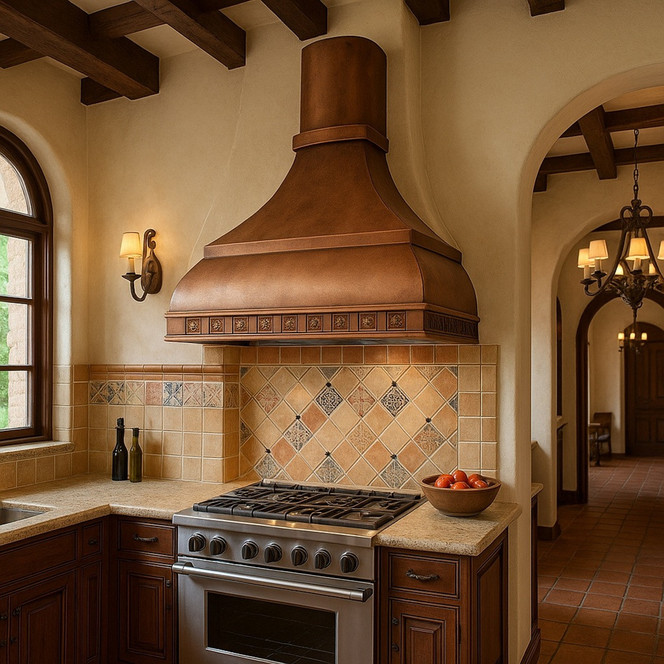
The Curved Bell Copper Range Hood with Paneled Apron is shown in these lifestyle images as a warm architectural focal point for traditional, Mediterranean, Tuscan, Spanish Colonial, and transitional kitchens. Its rounded bell body, hammered copper surface, cylindrical chimney, wide curved shoulders, and paneled lower apron create a strong handcrafted presence above the range. The paneled apron adds structure below the curved canopy, while the copper patina brings depth, warmth, and old-world character to the cooking wall. This hood works especially well with stone backsplashes, plaster walls, wood cabinetry, handmade tile, and bronze or iron accents. Explore the Curved Bell Copper Range Hood with Paneled Apron to compare its shape, finish, apron detail, and kitchen style applications. For more product-specific planning details, read the curved bell copper range hood with paneled apron guide.
Blog Summary
- Focus: Lifestyle image guide
- Product: Curved bell copper hood
- Feature: Paneled apron design
- Shape: Rounded bell silhouette
- Styles: Five kitchen ideas
- Finish: Warm copper patina
Curved Bell Hood Images
Lifestyle images help show how a copper range hood looks inside a complete kitchen instead of as a standalone product. Cabinet style, wall texture, backsplash material, countertop color, flooring, lighting, and hardware all influence how the copper finish appears. In one room, the hood may look deeply traditional and old-world. In another, the same curved bell body and paneled apron may feel cleaner, lighter, or more transitional.
This hood stands out because it combines a rounded bell silhouette with a structured paneled apron. The curved body gives the range wall softness and movement, while the apron panels add rhythm and definition across the lower section. This balance makes the hood useful for kitchens that need a warm focal point with both graceful curves and architectural detail.
Design Highlights
- Curved bell copper range hood
- Decorative paneled lower apron
- Warm hammered copper surface
- Cylindrical chimney profile
- Traditional and old-world appeal
- Wall or island planning options
- Handcrafted kitchen focal point
The curved bell shape is one of the strongest features of this design. It creates a broad rounded canopy that feels graceful and substantial above the cooking area. The paneled apron gives the lower edge a more finished appearance, which helps the hood coordinate with framed cabinetry, decorative tile, stone surrounds, and classic architectural trim.
Traditional Kitchen Image
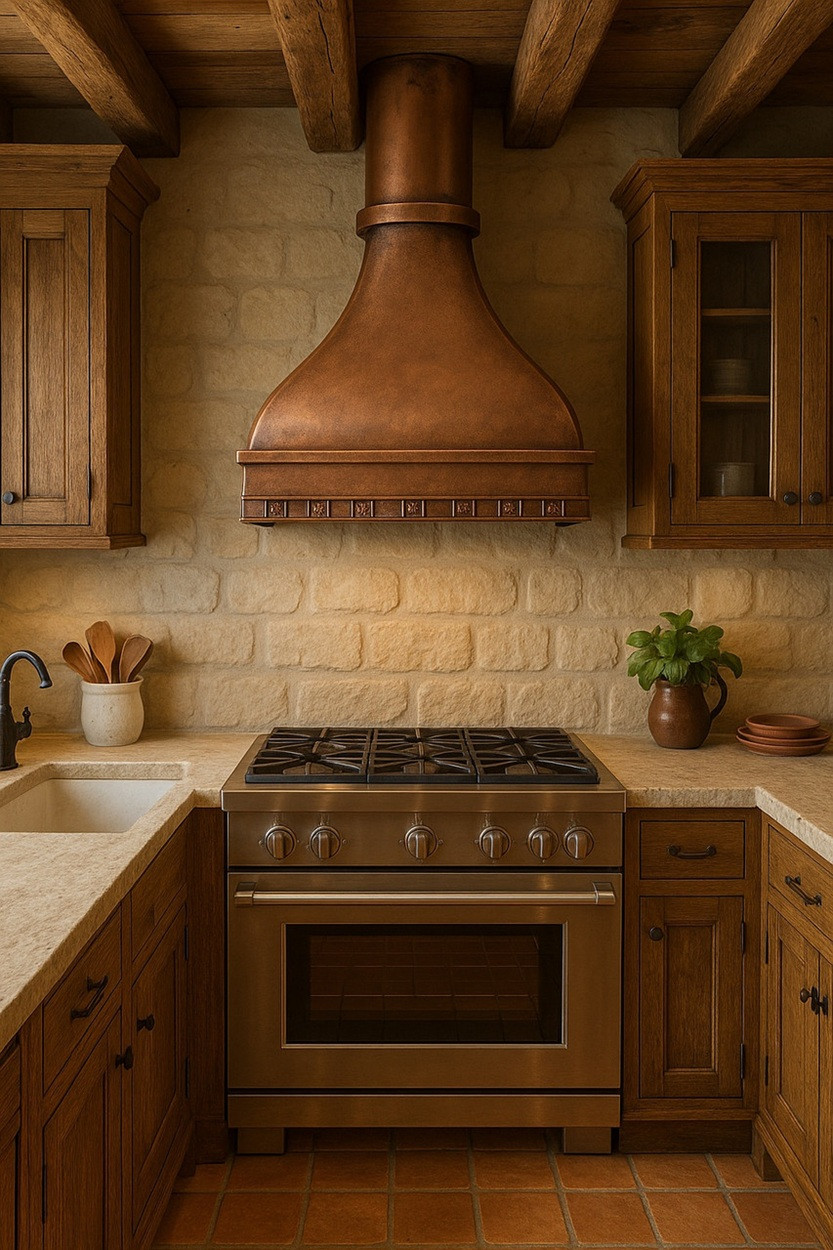
In a traditional kitchen, the curved bell copper range hood adds warmth, structure, and handcrafted character. Traditional kitchens often include framed cabinetry, stone counters, classic hardware, decorative backsplash tile, and balanced architectural details. The copper hood supports this style because it feels substantial without looking overly modern or industrial.
The paneled apron is especially useful in a traditional setting. It creates a lower band that feels connected to cabinet panels, trim, and framed details elsewhere in the room. The curved bell body softens the range wall, while the apron gives the hood a more orderly and finished base above the cooking surface.
This lifestyle image shows how the hood can become the central feature of a traditional kitchen without overpowering the room. The copper patina adds warmth and depth, while the paneled apron provides a tailored detail that works with classic cabinetry and refined finishes.
Mediterranean Kitchen Image
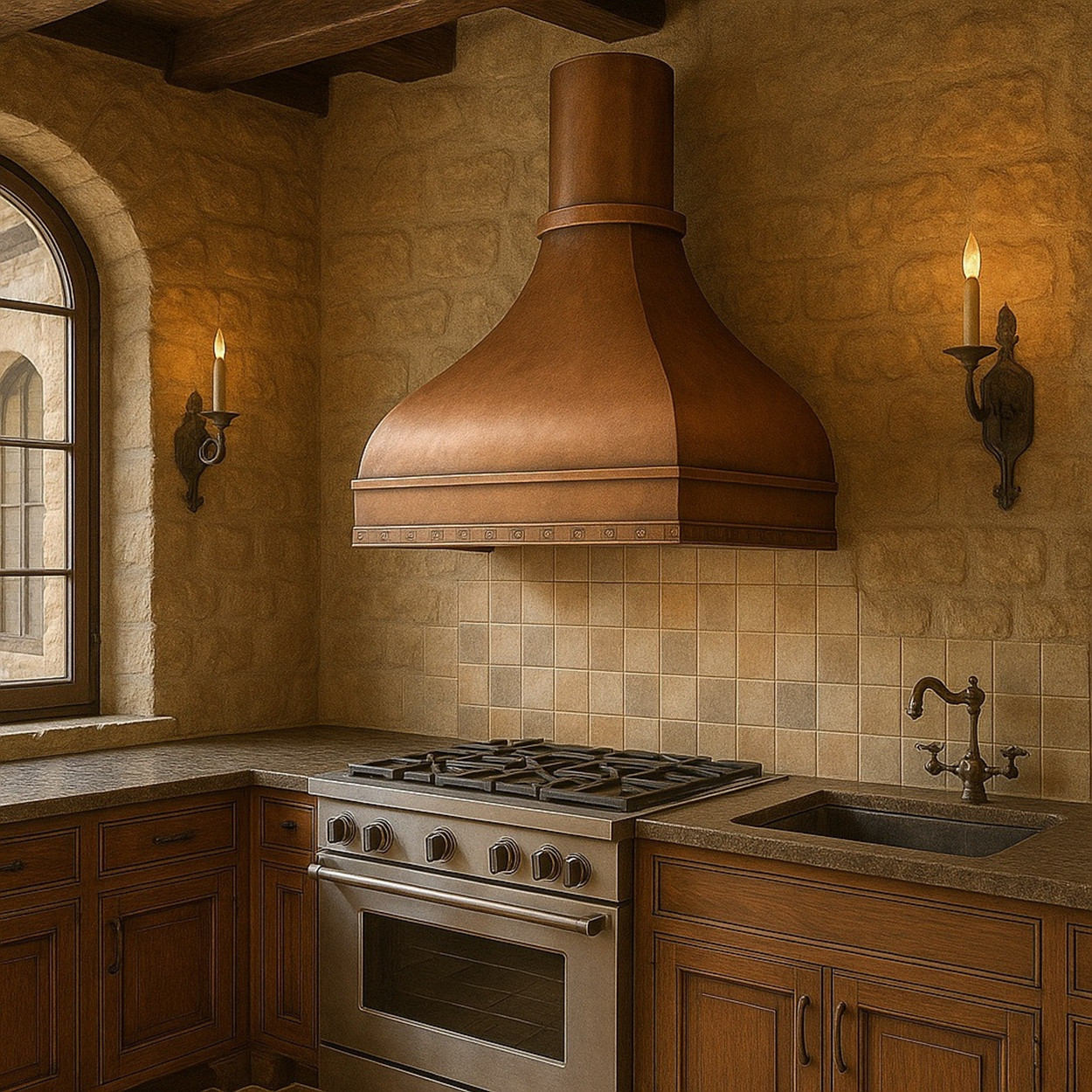
In a Mediterranean kitchen, the curved bell copper hood feels naturally connected to plaster walls, stone floors, arched openings, handmade tile, and warm wood cabinetry. Mediterranean interiors often rely on layered textures and sun-warmed materials. Copper fits this style because its patina carries bronze, brown, amber, and reddish undertones.
The rounded bell shape adds softness to the cooking wall, while the paneled apron gives the design a more architectural lower edge. This combination works well in Mediterranean kitchens because the hood feels both decorative and grounded. It can pair with stone backsplashes, terracotta floors, carved wood, bronze fixtures, and hand-painted tile without feeling out of place.
For additional bell-style copper designs, browse the Bell-Shaped Copper Range Hoods collection. Comparing curved, tapered, rounded, and paneled bell hoods can help determine which silhouette best fits the kitchen.
Tuscan Kitchen Image
In a Tuscan kitchen, the curved bell copper range hood brings old-world warmth and strong visual presence. Tuscan interiors often include textured plaster, stone, heavy wood, warm tile, iron lighting, and earthy color palettes. The copper finish supports those materials because it looks aged, substantial, and naturally warm.
The paneled apron gives the hood an added layer of design detail. It creates rhythm across the lower section and helps the hood feel more architectural above the range. This is helpful in Tuscan kitchens, where heavier materials and traditional proportions often need a focal point with enough visual weight to match the room.
This lifestyle image shows how the rounded copper canopy can soften a Tuscan cooking wall while still providing a strong centerpiece. The combination of curved shape, paneled apron, and warm patina gives the hood a handcrafted character that fits the old-world setting.
Spanish Colonial Kitchen Image

In a Spanish Colonial kitchen, the copper hood supports arched forms, plaster walls, dark wood, handmade tile, and aged metal accents. The warm patina feels appropriate for this style because it echoes traditional metalwork and historic architectural finishes. The curved bell silhouette also works well with rounded openings and softer architectural lines.
The paneled apron adds order and structure to the lower part of the hood. This detail can coordinate with framed cabinetry, carved wood, decorative tile borders, or paneled architectural elements. The hood feels handcrafted and substantial, but the rounded bell body prevents it from looking too rigid.
For more copper hood options across related shapes and finishes, review the Copper Range Hoods collection. It can help compare paneled aprons, straps, rivets, hammered finishes, smooth finishes, and different hood silhouettes.
Transitional Kitchen Image
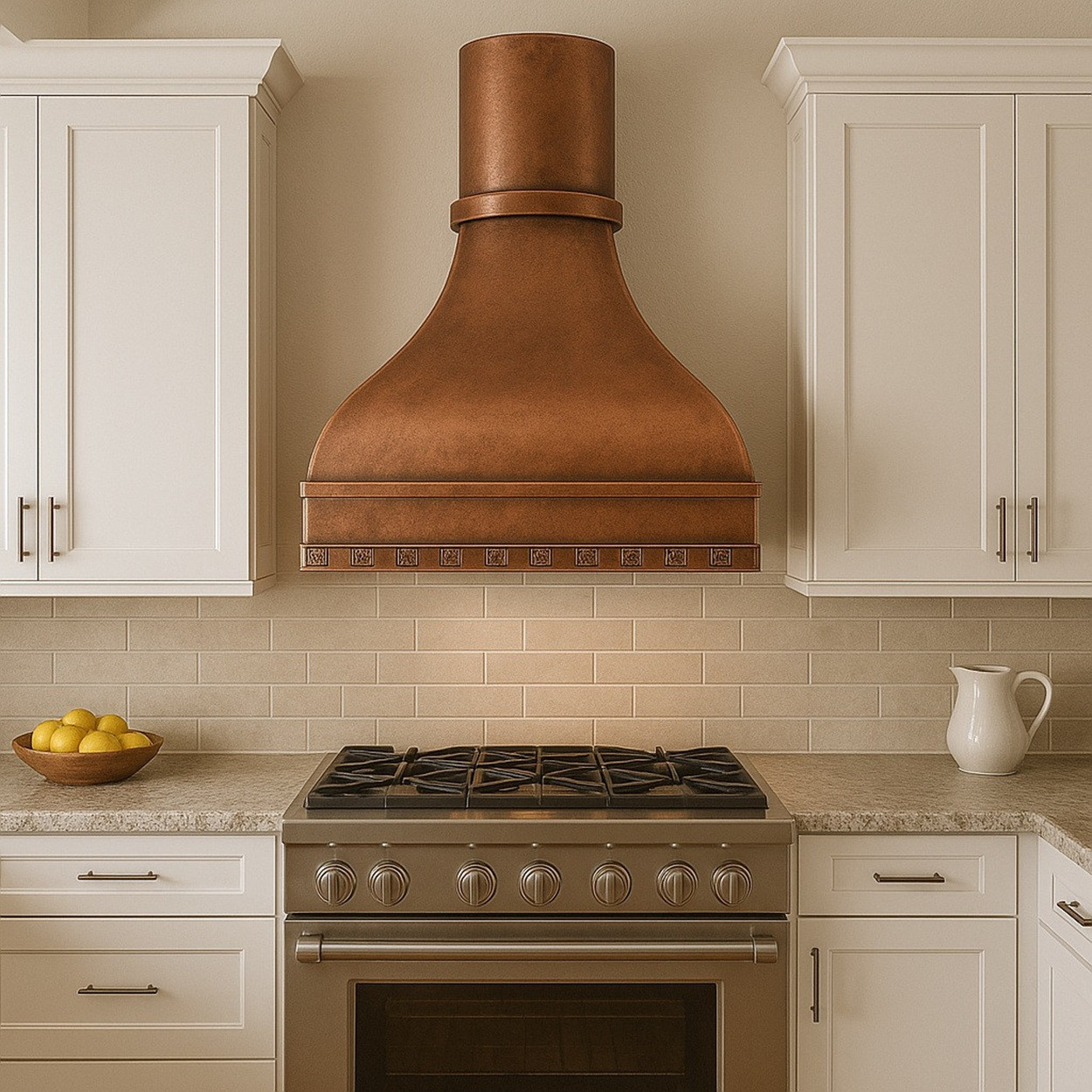
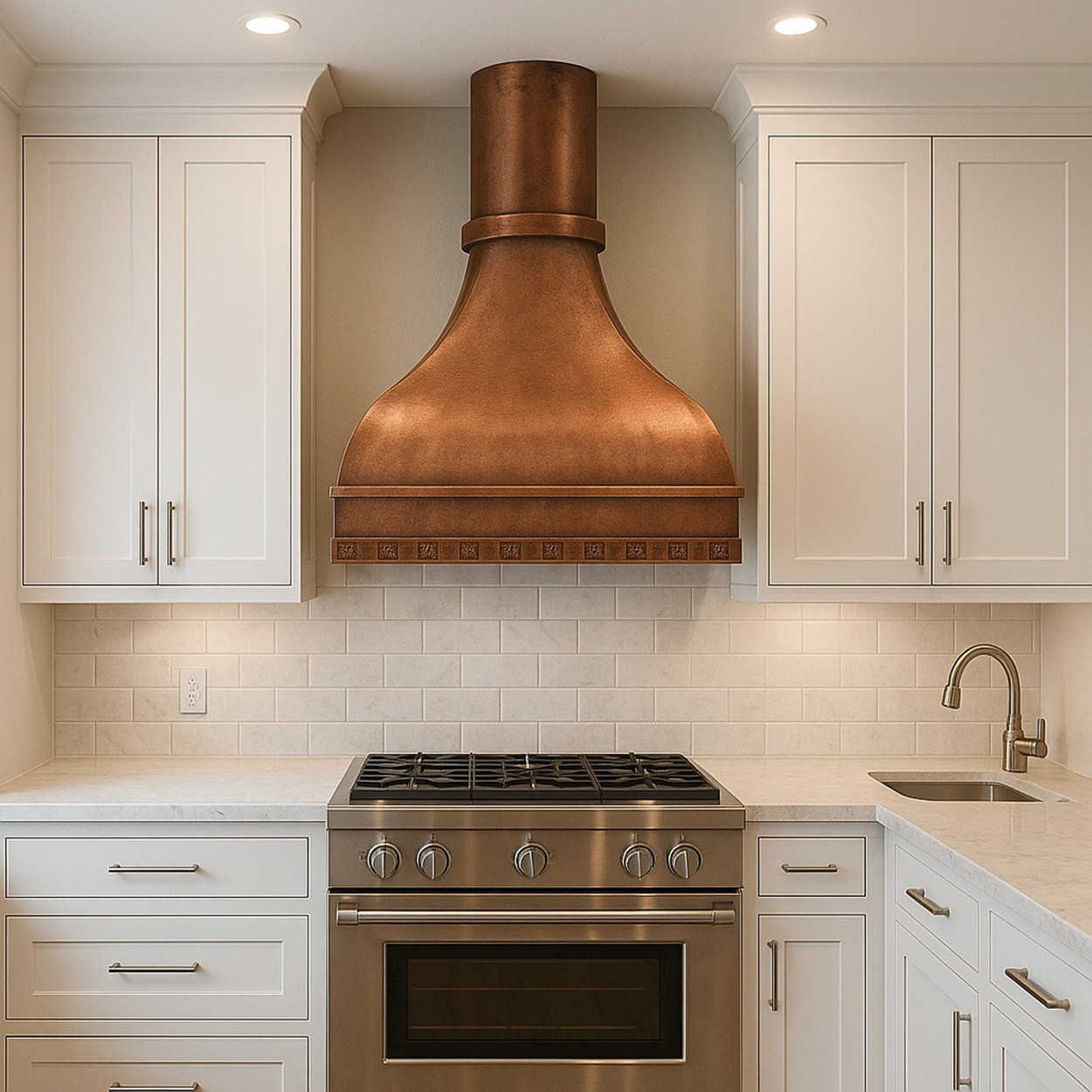
In a transitional kitchen, the curved bell copper hood adds warmth and artisan character while the surrounding finishes remain clean and balanced. Transitional interiors often combine simple cabinetry, neutral colors, stone counters, refined lighting, and restrained decorative details. The hood gives the kitchen personality without forcing the entire room into a fully rustic style.
The paneled apron helps the hood feel organized in a cleaner setting. It provides traditional detail, but the overall shape remains smooth and architectural. The copper surface softens painted cabinetry, stone backsplashes, and modern hardware, creating a focal point that feels handcrafted but still polished.
This lifestyle image shows how a curved bell copper hood can work in a kitchen with updated materials. It becomes the warm visual anchor above the range while the surrounding cabinetry and counters keep the room current and approachable.
Paneled Apron Design
The paneled apron is the detail that gives this hood its lower architectural structure. Instead of ending with a plain band, the hood includes framed sections that add rhythm and definition. This makes the apron feel connected to cabinetry, doors, trim, and other paneled elements in the kitchen.
This feature is especially helpful when the kitchen needs a copper hood that feels decorative but not overly ornate. The panels give the lower edge a finished appearance, while the curved bell body keeps the overall form soft and graceful. Together, they create a balanced hood for traditional, Mediterranean, Tuscan, Spanish Colonial, and transitional interiors.
Curved Bell Shape
The curved bell body gives the hood a broad, rounded silhouette above the range. This shape works well in kitchens where the cooking wall needs softness, movement, and visual height. The wide shoulders make the hood feel substantial, while the narrowing upper section guides the eye toward the chimney.
For broader comparisons across handcrafted hood materials, visit the Metal Range Hoods collection. Comparing copper with zinc, iron, and other metal finishes can help determine whether a warm patina or a cooler metal tone works best for the kitchen.
Hammered Copper Patina
The copper patina gives this hood warmth and depth. Depending on lighting and surrounding finishes, the surface can reveal reddish, brown, bronze, and amber tones. The hammered texture adds small highlights and shadows across the curved body, helping the hood look handcrafted rather than flat.
This living finish can coordinate with wood cabinetry, stone backsplashes, clay tile, bronze hardware, iron lighting, and plaster walls. It can also add warmth in cleaner transitional kitchens where the palette is white, gray, cream, or natural wood.
Buyer Confidence
Customer feedback can help homeowners understand how handcrafted copper hoods look and feel after installation. Reviews often mention craftsmanship, finish character, delivery experience, and how the hood changes the kitchen once it becomes the centerpiece above the range.
For buyer impressions and additional customer experiences, visit Rustica House Reviews. This can be useful when comparing made-to-order copper hoods and other artisan home features.
Ventilation Planning
A copper range hood should be planned around both appearance and performance. The visible copper shell creates the focal point, while the insert, blower, filters, ducting, and lighting determine how the hood functions. Range width, cooking habits, ceiling height, cabinet clearance, and installation type should all be reviewed before ordering.
This hood can be planned for wall-mounted or island kitchen installations depending on the room layout. Rustica House can supply the 200 CFM insert only. Any other insert must be supplied by the buyer, and Rustica House will make the hood ready for that buyer-supplied insert when the insert details are provided.
Frequently Asked Questions
What makes this copper hood different?
This hood combines a rounded curved bell body with a paneled lower apron. The bell shape adds softness and height, while the apron panels give the hood a more structured architectural base.
Which kitchen styles fit this hood?
This hood works well in traditional, Mediterranean, Tuscan, Spanish Colonial, transitional, rustic, and old-world kitchens. It pairs best with stone, plaster, handmade tile, wood cabinetry, bronze hardware, and iron accents.
Is the paneled apron only decorative?
The paneled apron is mainly a visual design feature, but it also helps define the lower section of the hood. It gives the range wall a more finished and architectural appearance.
Conclusion
The Curved Bell Copper Range Hood with Paneled Apron brings a rounded bell silhouette, warm copper patina, cylindrical chimney, broad shoulders, and structured apron detail into the kitchen. These lifestyle images show how the hood adapts to traditional, Mediterranean, Tuscan, Spanish Colonial, and transitional interiors while keeping its handcrafted copper identity. With the right surrounding materials, it can become the defining architectural focal point above the cooking area.