 US Dollar
 Euro
Euro
 Australian Dollar
 Canadian Dollar
 Polish Zloty
 British Pound

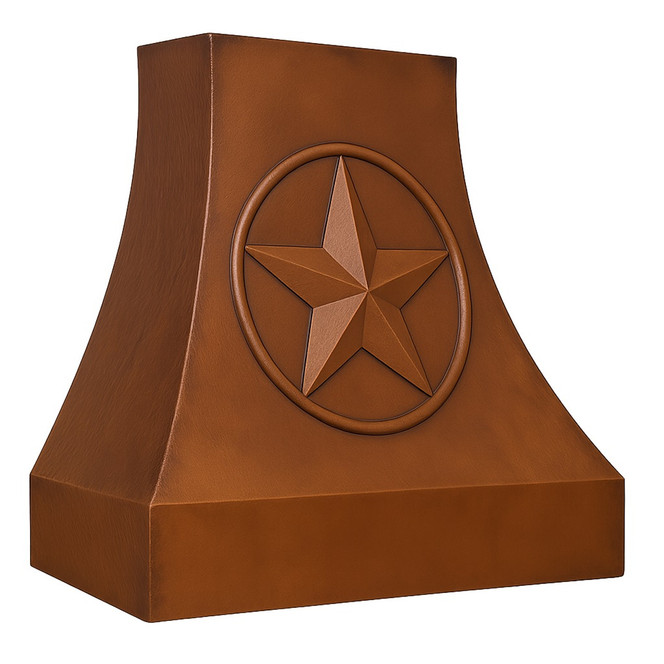
Copper Vent Hood with Texas Star: Hand-Hammered Amber Patina and Southwestern Character
A Copper Vent Hood with Texas Star combines bold regional symbolism, handcrafted metalwork, and practical kitchen ventilation in one architectural focal point. Formed from 16-gauge copper, the hood features a broad trapezoidal body, stepped chimney, deeply hammered surface, and a prominent Texas Star framed within the apron. Its warm amber patina brings out the natural variation of the copper while emphasizing the raised star and artisan hammer marks. Designed for Spanish Colonial, Southwestern, Hacienda, rustic, ranch, and transitional kitchens, this custom vent hood can be adapted in width, mounting style, patina, and ventilation configuration to suit the surrounding cabinetry and cooking area.
Blog Summary
- Product: Copper vent hood
- Motif: Raised Texas Star
- Material: 16-gauge copper
- Finish: Warm amber patina
- Style: Southwestern and Spanish Colonial

A Regional Statement in Handcrafted Copper
The Texas Star gives this hood a strong visual identity while the copper body keeps the design rooted in traditional artisan metalwork. Rather than functioning only as a ventilation enclosure, the hood becomes part of the kitchen’s architecture.
The combination works especially well in homes that celebrate Southwestern, ranch, Spanish Colonial, or regional Texas design.
Why the Texas Star Works as a Focal Motif
The five-point star is centered on the apron where it remains visible from across the kitchen. Its symmetry creates a clear visual anchor beneath the broader copper canopy.
The raised design also introduces another layer of depth beyond the hammered surface.
Design Highlights
- Centerpiece: Raised Texas Star
- Frame: Circular relief border
- Surface: Deep hand hammering
- Patina: Warm amber finish
- Profile: Broad trapezoidal body
Trapezoidal Hood Silhouette
The hood expands toward the bottom, creating a broad lower canopy that frames the cooking area. Its sloping sides then narrow as they rise toward the chimney.
This shape gives the enclosure a substantial architectural presence while preventing the upper section from appearing overly heavy.
Broad Lower Apron
The lower apron acts as the strongest horizontal element and provides a natural location for the Texas Star motif. Its width visually grounds the hood above the range.
The apron should remain centered with the cooking surface and surrounding cabinetry.
Stepped Chimney Design
The upper chimney incorporates stepped transitions inspired by traditional cornices. These horizontal breaks add detail while guiding the eye upward.
The stepped profile works particularly well in kitchens with crown molding, exposed beams, plaster walls, or tall ceilings.
Silhouette Features
- Base: Broad lower canopy
- Sides: Sloping trapezoidal profile
- Chimney: Tall upper section
- Crown: Stepped architectural finish
- Effect: Strong vertical balance
Hand-Hammered Copper Texture
Every visible copper panel is hammered manually, producing an irregular dimpled texture rather than a perfectly flat surface. Individual hammer marks create tiny highlights and shadows across the hood.
This makes the copper appear more dimensional and gives the enclosure visible evidence of artisan production.
How Hammering Interacts with Light
Natural daylight, recessed fixtures, and pendant lighting reveal different sections of the hammered surface throughout the day. Raised areas reflect more strongly while deeper impressions appear darker.
The texture becomes especially dramatic around the curved apron and Texas Star relief.
Natural Handmade Variation
No two hand-hammered hoods will display precisely the same pattern. Minor differences in hammering, dimensions, patina, seams, and decorative details are expected.
These characteristics distinguish handcrafted copper from factory-stamped sheet metal.
Hammered Surface Characteristics
- Texture: Individually hammered
- Depth: Organic surface variation
- Reflection: Changing highlights
- Character: Unique artisan finish
- Variation: Expected between pieces
Warm Amber Copper Patina
The amber patina gives the hood a sun-warmed bronze appearance with reddish, golden, and deeper brown undertones. The finish emphasizes the irregular hammering and makes the star relief more visible.
It pairs naturally with wood, terracotta, stone, plaster, brass, iron, and other warm architectural materials.
Patina Around the Relief
Darker tones may collect naturally around the raised star, circular border, seams, and deeper hammer marks. This tonal contrast strengthens the three-dimensional appearance.
The result is more nuanced than a uniform painted surface.
Copper as a Living Finish
Copper may continue changing through exposure to air, moisture, heat, fingerprints, cleaning, and normal cooking activity. Some areas can deepen while others become lighter or more polished through use.
This gradual evolution is part of the natural character of patinated copper.
Amber Patina Qualities
- Base Tone: Warm amber brown
- Highlights: Copper and bronze
- Shadows: Deeper around relief
- Aging: May continue naturally
- Variation: Hand-applied finish
The Texas Star in High Relief
The star is raised above the surrounding apron, allowing each point to catch light along its edges. A circular border frames the motif and separates it visually from the surrounding hammered copper.
This combination transforms the emblem into a sculptural element rather than a flat decorative image.
Strong Central Symmetry
The five-point star creates a clear center on the front of the hood. Its geometry contrasts with the more organic hammer marks surrounding it.
Because the motif is visually dominant, surrounding backsplash and cabinetry can remain relatively restrained.
Regional Identity Without Excess Ornament
The hood communicates Texas and Southwestern character through one strong emblem instead of relying on many decorative motifs. This keeps the overall design bold but controlled.
The star can therefore work in both highly rustic and more transitional kitchens.
Texas Star Details
- Shape: Five-point star
- Position: Centered on apron
- Relief: Raised dimensional design
- Frame: Circular surrounding border
- Style: Regional Southwestern character
Spanish Colonial Kitchen Design
The combination of hammered copper, architectural molding, warm patina, and sculptural ornament works naturally in Spanish Colonial kitchens. Plaster walls, dark wood cabinetry, terracotta floors, and iron lighting create a complementary setting.
The star adds a distinctly regional American interpretation to the Old World metalwork.
Pairing with Talavera Tile
Mexican Talavera can add cobalt, green, yellow, terracotta, and white beneath the warm copper. A controlled backsplash panel behind the range can strengthen the Spanish Colonial connection.
When the tile is highly patterned, surrounding cabinets should remain visually simple.
Pairing with Wrought Iron
Black or oxidized iron chandeliers, cabinet hardware, railings, or pot racks provide a dark counterpoint to the amber copper.
Iron also supports the historic architectural language of Spanish Colonial interiors.
Spanish Colonial Pairings
- Talavera: Adds handcrafted color
- Iron: Dark architectural contrast
- Plaster: Soft Old World walls
- Wood: Warm historic character
- Terracotta: Regional earth tones
Southwestern Kitchen Style
The hood fits naturally within Southwestern kitchens that combine stone, clay tile, plaster, heavy timber, woven textiles, and warm metal. The Texas Star makes the regional influence immediately recognizable.
The amber finish reinforces the earthy palette associated with desert landscapes and ranch architecture.
Pairing with Natural Stone
Limestone, sandstone, travertine, and rough-cut stone offer matte texture beside reflective copper. The two surfaces provide enough contrast to remain visually distinct.
A stone backsplash or adjacent fireplace can help ground the large metal hood.
Pairing with Wood Beams
Exposed wood beams provide enough visual weight to balance a large copper enclosure. Dark beams create a more traditional ranch atmosphere, while lighter oak can produce a softer transitional result.
The amber patina connects naturally with both.
Southwestern Materials
- Stone: Natural rugged texture
- Timber: Architectural warmth
- Clay: Earth-tone flooring
- Iron: Strong metal contrast
- Leather: Rich regional character
Texas Ranch Kitchen Inspiration
In a ranch-style kitchen, the hood can become a signature feature above a substantial cooking range. Leather seating, reclaimed timber, natural stone, and iron hardware reinforce the regional character.
The star motif creates a direct connection to Texas identity without requiring additional themed décor.
Using the Hood with Reclaimed Wood
Reclaimed oak or pine introduces visible grain, knots, and age that complement the uneven hammered copper. The two materials share a handcrafted, naturally imperfect appearance.
Pale stone or plaster can keep the overall composition from becoming too dark.
Rustic Kitchen Applications
The hood also suits broader rustic interiors where regional symbolism is used as one decorative accent among natural materials. Its hammered surface works particularly well with rough stone, hand-finished wood, and forged metal.
Simple cabinet doors help keep attention on the hood.
Ranch-Style Pairings
- Reclaimed Wood: Natural aged surface
- Leather: Adds rich texture
- Stone Counters: Durable visual base
- Iron Lighting: Reinforces rustic metalwork
- Neutral Plaster: Keeps room balanced
Transitional Kitchens
The Texas Star hood can also work in transitional interiors when it serves as the main handcrafted feature. Simple cabinetry, stone counters, large windows, and restrained hardware provide a cleaner background.
The hood supplies warmth and regional identity without requiring the entire kitchen to follow a rustic theme.
Pairing with White Cabinets
White or warm cream cabinetry creates a strong contrast that makes the amber copper appear richer. The bright surroundings also prevent the large metal hood from visually darkening the room.
Black hardware can provide additional definition.
Pairing with Dark Cabinets
Walnut, charcoal, dark green, or black cabinetry creates a more dramatic setting. The copper then acts as a warm focal point against the deeper background.
Light countertops and sufficient natural light help balance the composition.
Cabinet Pairings
- White: Bright copper contrast
- Cream: Warm traditional balance
- Oak: Relaxed natural character
- Walnut: Rich regional depth
- Dark Green: Earthy sophisticated contrast
Standard 40-Inch Width
The supplied specifications describe the hood at approximately 40 inches wide. This provides a substantial presence suitable for medium-to-large residential cooking areas.
Custom widths may be produced according to the range, cabinetry, and available wall space.
Choosing the Correct Hood Width
The final hood dimension should be coordinated with the cooking surface and ventilation system rather than selected only for appearance. Cabinet spacing and backsplash dimensions also depend on this measurement.
All dimensions should be confirmed before production begins.
Custom Width Options
A made-to-order hood can be adapted when the standard width does not suit the project. Larger dimensions may require changes to internal support, ventilation insert size, weight, packing, and installation planning.
Width Planning
- Standard: Approximately 40 inches
- Custom: Available by project
- Range: Coordinate cooking surface
- Cabinets: Preserve visual spacing
- Insert: Confirm internal fit
Wall-Mounted Configuration
A wall-mounted hood places the copper enclosure above a range positioned against the kitchen wall. The decorative front, apron, and side panels remain visible while the back integrates with the backsplash.
This configuration works especially well in Spanish Colonial, Southwestern, ranch, and farmhouse kitchens.
Island Canopy Configuration
The supplied options also include an island version. Island installations expose the hood from all directions, requiring complete finishing around every side.
Ceiling support, duct routing, and visual symmetry become more important because the enclosure is suspended above the center of the room.
Under-Cabinet Configuration
An under-cabinet configuration allows the decorative hood to coordinate with cabinetry above or around the cooking surface. Available vertical space must be reviewed carefully before selecting this mounting style.
Mounting Options
- Wall Mount: Traditional range-wall installation
- Island: Four-sided suspended enclosure
- Under Cabinet: Integrated cabinetry application
- Custom: Adapted by project
- Support: Requires adequate structure
Ventilation Insert Options
The supplied product information states that the hood can accommodate blower inserts ranging from approximately 600 to 1,200 CFM. The copper enclosure is therefore designed around separate mechanical ventilation equipment.
The appropriate airflow depends on the range, cooking habits, kitchen volume, ductwork, and local requirements.
600 CFM Ventilation
A 600 CFM insert may be suitable for many residential applications depending on the cooking appliance and installation. It provides considerably more airflow than light-duty ventilation systems.
The duct size and route should match the equipment manufacturer’s requirements.
1,200 CFM Ventilation
Higher-capacity inserts may be used for more intensive cooking or larger professional-style ranges. Increased airflow can require larger ducting and additional planning.
The insert specifications should be provided before the hood is fabricated.
Ventilation Options
- Capacity: Approximately 600–1,200 CFM
- Insert: Sized to project needs
- Duct: Match blower specifications
- Filters: Stainless-steel baffles
- Access: Preserve maintenance clearance
Stainless-Steel Baffle Filters
Baffle filters collect airborne grease while allowing exhaust air to pass through the insert. Their stainless-steel construction is durable and appropriate for regular kitchen use.
Filters should remain removable after installation for cleaning.
Ductwork Planning
The duct route should be established before fabrication, particularly in remodels where framing, joists, or existing mechanical systems may limit routing options.
Long runs and multiple bends may affect airflow performance.
Ventilation and Decorative Design
The mechanical insert remains visually concealed inside the copper shell, allowing the ventilation system to perform without disrupting the handmade appearance of the hood.
This separation between decorative enclosure and mechanical equipment makes customization more flexible.
Backsplash Design Behind the Star Hood
The Texas Star already provides a strong central motif, so the backsplash should support rather than compete with it. Natural stone, simple ceramic, plaster, or restrained Talavera patterns can all work effectively.
The backsplash should align carefully with the hood centerline.
Stone Slab Backsplash
A relatively quiet stone slab allows the copper texture and star relief to dominate the range wall. Limestone, marble, travertine, and similar materials can create a refined background.
Warm stone colors integrate particularly well with amber copper.
Mexican Tile Backsplash
Talavera tile can reinforce the regional character with cobalt, terracotta, yellow, green, and white. A limited panel directly behind the range can provide color without overwhelming the star.
Geometric or simpler motifs generally work best around a highly symbolic hood.
Backsplash Choices
- Stone: Quiet natural backdrop
- Talavera: Regional artisan color
- Solid Tile: Controlled handmade texture
- Plaster: Soft traditional simplicity
- Brick: Rustic architectural character
Pairing the Hood with Copper Sinks
A hammered copper kitchen sink can repeat the material at countertop level and create a coordinated metal story. The sink and hood do not need identical patinas.
Slight differences in tone can make the room feel more naturally layered.
Pairing with Brass Fixtures
Brass faucets, cabinet hardware, and lighting introduce warm golden contrast without competing with the amber copper. Antique and unlacquered finishes work especially well.
The combination supports both traditional and transitional interiors.
Pairing with Black Iron
Black iron creates a strong counterpoint and can be repeated through chandeliers, cabinet hardware, stools, railings, or window frames.
The darker metal also emphasizes the warm copper tones.
Metal Combinations
- Copper: Coordinated warm surface
- Brass: Golden accent metal
- Iron: Strong dark contrast
- Bronze: Traditional tonal bridge
- Stainless: Transitional appliance contrast
Lighting the Texas Star
Directional lighting can make the raised star more dramatic by casting small shadows around the relief. The hammered field surrounding it also responds strongly to side lighting.
Warm bulbs reinforce amber and bronze undertones.
Natural Daylight
Sunlight can reveal brighter copper and reddish tones that may be less obvious under artificial lighting. The hood may therefore change appearance noticeably between morning and evening.
This shifting character is part of the appeal of textured metal.
Recessed Kitchen Lighting
Recessed fixtures positioned in front of the hood can illuminate the apron and upper canopy without visually competing with the design.
Careful placement helps avoid excessive glare on the metal.
Lighting Strategies
- Warm LEDs: Enrich amber patina
- Directional Light: Highlights Texas Star
- Daylight: Reveals copper variation
- Recessed Lights: Keep ceiling uncluttered
- Pendants: Support nearby work zones
Routine Copper Cleaning
Use a soft cloth with mild, pH-neutral soap for normal cleaning. Grease and fingerprints should be removed gently rather than scrubbed aggressively.
Dry the surface afterward to minimize spotting.
Protecting the Star Relief
Abrasive pads and hard tools should not be used across the raised star or circular frame because they may scratch the patina or alter sharper relief edges.
Clean around the motif with a soft cloth and light pressure.
Wax Protection
The supplied instructions recommend a light beeswax coating approximately every six to twelve months to help preserve luster and protect the patinated surface.
Any wax or care product should be compatible with the selected copper finish.
Copper Care Tips
- Clean: Mild soap and water
- Cloth: Use soft microfiber
- Relief: Avoid abrasive pressure
- Wax: Apply periodically if desired
- Avoid: Harsh chemical cleaners
Cleaning Baffle Filters
The supplied maintenance guidance recommends cleaning baffle filters approximately once a month. Actual frequency should depend on cooking intensity and the insert manufacturer’s recommendations.
Warm soapy water or a dishwasher may be used when permitted by the equipment specifications.
Protecting the Hood During Installation
The finished copper should remain covered while nearby tile, plaster, grout, paint, countertops, cabinets, and lighting are being installed. Construction chemicals may permanently alter the patina.
Installers should handle the hood with clean gloves and padded protection.
Made-to-Order Craftsmanship
Custom production allows the hood width, patina, Texas Star treatment, mounting style, and ventilation preparation to be coordinated with the kitchen rather than forcing the project around a standard factory enclosure.
All major specifications should be approved before fabrication begins.
Custom Patina Options
The amber finish creates the appearance shown, but alternative copper tones can substantially change the character of the hood. Lighter patinas feel brighter, while darker coffee finishes create a heavier Old World appearance.
Hand-applied finishes will always display natural tonal variation.
Custom Installation Style
Wall, island, and under-cabinet applications require different fabrication details. The desired mounting style should therefore be selected before production.
Island versions in particular require complete finishing around all visible sides.
Custom Options
- Width: Adapt to cooking area
- Patina: Select copper color
- Star: Preserve central relief motif
- Mount: Wall, island, or under cabinet
- Insert: Coordinate blower capacity
Measurements to Confirm
Verify the range width, available wall space, hood depth, ceiling height, mounting height, backsplash dimensions, cabinet spacing, duct location, and ventilation insert dimensions.
These measurements should reflect finished surfaces rather than preliminary framing whenever possible.
Insert Specifications
If the customer supplies a separate ventilation insert, the exact brand, model, width, depth, height, duct outlet, and installation instructions should be reviewed before fabrication.
Similar nominal sizes can have very different physical dimensions.
Structural Support
The mounting structure must support the completed copper hood and ventilation equipment. Blocking and reinforcement are easiest to add during new construction before walls and ceilings are finished.
The installer should confirm the final support method.
Pre-Order Checklist
- Range: Confirm cooking dimensions
- Hood: Verify final width
- Ceiling: Record finished height
- Duct: Confirm route and outlet
- Insert: Supply exact specifications
Delivery and Handling
Large handcrafted hoods require protective packing to preserve both the copper shape and patina. Measure hallways, doors, gates, staircases, and other access points before the shipment arrives.
The shipping crate will be larger than the finished hood.
Inspecting the Shipment
Check the crate for visible impact before discarding any packaging. Photograph significant dents or crushed areas and retain the packing materials until the hood has been inspected completely.
Do not begin installation before confirming the enclosure arrived in suitable condition.
Safe Lifting
Use enough people or suitable equipment to move the hood safely. Decorative edges, the Texas Star, and other relief details should not be used as lifting points.
Padded surfaces help protect the finish during positioning.
Delivery Checklist
- Access: Measure installation route
- Crate: Inspect upon arrival
- Photos: Document visible damage
- Lifting: Arrange adequate assistance
- Protection: Preserve patina and relief
Understanding Handmade Variation
Natural differences in hammering, patina, star relief, seams, dimensions, and tonal distribution are expected in handcrafted copper production.
These characteristics should be distinguished from severe shipping dents, structural deformation, or incorrect fabrication.
Why This Hood Stands Apart
The combination of a handcrafted copper body and a strong symbolic motif creates a more personal focal point than a generic metal hood. The Texas Star gives the design a recognizable regional identity while the amber copper preserves a timeless architectural quality.
The result can feel authentically Southwestern without becoming overly themed.
Ordering and Project Planning
Before ordering, confirm the hood width, Texas Star motif, amber patina, hammered surface, mounting style, blower insert, duct configuration, backsplash, cabinet spacing, structural support, and installation schedule.
For custom dimensions, patina, ventilation preparation, or mounting requirements, contact Rustica House before completing the surrounding cabinetry and construction.
Conclusion
The Copper Vent Hood with Texas Star combines hand-hammered 16-gauge copper, a warm amber patina, broad trapezoidal architecture, stepped chimney detailing, and a raised five-point Texas Star within a custom ventilation enclosure designed to become the centerpiece of the kitchen. With a standard width described at approximately 40 inches, custom sizing, wall-mount, island, and under-cabinet options, plus compatibility with 600 to 1,200 CFM blower inserts, the design can be adapted to many residential projects. Thoughtful sizing, proper ventilation planning, coordinated backsplash materials, structural preparation, professional installation, and gentle copper maintenance allow this hood to bring lasting Southwestern, Spanish Colonial, ranch, Hacienda, rustic, and transitional character to the home.