 US Dollar
 Euro
Euro
 Australian Dollar
 Canadian Dollar
 Polish Zloty
 British Pound

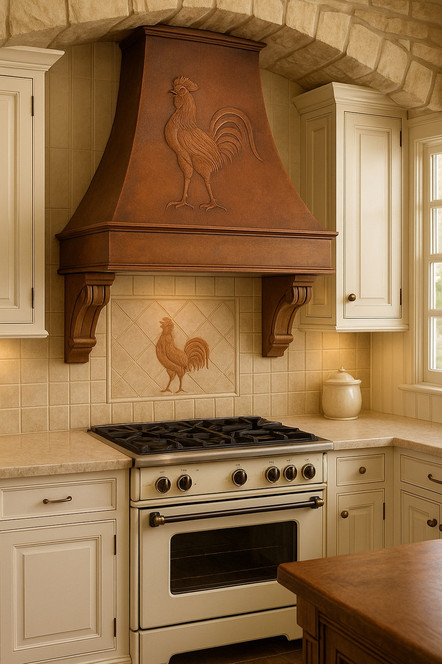
Copper Vent Hood with Rooster Motif Buying Guide helps homeowners choose the right size, finish, mounting style, texture, and ventilation setup for a farmhouse inspired copper hood. This design features a sloping canopy, hand punched rooster apron, hammered copper character, and warm rustic patina for French Country, farmhouse, Tuscan, rustic, and transitional kitchens. Available for wall mount or kitchen island installation, it can be customized in widths from 28 to 78 inches and heights from 24 to 72 inches. Explore the copper rooster vent hood before planning your kitchen focal point.
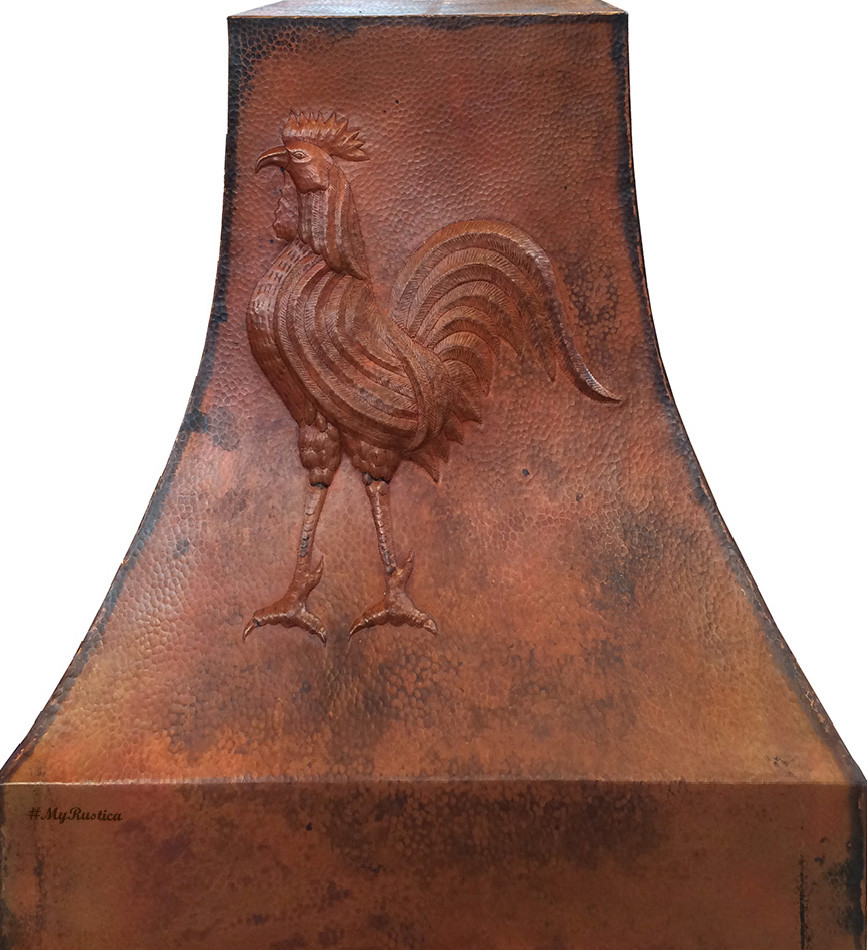
Rooster Hood Character
A copper vent hood with a rooster motif is designed for kitchens that need more than a plain appliance cover. The hand punched rooster apron gives the hood a country inspired focal point, while the sloping copper canopy keeps the overall silhouette clean and architectural. This balance makes the hood decorative without feeling overly busy. The rooster detail works especially well in farmhouse kitchens, French Country interiors, rustic homes, and traditional cooking spaces where the range wall should feel warm and personal. Copper adds another layer of character because its surface reflects light softly and develops deeper tones as it ages.
Farmhouse Design Appeal
The rooster motif has a long connection with farmhouse and country kitchen design. It brings a familiar rural symbol into the cooking area while still allowing the hood to feel custom and refined. On this design, the motif sits across the front apron where it can be seen clearly above the stove. That placement helps the hood frame the range and turn the cooking wall into a decorative feature. The look can be casual or elegant depending on surrounding materials. For additional visual ideas, visit the rooster copper hood gallery for farmhouse kitchen inspiration.
Best Style Matches
- French Country kitchens
- Rustic farmhouse rooms
- Tuscan cooking spaces
- Traditional kitchen walls
- Transitional rustic homes
Choosing Hood Size
Size is one of the most important buying decisions because it affects appearance and ventilation performance. The copper rooster vent hood is available in widths from 28 to 78 inches, giving homeowners flexibility for compact ranges, standard cooktops, and larger cooking stations. A narrower hood can suit a small farmhouse kitchen, while a wider hood creates stronger presence above a large range. Height is also customizable from 24 to 72 inches, allowing the hood to fit different ceiling conditions and chimney proportions. Before ordering, measure the cooktop width, wall space, cabinet clearance, ceiling height, and desired visual balance.
Width Planning Tips
Many buyers prefer a hood that is slightly wider than the cooking surface because it improves visual balance and helps capture side steam or smoke. This is especially useful in open kitchens, gas range layouts, or cooking spaces where burners are used frequently. A 30 inch cooktop may look balanced with a slightly wider hood, while larger ranges often need more width to avoid appearing undersized. The surrounding cabinets also matter. If the hood sits between upper cabinets, the width must be planned carefully. If it sits on an open wall, a larger hood can become a strong architectural feature.
Size Checks
- Measure cooktop width
- Check wall clearance
- Review ceiling height
- Plan chimney length
- Allow capture width
Wall Mount Option
A wall mount copper rooster hood is the most common choice when the range or cooktop sits against a kitchen wall. In this layout, the front apron becomes the main visual surface, making the rooster motif especially important. The hood can be framed by cabinets, stone, tile, brick, or plaster. Wall mount installations often feel more traditional because the hood connects directly with the backsplash and range wall. When planning this version, consider the backsplash height, duct path, cabinet spacing, and mounting support. The hood should be centered above the cooking surface and scaled to feel integrated with the full wall design.
Island Mount Option
The island version is designed for kitchens where the cooktop sits on an island instead of against a wall. This changes the buying decision because the hood must be finished and visually balanced from every side. Island hoods often become major focal points in open floor plans because they are visible from the kitchen, dining area, and living space. The rooster motif should still be oriented so it can be appreciated from the most important viewing angle. Island installation also requires ceiling support and careful duct planning. This option works beautifully when a farmhouse or rustic kitchen has a central cooking island.
Mounting Choices
- Wall mount cooking wall
- Kitchen island layout
- Ceiling mounted design
- Centered range placement
- Open kitchen visibility
Surface Texture
The hood can be ordered with smooth or hammered copper texture, and each surface creates a different effect. Hammered copper feels more rustic, traditional, and visibly handmade. The small surface marks catch light and create movement across the canopy and apron. Smooth copper feels cleaner and more restrained, making it useful in transitional or more refined farmhouse kitchens. If the room already includes busy tile or heavy wood grain, a smoother surface may create balance. If the kitchen needs more artisan character, hammered copper gives the hood stronger depth and a more handcrafted appearance.
Patina Selection
Finish selection strongly affects the final mood of the hood. Coffee patina creates a deep, aged tone with strong rustic presence. Antique copper feels warm and traditional, while natural copper shows brighter metal character. Honey patina adds golden warmth, and green or polished finishes create more specialized design effects. Since copper is a living material, the surface can continue changing with time, heat, steam, and cleaning habits. Choose the finish according to the full room palette. Dark cabinets may benefit from honey or natural tones, while light walls and stone counters can support coffee or antique finishes with stronger contrast.
Finish Options
- Coffee copper patina
- Antique copper finish
- Natural copper tone
- Honey warm finish
- Green patina option
Rooster Motif Details
The rooster design is the signature feature of this hood. Because it is punched directly into the copper apron, it feels integrated into the metal rather than applied as a separate decorative piece. This gives the front of the hood a handcrafted focal point with texture and personality. Buyers should think about how bold they want the motif to appear in relation to the surrounding kitchen. In a simple kitchen, the rooster can become the main decorative feature. In a highly detailed room, the motif should coordinate with other rustic elements such as cabinet hardware, tile borders, iron lighting, or wood beams.
Ventilation Planning
The decorative copper body must be paired with a suitable ventilation plan. This hood supports ducted ventilation or ductless recirculating inserts, depending on the kitchen setup. A ducted system moves air outside, while a recirculating insert filters air and returns it to the room. The product can also be planned around an optional insert or a custom insert supplied by the buyer. Ventilation should be planned before production so the hood body fits the selected insert properly. Consider cooking frequency, range type, duct route, filter access, noise level, and lighting placement before ordering.
Insert Planning
- Ducted ventilation route
- Ductless insert option
- Filter access needs
- Fan power planning
- Custom insert fit
Kitchen Material Pairings
This copper rooster hood pairs well with materials that support warmth and handmade character. In farmhouse kitchens, it looks natural with shiplap, wood shelves, butcher block, apron front sinks, and simple white cabinetry. In French Country rooms, it can pair with stone floors, cream cabinets, floral tile, and aged brass hardware. In Tuscan kitchens, copper works with plaster walls, terracotta tile, dark wood, and iron lighting. Transitional kitchens can use the hood as a rustic accent against cleaner cabinets and stone counters. The key is to repeat at least one tone or material elsewhere so the hood feels connected to the room.
Best Backsplash Choices
The backsplash should support the rooster hood without competing against it. A plain plaster or stone backsplash lets the motif stand out clearly. Handmade subway tile can add texture while keeping the wall calm. Brick gives the hood a warm farmhouse or rustic industrial feeling. Talavera tile can work when the colors are coordinated carefully, especially if the kitchen already has Mexican or Mediterranean influence. If the backsplash is highly decorative, choose a simpler hood finish or reduce other busy elements nearby. A successful range wall lets the copper hood, apron motif, and backsplash work together as one composition.
Backsplash Pairings
- Rustic brick walls
- Handmade white tile
- Natural stone slabs
- Warm plaster finishes
- Soft patterned tile
Made to Order Value
This hood is made to order, which gives buyers more control over the final product than a standard stock appliance cover. Width, height, texture, finish, mounting type, and ventilation setup can be selected according to the kitchen layout. Made to order production is especially valuable for older homes, custom cabinetry, tall ceilings, unusual island layouts, or kitchen remodels where standard sizes do not fit properly. It also allows the hood to match the homeowner’s design goals more closely. Instead of adjusting the kitchen around a fixed hood, the hood can be built around the room’s dimensions and style.
Care and Maintenance
Copper hoods should be cleaned gently to protect the finish. Use mild soap, water, and a soft cloth for routine care. Avoid abrasive pads, acidic cleaners, harsh degreasers, or rough scrubbing because they can damage or unevenly alter the patina. Grease should be wiped away regularly, especially around the underside of the hood and nearby backsplash. Filters should be cleaned or replaced according to the insert instructions. Some homeowners allow copper to age naturally, while others use wax occasionally to slow patina changes. Either approach can work when the cleaning routine matches the desired appearance.
Care Guidelines
- Use mild soap only
- Avoid harsh cleaners
- Dry with soft cloth
- Clean filters often
- Protect patina finish
Buying Guide Summary
When buying a copper vent hood with a rooster motif, begin with the kitchen layout. Choose wall mount for a range against the wall or island mount for a central cooktop. Measure the cooktop, ceiling height, and cabinet spacing before selecting width and height. Decide whether hammered or smooth copper best fits the room. Then select a patina that coordinates with cabinetry, backsplash, lighting, and hardware. Plan ventilation early, especially if using a custom insert. Finally, think about how the rooster motif will relate to the full kitchen style so the hood feels intentional and balanced.
Final Design Guidance
Copper Vent Hood with Rooster Motif Buying Guide shows how size, finish, texture, mounting style, and ventilation planning affect the final kitchen design. This hood is ideal for homeowners who want farmhouse warmth, rustic copper texture, and a decorative apron detail above the cooking area. The rooster motif creates a personal focal point, while the custom dimensions and finish options allow the hood to fit many layouts. When paired with wood, stone, plaster, brick, tile, iron, or warm cabinetry, the copper rooster hood becomes more than ventilation. It becomes the defining feature of the kitchen.