 US Dollar
 Euro
Euro
 Australian Dollar
 Canadian Dollar
 Polish Zloty
 British Pound

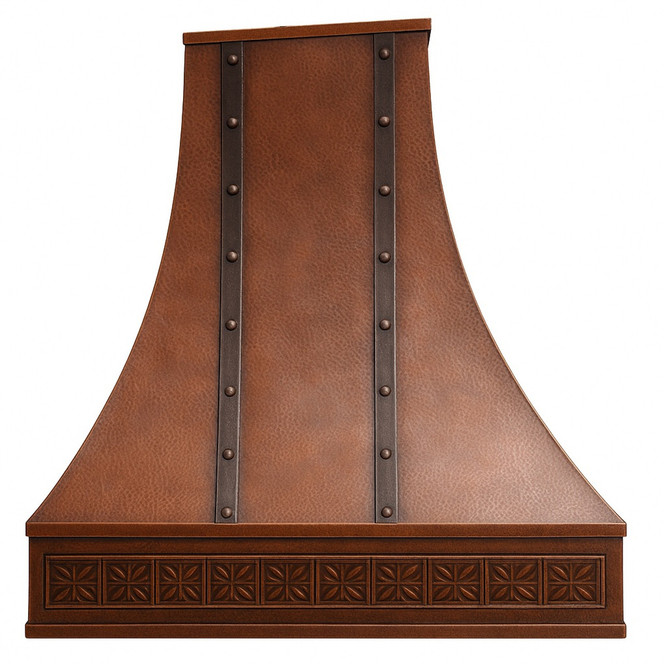
Copper Range Hood for Cathedral Ceilings: Custom Southwestern Vent Hood for Grand Kitchens
A Copper Range Hood for Cathedral Ceilings brings handcrafted metalwork, architectural scale, and powerful visual presence to kitchens with soaring rooflines. Designed around a broad sloping canopy and an extended multi-section chimney, this custom hood draws the eye upward while creating a substantial focal point above the cooking area. Hand-hammered copper, riveted vertical straps, square ornamental accents, and geometric detailing give the design a distinctive Southwestern personality that also works beautifully in Hacienda, Spanish Colonial, rustic, farmhouse, and transitional kitchens. Available in custom dimensions and designed for tall ceilings, this vent hood transforms otherwise difficult vertical space into an intentional architectural feature.
Blog Summary
- Product: Cathedral ceiling copper hood
- Material: 16-gauge hammered copper
- Style: Southwestern architectural design
- Finish: Rich coffee-brown patina
- Customization: Width, depth, and chimney height

Designed Specifically for Cathedral Ceilings
Cathedral and vaulted ceilings create exceptional architectural volume, but they also present a design challenge above the cooking area. A conventional short range hood may appear undersized beneath such dramatic vertical space.
This design solves that problem through an elongated chimney structure that extends the visual line of the hood upward toward the ceiling.
Why Vertical Scale Matters
In a tall kitchen, width alone does not determine whether a range hood feels proportional. The enclosure also needs sufficient height to connect the cooking surface with the architecture above.
The stacked chimney sections create that connection without forcing the lower canopy itself to become unnecessarily massive.
Cathedral Ceiling Advantages
- Scale: Fills tall architectural volume
- Height: Custom chimney proportions
- Presence: Creates a central focal point
- Balance: Connects range and ceiling
- Customization: Adaptable to unique kitchens
Layered Architectural Silhouette
The hood begins with a wide canopy that slopes inward as it rises. Above it, stacked chimney sections continue toward the ceiling, producing a layered profile instead of one uninterrupted vertical column.
This gradual reduction in width keeps the design substantial at the cooking level while creating a lighter appearance as the hood rises.
Broad Lower Canopy
The lower section provides the largest visual mass and frames the range beneath it. Its sloping sides create a strong transition between the wide apron and narrower upper chimney.
The proportions reinforce the traditional appearance of a large handcrafted metal hood.
Stacked Chimney Sections
Multiple chimney sections allow the design to extend upward without appearing excessively plain. Each transition introduces another architectural line that divides the height into manageable visual segments.
This approach is particularly effective where the ceiling rises far above the cabinetry.
Silhouette Features
- Canopy: Broad sloping lower body
- Transition: Gradual inward taper
- Chimney: Stacked vertical sections
- Top: Adapted to tall ceilings
- Profile: Layered architectural composition
Southwestern Design Character
The hood combines handcrafted copper with geometric ornament associated with Southwestern and Old World interiors. Rather than relying on elaborate floral embossing, the design uses structured bands, studs, and vertical straps.
This gives the hood a rugged architectural quality that pairs naturally with stone, wood, iron, plaster, and ceramic tile.
Geometric Apron Design
The lower apron incorporates a geometric band with angular forms that introduce rhythm across the width of the hood. These right-angled details contrast with the softer slope of the canopy.
The result balances ornament with a strong, disciplined structure.
Square Decorative Accents
Square ornamental studs reinforce the Southwestern character and bring additional depth to the apron area. Their repeated spacing creates a visual connection with masonry patterns, handcrafted furniture, and architectural ironwork.
Because they remain concentrated near the lower portion of the hood, they add detail without making the full chimney appear excessively decorated.
Southwestern Details
- Geometry: Angular decorative band
- Studs: Square ornamental accents
- Straps: Vertical riveted details
- Patina: Deep coffee-brown tone
- Texture: Hand-hammered copper
Three Riveted Vertical Straps
Three decorative straps run vertically along the front of the hood, reinforcing its height and emphasizing the upward movement of the overall design. Each strap is accented with individually placed rivets.
The repeated metal details create visual rhythm without competing with the geometric apron.
Why Vertical Straps Work on Tall Hoods
Horizontal decoration tends to emphasize width, while vertical straps naturally reinforce height. On a hood designed for cathedral ceilings, this directional effect helps the enclosure feel more proportional to the room.
The straps also visually connect the lower canopy with the extended chimney above.
Decorative Rivets
Rivets add small points of shadow and texture along the metal bands. Their handcrafted appearance supports the rugged Southwestern character of the hood.
Spacing and placement should remain balanced across the front facade.
Strap Design Benefits
- Direction: Emphasizes vertical height
- Rhythm: Creates repeated detail
- Texture: Rivets add dimension
- Contrast: Breaks up broad copper fields
- Style: Reinforces artisan metalwork
Hand-Hammered Copper Surface
The hood is produced from 16-gauge copper with a hand-hammered texture. Repeated hammer impressions create an irregular surface that reflects light differently across the canopy and chimney.
The result is warmer and more dynamic than completely flat sheet metal.
How Hammering Changes the Appearance
Every depression creates its own small highlight and shadow. Daylight from high windows, pendant lighting, and under-cabinet fixtures can reveal different aspects of the texture throughout the day.
The large scale of a cathedral-ceiling hood provides plenty of surface area for this craftsmanship to remain visible from across the kitchen.
Natural Artisan Variation
No two hand-hammered surfaces are identical. Differences in hammer marks, patina, rivet placement, and tonal distribution contribute to the handmade nature of the finished piece.
These details distinguish the hood from mass-produced metal enclosures.
Copper Surface Characteristics
- Gauge: 16-gauge copper
- Texture: Hand-hammered surface
- Reflection: Changing highlights
- Variation: Individual artisan character
- Scale: Texture visible across large hood
Rich Coffee-Brown Patina
The hood is shown with a deep coffee-brown patina that highlights the warmth of copper while giving the surface an aged architectural character. Darker tones settle naturally around hammer marks, decorative bands, and recessed details.
The finish works especially well in kitchens containing natural wood, stone, iron, terracotta, and warm neutral walls.
Patina and Hammered Texture
The combination of a dark patina and hammered copper produces considerable visual depth. High points may appear warmer or lighter while recessed areas remain darker.
This tonal movement helps a very large hood avoid appearing like one flat brown surface.
How Copper Changes Over Time
Copper is a living metal, so its appearance may continue to develop through exposure to air, humidity, cooking residue, fingerprints, cleaning, and normal use.
The changing finish contributes to the aged character associated with handcrafted copper.
Patina Characteristics
- Base Tone: Coffee brown
- Undertones: Warm copper variation
- Texture: Hammering enhances depth
- Aging: Finish may evolve naturally
- Variation: Exact tones are not uniform
Custom Widths for Different Ranges
The supplied design allows widths from approximately 30 to 96 inches, making it adaptable to both residential ranges and very large cooking installations.
The final width should be coordinated with the cooking appliance, cabinetry, available wall area, and selected ventilation equipment.
Matching Hood and Range Proportions
In a cathedral-ceiling kitchen, the hood should feel substantial enough to balance both the range and the height of the room. A very narrow hood under a broad ceiling may appear visually disconnected.
Cabinet spacing and backsplash layout should be planned around the final hood dimensions.
Large Custom Hoods
Widths approaching the upper end of the range create a dramatic architectural feature suited to oversized cooking appliances and expansive kitchens.
Larger hoods require additional consideration for structural support, insert dimensions, ducting, weight, fabrication, and freight delivery.
Width Planning
- Minimum: Approximately 30 inches
- Maximum: Up to 96 inches
- Range: Coordinate cooking width
- Cabinets: Maintain balanced spacing
- Insert: Confirm internal dimensions
Custom Hood Depth
The design can be produced with depths up to approximately 30 inches. Greater depth may be appropriate above professional-style ranges, deeper cooking surfaces, or installations requiring larger ventilation inserts.
Depth affects both capture performance and the visual mass of the hood.
Standard Versus Deep Hoods
A shallower hood may work well over conventional residential ranges, while deeper appliances may benefit from additional forward coverage.
The final dimension should be coordinated with the selected appliance and ventilation professional.
Maintaining Comfortable Clearance
The hood should provide sufficient coverage without projecting so far that it becomes uncomfortable for the person cooking beneath it. Mounting height, depth, burner position, and overall body shape should be reviewed together.
Depth Considerations
- Maximum: Up to 30 inches
- Range Depth: Coordinate with appliance
- Insert: Ensure adequate internal space
- Capture: Cover cooking surface
- Comfort: Preserve usable headroom
Custom Chimney Height
The defining feature of this design is its ability to extend vertically for cathedral and vaulted ceilings. Chimney proportions may be adjusted according to the finished room height.
The supplied specifications indicate accommodation for ceiling heights up to approximately 20 feet.
Planning for a 20-Foot Ceiling
Very tall kitchens require careful visual proportion. Rather than simply stretching one narrow piece of metal upward, the stacked chimney design divides the height into architectural sections.
This helps the hood feel intentionally designed for the room rather than adapted after construction.
Measuring Cathedral Ceilings
Measurements should be taken from the finished floor, cooking surface, hood mounting position, and final ceiling plane. Sloped ceilings require additional attention because the height may vary across the hood width.
Final measurements should be confirmed before fabrication begins.
Height Planning
- Ceiling: Up to approximately 20 feet
- Chimney: Customized to room height
- Canopy: Maintains lower proportions
- Slope: Review vaulted ceiling geometry
- Measurements: Confirm before production
Ventilation Insert Options
The hood is designed to accommodate ventilation inserts rather than relying on the decorative copper body alone for mechanical performance. The supplied information describes optional blower systems ranging from approximately 400 to 1,200 CFM.
The exact insert should be selected according to the cooking appliance, kitchen size, ductwork, cooking habits, and installation requirements.
Internal Blower Systems
An internal blower places the motor within the hood or insert assembly. This approach creates a relatively straightforward installation when sufficient internal space is available.
The insert dimensions must be provided before the copper interior is fabricated.
Stainless-Steel Baffle Filters
Baffle filters provide a durable metal filtration surface for collecting airborne grease. They are commonly associated with higher-capacity kitchen ventilation equipment.
Filters should remain accessible for regular cleaning after installation.
Ventilation Features
- Blower Range: Approximately 400–1,200 CFM
- Filters: Stainless-steel baffles
- Insert: Installed within copper shell
- Ducting: Coordinated with kitchen plan
- Access: Preserve filter serviceability
Cathedral Ceiling Installation Kit
The supplied design references telescoping chimney sections, a ceiling canopy, and adjustable suspension components intended to help adapt the hood to very tall ceiling conditions.
The exact installation method should be coordinated with the final hood dimensions and structural conditions of the project.
Telescoping Chimney Sections
Sectioned chimney construction allows vertical dimensions to be adapted more easily than a single fixed-height enclosure. It also creates the distinctive layered appearance of the hood.
Connections between sections should align carefully so the front profile remains centered.
Ceiling Canopy
A ceiling canopy can provide a finished transition where the chimney reaches the upper architectural surface. Its dimensions should coordinate with the hood and ceiling geometry.
Sloped cathedral ceilings may require a project-specific solution.
Installation Components
- Chimney: Multi-section construction
- Canopy: Finished ceiling transition
- Supports: Adjustable components
- Structure: Requires appropriate reinforcement
- Customization: Adapted to ceiling conditions
Structural Support for Large Copper Hoods
A tall 16-gauge copper enclosure can become substantial in size and weight. The wall, ceiling, framing, or other structural attachment points must be prepared accordingly.
Decorative drywall, plaster, or tile should not be treated as the primary structural support.
Planning Support Before Construction Ends
New kitchens provide the best opportunity to install blocking and framing before walls and ceilings are closed. This simplifies attachment and reduces the need for later structural modifications.
Existing kitchens should be inspected before ordering the hood.
Coordinating with the Contractor
The cabinetmaker, ventilation professional, electrician, and hood fabricator should work from the same final dimensions. This coordination becomes increasingly important as hood height and complexity increase.
Structural Checklist
- Wall: Confirm adequate framing
- Ceiling: Review cathedral structure
- Blocking: Add before closing surfaces
- Weight: Plan for complete assembly
- Contractor: Coordinate all trades
High-Ceiling Kitchen Design
In a kitchen with very tall ceilings, the range wall often needs an architectural feature large enough to balance the empty space above standard cabinetry. A tall copper hood can serve this role without requiring cabinets to reach the roofline.
Its vertical chimney provides a visual bridge between human-scale kitchen elements and the ceiling above.
Using the Hood as the Main Focal Point
The most effective cathedral-ceiling kitchens often allow one major element to dominate the cooking wall. A custom metal hood naturally serves as this centerpiece.
Surrounding cabinets, backsplash materials, counters, and lighting can remain comparatively restrained.
Balancing Tall Windows
If the kitchen contains high windows, the hood can provide a strong central vertical form that balances glass openings on either side.
The copper’s warm surface also contrasts attractively with daylight and outdoor views.
High-Ceiling Strategies
- Focal Point: Center hood above range
- Cabinetry: Keep surrounding lines balanced
- Windows: Coordinate vertical proportions
- Lighting: Highlight copper texture
- Backsplash: Support rather than compete
Southwestern Kitchen Style
Southwestern interiors combine warm earth tones, handcrafted surfaces, natural stone, textured plaster, iron, wood, copper, and ceramic. The hood’s coffee patina and angular decoration fit naturally within this material palette.
Square studs and geometric apron details provide a stronger regional character than purely floral ornament.
Pairing with Terracotta Floors
Terracotta repeats the hood’s reddish and brown undertones while adding a matte clay texture underfoot. The combination creates a warm foundation for the kitchen.
Neutral walls help prevent the room from becoming visually saturated.
Pairing with Natural Stone
Travertine, limestone, sandstone, and textured stone counters or walls provide a quiet architectural background for hammered copper.
The contrast between matte stone and reflective metal adds material depth.
Southwestern Pairings
- Terracotta: Warm regional flooring
- Stone: Natural architectural contrast
- Plaster: Soft textured walls
- Iron: Repeats rugged metal detail
- Wood: Adds organic warmth
Spanish Colonial Kitchens
Copper range hoods are naturally compatible with Spanish Colonial architecture. Arches, dark beams, plaster walls, Talavera tile, carved cabinetry, and iron lighting all support the handcrafted metal enclosure.
The extended chimney can reinforce the vertical drama of tall Colonial-inspired spaces.
Pairing with Talavera Tile
Colorful Talavera can introduce cobalt, green, yellow, terracotta, and white beneath the warm copper. A controlled tile panel behind the range can provide cultural richness without competing with the hood’s geometric details.
For a heavily ornamented backsplash, the surrounding cabinetry should remain relatively simple.
Wrought-Iron Lighting
Forged iron pendants or chandeliers can repeat the dark accents created by rivets and Southwestern ornament. Iron also provides contrast against the warmer copper finish.
Lighting should be positioned so it does not visually obstruct the hood.
Spanish Colonial Pairings
- Talavera: Colorful artisan backdrop
- Iron: Strong architectural contrast
- Dark Wood: Historic visual depth
- Plaster: Soft neutral frame
- Terracotta: Warm regional continuity
Hacienda Kitchen Applications
Hacienda interiors embrace substantial handcrafted features, making a tall custom copper hood particularly appropriate. The hood can sit above a professional range surrounded by wood cabinetry, stone, ceramic, and forged metal.
The vertical chimney reinforces the scale of high beams and expansive ceilings.
Rustic Farmhouse Kitchens
Although the geometric details lean Southwestern, the hammered copper and broad sloping silhouette also work in rustic farmhouse kitchens. White or cream shaker cabinets can provide a brighter contrast.
Natural wood beams and stone counters help connect the hood to the more relaxed farmhouse palette.
Transitional High-Ceiling Kitchens
In a transitional space, the hood can introduce handmade character beside cleaner cabinetry, quartz or marble counters, and restrained lighting. The copper becomes the room’s principal warm material.
Limiting other decorative elements keeps the overall design sophisticated.
Compatible Kitchen Styles
- Southwestern: Geometric regional detail
- Spanish Colonial: Historic handcrafted character
- Hacienda: Large-scale Mexican warmth
- Farmhouse: Rustic metal centerpiece
- Transitional: Artisan contrast with clean lines
Contemporary Cathedral-Ceiling Kitchens
A custom copper hood can also work within modern architecture when the surrounding surfaces remain simple. Flat cabinetry, large-format stone, steel-framed windows, and neutral walls create a controlled background.
The handmade copper introduces warmth that can soften very large contemporary spaces.
Using Copper with White Cabinets
White cabinetry creates one of the strongest contrasts with coffee-patina copper. It prevents the large hood from making the kitchen feel too dark and highlights every edge of the silhouette.
Warm white tones coordinate especially well with aged copper.
Using Copper with Dark Cabinets
Walnut, dark oak, black, or charcoal cabinetry creates a richer and more dramatic composition. Adequate natural and artificial lighting becomes particularly important with this combination.
Light counters and backsplash materials can keep the room balanced.
Cabinet Pairings
- White: Maximum copper contrast
- Cream: Warm traditional balance
- Oak: Relaxed natural character
- Walnut: Rich architectural depth
- Black: Dramatic contemporary setting
Kitchen Backsplash Planning
A cathedral-ceiling hood already provides considerable visual complexity, so the backsplash should be selected carefully. Stone slabs, simple ceramic, handmade solid tile, or controlled Talavera patterns can all work effectively.
The backsplash should align with the hood’s centerline and lower apron.
Full-Height Stone Backsplashes
Stone provides a relatively quiet surface beneath detailed copper. Marble, limestone, or another natural material can extend behind the cooking area without introducing competing pattern.
The warm patina can help soften cooler stone colors.
Decorative Mexican Tile Panels
A centered ceramic panel can reinforce the Southwestern or Spanish Colonial character. Limit the pattern area so the copper apron and backsplash remain visually distinct.
Border tiles can create a clean transition between ceramic and surrounding plaster or stone.
Backsplash Options
- Stone Slab: Quiet architectural backdrop
- Solid Tile: Handmade subtle texture
- Talavera: Strong Mexican color
- Relief Tile: Sculptural accent panel
- Plaster: Soft traditional simplicity
Lighting the Copper Surface
Lighting has a major effect on hammered copper. Daylight emphasizes red and brown variations, while warm evening light creates deeper bronze and coffee tones.
Directional fixtures can reveal the hammering and rivet shadows without producing excessive glare.
High Windows and Skylights
Cathedral-ceiling kitchens often contain large clerestory windows or skylights. Sunlight moving across the hood creates changing highlights that emphasize its vertical scale.
The patina may appear substantially different at different times of day.
Pendant Lighting Coordination
Pendants over nearby islands should complement rather than obstruct the hood. Iron, brass, glass, or simple copper fixtures can create a layered lighting scheme.
Maintain clear visual separation between the hood chimney and hanging fixtures.
Lighting Strategies
- Daylight: Reveals natural patina variation
- Warm LEDs: Emphasize copper depth
- Directional Light: Highlights hammering
- Pendants: Coordinate surrounding zones
- Recessed Fixtures: Keep focus on hood
Ducted Ventilation
A tall chimney can conceal ductwork traveling toward the roof or another approved exterior termination. The duct route should be planned before the final hood dimensions are established.
Longer duct runs and multiple elbows may affect ventilation performance.
Ductless Configuration
The supplied maintenance instructions also reference charcoal filters for ductless configurations. A recirculating insert must be specifically designed for this type of operation.
The hood may require openings or another method for returning filtered air to the kitchen.
Choosing the Correct Ventilation System
The required blower capacity depends on the appliance, cooking intensity, kitchen volume, duct configuration, and local requirements. The decorative copper shell itself does not determine airflow.
Consult the ventilation manufacturer and qualified installer before selecting the final equipment.
Ventilation Planning
- Ducted: Exhausts air outdoors
- Ductless: Requires compatible recirculation
- CFM: Approximately 400–1,200 options
- Filters: Baffle or charcoal by system
- Ductwork: Coordinate before fabrication
Filter Maintenance
The supplied instructions recommend cleaning baffle filters monthly. Actual frequency should reflect cooking intensity and the ventilation equipment manufacturer’s guidance.
Grease accumulation can reduce airflow and make later cleaning more difficult.
Charcoal Filter Replacement
For compatible ductless systems, the supplied guidance recommends replacing charcoal filters approximately every six to twelve months.
Replacement intervals depend on cooking frequency and the specific insert.
Cleaning the Copper Hood
Use a soft microfiber cloth with mild, pH-neutral soap for routine cleaning. Remove grease and fingerprints gently without aggressive rubbing.
Avoid abrasive pads or harsh chemical products that may scratch the copper or alter the patina.
Routine Care
- Surface: Soft microfiber cloth
- Cleaner: Mild pH-neutral soap
- Filters: Clean regularly
- Avoid: Abrasive chemical cleaners
- Inspect: Monitor finish and hardware
Waxing and Copper Protection
The supplied maintenance guidance recommends applying beeswax or a suitable copper care product every six to twelve months to help preserve luster and provide surface protection.
Any product should be compatible with the existing patina before application.
Be Careful with Copper Polish
Polishing products can alter or remove aged finishes. When the intention is to preserve a coffee patina, cleaning should focus on gentle maintenance rather than restoring bright raw copper.
Test any unfamiliar product in an inconspicuous area first.
Protecting the Hood During Construction
Copper should remain covered while tile, stone, cabinetry, paint, plaster, grout, and countertops are installed nearby. Construction chemicals and tools can damage the finished surface.
Installers should use clean gloves and padded protection when handling the hood.
Made-to-Order Production
Custom cathedral-ceiling hoods are fabricated according to project-specific dimensions. Width, depth, chimney height, ventilation preparation, decorative details, and finish should be finalized before production begins.
Changes after fabrication begins may affect fit, appearance, cost, or installation.
Measurements to Confirm
Measure the range, wall opening, ceiling height, ceiling slope, cabinet spacing, backsplash area, hood mounting height, available depth, duct location, and insert dimensions.
For unusual cathedral ceilings, drawings or photographs can help communicate architectural conditions.
Pre-Order Measurements
- Width: Confirm range and cabinet opening
- Height: Measure finished ceiling
- Depth: Coordinate with appliance
- Slope: Record cathedral angle
- Insert: Provide exact specifications
Freight and Delivery Planning
A very tall or wide copper hood may require substantial protective packaging and freight delivery. Doorways, gates, hallways, stairwells, and access to the kitchen should be reviewed before ordering.
The shipping crate will be larger than the finished hood itself.
Inspecting the Crate
Check the exterior packaging before accepting delivery. Photograph visible damage and note it on the carrier documentation when appropriate.
Retain the crate and packing materials until the hood has been inspected fully.
Handling a Large Hood
Large copper enclosures may require several people or lifting equipment for safe installation. Do not support the complete weight from decorative straps, apron details, or chimney edges.
Use padded surfaces to protect the patina during handling.
Delivery Checklist
- Access: Measure route to kitchen
- Crate: Inspect before acceptance
- Photos: Document visible damage
- Handling: Arrange adequate help
- Protection: Preserve finished patina
Understanding Handmade Expectations
Minor variations in hammering, patina, dimensions, rivet placement, seams, tonal distribution, and forming are normal characteristics of handcrafted copper.
These should be distinguished from significant dents, structural deformation, shipping damage, or incorrect dimensions.
Why Cathedral Ceiling Hoods Stand Apart
Standard metal hoods are generally designed around ordinary ceiling heights. A cathedral-ceiling model must address a much larger architectural volume while preserving useful proportions near the cooking surface.
The extended layered chimney allows the hood to become part of the room architecture rather than merely an appliance installed above the range.
Ordering and Project Planning
Before ordering, confirm the range dimensions, hood width, depth, chimney height, ceiling slope, mounting clearance, coffee patina, hammered texture, geometric apron, vertical straps, rivets, ventilation insert, blower capacity, duct route, structural framing, installation access, and delivery schedule.
For custom dimensions, finishes, ventilation preparation, or cathedral-ceiling installation requirements, contact Rustica House before finalizing the surrounding cabinetry and construction.
Conclusion
A Copper Range Hood for Cathedral Ceilings combines a broad sloping canopy, extended layered chimney, 16-gauge hand-hammered copper, coffee-brown patina, geometric Southwestern ornament, square decorative accents, and three riveted vertical straps in a custom enclosure designed for dramatic kitchen architecture. With widths from approximately 30 to 96 inches, depths up to 30 inches, chimney configurations for ceilings reaching approximately 20 feet, and ventilation options described from 400 to 1,200 CFM, the hood can be adapted to a wide variety of grand cooking spaces. Thoughtful measurements, coordinated structural support, correct ventilation equipment, professional installation, gentle copper care, and careful delivery planning allow this handcrafted hood to become a lasting architectural centerpiece in Southwestern, Spanish Colonial, Hacienda, rustic, farmhouse, transitional, and contemporary kitchens.