 US Dollar
 Euro
Euro
 Australian Dollar
 Canadian Dollar
 Polish Zloty
 British Pound

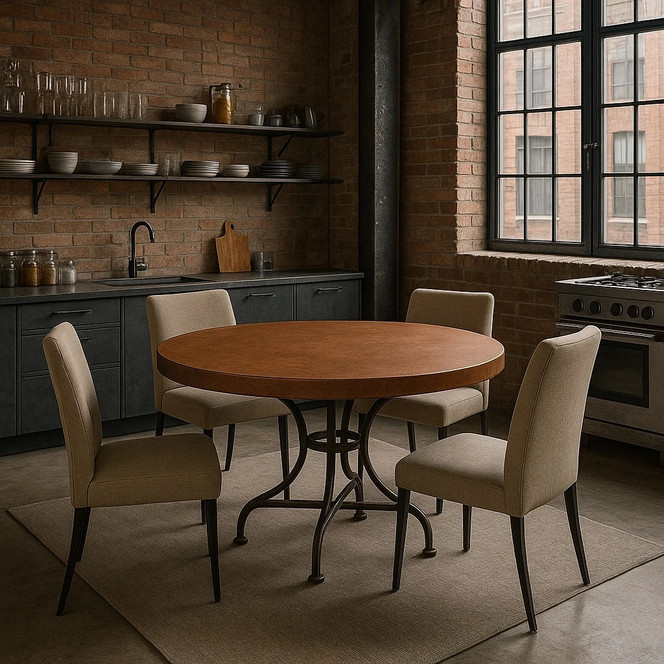
Copper Dining Table Guide for Rustic Interiors helps homeowners choose the right table shape, size, material pairing, and base style for kitchens, breakfast rooms, dining areas, wine rooms, patios, and restaurant spaces. A copper table brings warm metal character, handcrafted texture, and Spanish Mission influence into the room, while an iron base adds strength and architectural detail. Available in standard 36 inch or 48 inch dimensions, this table can be ordered as a round or square design to match the layout. For room planning inspiration, explore our rustic dining room ideas guide before selecting the final shape and size.

Copper Table Guide
Choosing a copper dining table begins with understanding how the surface, shape, and base affect the room. Copper adds warmth, reflection, and artisan character, while iron provides structure and Spanish Mission influence. A round table works well in conversational layouts, breakfast areas, and compact dining rooms. A square table creates a more structured arrangement for symmetrical spaces. Homeowners comparing metal surfaces can review copper and zinc tops to see how different metal tabletops influence rustic and transitional dining spaces.
Design and Function
This copper dining table stands out because it combines a warm metal top with a sculptural iron base. The tabletop has a reddish brown finish that reflects light softly without feeling overly polished or formal. Its round shape encourages conversation from every seat, making it practical for kitchens, breakfast rooms, wine rooms, small dining areas, and restaurant spaces. The copper surface adds visual richness when surrounded by brick, stone, dark cabinetry, wood shelves, or iron details. Instead of looking like a generic dining table, it becomes a handcrafted focal point that brings artisan material into daily use.
Spanish Mission Influence
The table base gives the piece its Spanish Mission character. Curved iron legs, circular support elements, and hand forged visual weight create a strong connection to traditional Hacienda and Colonial interiors. The base feels decorative without becoming overly ornate, which makes it useful in both rustic and transitional spaces. In the image, the ironwork pairs beautifully with black window frames, dark kitchen cabinetry, open shelving, and exposed brick walls. This table works especially well in interiors that already include forged lighting, wrought iron hardware, rustic doors, stone floors, or handmade tile accents.
Design Features
- Warm copper table surface
- Round or square options
- Curved iron base design
- Spanish Mission influence
- Rustic dining room appeal
Standard Dimensions
The table is available in standard 36 inch and 48 inch dimensions, making it adaptable to different dining spaces. A 36 inch table is ideal for compact kitchens, breakfast nooks, apartment dining areas, wine tasting rooms, and small hospitality corners. A 48 inch version provides more room for family meals, shared dishes, and comfortable seating for larger gatherings. Because the table can be ordered in round or square form, homeowners can choose the shape that works best with traffic flow, chair placement, and room proportions. Round tables soften tight spaces, while square tables create a more structured layout.
Round Table Choice
A round copper dining table creates a more intimate seating arrangement because every chair faces the center. This makes it an excellent choice for breakfast rooms, conversational dining spaces, and casual entertainment areas. The lack of sharp corners helps movement around the table, especially in kitchens where people walk between counters, appliances, and seating. The circular copper top also creates a strong visual contrast against straight lines in cabinetry, shelves, windows, and brickwork. In rustic interiors, that balance between curved metal and architectural geometry makes the room feel more relaxed and visually balanced.
Round Table Uses
- Breakfast nook seating
- Kitchen dining space
- Wine tasting room
- Boutique restaurant table
- Small hacienda dining area
Square Table Choice
The square version offers a different design personality while keeping the same copper and iron character. A square copper dining table works well in symmetrical rooms, compact dining areas, and interiors where furniture lines need to echo cabinetry, tile grids, or architectural framing. It can sit naturally under a pendant light or chandelier, especially in spaces where the dining area is centered within a kitchen or open plan room. Square tables also make place settings feel orderly and balanced. For homeowners who prefer clean geometry, the square option keeps the artisan warmth of copper while introducing a more structured layout.
Choosing the Tabletop
The tabletop is one of the most important choices because it defines the color, light reflection, and daily character of the table. Copper brings a living surface quality that changes with light, use, and surrounding materials. Its reddish brown tone adds warmth to neutral walls, brick surfaces, iron accents, and stone floors. The metal can feel rustic, refined, or Mediterranean depending on the finish and room setting. Homeowners looking for discounted or limited availability surfaces can also browse tabletop clearance options when planning a custom dining or kitchen project.
Iron Base Craftsmanship
The iron base provides stability and visual movement beneath the copper top. Its curved legs create an elegant profile, while the circular center support reinforces the handcrafted character of the piece. This type of base works well because it looks substantial without blocking the chairs or making the dining area feel heavy. The dark iron finish contrasts with the copper surface, giving the table a balanced two material composition. In Spanish Mission and Hacienda interiors, forged iron is often used for chandeliers, railings, door hardware, and furniture details, so the base helps the table feel connected to the wider architectural style.
Material Pairings
- Exposed brick walls
- Dark iron lighting
- Stone floor surfaces
- Warm wood shelving
- Neutral upholstered chairs
Selecting a Base
A dining table base should support the tabletop visually and structurally. Curved iron stands add artisan movement, while simpler bases create a cleaner rustic look. The right choice depends on the table shape, chair style, and room architecture. Round tops often pair well with central or curved iron bases because the lines feel balanced from every side. Square tops may look stronger with more geometric support. For separate base planning, explore iron table stands to compare forged shapes, proportions, and support styles for custom dining table projects.
Best Interior Settings
This copper dining table works in many interiors, but it is especially effective in spaces with rustic, Spanish Revival, Hacienda, Mission, industrial, Mediterranean, or Old World influence. In a brick kitchen, it adds warmth and polish. In a plaster wall dining room, it becomes a decorative metal focal point. In a restaurant, it can create a memorable seating area with handmade character. In a wine room or tasting space, the copper top feels rich and inviting. For broader furnishing ideas, visit rustic dining furniture to coordinate tables, seating, and room style.
Chair and Lighting Pairings
The right chairs and lighting help complete the table setting. Upholstered dining chairs, like those shown in the image, soften the metal surfaces and make the room more comfortable for longer meals. Wood chairs can make the table feel more rustic, while iron framed chairs create a stronger Spanish Colonial effect. Lighting should be chosen to complement the iron base and copper top. A wrought iron chandelier, simple pendant, or warm metal fixture can bring the arrangement together. The goal is to let the table remain the focal point while surrounding it with materials that support its handmade character.
Kitchen Dining Placement
Placement matters because a copper dining table has strong visual presence. In a kitchen, it should leave enough room for chairs to pull out comfortably and for people to move around counters, appliances, and doorways. A round 36 inch table can sit nicely near a window, in a corner breakfast area, or beside a compact kitchen wall. A 48 inch table needs more space but creates a stronger dining zone. If the room has exposed brick, stone, or open shelving, placing the table where those textures remain visible helps create a more complete rustic dining composition.
Placement Ideas
- Near a kitchen window
- Inside a breakfast room
- Beside open shelving
- Centered under lighting
- In a restaurant corner
Care and Maintenance
Copper furniture should be cleaned gently to preserve the surface finish. A soft cloth and mild soap are usually enough for regular cleaning. Abrasive pads, harsh chemicals, and acidic cleaners should be avoided because they may affect the patina. Coasters, placemats, and table linens can help protect the surface during meals, especially when serving hot dishes, citrus, wine, or sauces. Some homeowners enjoy the natural aging of copper, while others prefer to maintain a more even finish. Either approach can work as long as the care routine matches the desired appearance and the table is treated as a handcrafted surface.
Buying Guide Summary
When choosing a copper dining table, start with the room size, then decide between a round or square tabletop. Select 36 inches for compact areas and 48 inches for larger dining zones. Match the iron base to the architecture, chair style, and level of decorative detail desired. Consider surrounding materials, including brick, stone, wood, iron, tile, and neutral upholstery. A copper top with an iron base works best when it feels connected to the full room instead of standing alone. With careful planning, it becomes a durable dining surface and the central gathering point of a warm rustic interior.
Final Design Guidance
Copper Dining Table Guide for Rustic Interiors shows how the right tabletop, base, shape, and size can transform a kitchen or dining room. Available in standard 36 inch or 48 inch dimensions and offered as round or square, this table can suit compact kitchens, breakfast rooms, rustic dining areas, wine spaces, patios, and restaurant interiors. The copper top creates warmth and artisan character, while the iron base brings Spanish Mission structure below the surface. When paired with brick, stone, wood, iron, and neutral seating, the table becomes more than furniture. It becomes the central feature of a character filled room.