 US Dollar
 Euro
Euro
 Australian Dollar
 Canadian Dollar
 Polish Zloty
 British Pound

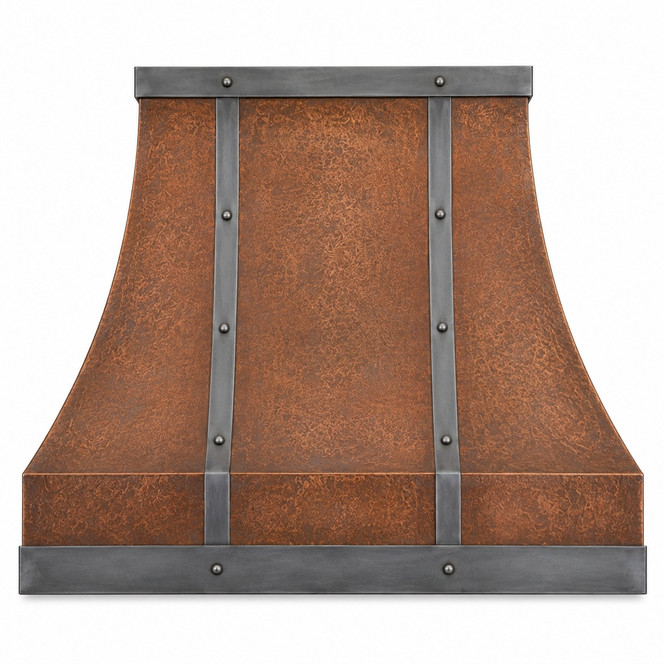
The Copper Bell Range Hood with Zinc Frame and Twin Riveted Straps is shown in these kitchen lifestyle images as a refined mixed-metal focal point for Belgian, English estate, Alpine contemporary, and Wabi-industrial kitchens. Its curved copper bell body, wide zinc frame, twin riveted zinc straps, broad lower apron, structured crown, and clean panel organization create a strong architectural range-wall feature with both warmth and cool contrast. The copper surface brings artisan depth, while the zinc frame and straps give the hood definition, structure, and a tailored edge. Explore the copper bell range hood with zinc frame and twin riveted straps to compare its shape, finish, frame, and kitchen style applications. For related copper hood design context, read the hammered copper bell range hood guide.
Blog Summary
- Focus: kitchen lifestyle images
- Product: mixed-metal bell hood
- Feature: zinc frame and straps
- Shape: curved copper bell body
- Scenes: four kitchen styles
- Look: tailored and architectural
Mixed-Metal Bell Hood Images
Lifestyle images help show how this copper bell range hood looks inside finished kitchens rather than as a standalone product photo. Cabinet tone, backsplash texture, ceiling height, lighting, counter material, flooring, hardware, and surrounding metal finishes all affect how the copper body and zinc frame appear. In one kitchen, the hood can feel Belgian and understated. In another, the same mixed-metal profile can support English estate, Alpine contemporary, or Wabi-industrial interiors.
This hood stands out because the zinc is not used as a small accent only. The zinc frame surrounds and defines the copper body, while the twin riveted straps divide the front into broad vertical sections. That composition makes the hood feel structured, architectural, and intentional. The copper adds warmth, while the zinc keeps the design cooler, more linear, and more refined. For broader mixed-metal planning, review the mixed metal range hoods buying guide.
Design Highlights
- curved copper bell canopy
- wide zinc perimeter frame
- twin riveted front straps
- structured crown and apron
- warm copper center panels
- cool gray zinc contrast
- Belgian to industrial flexibility
Belgian Kitchen Image
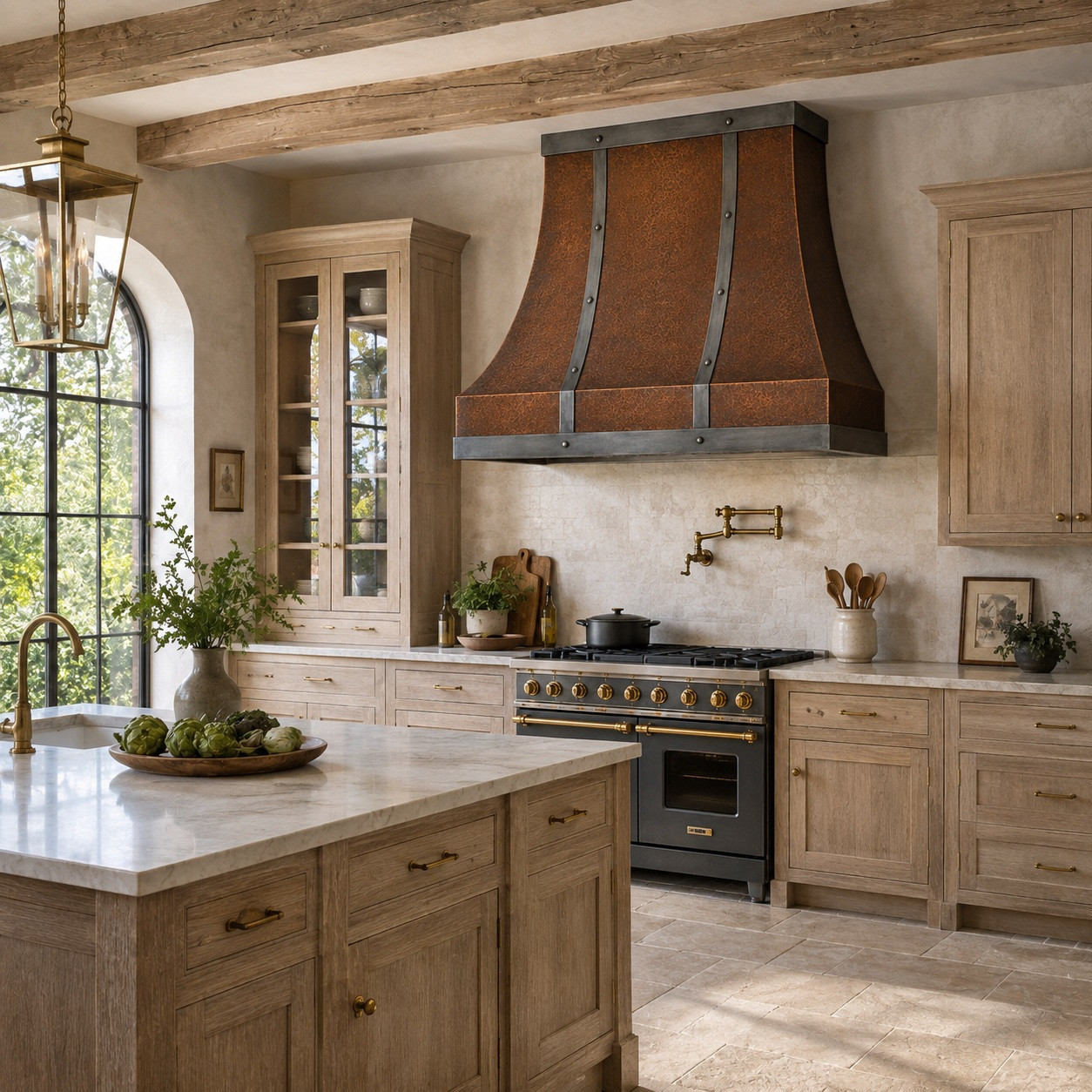
In a Belgian kitchen, the copper and zinc hood brings quiet richness to limewashed walls, pale oak, aged stone, honed counters, linen textures, and restrained cabinetry. Belgian interiors often rely on natural materials, muted colors, and substantial forms rather than bright decoration. The hood fits this style because the zinc frame feels architectural and cool, while the copper panels add warmth without overwhelming the calm palette.
The twin riveted straps are especially useful in this setting because they add order to the curved copper body. They divide the front into broad fields and create a controlled rhythm that can relate to cabinet panels, stone joints, window muntins, or shelving lines. The zinc frame also helps the hood sit comfortably beside gray stone, pewter hardware, blackened metal, and pale plaster. The result is warm but not rustic-heavy, detailed but not ornate, and substantial without feeling overly decorative.
English Estate Kitchen Image
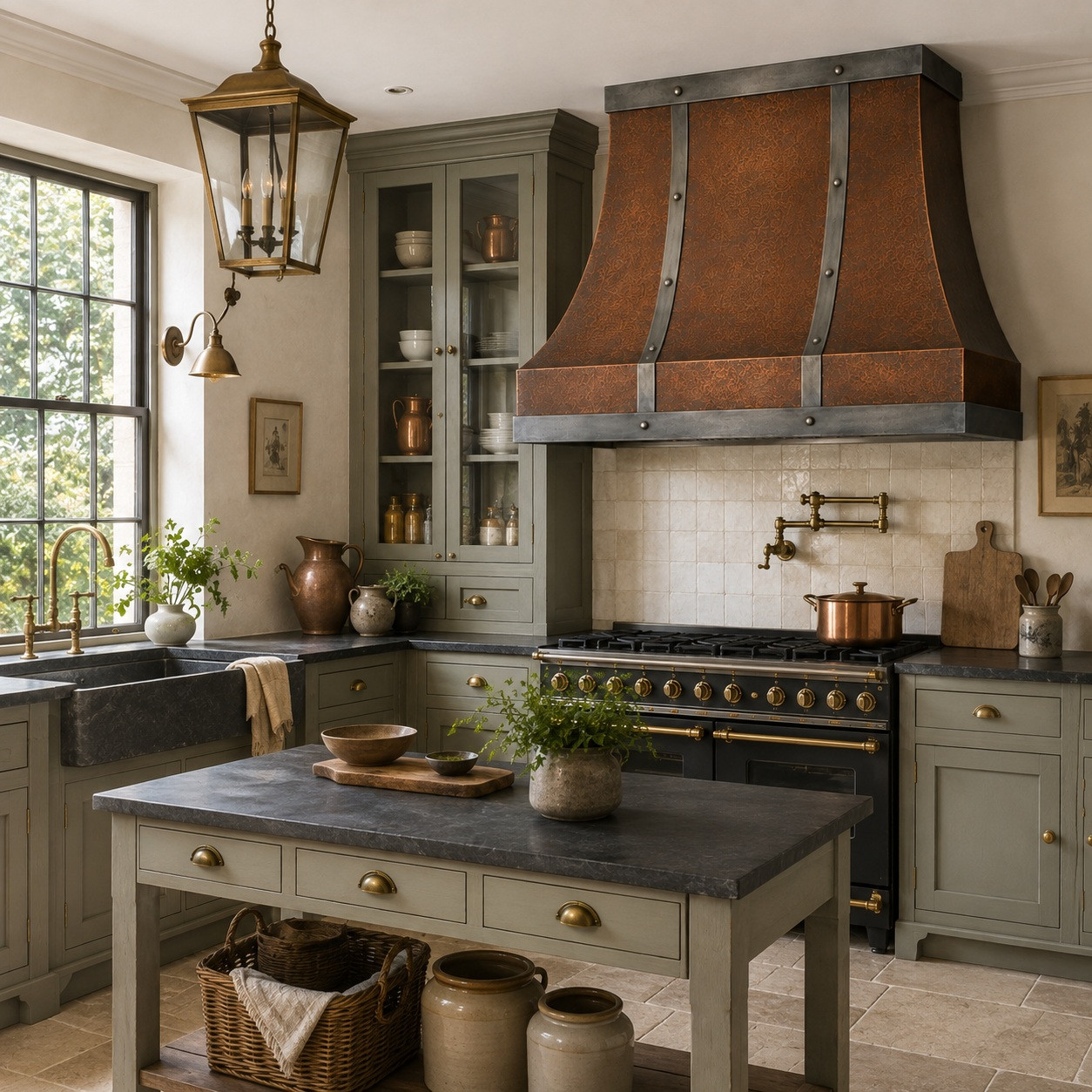
In an English estate kitchen, the hood supports painted cabinetry, soapstone, marble, deep utility sinks, antique brass, paneled walls, traditional hardware, and practical craftsmanship. English estate kitchens often feel collected and built over time, so a mixed-metal hood can add a strong handmade focal point without looking too polished or new. The copper body introduces warmth, while the zinc frame connects with cooler stone, aged hardware, and workshop-style metal details.
The bell form gives the hood a traditional presence above the range, but the zinc frame makes the front feel more structured than a plain copper canopy. The rivets add functional-looking detail that suits a room inspired by sculleries, working kitchens, and country-house utility spaces. This image shows how the hood can feel formal enough for a large estate kitchen while still keeping the grounded character of hand-shaped metal.
Alpine Contemporary Kitchen Image
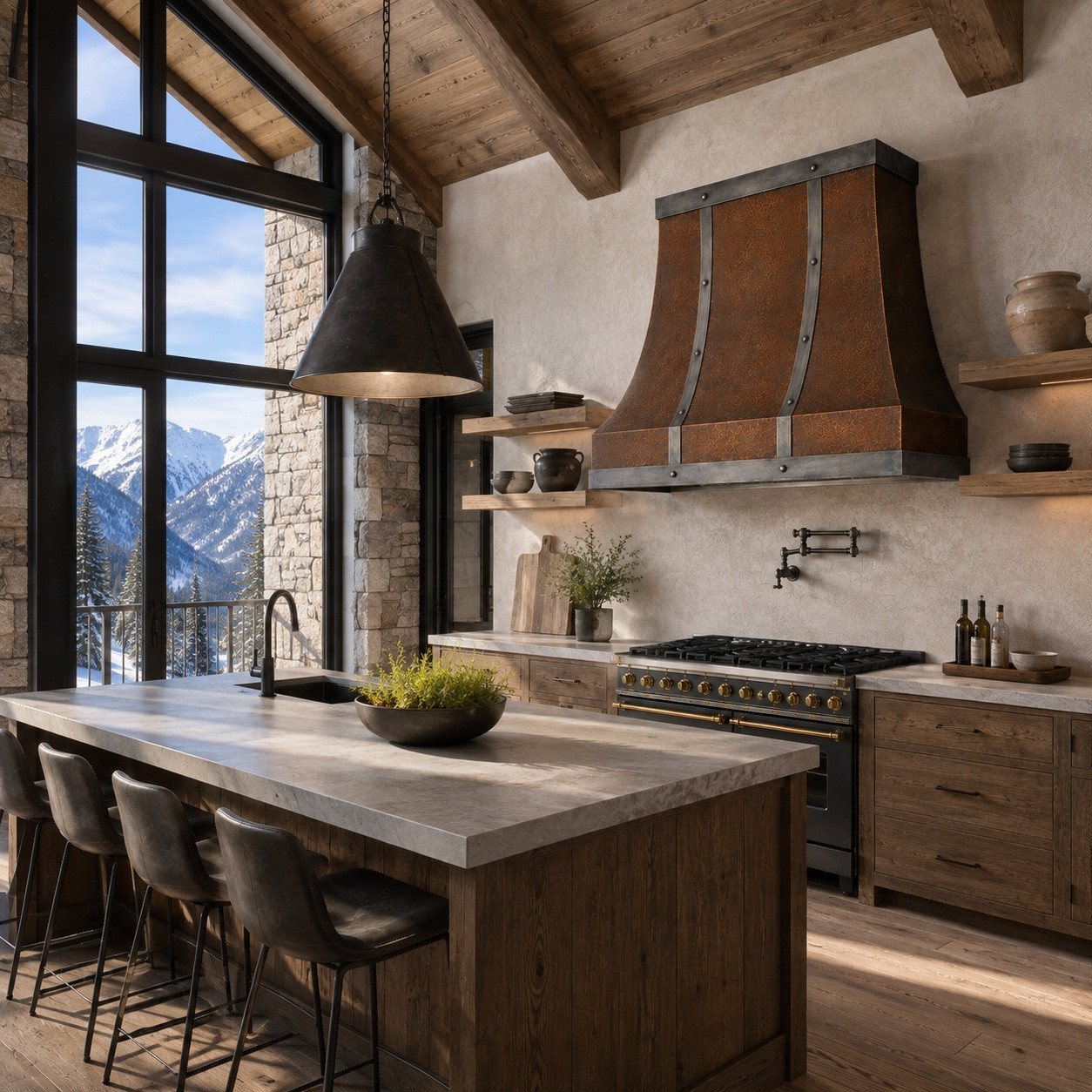
In an Alpine contemporary kitchen, the hood bridges rustic materials and cleaner modern architecture. Alpine contemporary interiors often combine exposed timber, dark steel windows, textured plaster, natural stone, minimal cabinetry, and strong mountain light. The copper body adds warmth to that mix, while the zinc frame introduces a cooler metal edge that coordinates with steel, stone, and gray cabinetry.
The structured frame is important in this scene because Alpine contemporary rooms often use bold architecture and fewer decorative accessories. A plain copper hood could feel too soft, while a heavily ornate hood could feel out of place. This design sits between those extremes. The bell shape gives the range wall movement, the zinc frame gives it discipline, and the twin riveted straps add crafted detail. The hood becomes a warm architectural anchor without disturbing the clean mountain aesthetic.
Wabi-Industrial Kitchen Image
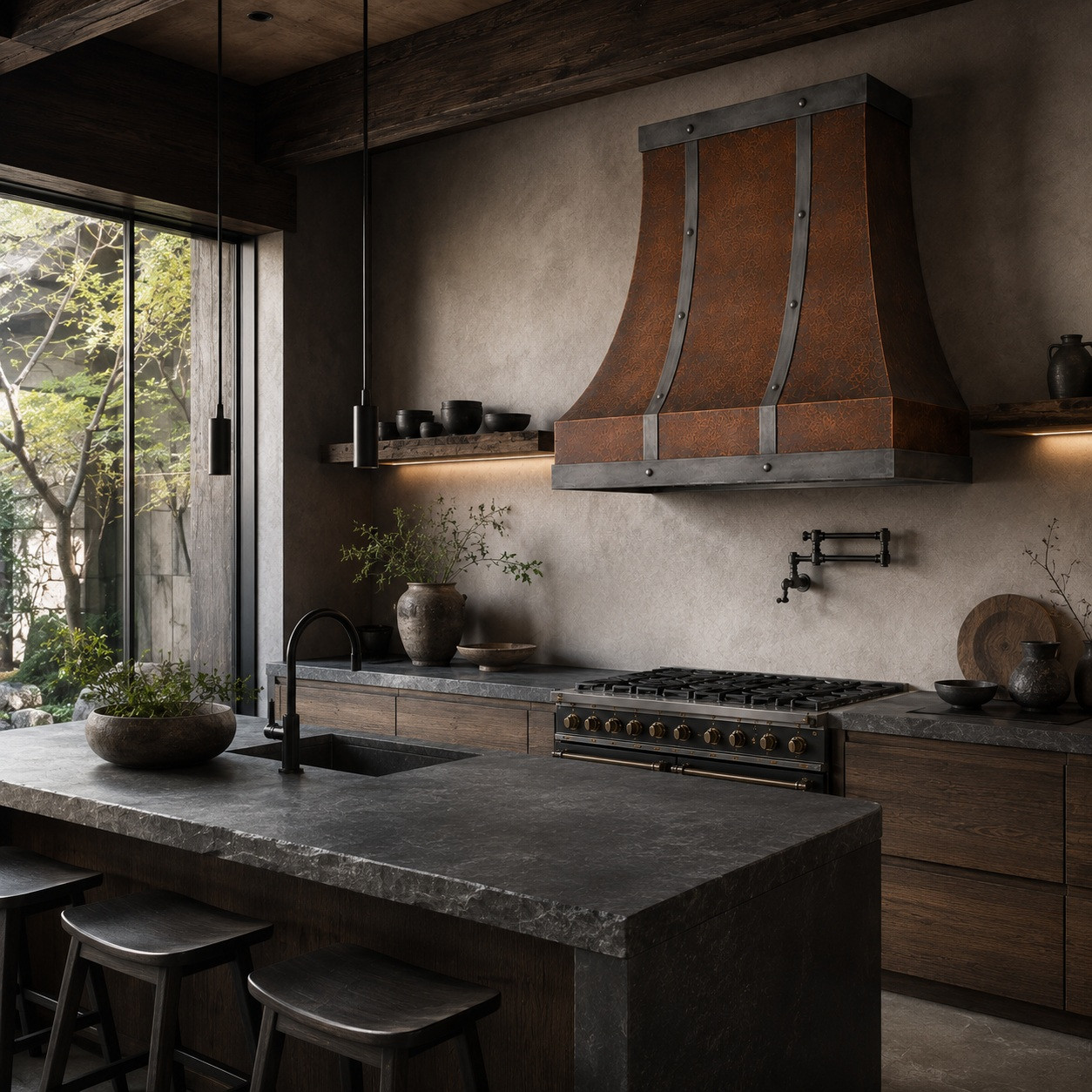
In a Wabi-industrial kitchen, the copper and zinc hood works through material honesty, patina, restraint, and visible construction. This uncommon style direction can blend smoked oak, dark plaster, blackened steel, natural stone, handmade ceramics, and disciplined minimalism. The hood fits because it celebrates imperfect surface character while keeping the overall form controlled and architectural.
The zinc frame and riveted straps support the industrial side of the room, while the copper body brings warmth and subtle variation. The bell curve keeps the hood from feeling too rigid, and the rivets provide just enough visible fastening detail to make the piece feel fabricated by hand. In this setting, the hood does not need bright polish or ornamental motifs. Its strength comes from honest materials, quiet contrast, and the natural beauty of metals that can change visually with light and use.
Copper and Zinc Contrast
The copper and zinc combination is the main visual strength of this hood. Copper brings warmth, amber depth, and handcrafted surface movement. Zinc adds a cooler gray frame that outlines the shape and gives the hood a more tailored architectural presence. Together, the metals create contrast without relying on paint or applied color.
This balance makes the hood useful in kitchens that include both warm and cool materials. It can coordinate with wood, plaster, stone, handmade tile, black iron, stainless steel, pewter, bronze, or brass. The key is to let the hood become the main mixed-metal feature so the surrounding finishes do not compete with it.
Twin Riveted Straps
The twin riveted straps organize the copper bell body into broad vertical sections. They add structure, shadow, and handcrafted metalwork detail across the front. The rivets also give the hood a more functional, built appearance, which helps it fit working kitchen styles such as English estate, industrial, rustic European, and Alpine contemporary interiors.
Because there are only two front straps, the design remains balanced and readable. It does not become visually crowded. The copper panels stay broad enough to show the finish, while the zinc straps provide enough contrast to define the hood from a distance.
Bell Shape and Frame
The bell shape gives the hood softness and traditional movement. The canopy expands as it descends, creating a natural focal point above the cooking area. The zinc frame changes that familiar bell silhouette by giving the edges a stronger outline. This makes the hood feel more architectural than a plain copper bell hood.
The crown and apron also help the hood feel complete. The top edge relates to cabinet and ceiling details, while the lower apron grounds the design above the range. Together, the frame, straps, bell body, crown, and apron create a composed mixed-metal range-wall feature.
Handcrafted Variation
Small differences in copper tone, zinc finish, rivet spacing, strap alignment, seam detail, edge shaping, patina movement, and artisan finishing should be expected in handmade metalwork. These variations help each hood feel individual rather than mass produced.
The mixed-metal construction also means light can affect each material differently. Copper may appear warmer or deeper, while zinc may look lighter, cooler, or more weathered depending on the kitchen’s lighting and surrounding surfaces. This natural visual variation is part of the hood’s character.
Style Compatibility
This hood works across several kitchen styles because it balances curve, structure, warmth, and cool metal contrast. In Belgian kitchens, it supports muted natural materials. In English estate kitchens, it feels crafted and practical. In Alpine contemporary rooms, it brings warmth to stone, timber, and steel. In Wabi-industrial kitchens, it adds honest material character with restrained detail.
The design is strongest when the surrounding kitchen materials allow the copper body and zinc frame to remain visible. Plaster, stone, wood, simple tile, dark hardware, and controlled lighting help the hood read as the primary architectural feature above the range.
Conclusion
The copper bell range hood with zinc frame and twin riveted straps brings curved copper warmth, cool zinc structure, riveted detail, a broad lower apron, and a defined architectural frame into the kitchen. These lifestyle images show how the hood adapts to Belgian, English estate, Alpine contemporary, and Wabi-industrial interiors while keeping its mixed-metal design balanced, handcrafted, and visually distinctive.