 US Dollar
 Euro
Euro
 Australian Dollar
 Canadian Dollar
 Polish Zloty
 British Pound

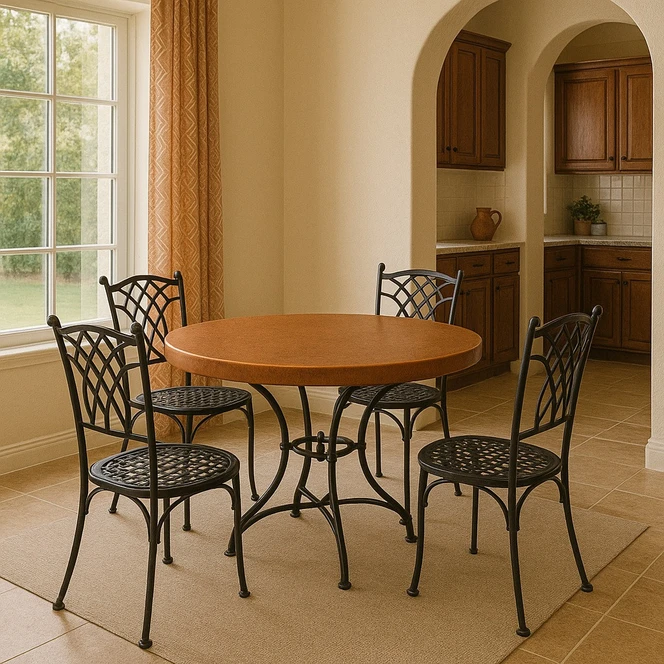
Colonial Copper Table with Forged Iron Base: Handcrafted Old World Furniture
A Colonial copper table with a forged iron base combines the warmth of hand-hammered metal with the strength and sculptural character of traditional ironwork. Made by skilled Mexican artisans, this table features a copper-wrapped top supported by an ornate base inspired by Spanish Colonial, Mediterranean, and Mexican Hacienda architecture. Available in round or square formats, it can be customized in size, copper patina, and iron finish to complement dining rooms, eat-in kitchens, breakfast areas, entryways, restaurants, and covered patios. Its copper surface displays natural hammer marks and evolving tonal variation, while the forged base provides stable support and generous visual detail. Explore the Colonial copper table with an iron base to bring enduring artisan craftsmanship into your home.
Blog Summary
- Product: Colonial copper table
- Top: Hand-hammered copper
- Base: Hand-forged iron
- Shapes: Round or square
- Style: Spanish Colonial
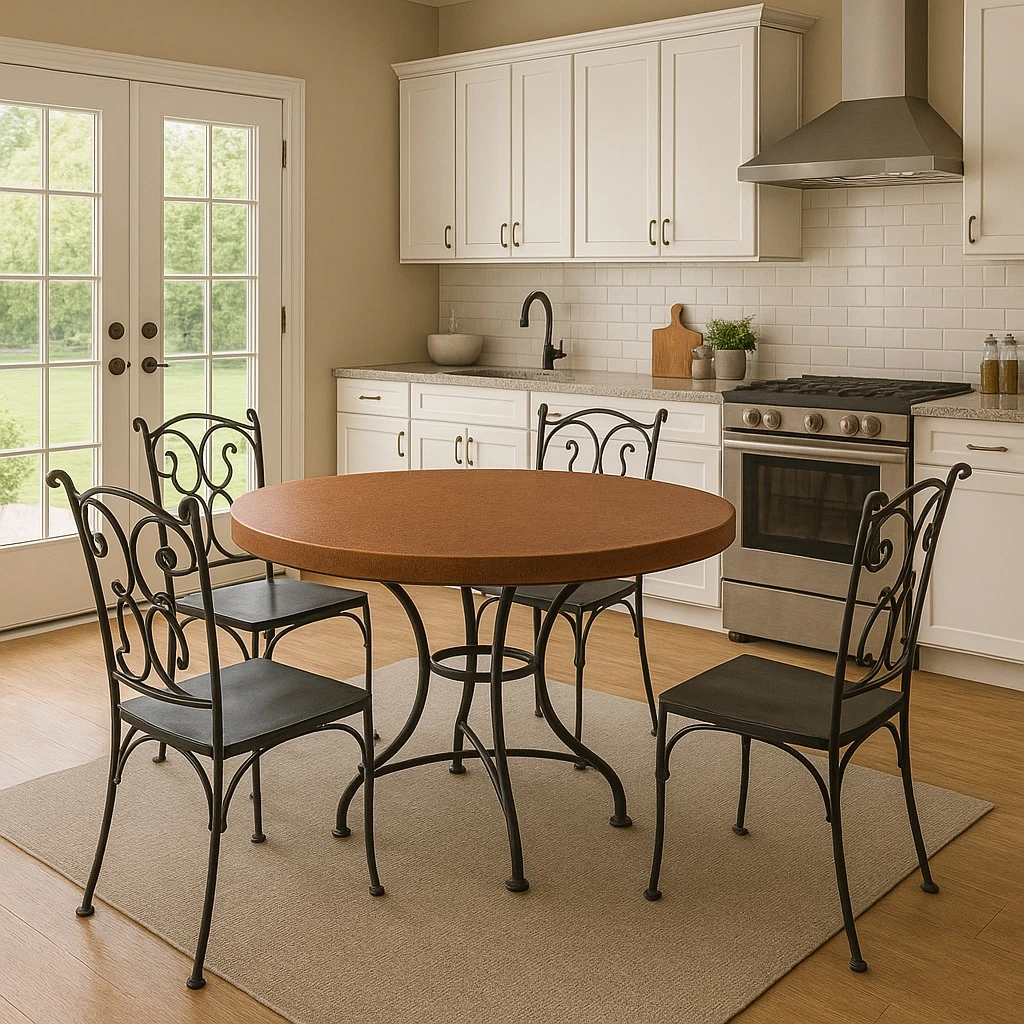
Old World Metalwork for Modern Interiors
The design unites two materials long associated with architectural craftsmanship. Copper contributes warmth, reflection, and evolving color, while forged iron adds strength, visual contrast, and ornamental structure beneath the tabletop.
Together, the metals create furniture that feels established and historic while remaining practical for contemporary residential and hospitality interiors.
Spanish Colonial Inspiration
The table draws visual inspiration from Spanish Colonial metalwork, including wrought iron gates, balconies, chandeliers, church grilles, and courtyard furnishings. Curving scrolls and symmetrical forged details create an elegant base beneath the simpler geometric tabletop.
The design is especially compatible with plaster walls, terracotta flooring, Talavera ceramics, carved wood, natural stone, and iron lighting.
Mexican Hacienda Character
Mexican Hacienda interiors frequently combine substantial handcrafted furniture with warm metals, rustic wood, colorful ceramic, and architectural stone. A copper table supported by iron fits naturally into this layered material palette.
The handmade surfaces keep the table from appearing overly formal, even when the base includes decorative scrollwork.
Design Influences
- Spanish Colonial: Forged architectural detail
- Mexican Hacienda: Warm artisan materials
- Mediterranean: Curves and aged finishes
- Tuscan: Rustic Old World character
- Transitional: Traditional-modern contrast
Hand-Hammered Copper Tabletop
The tabletop is covered with copper sheeting that is shaped and hammered by hand. Repeated hammer impressions form an irregular texture that reflects light differently across the surface.
Because the hammering is completed manually, no two tabletops display an identical pattern.
Why Hammering Adds Visual Depth
A flat metal surface reflects light evenly, while hammered copper creates highlights and shadows across hundreds of small impressions. This movement makes the table appear warmer and more dimensional throughout the day.
The texture also helps ordinary signs of use blend naturally into the handcrafted surface.
Artisan Variation
Slight differences in hammering, patina, edges, seams, color, and dimensions are natural results of handmade production. These details distinguish an artisan tabletop from a mechanically stamped or printed furniture surface.
Photographs and samples should therefore be viewed as general representations rather than exact duplicates of the finished table.
Hammered Surface Qualities
- Texture: Individual hammer impressions
- Reflection: Changing light and shadow
- Variation: Unique on every tabletop
- Character: Visible handmade detail
- Aging: Integrates natural wear
Copper-Wrapped Core Construction
The copper sheet is wrapped over a stable structural core that provides the shape, thickness, and support required for furniture use. The metal covers the top and visible sides, producing the appearance of a substantial copper surface.
This construction combines the beauty of copper with a practical internal foundation.
Tabletop Thickness
The tabletop is approximately 1.5 inches thick, giving it enough visual weight to balance the forged iron base. The profile works well in dining rooms, kitchens, breakfast areas, and commercial settings.
The finished thickness should be considered when choosing chair height and calculating the available knee clearance beneath the table.
Copper Gauge
The source specifications describe the tabletop as using 21-gauge copper over a plywood or particleboard core. The core material may depend on the table size and intended residential or commercial use.
The copper should be protected from severe impact even though the internal structure provides support.
Tabletop Construction
- Surface: Hand-hammered copper
- Gauge: 21-gauge copper sheet
- Core: Plywood or particleboard
- Thickness: Approximately 1.5 inches
- Edges: Copper-wrapped profile
Round Colonial Copper Tables
A round table creates an inclusive seating arrangement and supports conversation between every person. It is particularly suitable for breakfast areas, square dining rooms, compact kitchens, entry halls, and restaurant seating.
The curved tabletop also echoes the scrollwork and rounded movement of the forged iron base.
Round Tables for Eat-In Kitchens
In an eat-in kitchen, a round copper table softens the straight lines of cabinets, counters, appliances, and islands. Its lack of projecting corners can make circulation easier in smaller spaces.
A centered iron base may also provide more flexible chair placement than four legs located at the perimeter.
Round Tables for Dining Rooms
Larger round tables create a strong focal point beneath a chandelier and allow the copper surface to be appreciated from every direction. The final diameter should be chosen according to seating capacity and room clearance.
Large tabletops require a properly proportioned iron base to maintain stability.
Round Table Benefits
- Conversation: Inclusive seating arrangement
- Circulation: No projecting corners
- Balance: Echoes curved ironwork
- Placement: Works in compact rooms
- Style: Strong central focal point
Square Colonial Copper Tables
Square tabletops create a balanced geometric format suited to breakfast rooms, small dining areas, restaurants, game rooms, and open-concept kitchens. Equal sides provide similar seating conditions around the complete table.
The straight edges contrast attractively with the curved forged base beneath them.
Choosing Between Round and Square
Round tables improve circulation and create softer movement, while square tops provide stronger alignment with walls, cabinetry, rugs, and architectural grids. The best choice depends on the room shape and preferred seating arrangement.
Measure the floor area with chairs pulled back before selecting the final tabletop format.
Available Shapes
- Round: Soft social arrangement
- Square: Balanced geometric layout
- Custom: Subject to production review
- Compact: Kitchen and breakfast use
- Large: Dining and hospitality use
Standard Table Sizes
The available standard dimensions range from compact accent sizes to larger dining formats. The listed options include 16, 24, 30, 36, 42, 48, 54, and 60 inches.
The selected size should account for seating, chair width, room circulation, base dimensions, and delivery access.
Compact Table Sizes
Tables measuring 16 to 30 inches are generally more appropriate for side-table, occasional-table, bistro, or compact breakfast applications. Seating capacity depends on the exact shape and chair dimensions.
Small tables can bring copper and iron into a room without requiring a full dining installation.
Dining Table Sizes
Diameters or widths from approximately 36 to 60 inches can support dining applications, depending on shape and seating expectations. Larger dimensions provide greater serving space but require more clearance around the perimeter.
The room should remain comfortable when every chair is occupied and pulled away from the table.
Listed Size Options
- 16 Inches: Compact accent table
- 24–30 Inches: Bistro applications
- 36–42 Inches: Small dining areas
- 48–54 Inches: Family dining
- 60 Inches: Larger gathering table
Custom Table Dimensions
Custom sizing may be available when standard dimensions do not fit the room or seating plan. The final size affects the quantity of copper, core construction, weight, iron base proportions, production time, and shipping crate.
All custom measurements should be confirmed before fabrication begins.
Standard and Custom Table Height
The standard table height is approximately 29 inches. The source specifications also indicate that made-to-order heights up to 36 inches may be available.
A taller table may require counter-height seating rather than standard dining chairs.
Measuring for Chair Clearance
Chair seat height, tabletop thickness, apron construction, and base placement determine the available knee space. Review these measurements together rather than selecting chairs after the table arrives.
Decorative iron scrollwork should not interfere with normal seating positions.
Dimension Planning
- Height: Approximately 29 inches standard
- Custom Height: Up to 36 inches
- Thickness: Approximately 1.5 inches
- Chairs: Confirm seat compatibility
- Clearance: Preserve comfortable legroom
Hand-Forged Iron Base
The base is constructed from iron shaped into curved scrolls and supporting elements. Forging allows the metal to be bent and formed into decorative components while retaining the structural strength required beneath the copper top.
The base combines an ornamental appearance with a practical supporting function.
Traditional Scrollwork
S- and C-shaped scrolls recall architectural ironwork used in gates, railings, balconies, church grilles, and chandeliers. Their curves introduce movement and soften the visual weight of the metal.
The pattern should remain open enough to preserve legroom and allow the floor to remain visible.
Central Support Structure
A central support with outward-projecting arms can distribute weight beneath the tabletop while keeping the perimeter relatively open. This configuration works especially well with round and square tops.
The base must remain proportionate to the tabletop to prevent excessive overhang or instability.
Iron Base Characteristics
- Material: Hand-forged iron
- Motifs: S- and C-scroll forms
- Structure: Central supporting design
- Finish: Black or natural rust
- Style: Colonial architectural influence
Why Copper and Iron Work Together
Copper and iron create a strong contrast in color, texture, and reflection. Copper is warm and visually active, while iron is darker, heavier, and more structural.
This contrast allows the tabletop and base to remain clearly defined while still belonging to one cohesive design.
Complementary Aging
Copper may deepen into brown, amber, coffee, or green tones over time. Iron finishes can also acquire additional surface variation depending on their protective coating, environment, and maintenance.
The evolving metals reinforce the Old World character of the furniture.
Structural and Decorative Balance
The iron base supports the tabletop physically while also grounding the brighter copper visually. Without the dark base, a large copper surface might appear too light or disconnected from the room.
The open scrollwork prevents the supporting structure from feeling excessively heavy.
Material Combination Benefits
- Contrast: Warm copper and dark iron
- Balance: Decorative top and strong base
- Texture: Hammering beside scrollwork
- Aging: Both metals gain character
- Versatility: Traditional or modern use
Natural Copper Finish
Natural copper displays orange-red, golden, and light brown tones beneath a protective finish. It creates a brighter appearance than antique or coffee patinas.
The surface may continue to change gradually through normal exposure and use.
Coffee Copper Patina
Coffee patina creates a rich brown surface with warmer copper highlights visible across hammer marks and edges. It works well with dark wood, stone, leather, iron, and neutral plaster.
The finish is especially suitable for Colonial, Hacienda, rustic, and traditional interiors.
Antique Copper Finish
An antique patina produces a golden-brown aged appearance intended to suggest long-established metalwork. Tonal variation may appear across the hammered surface.
This finish coordinates naturally with carved furniture and Old World architectural materials.
Honey Copper Patina
Honey patina creates a softer amber appearance that remains warmer and lighter than coffee finishes. It can suit farmhouse, Mediterranean, transitional, and relaxed traditional interiors.
Natural lighting may reveal brighter highlights across the hammering.
Verdigris Copper Finish
Verdigris introduces blue-green oxidation inspired by naturally weathered copper. The finish can become the table’s primary color statement within a neutral interior or covered exterior setting.
Because oxidation is applied by hand, exact color placement and intensity will vary.
Polished Copper Surface
A polished finish creates greater reflectivity and a brighter metallic appearance. It may feel more formal or contemporary than heavily aged patinas.
Maintaining a mirror-like surface generally requires more attention than allowing copper to age naturally.
Copper Finish Options
- Natural: Orange-red copper glow
- Coffee: Deep brown patina
- Antique: Golden aged appearance
- Honey: Soft amber tone
- Verdigris: Blue-green oxidation
- Polished: Bright reflective finish
Black Iron Base
A matte black iron base creates strong contrast with every copper finish. It is the most versatile option for coordinating with cabinet hardware, chandeliers, doors, windows, and other architectural metalwork.
Black also keeps attention focused on the copper tabletop.
Natural Rust Iron Finish
A sealed natural-rust finish introduces brown, orange, and dark metal variation. It strengthens the antique and rustic appearance of the table while coordinating with coffee, antique, and natural copper.
The coating and maintenance requirements should be reviewed for the intended indoor or covered outdoor setting.
Iron Finish Options
- Matte Black: Timeless dark contrast
- Natural Rust: Aged iron character
- Sealed Finish: Helps protect patina
- Custom Color: Subject to availability
- Hand-Applied: Variation expected
Copper as a Living Finish
Copper reacts naturally to air, moisture, fingerprints, food, drinks, heat, and cleaning products. The color may deepen, lighten, or develop additional tonal variation.
This evolution is part of genuine copper and should not be compared with an entirely uniform painted furniture finish.
Natural Variation Between Pieces
Separately produced tables, samples, and accessories may not display identical patina tones. The appearance is influenced by copper sheet variation, hammering, patina application, lighting, and time.
When coordinating several copper products, order them together when possible while still expecting individual variation.
Spanish Revival Dining Rooms
A Colonial copper table works naturally in Spanish Revival interiors containing stucco or plaster walls, carved wood, iron chandeliers, terracotta floors, arches, and patterned ceramic tile.
The table can serve as the central furnishing beneath a substantial light fixture.
Mexican Colonial Interiors
Talavera pottery, woven textiles, dark wood, iron, stone, and copper create a rich Mexican Colonial composition. The table provides a warm metallic surface that connects these different artisan materials.
A coffee or antique patina can strengthen the historic atmosphere.
Mediterranean Kitchens
Natural copper and black iron pair well with cream cabinetry, limestone, travertine, plaster, wood beams, and terracotta. The table can be used in a breakfast area or as a central gathering surface.
Honey and antique finishes support the warm sun-aged palette associated with Mediterranean rooms.
Traditional Interior Pairings
- Spanish Revival: Arches and iron lighting
- Mexican Colonial: Talavera and carved wood
- Mediterranean: Plaster and natural stone
- Tuscan: Rustic earth-tone materials
- Hacienda: Layered Mexican craftsmanship
Tuscan and Rustic Farmhouse Interiors
A hammered copper surface complements stone counters, travertine, linen seating, wood cabinetry, and warm neutral walls. The iron base adds enough architectural structure to prevent the table from feeling overly casual.
Coffee, antique, and honey patinas work particularly well in this setting.
Transitional Interiors
In a transitional room, the table can provide handcrafted warmth beside simple cabinetry, modern upholstery, restrained lighting, and neutral stone. A black iron base helps the traditional scrollwork feel more graphic and controlled.
Limiting additional ornament allows the copper and iron to remain the main material statement.
Contemporary Contrast
A Colonial table may also be used as a contrasting feature in a contemporary interior. Flat cabinetry, concrete, large-format stone, glass, and clean walls create a quiet background for the handcrafted furniture.
The contrast between modern architecture and traditional metalwork can make the table appear more sculptural.
Covered Patio Applications
The table may be used in covered outdoor areas protected from direct rain and severe weather. A sheltered veranda, loggia, or roofed patio can provide an appropriate setting for casual dining.
Humidity, temperature changes, and exposure may accelerate patina development on both copper and iron.
Covered Outdoor Pairings
- Iron Chairs: Coordinated metal seating
- Outdoor Rugs: Softens hard flooring
- Terracotta Pots: Mediterranean warmth
- Talavera Pottery: Adds Mexican color
- Greenery: Complements aged metals
Using the Table in an Eat-In Kitchen
A compact Colonial table can define an informal dining zone within a kitchen. Round formats work especially well where circulation space is limited or the room contains many straight cabinet lines.
The copper may coordinate with a nearby range hood, sink, lighting fixture, or cabinet hardware.
Using the Table in a Formal Dining Room
A larger table can anchor a formal dining arrangement surrounded by upholstered, wood, leather, or iron chairs. The tabletop should remain visible enough for its hammering and patina to contribute to the room.
A centered chandelier can emphasize the table’s round or square geometry.
Choosing Dining Chairs
Chair width, seat height, arms, and back design affect how many people can sit comfortably. Large upholstered armchairs require more space than narrow wood or iron side chairs.
Verify that the scrollwork and base arms do not interfere with intended chair positions.
Chair Pairings
- Wood: Warm traditional seating
- Iron: Coordinates with the base
- Leather: Adds refined texture
- Upholstered: Softens the metal table
- Mixed Seating: Creates eclectic character
Lighting Above the Copper Table
Lighting influences how the hammering and patina are perceived. Warm bulbs emphasize amber, red, and brown tones, while cooler daylight reveals brighter metallic highlights.
The fixture should be centered above the table rather than simply centered within the room.
Wrought Iron Chandeliers
A forged iron chandelier repeats the material and visual language of the table base. This pairing works especially well in Spanish Revival, Hacienda, Mediterranean, and rustic dining rooms.
The chandelier scale should remain proportionate to the tabletop.
Mixed-Metal Lighting
Brass, bronze, copper, black iron, and glass may be combined above the table. Repeating each finish elsewhere in the room helps the mixed-metal scheme feel intentional.
Lighting Options
- Iron Chandelier: Strong Colonial pairing
- Copper Pendant: Repeats tabletop warmth
- Brass Fixture: Adds golden contrast
- Lantern Style: Supports Hacienda design
- Glass Lighting: Keeps the room lighter
Styling the Tabletop
The copper surface can remain uncovered so its hammering and patina remain visible. A runner, pottery arrangement, candleholders, or botanical centerpiece may be added without hiding the complete top.
Decorative items should have smooth or padded bases to reduce scratching.
Textural Contrast
Natural-fiber rugs, linen, woven textiles, pottery, carved wood, and stone create contrast with the metal surfaces. These materials soften the table while reinforcing its handcrafted character.
A restrained textile palette allows the copper color to remain dominant.
Botanical Accents
Olive branches, succulents, herbs, and seasonal flowers provide a fresh counterpoint to copper and iron. Terracotta or Talavera vessels can reinforce Mediterranean or Mexican styling.
Protect the tabletop from standing moisture beneath planters and vases.
Styling Ideas
- Runner: Adds textile softness
- Pottery: Introduces artisan color
- Candles: Reflect warm light
- Greenery: Contrasts aged metal
- Natural Fibers: Adds tactile balance
Residential and Commercial Use
The table can be used in dining rooms, kitchens, restaurants, cafés, hotels, tasting rooms, and other hospitality environments. Commercial use should be specified when ordering so the construction can be reviewed for repeated daily service.
Table sizes, aisle spacing, chair placement, and cleaning procedures require careful planning in commercial interiors.
Restaurant Applications
Round and square copper tables can create a coordinated dining room while allowing different seating arrangements. The metal surface contributes a distinctive visual identity that guests can associate with the property.
Commercial tabletops should be cleaned regularly and protected from harsh restaurant chemicals.
Hospitality Interiors
Hotels, boutique inns, wineries, and event spaces can use Colonial copper tables in guest areas, dining rooms, covered patios, and entry halls. The artisan construction supports interiors intended to feel individual rather than standardized.
Commercial Settings
- Restaurants: Distinctive dining furniture
- Cafés: Compact artisan tables
- Hotels: Custom guest-space furnishings
- Wineries: Warm tasting-room surfaces
- Patios: Sheltered hospitality seating
Cleaning the Copper Top
Use mild soap, warm water, and a soft cloth for regular cleaning. Remove food, liquids, grease, and other residue promptly, then dry the surface gently.
Avoid abrasive pads, harsh acids, bleach, ammonia, solvents, and aggressive copper cleaners that may alter the patina.
Using Coasters and Trivets
Coasters reduce moisture rings, while trivets protect the tabletop from very hot cookware and serving pieces. Padded protectors can be placed beneath rough pottery or decorative objects.
These habits help preserve a more consistent finish while allowing normal patina development.
Acidic Foods and Liquids
Wine, vinegar, citrus, tomatoes, and other acidic substances may affect the patina if left on the copper. Clean spills promptly rather than allowing them to dry on the surface.
Small tonal changes may gradually blend into the surrounding finish.
Copper Care Tips
- Clean: Mild soap and water
- Dry: Use a soft cloth
- Protect: Use coasters and trivets
- Avoid: Abrasive chemical products
- Patina: Expect gradual evolution
Optional Wax Protection
A compatible clear paste wax may be applied when recommended for the selected copper finish. The source material suggests waxing approximately every six to twelve months, although actual frequency depends on use and environmental conditions.
Test any product in an inconspicuous area before applying it to the complete table.
Caring for the Iron Base
Dust the iron regularly with a soft cloth and remove spills promptly. Avoid leaving standing moisture on the base, particularly around joints and feet.
Do not encourage rust development with water unless the finish and manufacturer’s care guidance specifically support that treatment.
Adjusting the Leveling Feet
If the base includes adjustable levelers, inspect them periodically to keep the table stable on tile, wood, or stone floors. Uneven adjustment may cause rocking or place unnecessary stress on the tabletop.
Floor protectors may be added when appropriate for the surface beneath the table.
Assembly and Placement
The tabletop and iron base may be shipped separately and assembled at the destination. Larger sizes may require several people to lift, position, and secure the components safely.
Protect the copper with padded blankets or clean soft material during assembly.
Attaching the Top to the Base
The base should be centered beneath the tabletop and secured using the appropriate hardware and attachment points. Improvised fasteners may damage the core or copper surface.
Follow the supplied assembly instructions or use an experienced furniture installer.
Assembly Checklist
- Helpers: Arrange safe lifting support
- Padding: Protect copper during handling
- Centering: Align base beneath top
- Hardware: Use correct fasteners
- Leveling: Prevent rocking
Planning the Delivery Route
Measure doors, hallways, stairways, elevators, gates, and turning areas before ordering. The tabletop may fit the final room but still be difficult to move through the property.
The protective crate will be larger than the finished table.
Freight Delivery
Large copper furniture may require freight delivery rather than ordinary parcel service. Confirm truck access, unloading requirements, driveway conditions, and a protected area for receiving the crate.
The delivery service and available assistance should be reviewed before shipment.
Inspecting the Shipment
Inspect the exterior of the crate before signing the delivery documentation. Note visible damage on the carrier paperwork and photograph the packaging immediately.
Retain all packing materials until the tabletop and base have been unpacked and examined fully.
Delivery Checklist
- Access: Confirm truck route
- Unloading: Arrange suitable assistance
- Crate: Inspect before signing
- Photos: Document visible damage
- Storage: Keep components protected
Production Time
The source specifications list an estimated standard lead time of approximately eight weeks, with custom production potentially requiring ten to twelve weeks. Actual timing may vary according to size, finish, customization, inspection, packing, and transportation.
Order early when the table is required for a renovation, opening, event, or installation deadline.
Custom Finish Approval
Finish samples may be reviewed to compare copper patinas and iron treatments. Samples indicate the general direction of the finish but cannot guarantee an exact match to the full tabletop.
Hammering, sheet variation, lighting, and hand-applied patina influence the completed appearance.
Custom Design Planning
Before production, confirm the tabletop shape, dimensions, height, copper patina, iron finish, intended use, chair style, room clearance, delivery access, and assembly requirements.
Written instructions and reference images can help communicate custom preferences.
Ordering Information
- Shape: Select round or square
- Size: Choose standard or custom
- Copper: Select preferred patina
- Iron: Choose base finish
- Use: Specify residential or commercial
Understanding Handmade Expectations
Minor differences in dimensions, hammering, patina, seams, iron scrolls, welds, and overall symmetry are normal in handmade furniture. These characteristics reflect manual production rather than automated repetition.
They should be distinguished from severe dents, structural damage, broken welds, or freight-related deformation.
Why the Colonial Copper Table Stands Apart
Mass-produced furniture is built around standardized dimensions, printed finishes, and repeated components. This table combines hand-hammered copper, forged iron, customizable finishes, and made-to-order production.
The finished piece functions as dining furniture while also displaying traditional Mexican metalworking skills.
Ordering and Product Information
Before ordering, confirm the table shape, dimensions, height, tabletop thickness, copper patina, iron finish, seating capacity, intended location, floor clearance, delivery route, assembly plan, and production schedule.
Visit the Colonial Copper Table with Forged Iron Base product page to review ordering options, or contact Rustica House for assistance with sizing, finishes, and project planning.
Conclusion
A Colonial copper table with a forged iron base combines a hand-hammered metal surface, substantial copper-wrapped construction, ornamental scrollwork, customizable patinas, and Old World architectural character. Available in round or square formats and in dimensions suited to accent, breakfast, dining, restaurant, and covered-patio applications, the table can complement Spanish Colonial, Mexican Hacienda, Mediterranean, Tuscan, farmhouse, transitional, and contemporary interiors. With accurate room measurements, coordinated seating, appropriate delivery planning, careful assembly, gentle cleaning, and respect for the evolving metal finishes, this artisan table becomes a lasting centerpiece shaped by Mexican craftsmanship.