 US Dollar
 Euro
Euro
 Australian Dollar
 Canadian Dollar
 Polish Zloty
 British Pound

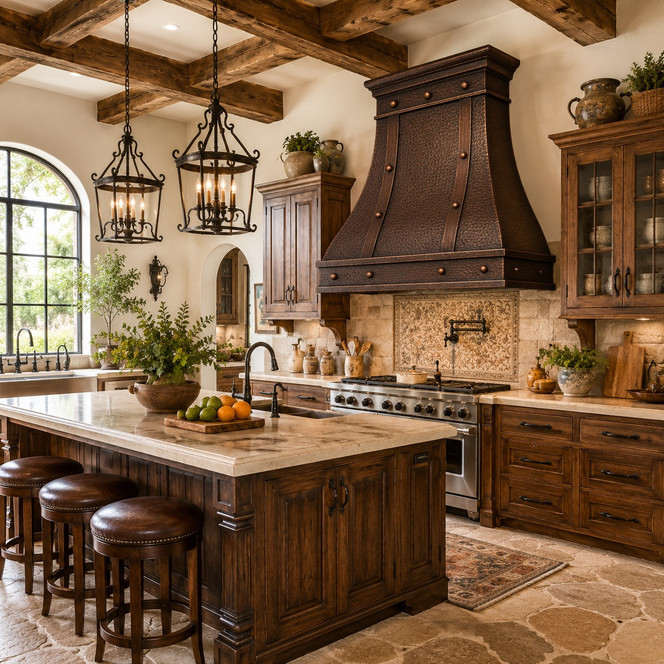
Coffee Copper Range Hood with Decorative Straps Guide explains how a dark coffee-finish copper hood can bring handcrafted warmth, architectural shape, and refined rustic detail into transitional, farmhouse, Spanish, Mediterranean, and rustic kitchen interiors. This made-to-order hood uses a bell-style form with decorative vertical straps, dome-rivet accents, and a rich coffee patina that deepens the copper surface. The design works well when the kitchen needs a focal point with more detail than a plain smooth hood but less ornament than highly decorative Old World models. Explore the coffee copper range hood to review its finish, straps, custom sizing, and ventilation planning options.
Blog Summary
- Design: Coffee copper hood
- Details: Decorative straps
- Finish: Dark coffee patina
- Shape: Bell-style profile
- Planning: Custom size and insert
Design Guide Overview
A coffee finish copper range hood with decorative straps is designed for kitchens that need warmth, contrast, and handcrafted metal detail above the cooking surface. The dark patina gives the copper a deeper, more aged appearance than bright natural copper, while the straps create vertical rhythm across the hood body. The bell-inspired shape softens the range wall and helps the hood feel architectural rather than flat. This combination works especially well in kitchens with wood cabinetry, stone counters, handmade tile, plaster walls, rustic beams, and dark hardware. The hood can become the main visual anchor without overwhelming the entire room. Browse beautifully designed kitchens in our coffee copper hood lifestyle image gallery.
Coffee Copper Finish
The coffee finish is one of the most important visual features of this hood. Instead of showing a bright copper tone, the surface has a darker brown character with warm undertones. This makes the hood easier to coordinate with rustic wood, aged bronze, black iron, stone, brick, and darker cabinet hardware. The finish can also create strong contrast against cream, white, beige, gray, or pale green cabinetry. Because the color is deep and warm, it gives the kitchen a grounded look. The coffee patina is especially useful when the goal is refined rustic style rather than polished copper shine.
Finish Benefits
- Tone: Deep coffee patina
- Warmth: Dark copper depth
- Contrast: Works with light walls
- Style: Refined rustic look
- Use: Fits warm kitchens
Decorative Strap Detail
The decorative straps give the hood a stronger handcrafted identity. Vertical straps draw the eye upward and help organize the hood’s surface into balanced sections. Dome-rivet accents add small points of shadow and texture, reinforcing the artisan metalwork character. These details are especially effective on a coffee finish because the darker patina highlights raised elements without looking overly shiny. In transitional kitchens, the straps provide detail without excessive ornament. In rustic or Spanish-inspired kitchens, they echo forged metal, wood beams, hand-hammered surfaces, and traditional architectural hardware. The result is detailed but still controlled.
Bell Shape Character
The bell-style shape gives the hood a softer profile than a simple box design. It creates a gentle transition from the upper body to the wider lower capture area above the range. This profile is useful in kitchens that need a focal point with movement but not heavy carving or elaborate embossing. Bell hoods are popular because they feel classic, balanced, and adaptable across many interior styles. To understand how this silhouette works across different copper hood designs, review the bell shape copper hoods guide.
Shape Advantages
- Profile: Soft bell form
- Balance: Wider lower area
- Style: Classic kitchen shape
- Detail: Supports straps
- Focus: Frames the range
Transitional Rustic Setting
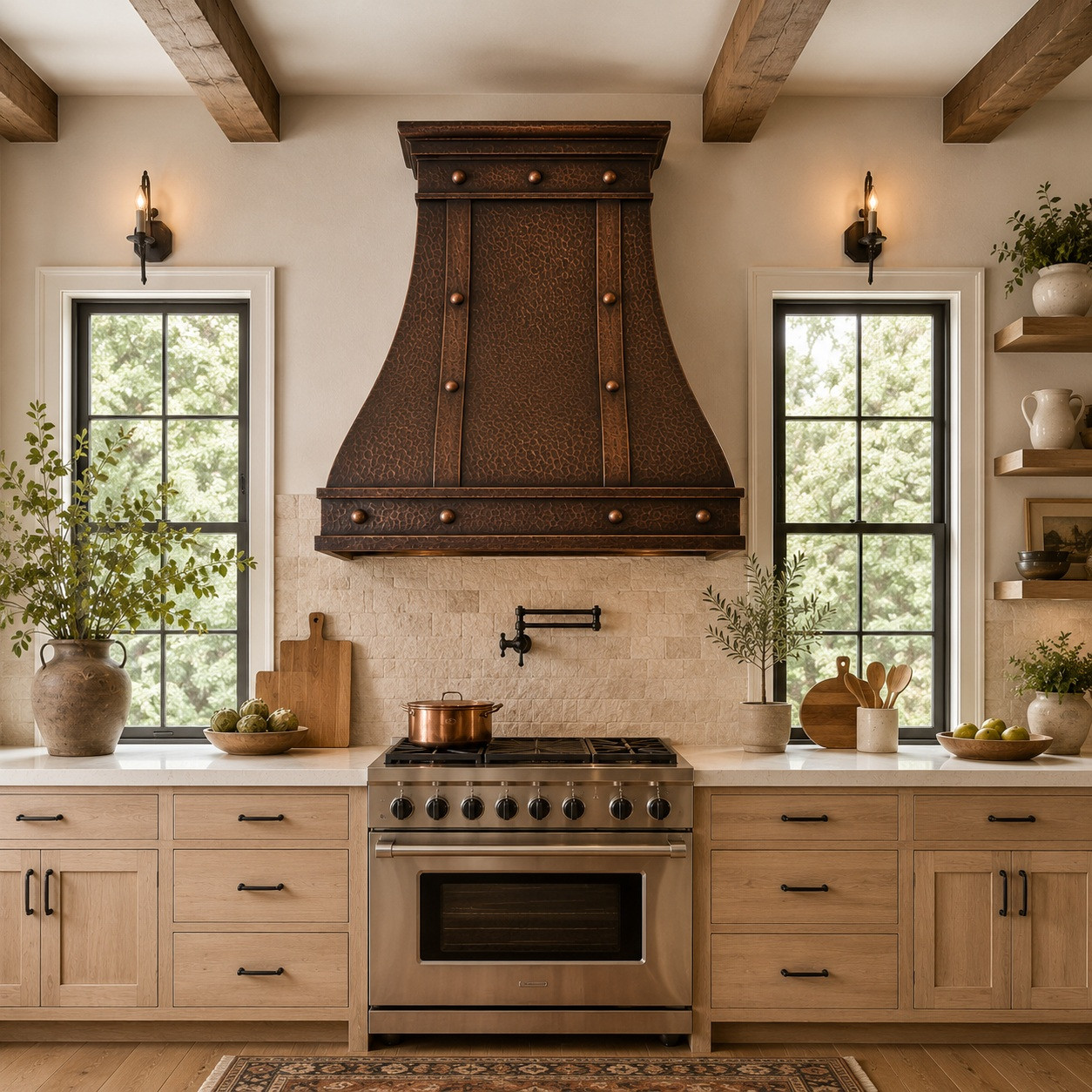
The lifestyle image shows the coffee finish copper hood in a transitional rustic kitchen, where clean cabinetry and warm handcrafted materials work together. Transitional rustic design usually combines updated structure with natural texture. The hood fits this setting because its shape is organized, but its finish and straps add artisan depth. Light cabinetry, stone surfaces, muted tile, and wood accents allow the coffee patina to stand out clearly. The hood becomes the focal point above the range while still feeling connected to the room. This balance is ideal for homeowners who want handcrafted copper without making the kitchen look overly ornate.
Copper Hood Category
Copper range hoods can be designed in many forms, including bell, barrel, box, pyramid, under-cabinet, and curved-front styles. A coffee finish hood with decorative straps belongs to the more detailed side of the copper category, but it remains versatile because the decoration is architectural rather than excessive. Compared with smooth copper, the coffee finish feels darker and more grounded. Compared with bright polished copper, it feels older and more rustic. To compare related handmade copper styles, browse the copper range hoods collection.
Metal Hood Planning
This hood is also part of the broader handmade metal hood category, where copper, zinc, iron, pewter, brass, and mixed-metal designs each create a different mood. Copper is usually chosen for warmth and patina, while iron creates darker structure and zinc offers softer gray tones. The coffee copper finish sits between rustic warmth and refined depth, making it useful for kitchens that need a strong but welcoming focal point. Before choosing a material, compare how each metal works with cabinetry, lighting, backsplash, flooring, and appliances. The broader metal range hoods category can help with material comparison.
Farmhouse Kitchen Use
In farmhouse kitchens, the coffee copper hood adds depth above the range without feeling too formal. The dark patina works well with white shaker cabinets, wood shelves, stone counters, apron-front sinks, and handmade ceramic accessories. Decorative straps add enough character to support rustic styling, while the bell form keeps the silhouette classic. A lighter backsplash can help the hood stand out, especially if the cabinets are pale. Repeating warm tones through wood beams, cutting boards, pottery, or bronze hardware helps connect the hood with the rest of the room. The result feels practical, warm, and handcrafted.
Spanish Kitchen Use
Spanish-style kitchens often include plaster walls, handmade tile, dark wood, iron lighting, arches, and warm earth tones. A coffee finish copper hood with decorative straps fits naturally into this setting because the patina feels aged and the metal details echo traditional hardware. The bell shape adds softness above the range, while the straps provide structure. Pair the hood with clay tile, Talavera accents, limestone, wrought iron fixtures, and wood cabinetry for a stronger Spanish character. To avoid visual clutter, allow either the hood or the backsplash to lead. If the tile is colorful, keep nearby details more restrained.
Spanish Pairings
- Tile: Handmade ceramic color
- Wood: Dark cabinet tones
- Iron: Lantern or hardware
- Walls: Plaster or limewash
- Stone: Warm natural texture
Mediterranean Kitchen Use
Mediterranean kitchens often use stone, plaster, aged wood, clay tones, patterned tile, and warm metals. The coffee copper hood supports this style because its dark finish feels naturally aged. Decorative straps bring depth without needing floral or embossed ornament. The hood can work above a range surrounded by limestone, terracotta, cream plaster, or muted decorative tile. Warm lighting is important because it brings out the copper undertones within the darker patina. The bell shape helps the range wall feel traditional and architectural, while the custom copper surface gives the kitchen an artisan focal point.
Rustic European Style
Rustic European kitchens often feel collected, textured, and architectural. They may include stone flooring, aged beams, plaster walls, antique hardware, and muted cabinetry. A coffee copper hood with straps fits this atmosphere because the finish has depth and the shape feels substantial. The decorative straps can echo old metalwork, door hinges, or forged details. Pair the hood with limestone, brick, reclaimed wood, or soft neutral walls for a grounded look. Since the coffee finish is dark, balance it with lighter stone or cabinetry if the kitchen lacks natural light. The goal is warmth, not heaviness.
Rustic Pairings
- Stone: Limestone or brick
- Wood: Reclaimed beams
- Metal: Iron or bronze
- Walls: Cream plaster
- Light: Warm soft glow
Transitional Kitchen Use
In transitional kitchens, this hood can provide the handmade warmth that clean cabinetry sometimes needs. The bell shape keeps the design familiar, while the straps and coffee finish add character. Use simple cabinets, quiet stone counters, restrained tile, and balanced hardware so the hood remains the focal point. A transitional kitchen should not feel overly rustic, so avoid pairing too many heavy textures at once. The hood works best when surrounding materials are clean but warm. This allows the dark copper finish to stand out as an intentional design choice rather than a decorative excess.
Backsplash Coordination
The backsplash has a major effect on how the coffee copper finish appears. Light stone, cream tile, plaster, brick, or muted handmade tile can all support the hood. If the backsplash is patterned, choose colors that relate to the copper patina, cabinet finish, or flooring. Because the hood already includes straps and rivets, overly busy tile can make the range wall feel crowded. A simpler background often gives the hood more visual authority. In Spanish or Mediterranean kitchens, patterned tile can work if it is used in a controlled area and balanced with quieter surrounding surfaces.
Hardware and Lighting
Hardware and lighting should help connect the hood to the rest of the kitchen. Dark bronze, oil-rubbed bronze, black iron, antique brass, or aged copper hardware can all coordinate with the coffee finish. Warm bulbs are helpful because they bring out the copper undertones and prevent the patina from appearing too dark. Pendants, sconces, or cabinet pulls can repeat the metal mood in smaller areas. Stainless steel appliances can still work if the room includes enough wood, stone, tile, or warm lighting to balance them. The hood should feel integrated, not isolated.
Finish Coordination
- Bronze: Matches dark warmth
- Iron: Adds rustic contrast
- Brass: Softens dark patina
- Wood: Warms the kitchen
- Light: Reveals copper tone
Wall and Island Planning
A coffee copper range hood can be planned for wall-mounted or island installation depending on the kitchen layout. A wall-mounted hood frames the range against a backsplash and is often surrounded by cabinets, open shelving, or architectural wall material. An island hood must look balanced from several viewing angles because it is visible from the kitchen and nearby living areas. The decorative straps and bell form should be centered and proportioned carefully. Island installations also require early planning for ceiling support and duct routing. In both layouts, the hood width should relate to the range below.
Ventilation Insert Planning
The copper hood cover provides the exterior design, but the insert provides the cooking performance. Before ordering, confirm the insert dimensions, airflow needs, filter access, lighting, controls, and duct route. A kitchen with high-output burners, frequent frying, or heavy cooking may need stronger airflow than a kitchen used for lighter meals. The hood should also have enough capture area above the range. Insert details should be reviewed before production so the metal shell can be prepared correctly. Good planning helps the hood look custom while also supporting smoke, steam, grease, and odor removal.
Insert Planning
- Size: Confirm insert fit
- Airflow: Match cooking use
- Filters: Keep access clear
- Lights: Plan placement
- Duct: Review route early
Custom Sizing
Custom sizing is important because the hood must fit both the appliance and the room architecture. Width should relate to the range or cooktop below. Height should work with ceiling height, cabinet layout, and installation type. Depth should support ventilation capture while remaining comfortable for cooking. Decorative straps need proportional spacing, especially on wider hoods. The flared or bell-style lower area should look balanced from the front and side. A properly sized coffee copper hood feels integrated into the kitchen rather than added as an oversized decorative object.
Care and Cleaning
Coffee finish copper should be cleaned gently to protect the patina. Use mild soap, warm water, and a soft cloth for regular care. Avoid abrasive pads, steel wool, bleach, ammonia, acidic cleaners, and aggressive polishing compounds. These can scratch the surface or disturb the darker finish. Wipe grease before it hardens, especially near lower edges, straps, rivets, and seams. Dry the hood after cleaning to reduce water spots. Because the coffee finish is intended to look aged and warm, maintenance should preserve the patina rather than force the copper back to a bright polished surface.
Care Guidelines
- Soap: Use mild cleaner
- Cloth: Choose soft fabric
- Grease: Wipe before buildup
- Avoid: No harsh chemicals
- Patina: Protect dark finish
Design Summary
A coffee copper range hood with decorative straps is ideal for kitchens that need handcrafted warmth, dark patina, and architectural detail. The bell-style shape softens the range wall, while the straps and rivets create structure and artisan character. The coffee finish works with farmhouse, Spanish, Mediterranean, rustic European, and transitional interiors because it adds depth without the brightness of polished copper. Proper backsplash coordination, hardware selection, lighting, custom sizing, and insert planning all shape the final result. When balanced carefully, the hood becomes both a functional ventilation cover and a lasting kitchen focal point.
Final Design Guidance
Coffee Copper Range Hood with Decorative Straps Guide shows how finish, shape, detailing, and kitchen planning work together. Choose this hood when the room needs a darker copper focal point with refined rustic character. Pair it with warm lighting, stone, plaster, wood, muted tile, bronze hardware, or iron accents. Confirm width, height, depth, installation type, and insert details before production. Whether used in a transitional rustic kitchen, farmhouse room, Spanish interior, or Mediterranean design, this handcrafted Rustica House hood adds warmth, ventilation function, and artisan metal character above the cooking area.