 US Dollar
 Euro
Euro
 Australian Dollar
 Canadian Dollar
 Polish Zloty
 British Pound

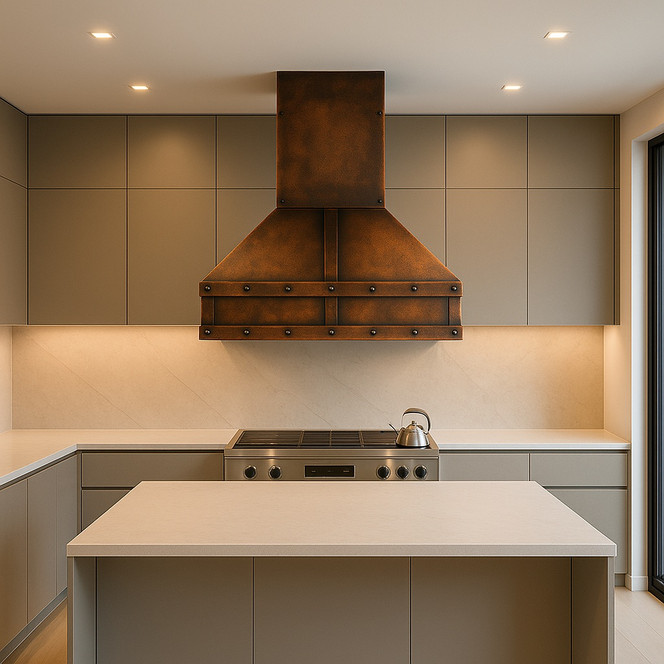
Copper Kitchen Hood Guide explains why a handcrafted copper hood is a practical and attractive choice for many residential kitchens. A copper hood can align with different cooktop and range widths while adding warmth, patina depth, and custom metal character above the cooking area. This style works well in compact kitchens, larger remodels, farmhouse layouts, transitional interiors, rustic rooms, and custom homes where proportion matters. Copper also offers a timeless visual presence that pairs with stone, wood, tile, plaster, iron, brass, and stainless steel. Explore copper range hoods to compare styles, finishes, textures, and installation options.
Blog Summary
- Size: Custom hood dimensions
- Material: Handcrafted copper
- Options: Wall or island mount
- Finish: Patina or polished look
- Planning: Insert and duct needs
Size Guide Overview
Choosing the correct range hood size is important for both kitchen design and ventilation planning. A copper kitchen hood should relate to the cooktop or range below, the available wall space, cabinet layout, ceiling height, and duct route. The goal is to create a hood that looks balanced while supporting ventilation performance. A properly sized hood should not feel too narrow above the range or too large for the surrounding cabinetry. Custom sizing makes it possible to adjust width, height, depth, chimney shape, and installation style so the hood fits the actual kitchen instead of forcing a standard appliance shape into the design.
Why Size Matters
Range hood size affects both appearance and function. A hood that is too small may look weak above the cooking surface and may not provide enough capture area for smoke, steam, grease, and odors. A hood that is too large can crowd cabinets, overwhelm a backsplash, or feel heavy in a compact room. Copper hoods are often chosen as focal points, so proportion is especially important. The hood should frame the cooking area, align visually with the range, and leave enough clearance for safe and comfortable use. Careful planning helps the hood feel integrated and intentional.
Size Benefits
- Fit: Matches kitchen layout
- Scale: Balances the range wall
- Focus: Frames the cooktop
- Use: Works in remodels
- Style: Adds copper warmth
Copper Hood Benefits
Copper brings warmth, texture, and timeless character to the kitchen. Unlike plain appliance finishes, copper can develop patina and visual depth over time. It works with rustic, farmhouse, Mediterranean, Spanish, Tuscan, transitional, and modern kitchen styles depending on the hood shape and finish. A hand-hammered copper surface feels more artisan and traditional, while a smoother copper surface can look cleaner and more refined. Copper also coordinates well with dark bronze, black iron, antique brass, natural wood, stone counters, and handmade tile. This flexibility makes it useful for many different kitchen design directions.
Wall-Mount Option
A wall-mounted copper hood is installed above a range or cooktop positioned against a wall. This is the most common configuration and usually works well with surrounding cabinets, backsplash tile, and duct routes. The hood should align with the center of the appliance and be mounted at a height that supports safe cooking clearance. Wall-mounted hoods often become the main feature of the range wall, especially when paired with stone, plaster, brick, or decorative tile. Review related options in the metal range hoods collection when comparing wall-mounted designs.
Island-Mount Option
An island-mounted copper hood is used when the cooktop sits in a kitchen island. This layout requires more planning because the hood is visible from multiple sides and must be supported from the ceiling. Island hoods should be sized carefully so they feel balanced above the cooking surface without blocking important sightlines. Duct routing, ceiling height, electrical access, and structural support should all be confirmed before production. Island hoods should look balanced from the kitchen, dining area, and adjacent living space, not only from one front view.
Mounting Choices
- Wall: Best for range walls
- Island: For open cooktops
- Duct: Plan route early
- Support: Check framing
- View: Balance sightlines
Custom Texture Options
Texture changes the mood of a copper hood. A hammered finish gives the surface visible artisan movement and works beautifully in rustic, farmhouse, Mediterranean, Spanish, and Old-World kitchens. The hammer marks scatter light and help the hood feel more dimensional. A smooth finish creates a cleaner surface that emphasizes shape and patina rather than texture. Smooth copper can work well in transitional, modern farmhouse, and contemporary kitchens. The best choice depends on the surrounding materials. Textured kitchens may need a smoother hood, while cleaner kitchens may benefit from hammered copper character.
Patina Finish Options
Patina controls the color and atmosphere of the copper hood. Coffee and antique finishes create deeper, darker warmth that contrasts well with cream, white, gray, or pale green cabinetry. Natural copper feels brighter and more traditional, while honey patina gives the surface a softer golden warmth. Oxidized green accents can add an artistic Mediterranean or rustic effect, while polished copper creates a brighter reflective look. The finish should coordinate with cabinet color, backsplash material, flooring, hardware, and lighting. Since copper can change over time, homeowners should decide whether they prefer protected patina or natural aging.
Finish Choices
- Coffee: Dark rustic warmth
- Antique: Aged copper depth
- Natural: Classic copper tone
- Honey: Softer golden warmth
- Green: Oxidized accent color
Custom Height Planning
Custom height helps a copper hood fit the kitchen correctly. A low ceiling may require a shorter body or compact chimney, while a tall ceiling may need a longer chimney or taller hood profile. The hood height should relate to the backsplash, cabinets, ceiling line, and required cooking clearance. A hood that is too short can look weak above the range, while one that is too tall may feel crowded or heavy in a small kitchen. Custom production allows the height to be adjusted for the actual room instead of forcing a standard appliance shape into a custom kitchen.
Ventilation Insert Planning
The copper shell creates the exterior design, but the insert provides the ventilation performance. Rustica House can supply the 200 CFM insert only. Any other insert, blower, or higher-output system must be supplied by the buyer. Rustica House can prepare the hood for a buyer-supplied insert when exact details are provided before production. These details should include make, model, dimensions, cutout requirements, duct size, controls, and lighting placement. Ventilation planning should also consider cooking habits, range output, duct length, local code requirements, and whether the hood will be ducted or recirculating.
Insert Planning
- Rustica: 200 CFM insert only
- Buyer: Supplies other inserts
- Fit: Provide exact details
- Duct: Choose top or rear
- Use: Match cooking needs
Ducted and Ductless Use
A ducted installation sends smoke, steam, grease, and odors outdoors through a vent route. This is usually the preferred option when the kitchen layout allows it. A ductless or recirculating setup filters air and returns it to the room, which can be useful in apartments, condos, or kitchens where exterior venting is not possible. The correct choice depends on local codes, building conditions, cooking habits, and insert compatibility. Ducted systems require careful route planning, while ductless systems require filter maintenance. Either option should be confirmed before the copper hood is built.
Metal Alternatives
Copper is not the only option for a custom range hood. Zinc offers a softer gray tone, iron creates dark architectural strength, brass adds golden warmth, tin provides lighter vintage character, and pewter gives a muted refined appearance. Each metal changes the mood of the same kitchen layout. Copper is best when warmth and patina are priorities, while other metals may better suit cooler palettes or stronger industrial design. Rustica House offers zinc range hoods, iron range hoods, brass range hoods, tin range hoods, and pewter range hoods.
Installation Planning
Installation planning should begin before the hood is ordered. Confirm the appliance width, hood width, mounting height, cabinet clearance, backsplash height, duct route, electrical access, and structural support. Installation clearance should follow appliance requirements, local code, and the insert manufacturer’s guidance. Wall-mounted hoods should be anchored securely into framing or appropriate structural support. Island hoods require ceiling support and more complex alignment. Professional installation is recommended when electrical work, duct changes, masonry drilling, or structural reinforcement are involved.
Install Checks
- Measure: Confirm range width
- Height: Check safe clearance
- Support: Locate framing
- Power: Plan electrical access
- Pro: Hire when needed
Backsplash Coordination
The backsplash can make a copper hood appear more dramatic or more subtle. Simple stone, plaster, subway tile, brick, or handmade ceramic tile allows the copper to stand out clearly. Patterned tile can work well if the colors relate to the patina, cabinetry, flooring, or nearby hardware. In a compact range wall, avoid using too many competing details around the hood. If the copper surface is hammered or deeply patinated, a quieter backsplash often creates better balance. If the hood is smooth and simple, the backsplash can carry more pattern or texture.
Cabinet Coordination
Cabinet color should be selected or evaluated with the copper finish in mind. White and cream cabinets create strong contrast and make the hood the focal point. Dark wood cabinets create a richer traditional appearance. Green, blue-gray, taupe, and warm neutral cabinetry can also work beautifully with copper patina. If the hood is surrounded closely by cabinets, side spacing and visual balance matter. Hardware should coordinate with the copper or intentionally contrast with it. Bronze, brass, black iron, and aged copper are common choices for a warm metal palette.
Cabinet Pairings
- White: Bright copper contrast
- Cream: Warm soft balance
- Wood: Rustic natural depth
- Green: Earthy color pairing
- Taupe: Quiet neutral look
Maintenance Basics
Copper hood maintenance is simple when the finish is treated gently. Use mild soap, warm water, and a soft cloth for routine cleaning. Avoid abrasive pads, steel wool, bleach, ammonia, acidic cleaners, and harsh degreasers because they can scratch copper or disturb patina. Hammered copper can help hide minor marks, but grease should still be wiped before it builds up in low areas. Smooth copper may show fingerprints and water spots more easily, so drying after cleaning is helpful. Homeowners can preserve a finish with wax or allow the copper to age naturally over time.
Common Questions
Does a hammered texture require special care?
No. Hammered copper is easy to maintain with mild soap, warm water, and a soft cloth. The texture can help hide minor fingerprints or small marks, but the surface should still be cleaned gently. Avoid abrasive pads and harsh cleaners because they can scratch the copper or disturb the patina. Wipe grease before it hardens, especially around lower edges, seams, and decorative details.
Does copper change color over time?
Yes. Copper naturally develops patina as it reacts to air, moisture, touch, and everyday kitchen conditions. Some homeowners enjoy this evolving surface because it adds character and depth. Others prefer to slow the process by using copper wax or protective care products. Either approach can work, but cleaning should always protect the finish rather than strip the surface aggressively.
Can copper be mixed with other metals?
Yes. Copper can mix beautifully with stainless steel, iron, brass, bronze, pewter, and zinc when the design is intentional. The best approach is to let copper remain the main warm metal, then repeat secondary finishes in smaller details such as lighting, faucets, cabinet pulls, or pot fillers. Mixed metals should feel coordinated, not random.
Is an island hood harder to install?
An island hood usually requires more planning than a wall-mounted hood because it hangs from the ceiling and is visible from multiple sides. Ceiling support, duct routing, electrical access, and visual alignment are all important. Professional installation is recommended for island hoods, especially when structural reinforcement, hardwiring, or ceiling ductwork is required.
Related Resources
Additional planning guides can help homeowners compare copper hood shapes, finishes, installation types, and kitchen design choices. For a wider material overview, browse all metal range hoods.
Design Summary
A copper kitchen hood is a practical choice for many residential kitchens because it can be made to fit different cooking appliance sizes while adding artisan warmth and custom design value. Wall-mounted and island-mounted layouts are both possible with proper planning. Texture, patina, height, duct direction, insert preparation, cabinet coordination, and backsplash selection all affect the final result. Rustica House can supply the 200 CFM insert only, while any other insert must be buyer-supplied with exact details. When measured carefully, a copper hood can provide ventilation support, visual balance, and handcrafted character.
Final Design Guidance
Copper Kitchen Hood Guide shows how size, material, finish, ventilation, and installation planning work together. Choose this hood style when the kitchen needs a visually strong focal point above a range or cooktop. Select hammered copper for more rustic texture or smooth copper for a cleaner look. Choose a patina that coordinates with cabinets, counters, tile, lighting, and hardware. Confirm mounting type, hood height, duct route, insert details, and structural support before production. With proper planning, a Rustica House copper hood adds warmth, function, and lasting artisan character.