 US Dollar
 Euro
 Australian Dollar
 Canadian Dollar
 Polish Zloty
 British Pound

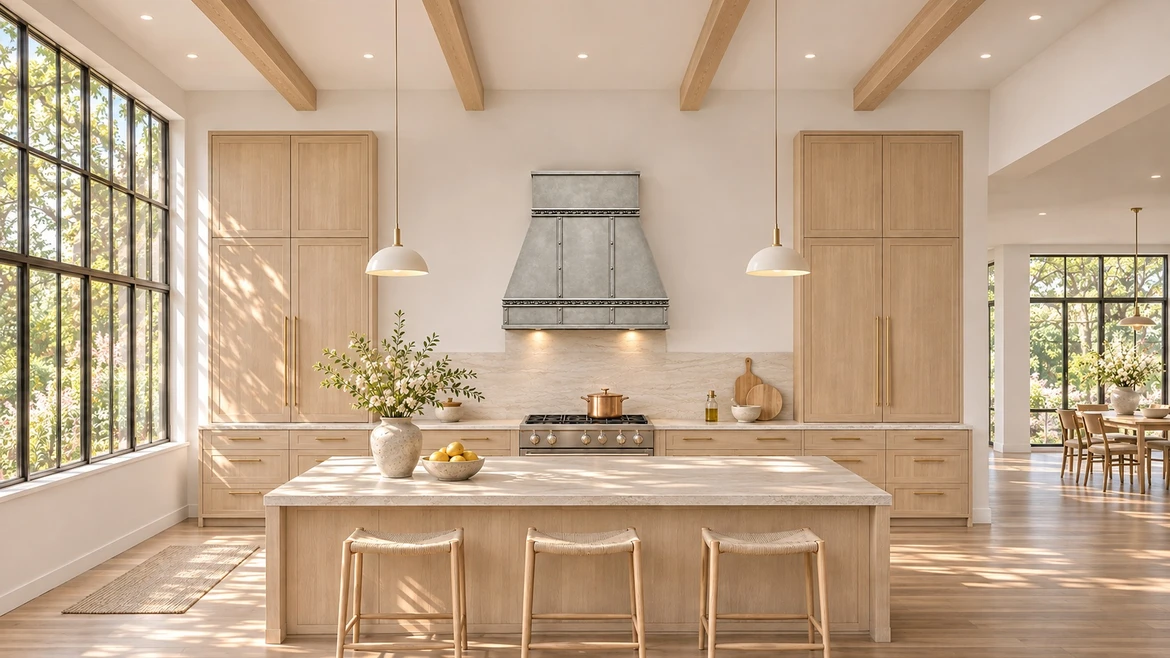
The Brutalist Mid-Century Zinc Range Hood with Modular Panel Design brings sculptural metalwork and bold architectural geometry into contemporary kitchen interiors. Its tall rectangular chimney, broad trapezoidal canopy, expressed vertical seams, and horizontal riveted bands create a distinctive tower-and-plinth composition. The matte zinc surface introduces subtle tonal variation, while the clean lower apron provides a strong visual foundation above the cooking area. These four kitchen images demonstrate how the same handcrafted hood complements mid-century modern, industrial, contemporary minimalist, and architectural contemporary interiors. A fifth image presents the available zinc finishes and surface textures. Each setting highlights a different relationship between modular metalwork, cabinetry, concrete, natural wood, stone, and lighting. Explore these kitchen design ideas to discover how a Brutalist zinc range hood can become an architectural focal point.
Blog Summary
- Featured hood: Brutalist mid-century zinc
- Silhouette: Tall chimney and trapezoidal canopy
- Design: Modular panels and vertical seams
- Metal details: Horizontal riveted bands
- Mid-century modern: Walnut and geometric cabinetry
- Industrial: Concrete, brick, and exposed steel
- Contemporary minimalist: Smooth stone and simple surfaces
- Contemporary architectural: Monolithic forms and natural materials
- Finish options: Smooth and hammered zinc treatments
- Technical guide: Mid-Century Brutalist Zinc Range Hood Guide
Four Kitchens Featuring a Brutalist Zinc Range Hood
Brutalist-inspired kitchen design emphasizes strong geometry, visible materials, and clearly defined structural forms. This zinc range hood expresses those characteristics through a tall rectangular chimney, broad angular canopy, and repeated metal panel divisions.
The horizontal riveted bands introduce an industrial influence, while the matte zinc surface prevents the large metal composition from appearing excessively reflective. The design combines the sculptural mass associated with Brutalism and the disciplined proportions often found in mid-century modern architecture.
Unlike traditional bell-shaped or decorative range hoods, this model depends on its architectural silhouette. The modular panel arrangement reinforces the vertical chimney and broad lower canopy, creating a strong relationship between the hood and surrounding cabinetry.
Mid-Century Modern Kitchen with Zinc Range Hood
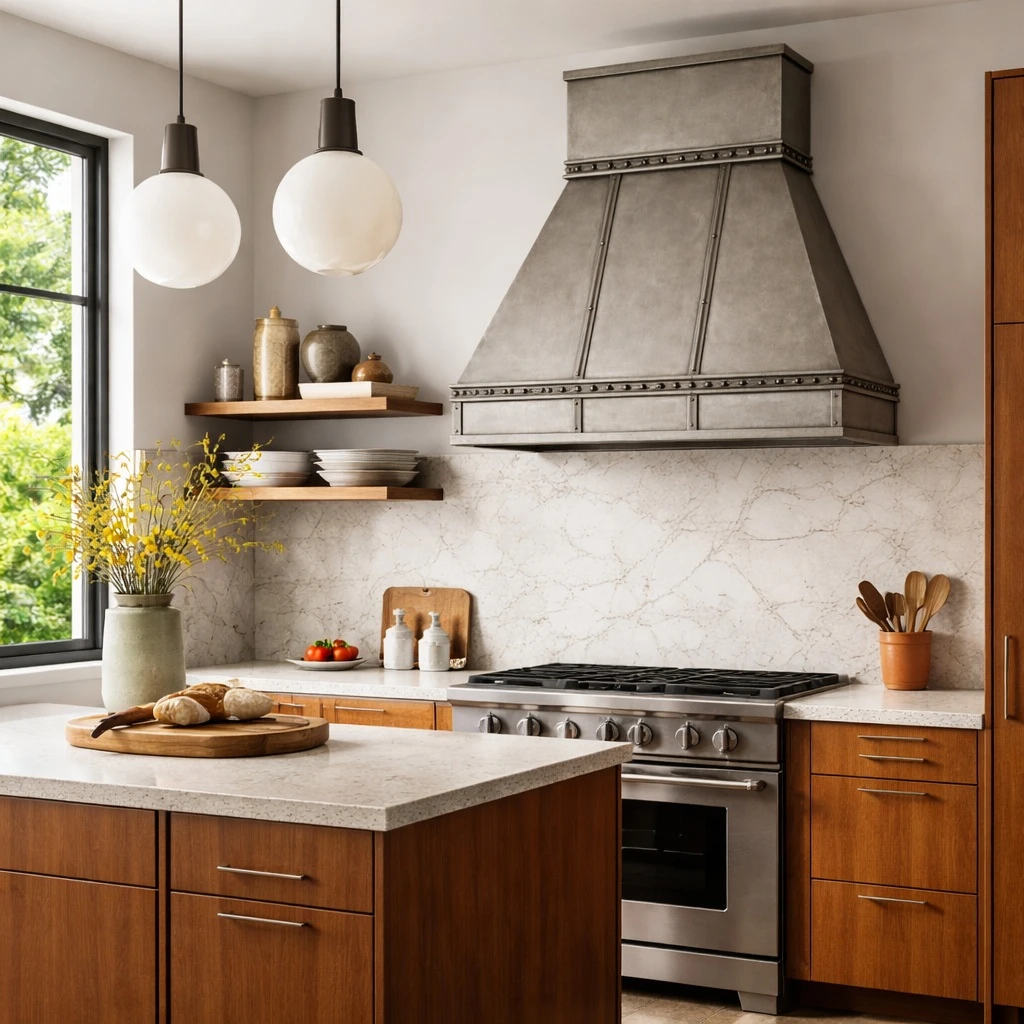
A mid-century modern kitchen provides a natural setting for the Brutalist zinc range hood. Walnut cabinetry, geometric surfaces, clean furniture lines, and carefully controlled decoration complement the hood's modular composition.
The tall chimney establishes a strong vertical element, while the trapezoidal canopy introduces an angular transition toward the cooking range. Horizontal riveted bands echo the disciplined architectural detailing associated with mid-century interiors.
Walnut Cabinetry and Zinc
Walnut provides warm brown tones and visible grain that balance the cooler gray zinc surface. Its linear wood patterns complement the hood's expressed vertical seams without duplicating the metal's texture.
Flat-front cabinetry maintains the geometric character of the kitchen. Simple hardware and restrained countertops allow the modular hood to remain the principal architectural feature.
Mid-Century Geometry
Mid-century modern interiors often emphasize clean horizontal and vertical relationships. The hood's rectangular chimney and riveted bands reinforce this organization, while the angular canopy introduces a sculptural transition.
Natural stone, warm wood, and understated lighting can help balance the hood's substantial appearance. The surrounding cabinetry should remain proportionate to the cooking wall rather than attempting to match the hood's visual mass.
Industrial Kitchen with Brutalist Zinc Range Hood
Industrial kitchens emphasize practical materials, exposed construction, and visible metalwork. Concrete, brick, dark steel, and utilitarian fixtures create a strong architectural setting for the modular zinc hood.
The horizontal riveted bands and expressed seams reinforce the industrial character, while the broad trapezoidal canopy establishes a substantial focal point above the cooking area.

Concrete and Exposed Materials
Concrete countertops, cement-look walls, and exposed brick complement the matte zinc surface. These materials share a restrained, utilitarian character while introducing different textures.
The hood's geometric panels create an orderly metal composition against more irregular architectural surfaces. This contrast helps distinguish the cooking area without relying on decorative color.
Riveted Metal Details
The horizontal bands and rivets contribute to the industrial appearance by making the panel divisions visually explicit. Their placement establishes repeated lines across the hood's broad metal surfaces.
Dark steel hardware, simple pendant lighting, and restrained open shelving can reinforce this architectural vocabulary. Additional decorative metalwork should be limited so the hood remains the principal focal point.
Contemporary Minimalist Kitchen with Zinc Hood
A contemporary minimalist kitchen provides a contrasting environment for the Brutalist range hood. Smooth cabinetry, neutral stone, uninterrupted countertops, and limited decoration allow the hood's architectural geometry to become the main visual feature.
Although the hood contains multiple seams and riveted bands, its overall composition remains orderly. The rectangular chimney and trapezoidal canopy establish a clear geometric hierarchy that complements minimalist architecture.

Simple Cabinetry and Stone
Flat-panel cabinets in warm white, light gray, charcoal, or natural wood provide a restrained background for the zinc. Large-format stone and smooth backsplashes emphasize the contrast between uninterrupted surfaces and modular metal panels.
Because the hood already introduces strong geometry, surrounding cabinet hardware can remain discreet. This prevents the cooking wall from becoming visually crowded.
Architectural Contrast
The minimalist setting emphasizes the hood's sculptural mass. Its tall chimney becomes a vertical focal point, while the broad canopy establishes a strong horizontal presence above the range.
Careful lighting can reveal the subtle tonal variation of the matte zinc without producing excessive glare. The resulting composition combines architectural restraint with a deliberately expressive metal feature.
Contemporary Architectural Kitchen with Zinc Hood
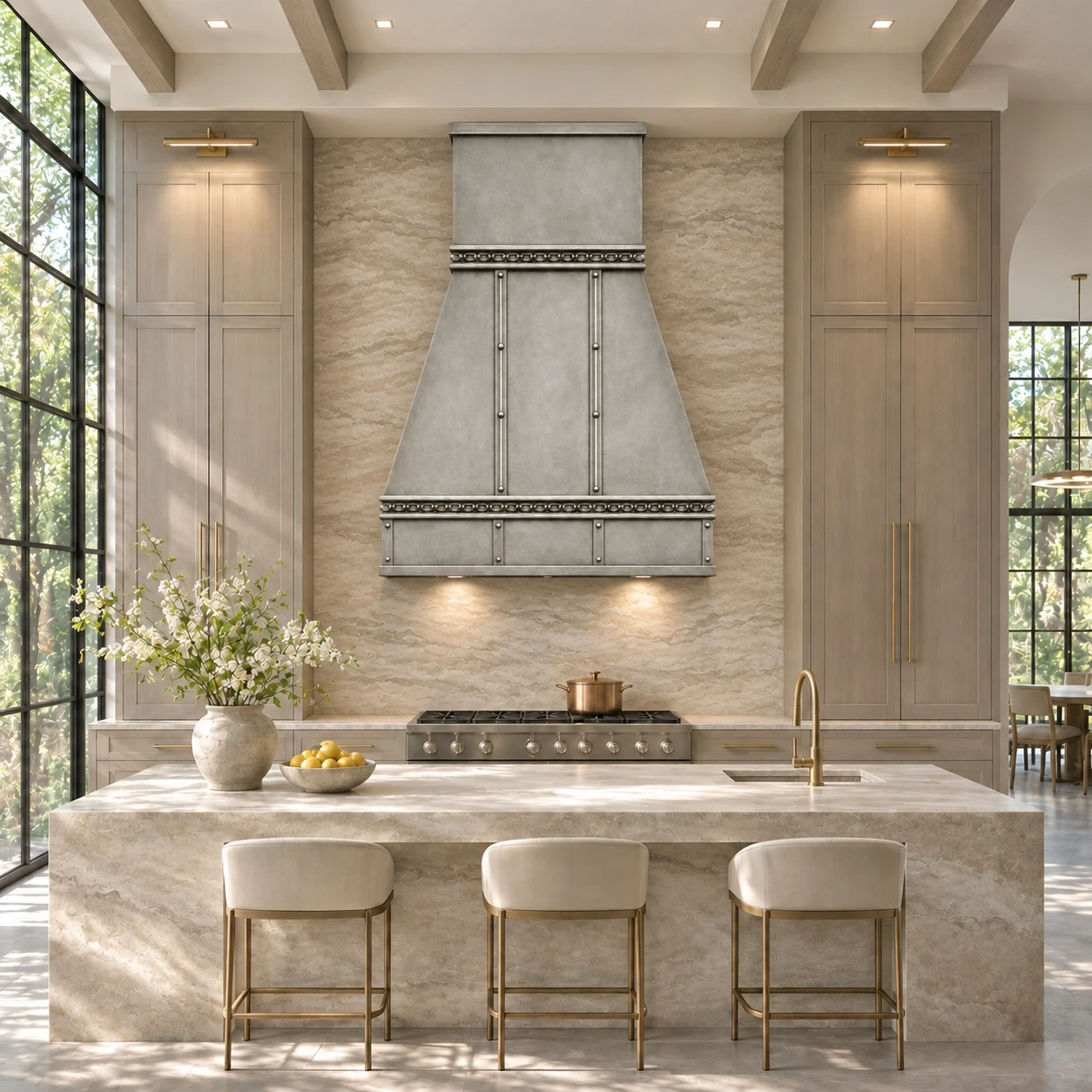
Contemporary architectural kitchens often feature monolithic islands, natural stone, full-height cabinetry, and carefully positioned lighting. These elements complement the Brutalist hood because they emphasize strong forms and deliberate material relationships.
The tower-and-plinth silhouette creates a sculptural focal point, while the modular panel arrangement connects the metalwork to the surrounding architectural geometry.
Monolithic Islands and Natural Stone
Large stone islands create a substantial visual foundation that can balance the hood's architectural presence. Natural veining introduces organic variation against the structured zinc panels.
Full-height cabinetry and uninterrupted wall surfaces help establish a clear geometric setting. The hood becomes a distinct metal volume within the larger architectural composition.
Scale and Proportion
Proportion is particularly important in contemporary architectural kitchens. The hood should relate to the cooking range, ceiling height, surrounding cabinetry, and overall room dimensions.
Its broad trapezoidal canopy and tall chimney can appear visually substantial, so the final configuration should be coordinated with the kitchen's architectural drawings. A balanced installation allows the hood to remain prominent without overwhelming the space.
Comparing the Four Kitchen Styles
| Kitchen Style | Main Materials | Hood Effect |
|---|---|---|
| Mid-century modern | Walnut, stone, geometric cabinetry | Sculptural architectural contrast |
| Industrial | Concrete, brick, steel | Expressed metalwork and utility |
| Contemporary minimalist | Smooth stone, flat-panel cabinets | Bold geometry against quiet surfaces |
| Contemporary architectural | Monolithic stone, full-height cabinetry | Tower-and-plinth focal point |
Zinc Finish and Texture Options
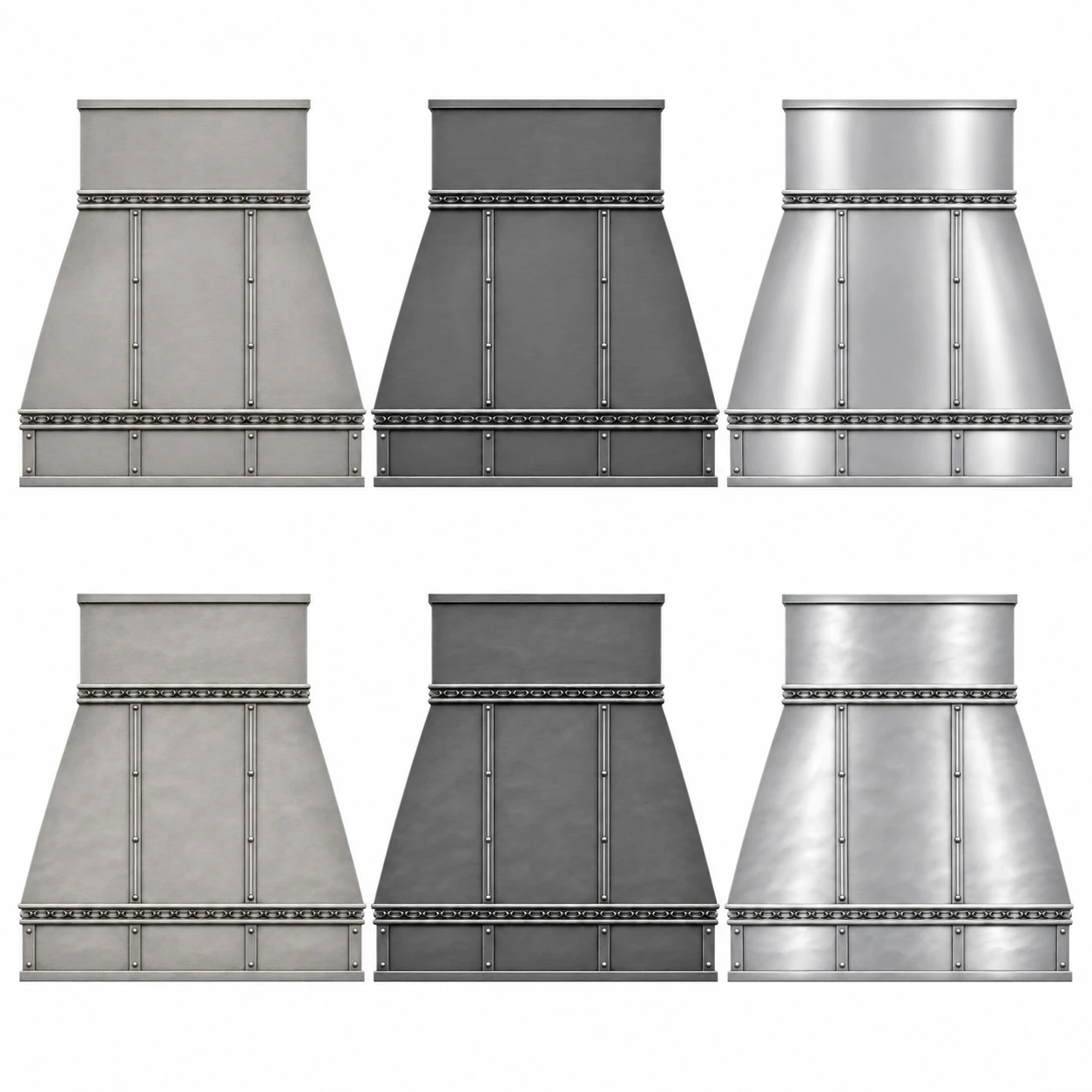
The finish changes how the Brutalist hood relates to the surrounding kitchen. Smooth zinc emphasizes the architectural panel arrangement, while hammered zinc introduces additional surface texture. Natural, darkened, and polished treatments provide different tonal and reflective effects.
In mid-century modern kitchens, natural zinc can complement walnut and neutral stone. Industrial interiors may benefit from darker treatments, while contemporary minimalist spaces can emphasize smooth finishes. Polished zinc can introduce brighter highlights in architectural kitchens.
Six Zinc Treatments
- Smooth natural: Soft silver-gray metal
- Smooth dark: Deeper charcoal appearance
- Smooth polished: Brighter reflective finish
- Hammered natural: Textured silver-gray surface
- Hammered dark: Textured dark zinc character
- Hammered polished: Reflective hammered metal
The preferred finish should be selected alongside cabinetry samples, stone materials, and lighting conditions. Surface texture and reflectivity can influence how prominently the modular panel divisions appear.
Cabinet Colors for a Brutalist Zinc Hood
The neutral metallic character of zinc allows this range hood to coordinate with several cabinet colors. The most effective palette depends on whether the goal is strong architectural contrast or a more integrated composition.
- Walnut: Warm mid-century character
- Natural oak: Organic contemporary balance
- Warm white: Bright architectural contrast
- Light gray: Restrained minimalist palette
- Charcoal: Cohesive industrial appearance
- Black: Strong monochromatic definition
Wood cabinetry creates warmth against the cool zinc surface. Light painted cabinets emphasize the hood's silhouette, while dark cabinetry can produce a more unified architectural composition.
Backsplash Ideas for Modular Zinc
The backsplash should complement the hood's geometric panel arrangement without introducing excessive visual competition. Large-format stone slabs, simple ceramic tile, and concrete-look surfaces are particularly suitable.
Mid-century modern kitchens can use neutral tile or natural stone. Industrial interiors may incorporate brick or concrete-look materials, while contemporary minimalist kitchens benefit from smooth uninterrupted backsplashes.
In architectural kitchens, a full-height stone backsplash can establish a strong material background for the zinc hood. Natural veining introduces contrast without duplicating the hood's modular seams.
Lighting the Matte Zinc Surface
Lighting influences how the hood's panels, rivets, and hammered or smooth finish appear. Natural daylight reveals subtle tonal variation across the zinc, while directional lighting can emphasize the vertical seams and horizontal bands.
Matte zinc produces relatively restrained reflections compared with highly polished metal. This helps maintain the hood's sculptural appearance in kitchens with large windows and substantial natural light.
Warm lighting can soften the relationship between zinc and wood cabinetry, while neutral lighting emphasizes the metal's silver-gray character. The final lighting arrangement should support the cooking area while preserving the hood's architectural definition.
Styling Around Brutalist Geometry
The hood already introduces a strong combination of vertical seams, horizontal riveted bands, and angular metal surfaces. Surrounding decoration should therefore remain controlled.
Mid-century modern kitchens can incorporate walnut cabinetry, simple pendant lighting, and geometric furniture. Industrial spaces benefit from concrete, brick, and functional accessories.
Contemporary minimalist kitchens should emphasize uncluttered countertops and restrained hardware. Architectural contemporary interiors can use large stone surfaces, monolithic islands, and carefully positioned lighting to reinforce the hood's sculptural presence.
Why the Modular Design Works
The distinguishing feature of this range hood is the relationship between its tall rectangular chimney and broad trapezoidal canopy. The chimney establishes vertical emphasis, while the canopy expands toward the cooking range to create a substantial lower volume.
Expressed vertical seams divide the metal into architectural panels. Horizontal riveted bands introduce repeated lines that connect the upper and lower sections. The clean lower apron provides a defined base without elaborate ornament.
This combination produces a tower-and-plinth composition that works particularly well in kitchens emphasizing geometry, material honesty, and restrained decoration.
Interior Design Perspective
The four lifestyle images demonstrate how the Brutalist zinc range hood can complement different architectural directions. In a mid-century modern kitchen, walnut and geometric cabinetry reinforce its historical design references. Industrial surroundings emphasize riveted metalwork and utilitarian materials.
Contemporary minimalist interiors use the hood as a bold sculptural contrast against quiet surfaces. Architectural contemporary kitchens connect its tower-and-plinth form with monolithic islands, full-height cabinetry, and substantial stone elements.
For dimensions, mounting configurations, ventilation planning, metal finish options, and construction details, read the Mid-Century Brutalist Zinc Range Hood Guide.
Explore the Brutalist Zinc Range Hood
These four kitchen interiors illustrate how a handcrafted zinc range hood can function as an architectural centerpiece. Its rectangular chimney, trapezoidal canopy, modular panel divisions, horizontal riveted bands, and matte metal surface establish a consistent design language, while cabinetry, stone, concrete, wood, and lighting determine the surrounding atmosphere.
The additional finish image demonstrates how smooth and hammered zinc treatments can further adapt the design to different kitchens. Whether installed in a mid-century modern home, industrial loft, contemporary minimalist interior, or architectural kitchen, the hood combines sculptural geometry with handcrafted metalwork. Explore the Brutalist Mid-Century Zinc Range Hood with Modular Panel Design to review its design and customization options.