 US Dollar
 Euro
Euro
 Australian Dollar
 Canadian Dollar
 Polish Zloty
 British Pound

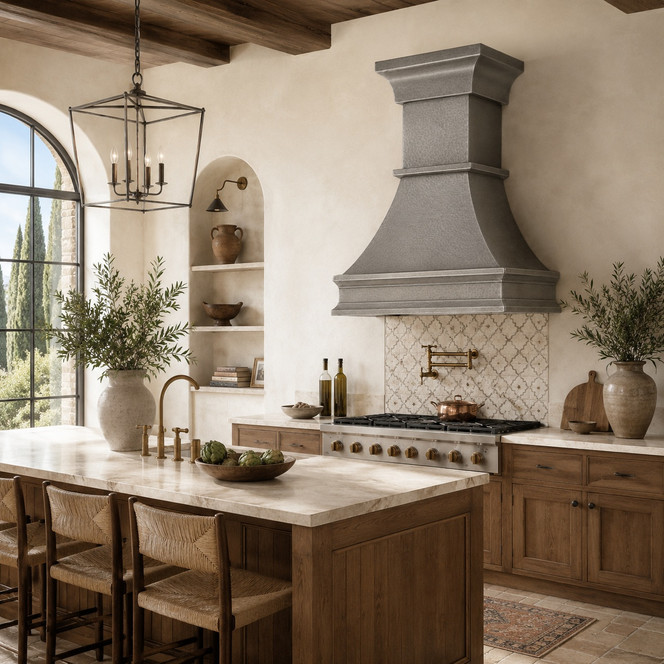
Brushed Zinc Bell Range Hood with Italian Crown Molding Guide explains how a refined zinc hood can bring soft gray metal tone, graceful bell shape, and classical architectural detail into transitional, Tuscan, Mediterranean, farmhouse, rustic European, and custom kitchen interiors. This handcrafted hood uses a brushed zinc surface with a low-sheen finish, giving the metal a calm appearance that works well with stone counters, painted cabinetry, warm wood, and muted tile. Italian crown molding frames the upper and lower areas with tailored detail while keeping the design elegant rather than overly decorative. Explore the brushed zinc crown hood to review its shape, finish, sizing, and insert planning options.
Blog Summary
- Design: Brushed zinc bell hood
- Detail: Italian crown molding
- Finish: Soft gray brushed zinc
- Style: Tuscan to transitional
- Planning: Custom size and insert

Design Guide Overview
A brushed zinc bell hood with Italian crown molding is designed for kitchens that need a refined metal focal point without the strong warmth of copper or the dark weight of iron. The bell form widens gently toward the apron, while the crown molding adds a classic architectural frame. Brushed zinc gives the hood a muted gray surface that feels handmade, calm, and elegant. This combination works well with transitional cabinetry, Tuscan stone, Mediterranean plaster, farmhouse wood, and rustic European materials. The hood becomes a central feature above the range while still keeping the overall kitchen balanced and understated. Discover beautifully designed kitchens in our brushed zinc hood with italian crown molding lifestyle images.
Brushed Zinc Finish
The brushed zinc finish gives this hood a soft, directional surface character. Unlike polished metal, brushed zinc does not create a bright mirror-like reflection. Instead, it softens light and creates a matte to low-sheen appearance that is easier to coordinate with residential kitchens. The gray tone works with white, cream, greige, green, blue, natural wood, and charcoal cabinetry. It also pairs well with stone, plaster, handmade tile, and mixed-metal hardware. For homeowners comparing different zinc silhouettes and finishes, the zinc range hoods collection offers related handcrafted options.
Finish Benefits
- Tone: Soft natural gray
- Surface: Brushed low sheen
- Look: Calm and tailored
- Style: Works with neutrals
- Use: Refined metal focal point
Bell Shape Profile
The bell shape gives the hood a graceful and familiar kitchen profile. It narrows toward the upper chimney and widens toward the lower apron, creating a balanced transition above the cooking surface. This shape feels softer than a box hood and more traditional than a flat modern canopy. In brushed zinc, the bell profile becomes elegant rather than rustic. The curve helps the hood stand out without needing heavy straps, rivets, or embossed decoration. It works especially well when the range wall needs movement, but the kitchen design still needs to remain clean and composed.
Italian Crown Molding
Italian crown molding gives the hood its classical frame. The upper crown creates a finished transition near the chimney, while the lower molding defines the apron area above the range. This detail adds depth and architectural refinement without overwhelming the zinc surface. In Tuscan, Mediterranean, and rustic European kitchens, crown molding connects naturally with stone, plaster, and traditional cabinetry. In transitional kitchens, it adds just enough classic detail to soften modern lines. The molding should be scaled carefully so it looks proportional to the hood width, height, ceiling line, and surrounding cabinets.
Crown Details
- Top: Frames the chimney
- Apron: Defines lower edge
- Style: Classical Italian detail
- Scale: Needs proper proportion
- Effect: Adds tailored depth
Refined European Character
This hood has a refined European character because it combines a curved bell silhouette with restrained molding and a calm zinc finish. It does not rely on heavy ornament, bright shine, or dark industrial contrast. Instead, it creates presence through shape, proportion, and material. The design can feel Tuscan when paired with stone and warm wood, Mediterranean when placed against plaster or handmade tile, and transitional when used with clean cabinetry and quiet counters. The brushed zinc finish helps the hood adapt to different interiors while keeping its handmade character visible.
Metal Hood Category
Brushed zinc belongs to the broader family of handcrafted metal hoods, where material choice changes the entire mood of the kitchen. Copper brings warmth and patina, iron adds dark architectural strength, brass gives golden richness, and zinc creates a softer gray tone. This brushed zinc hood is a strong choice when the kitchen needs custom metal character but not a heavy or high-contrast finish. Homeowners comparing zinc with other materials can browse custom metal range hoods to study different shapes, finishes, and installation styles.
Transitional Kitchen Use
In transitional kitchens, this brushed zinc hood can become a polished focal point without making the room feel overly traditional. Pair it with shaker cabinets, stone counters, simple backsplash tile, and balanced hardware. The bell shape adds softness, while the crown molding introduces classic structure. The brushed zinc finish keeps the look current and calm. White, cream, warm gray, and muted blue cabinets all work well with this type of hood. The design should be supported by quiet materials so the molding and zinc finish remain visible without competing against busy tile or heavy decorative details.
Transitional Pairings
- Cabinets: White or warm gray
- Counters: Marble or quartz
- Tile: Simple backsplash
- Hardware: Nickel or bronze
- Lighting: Soft warm glow
Tuscan Kitchen Use
Tuscan kitchens often include warm stone, plaster walls, wood cabinetry, iron lighting, and classical architectural details. A brushed zinc hood with Italian crown molding fits this environment because the crown feels traditional while the zinc finish keeps the room lighter than dark iron or aged copper. The hood can pair with travertine, limestone, cream plaster, muted tile, and warm cabinet finishes. If the room already includes heavy rustic elements, the brushed zinc surface can create balance by adding a softer metal tone. The result feels refined, warm, and architectural.
Mediterranean Kitchen Use
Mediterranean kitchens often use plaster, stone, handmade tile, arched forms, warm wood, and aged metals. This brushed zinc bell hood supports that style through its curved profile and classical crown detail. The gray finish works especially well when the kitchen palette includes cream, limestone, soft blue, muted green, terracotta, or warm neutral tones. A patterned backsplash can work if its colors are controlled and do not compete with the crown molding. The zinc finish keeps the range wall from feeling too dark, while the bell shape adds traditional movement above the cooking area.
Farmhouse Kitchen Use
In farmhouse kitchens, brushed zinc adds a practical and relaxed metal tone. The crown molding gives the hood a more finished look than a plain appliance cover, while the bell shape keeps the design soft and familiar. Pair it with white or cream shaker cabinets, wood shelves, apron-front sinks, stone counters, and simple ceramic tile. The gray zinc finish can balance warm wood and painted cabinetry without dominating the room. If the kitchen includes rustic beams or reclaimed surfaces, the smoother zinc finish can prevent the design from becoming too heavy.
Farmhouse Pairings
- Cabinets: Cream shaker doors
- Wood: Shelves or beams
- Stone: Quiet natural counters
- Tile: Handmade neutral field
- Metal: Zinc or bronze accents
Rustic European Style
Rustic European kitchens often rely on natural texture, muted color, and architectural detail. A brushed zinc bell hood works well because it feels aged and handcrafted without appearing overly dark. The Italian crown molding can coordinate with traditional cabinets, stone floors, plaster walls, and antique-inspired hardware. The brushed zinc surface adds a quiet metal layer that complements limestone, reclaimed wood, brick, and soft wall finishes. This hood is especially useful when the kitchen needs a European focal point but the homeowner wants a lighter finish than black iron or deep coffee copper.
Modern Country Style
Modern country kitchens combine clean lines with softer traditional materials. This hood supports that balance because the zinc finish feels current, while the bell shape and crown molding provide classic comfort. Use it with warm white cabinetry, muted green cabinets, oak flooring, stone counters, simple tile, and understated lighting. The hood should feel tailored rather than ornate. Avoid pairing it with too many decorative features at once. Let the brushed zinc surface and crown molding provide the main detail, then keep surrounding materials calm and natural for a relaxed but polished kitchen.
Backsplash Coordination
The backsplash should support the hood’s crown molding and brushed zinc finish. Marble slab, limestone, plaster, brick, subway tile, handmade ceramic, or muted patterned tile can all work depending on the kitchen style. Since the hood already has classical molding, a very busy backsplash may make the range wall feel crowded. In transitional kitchens, simple tile or stone usually works best. In Mediterranean or Tuscan kitchens, handmade tile can be used if the pattern is controlled. The goal is to frame the hood clearly while allowing the zinc tone and molding detail to remain visible.
Backsplash Ideas
- Stone: Marble or limestone
- Tile: Neutral handmade field
- Plaster: Soft European wall
- Brick: Rustic kitchen texture
- Simple: Keeps hood central
Cabinet Coordination
Cabinet color has a major effect on the final appearance of a brushed zinc hood. White cabinetry creates a crisp and clean range wall. Cream cabinetry softens the gray finish and adds warmth. Natural wood cabinets create a relaxed country or rustic European mood. Muted green, blue-gray, and taupe cabinets can also coordinate beautifully with zinc. The Italian crown molding works best when nearby cabinet profiles feel compatible, not overly modern or overly ornate. Classic shaker, inset, raised-panel, or softly detailed cabinet doors can all support the hood’s architectural character.
Hardware and Lighting
Hardware and lighting should connect the zinc hood with the rest of the kitchen. Brushed nickel, pewter, antique brass, bronze, and black iron can all work if used intentionally. Warm lighting helps soften the gray metal and prevents the range wall from feeling cold. Pendant lights, sconces, cabinet pulls, faucets, and pot fillers can repeat related finishes in smaller areas. Stainless steel appliances can remain in the room because zinc coordinates naturally with gray metals. Wood, stone, and warm bulbs help balance cooler surfaces and make the kitchen feel more inviting.
Finish Pairings
- Nickel: Cool clean match
- Pewter: Soft gray harmony
- Brass: Adds warm contrast
- Bronze: Grounds the palette
- Iron: Adds rustic detail
Wall Installation Planning
A wall-mounted brushed zinc hood should be centered over the range or cooktop and aligned with the surrounding cabinetry. The crown molding needs enough clearance from cabinets, shelves, ceiling beams, or trim. Hood width should relate to the cooking appliance below, while height should fit the wall space and ceiling line. Depth should provide practical capture area while remaining comfortable for cooking. Backsplash installation should be coordinated with the hood placement, especially if stone slab or tile must be cut around the hood body. Professional installation is recommended when structural support, ducting, or electrical work is involved.
Island Installation Planning
An island version must look balanced from all visible sides. The bell profile, brushed zinc finish, and crown molding should be attractive from the kitchen, dining area, and nearby living space. Island installation also requires ceiling support, duct routing, electrical planning, and careful alignment with the cooktop below. The hood should provide enough visual presence without blocking sightlines across the room. If the kitchen has beams, pendants, or open shelving nearby, confirm spacing before production. Proper planning helps the hood feel like an intentional centerpiece rather than a large object hanging in the room.
Installation Checks
- Width: Match range scale
- Height: Fit wall or ceiling
- Depth: Plan capture area
- Crown: Check clearance
- Duct: Confirm vent route
Ventilation Insert Planning
The zinc shell creates the exterior design, but the insert provides smoke, steam, grease, and odor removal. Rustica House can supply the 200 CFM insert only. Any other insert must be supplied by the buyer, and Rustica House can prepare the hood for that buyer-supplied insert when exact details are provided before production. Insert details should include make, model, dimensions, cutout requirements, duct size, controls, and lighting placement. Cooking habits, appliance output, duct length, and local code requirements should be reviewed before the final order is placed.
Insert Planning
- Rustica: 200 CFM insert only
- Buyer: Supplies other inserts
- Model: Provide exact details
- Duct: Plan route early
- Use: Match cooking needs
Custom Sizing
Custom sizing is important because a bell hood with crown molding depends on proportion. Width should match the range and surrounding cabinetry. Height should relate to ceiling height, backsplash area, and crown clearance. Depth should support ventilation capture while keeping the cooking area comfortable. The crown molding should be scaled to the hood body so it looks intentional, not too thin or too heavy. Custom production also allows the hood to be prepared for wall or island use, specific insert requirements, finish preferences, and room-specific installation conditions.
Care and Cleaning
Brushed zinc should be cleaned gently to protect the surface finish. Use mild soap, warm water, and a soft cloth for regular care. Avoid abrasive pads, harsh chemicals, acidic cleaners, and aggressive polishing compounds because they can alter the zinc surface. Dry the hood after wiping to reduce water marks. Because the finish is brushed, clean in a consistent direction rather than scrubbing randomly. Natural zinc may develop subtle patina over time, and that soft aging should be treated as part of the material’s character. Regular light cleaning is better than harsh occasional cleaning.
Care Guidelines
- Soap: Use mild cleaner
- Cloth: Choose soft fabric
- Motion: Follow brushed grain
- Avoid: No harsh chemicals
- Dry: Reduce water marks
Design Summary
A brushed zinc bell hood with Italian crown molding is ideal for kitchens that need soft gray metal tone, graceful shape, and classical detail. The brushed finish reduces glare, the bell body adds movement, and the crown molding frames the hood with architectural refinement. This design works well in transitional, Tuscan, Mediterranean, farmhouse, rustic European, and modern country kitchens. It pairs with stone, plaster, wood, handmade tile, painted cabinetry, and coordinated metal hardware. Proper sizing, insert planning, backsplash coordination, lighting, and gentle care help the hood remain functional and visually balanced over time.
Final Design Guidance
Brushed Zinc Bell Range Hood with Italian Crown Molding Guide shows how finish, shape, molding, and installation planning work together. Choose this hood when the kitchen needs a softer alternative to stainless steel and a more refined profile than plain zinc designs. Pair it with stone, plaster, wood, warm lighting, muted tile, painted cabinetry, and intentional metal accents. Confirm width, height, depth, crown clearance, wall or island configuration, duct route, and insert details before production. When planned carefully, this Rustica House zinc hood adds ventilation function, European character, and lasting handcrafted beauty above the range.