 US Dollar
 Euro
 Australian Dollar
 Canadian Dollar
 Polish Zloty
 British Pound

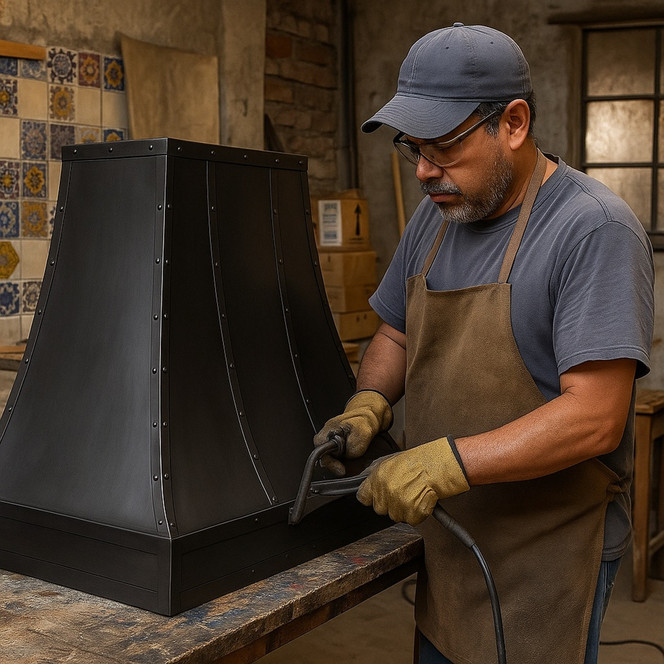
The Black Zinc Kitchen Range Hood with Trapezoidal Canopy brings dark metal character and handcrafted detailing into four distinctive kitchen interiors. Its outward-flaring canopy, matte charcoal zinc surface, riveted straps, and stepped lower apron create a strong architectural focal point above the cooking area. The broad front features balanced metal panels, while the gently concave sides introduce depth and movement to the trapezoidal silhouette. These lifestyle images demonstrate how the same hood complements a refined transitional kitchen, a traditional Spanish Revival interior, an industrial loft, and a modern rustic kitchen. An additional workshop image highlights the artisan production behind the finished design. Each setting reveals a different relationship between blackened zinc, cabinetry, stone, wood, plaster, and surrounding architectural details. Explore these kitchen design ideas to see how a custom black zinc range hood can transform the cooking wall.
Blog Summary
- Featured hood: Blackened zinc with trapezoidal canopy
- Finish: Matte charcoal with subtle brushing
- Details: Riveted straps and stepped apron
- Transitional: Refined cabinetry and natural stone
- Spanish Revival: Plaster, arches, and dark wood
- Industrial: Brick, steel, and concrete
- Modern rustic: Oak, stone, and textured finishes
- Workshop: Artisan metalworking
- Technical guide: Black Zinc Kitchen Range Hood with Trapezoidal Canopy Guide
Black Zinc Range Hood Kitchen Inspiration
A black zinc range hood can establish a clear focal point without introducing a bright metallic finish. Its dark surface contrasts with lighter cabinetry and stone while coordinating naturally with wood, brick, iron hardware, and other architectural materials. This particular hood adds another layer of interest through its trapezoidal shape and riveted metal detailing.
The four kitchen images illustrate how surrounding materials influence the hood's character. In a transitional kitchen, it provides controlled contrast. In a Spanish Revival interior, it reinforces traditional architectural details. Industrial surroundings emphasize its metal construction, while modern rustic materials soften the dark finish.
Transitional Kitchen with Black Zinc Range Hood
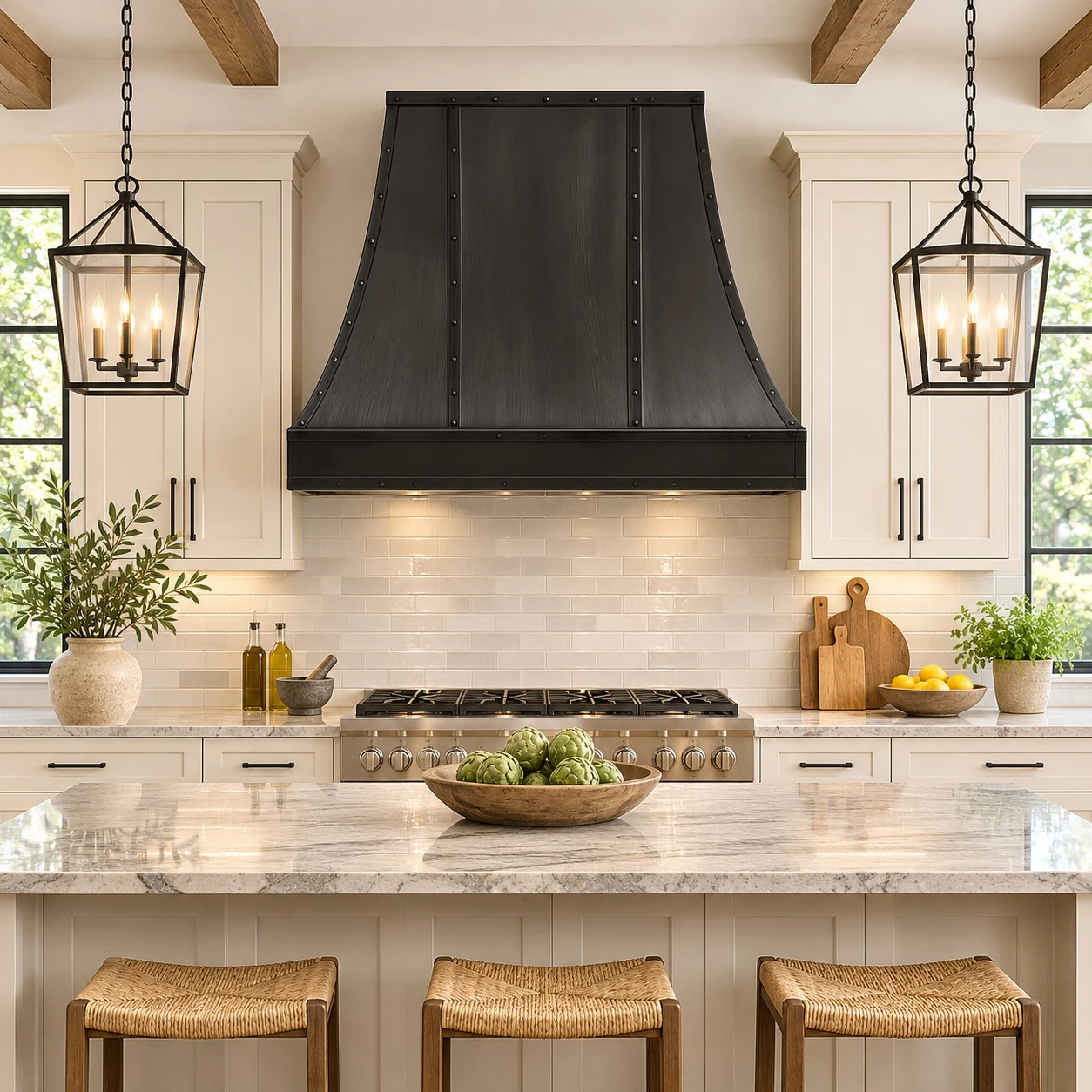
A transitional kitchen combines familiar cabinetry proportions with cleaner contemporary finishes. This balance provides a suitable setting for a black zinc hood with a structured trapezoidal canopy. The dark metal introduces contrast above the cooking area, while its symmetrical front and restrained rivet arrangement coordinate with orderly cabinet lines.
Warm white cabinetry, natural stone countertops, and understated hardware can keep the overall kitchen bright. The hood then becomes the principal dark architectural element rather than one of many competing features.
Cabinetry and Color Balance
Light cabinetry makes the charcoal zinc surface more visible and helps define the hood's flared silhouette. Cream, warm white, greige, and natural oak can provide complementary backgrounds without competing with the metal's subtle brushed texture.
Hardware can remain simple. Dark handles may repeat the hood's color, while brushed nickel or other understated finishes can provide a softer connection to the surrounding cabinetry.
Stone and Metal Contrast
Natural stone or lightly veined quartzite creates a restrained backdrop for the riveted straps. The contrast between smooth stone and brushed zinc allows the handcrafted metal details to remain visible without requiring an elaborate backsplash pattern.
Spanish Revival Kitchen with Black Zinc Range Hood
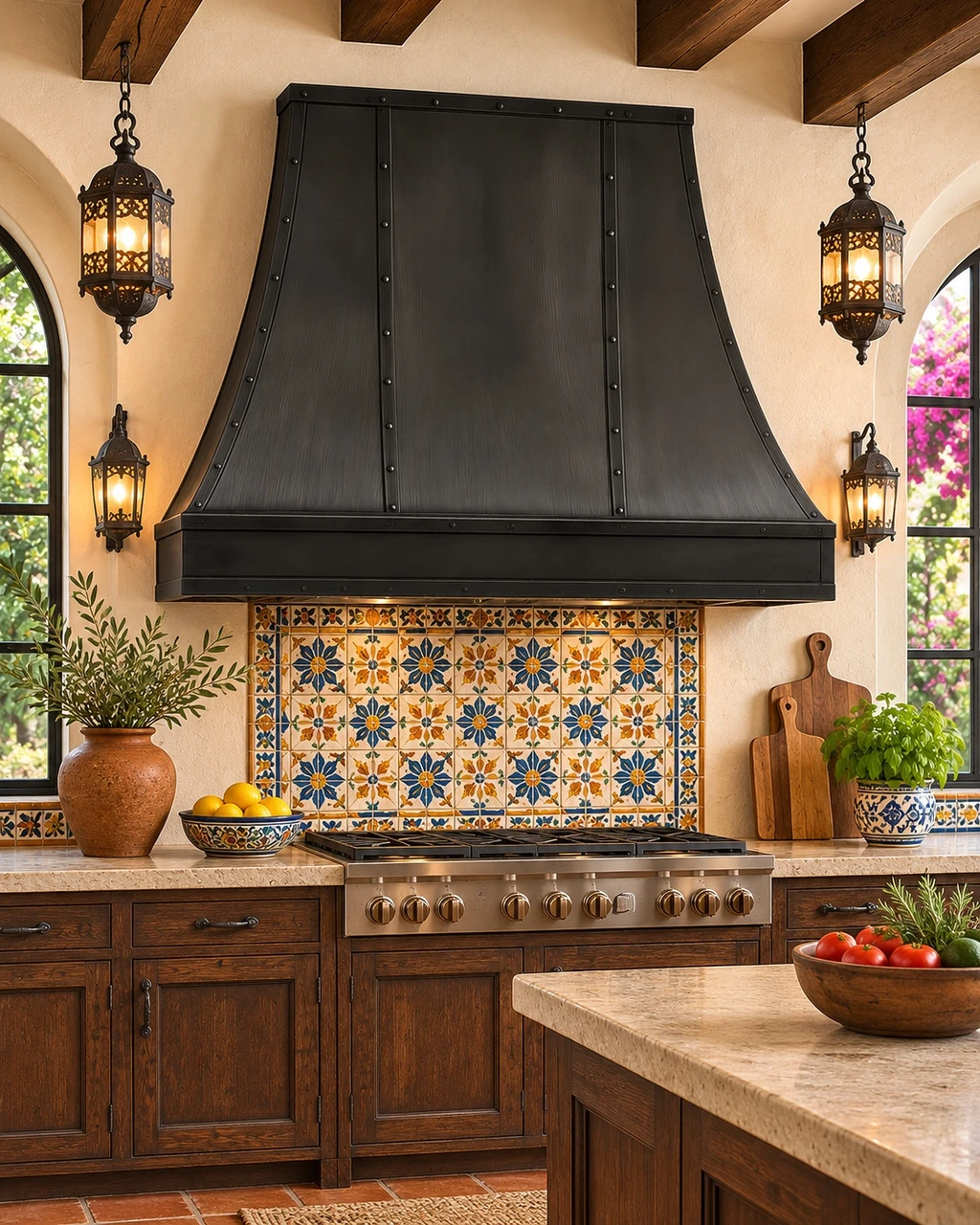
Spanish Revival kitchens often feature plaster walls, arches, substantial wood cabinetry, decorative tile, and traditional metalwork. A black zinc range hood with riveted straps fits naturally into this architectural vocabulary because its dark finish and visible fastener details reinforce the character of handcrafted metal.
The trapezoidal canopy widens toward the cooking surface, creating a substantial lower profile that balances heavy wood, masonry, and traditional cabinetry. Its stepped apron provides a defined architectural boundary above the backsplash.
Plaster and Architectural Arches
Warm plaster creates an effective contrast with dark zinc. Its softly textured appearance complements the hood's handcrafted surface while allowing the riveted straps to remain visually prominent.
Arched openings and traditional architectural details can soften the strong geometry of the trapezoidal canopy. This contrast between curved surroundings and structured metalwork gives the cooking area greater depth.
Traditional Wood and Tile
Dark wood cabinetry, carved furniture, and decorative ceramic tile can reinforce the Spanish Revival atmosphere. The hood's charcoal color provides a visual connection to traditional iron hardware, while the zinc material introduces its own distinct surface character.
When using patterned tile, the backsplash should be coordinated carefully with the hood's stepped apron and vertical strap arrangement. A controlled pattern helps maintain the cooking wall's overall balance.
Industrial Kitchen with Black Zinc Range Hood
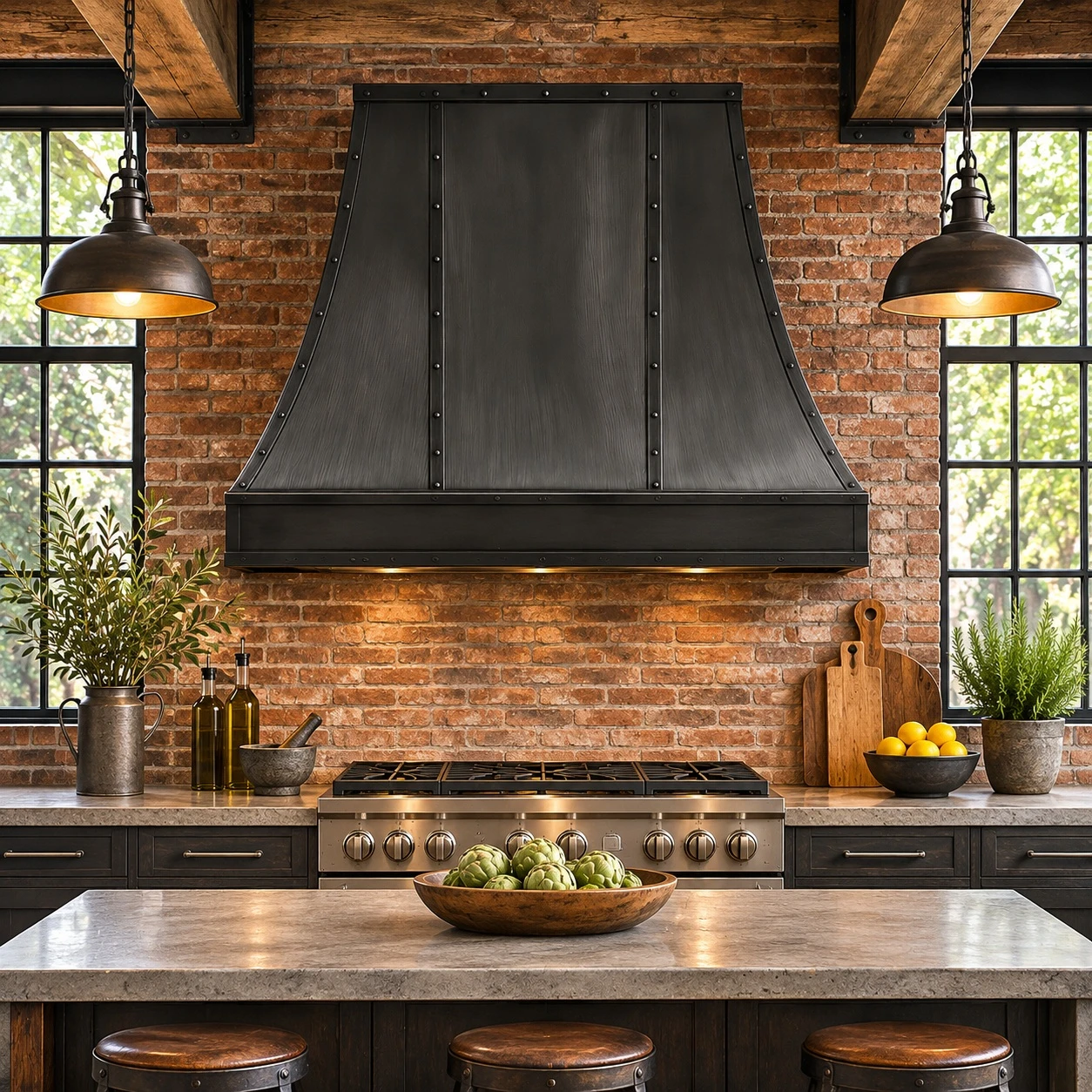
Industrial kitchens emphasize exposed materials, utilitarian details, and visible construction. Brick walls, concrete countertops, steel windows, and dark metal fixtures provide a natural setting for the black zinc trapezoidal hood.
Its riveted straps reinforce the industrial character, while the brushed charcoal surface introduces subtle texture. The broad front and flared canopy create a strong visual presence that can hold its own against substantial architectural elements.
Exposed Brick and Steel
Exposed brick provides a warm, irregular backdrop that contrasts with the cooler dark zinc. Steel windows, open shelving, and simple metal hardware can repeat the hood's industrial character without requiring identical finishes.
The riveted straps are particularly effective in this environment because visible fasteners already belong to the broader architectural language of industrial interiors.
Concrete and Dark Cabinetry
Concrete countertops, charcoal cabinetry, and restrained lighting can create a cohesive industrial palette. To prevent the kitchen from appearing too dark, natural wood, lighter flooring, or warm brick can introduce balance.
The hammered or brushed character of surrounding materials should remain subordinate to the hood's principal architectural lines.
Modern Rustic Kitchen with Black Zinc Range Hood
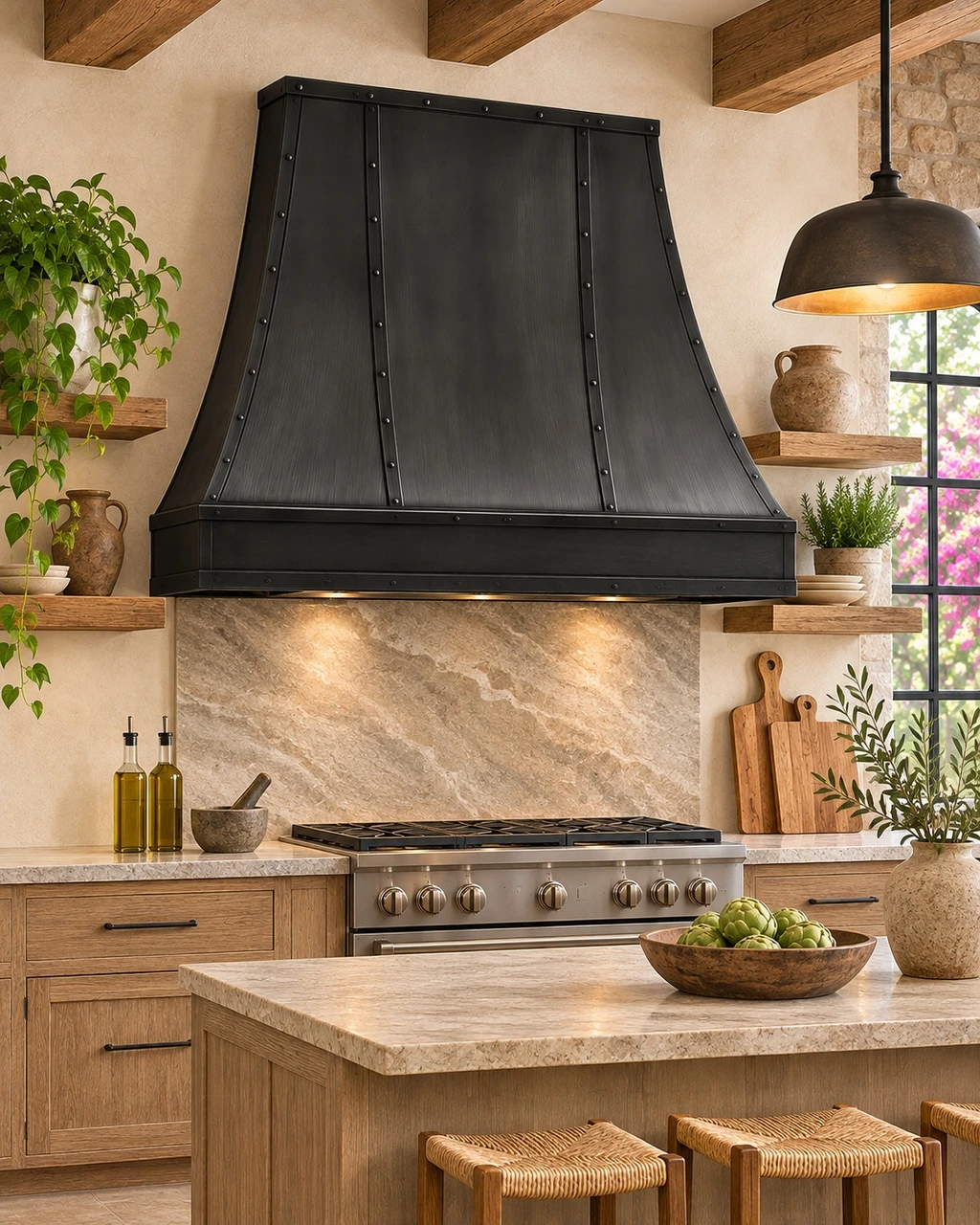
A modern rustic kitchen combines natural materials with simplified contemporary forms. Weathered oak, natural stone, textured plaster, and restrained cabinetry provide warmth that balances the dark zinc surface.
The trapezoidal canopy introduces a strong geometric element, while the riveted straps and stepped apron reinforce the handcrafted character. This combination makes the hood suitable for kitchens that avoid elaborate ornament but still emphasize natural texture and artisan construction.
Natural Wood and Zinc
Oak cabinetry, exposed beams, and wood islands soften the charcoal zinc finish. Light oak creates stronger contrast, while darker wood produces a more integrated and subdued composition.
The metal's brushed surface works well with visible wood grain because both materials contribute texture without requiring additional decorative patterns.
Stone and Plaster Surfaces
Natural stone and plaster provide a quiet architectural background for the dark canopy. Their irregular surfaces reinforce the rustic character, while the hood's structured trapezoidal geometry introduces a contemporary counterpoint.
This balance is particularly effective in kitchens where modern cabinetry is combined with reclaimed-looking or traditional building materials.
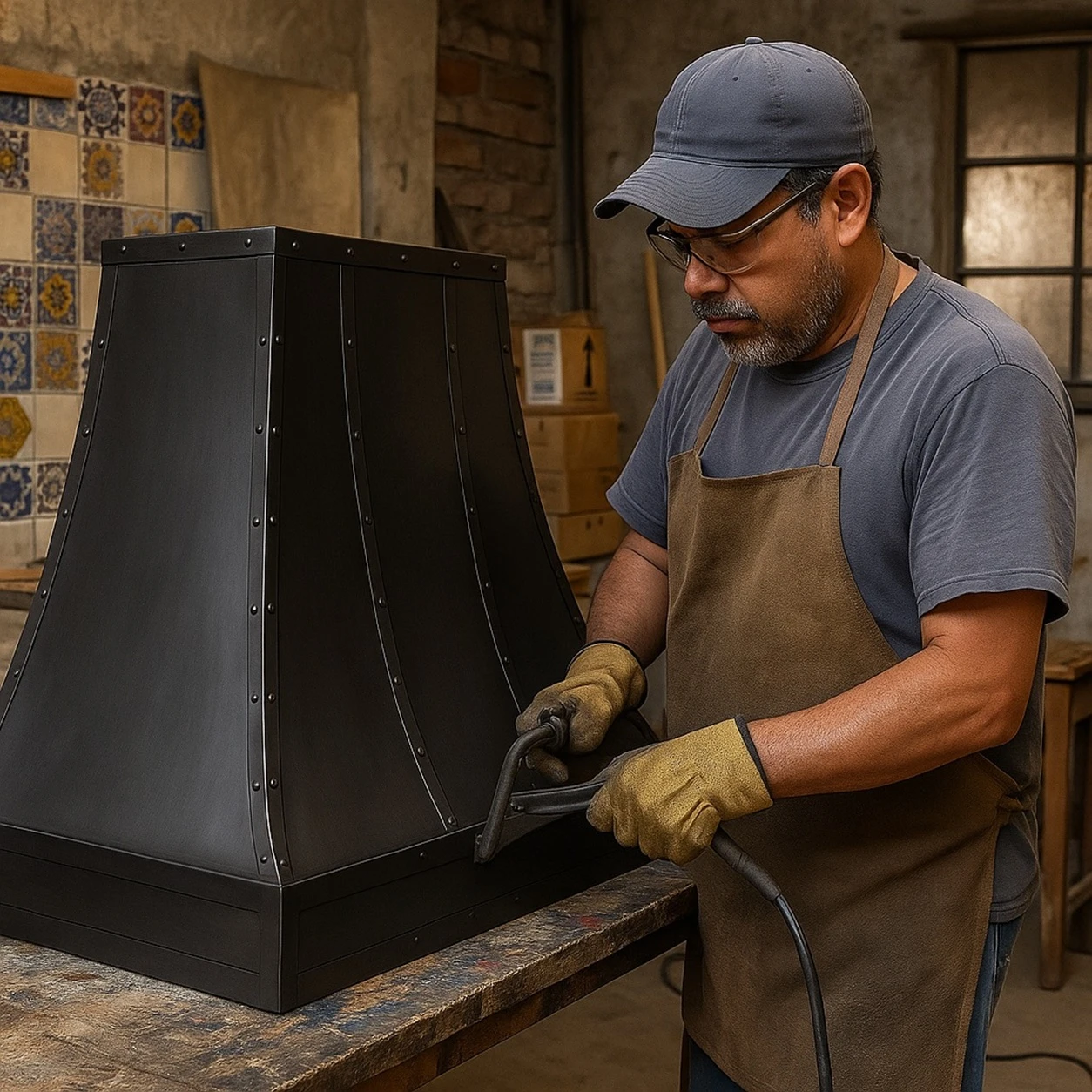
Inside the Metalworking Workshop
The workshop image shifts attention from finished interiors to the craftsmanship behind the black zinc hood. Unlike the four lifestyle settings, this view focuses on the metalworking environment and the relationship between the formed zinc shell, its darkened surface, and the decorative straps.
Handcrafted range hoods require coordinated forming, joining, surface finishing, and dimensional planning. The broad trapezoidal canopy must retain its intended proportions while the straps and apron follow the finished geometry.
Forming the Trapezoidal Canopy
The trapezoidal silhouette depends on carefully controlled metal shaping. The broad front, concave sides, and stepped lower apron must remain visually balanced so the hood appears symmetrical when installed above the cooking range.
Because the hood is available in custom dimensions, these relationships must be considered for each project rather than assuming every width and height produces identical proportions.
Riveted Strap Details
The straps divide the broad zinc surface into organized fields and emphasize the hood's handcrafted construction. Their placement contributes to the overall architectural composition rather than functioning as unrelated decoration.
Small variations in surface brushing, patina, and handcrafted details can occur between individual pieces.
Comparing the Four Kitchen Styles
| Kitchen Style | Main Materials | Hood Effect |
|---|---|---|
| Transitional | Painted cabinetry, natural stone | Refined architectural contrast |
| Spanish Revival | Plaster, arches, dark wood, tile | Traditional metalwork character |
| Industrial | Brick, steel, concrete | Strong utilitarian focal point |
| Modern rustic | Oak, stone, plaster | Dark metal with natural warmth |
Cabinet Colors for Black Zinc
The dark charcoal finish of this hood allows it to coordinate with a wide range of cabinetry colors. The most effective choice depends on whether the hood should stand apart from the surrounding cabinets or become part of a darker overall composition.
- Warm white: Strong light-dark contrast
- Cream: Soft traditional balance
- Natural oak: Warm modern rustic character
- Walnut: Rich wood and metal pairing
- Charcoal: Integrated contemporary appearance
- Greige: Restrained transitional palette
Backsplash Ideas for a Trapezoidal Hood
The backsplash sits directly beneath the hood's stepped apron and can strongly influence the cooking wall. Simple stone slabs or neutral ceramic tile allow the dark zinc and riveted straps to remain dominant.
Spanish Revival interiors may incorporate patterned ceramic tile, while industrial kitchens can emphasize brick or concrete-look materials. Modern rustic spaces often benefit from natural stone or subtly textured plaster.
When selecting a patterned backsplash, consider the relationship between the tile layout and the hood's centered front composition. A balanced installation helps preserve the visual structure established by the trapezoidal canopy.
Lighting the Dark Zinc Surface
Lighting is particularly important for a dark metal hood because the surface absorbs more visual light than bright polished metal. Natural daylight can reveal subtle vertical brushing and variations in the blackened zinc finish.
Warm ambient lighting emphasizes the hood's relationship with wood, plaster, and natural stone. More directional lighting can highlight the stepped apron and riveted straps, making the architectural details easier to distinguish.
The surrounding kitchen should maintain sufficient task lighting for the cooking area while allowing the hood to remain visually defined against the backsplash.
Styling Around the Black Zinc Hood
The hood already combines a distinctive silhouette, dark metal finish, riveted straps, and a stepped apron. Surrounding decoration should therefore be selected with restraint.
Transitional kitchens benefit from simple countertops and balanced cabinetry. Spanish Revival interiors can incorporate pottery, decorative tile, and substantial wood. Industrial spaces work with exposed materials and functional accessories, while modern rustic kitchens can emphasize natural wood and stone.
Across all four settings, the dark zinc hood remains the primary architectural element above the cooking range.
Interior Design Perspective
The strongest quality of this range hood is the contrast between its broad trapezoidal silhouette and carefully organized metal detailing. The gently concave sides soften the geometry, while the riveted straps and stepped apron establish structure.
The matte charcoal zinc finish gives the design a different character from natural or polished metal. It can appear refined in a transitional kitchen, traditional in a Spanish Revival interior, utilitarian in an industrial loft, or balanced against organic materials in a modern rustic space.
For dimensions, mounting configurations, ventilation preparation, and available zinc finishes, read the Black Zinc Kitchen Range Hood with Trapezoidal Canopy Guide.
Explore the Black Zinc Range Hood
These four lifestyle images demonstrate how the same black zinc range hood can complement different kitchen designs without changing its defining architecture. The outward-flaring trapezoidal canopy, dark brushed surface, riveted straps, and stepped apron create a consistent focal point, while cabinetry, backsplash materials, lighting, and architectural details determine the surrounding atmosphere.
The workshop image adds another perspective by highlighting the artisan metalwork behind the finished design. Whether used in a transitional home, Spanish Revival kitchen, industrial loft, or modern rustic interior, the hood combines dark metallic character with handcrafted detailing. Explore the Black Zinc Kitchen Range Hood with Trapezoidal Canopy to review its design and custom configuration options.