 US Dollar
 Euro
Euro
 Australian Dollar
 Canadian Dollar
 Polish Zloty
 British Pound

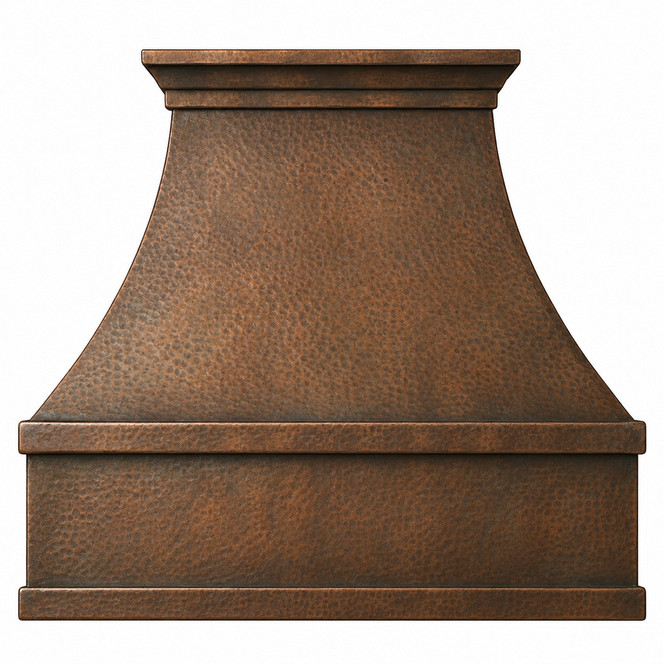
The Bell Copper Range Hood with Tall Apron and Double Bend is shown in these lifestyle images as a refined handcrafted focal point for French Provincial, English country, Georgian, and new traditional kitchens. Its long bell curve, tall plain apron, two folded copper bends, layered crown, softly hammered surface, and uninterrupted copper face create a formal but restrained range-wall feature. The hood does not rely on straps, rivets, scrollwork, contrasting metal, or embossed decoration. Instead, its impact comes from proportion, copper patina, architectural folds, and the strong apron below the canopy. Explore the bell copper range hood with tall apron and double bend to compare its shape, apron, bends, crown, and finish character. For product-specific design details, read the bell copper range hood tall apron double bend guide.
Blog Summary
- Focus: lifestyle image guide
- Product: bell copper range hood
- Feature: tall plain apron
- Detail: two folded bends
- Styles: four kitchen scenes
- Look: formal and restrained
Tall Apron Copper Hood Images
Lifestyle images help show how this bell copper range hood looks inside finished kitchens rather than as a standalone product photo. Cabinet profile, stone selection, backsplash height, ceiling details, wall color, lighting, flooring, and hardware all affect how the tall apron and copper folds appear. In one kitchen, the hood can feel French Provincial and softly traditional. In another, it can read as English country, Georgian, or new traditional depending on the surrounding architecture.
This hood stands out because the apron is unusually important to the design. The lower section is broad, plain, and structured, giving the hood the visual weight of a built-in chimney breast. The two horizontal bends define the canopy and lower rail without adding applied straps or rivets. For broader silhouette comparison, review the copper range hood shapes guide.
Design Highlights
- long bell-shaped copper canopy
- unusually tall plain apron
- two folded copper bends
- layered crown at the top
- softly hammered copper surface
- no straps, rivets, or scrollwork
- formal traditional kitchen fit
French Provincial Kitchen Image
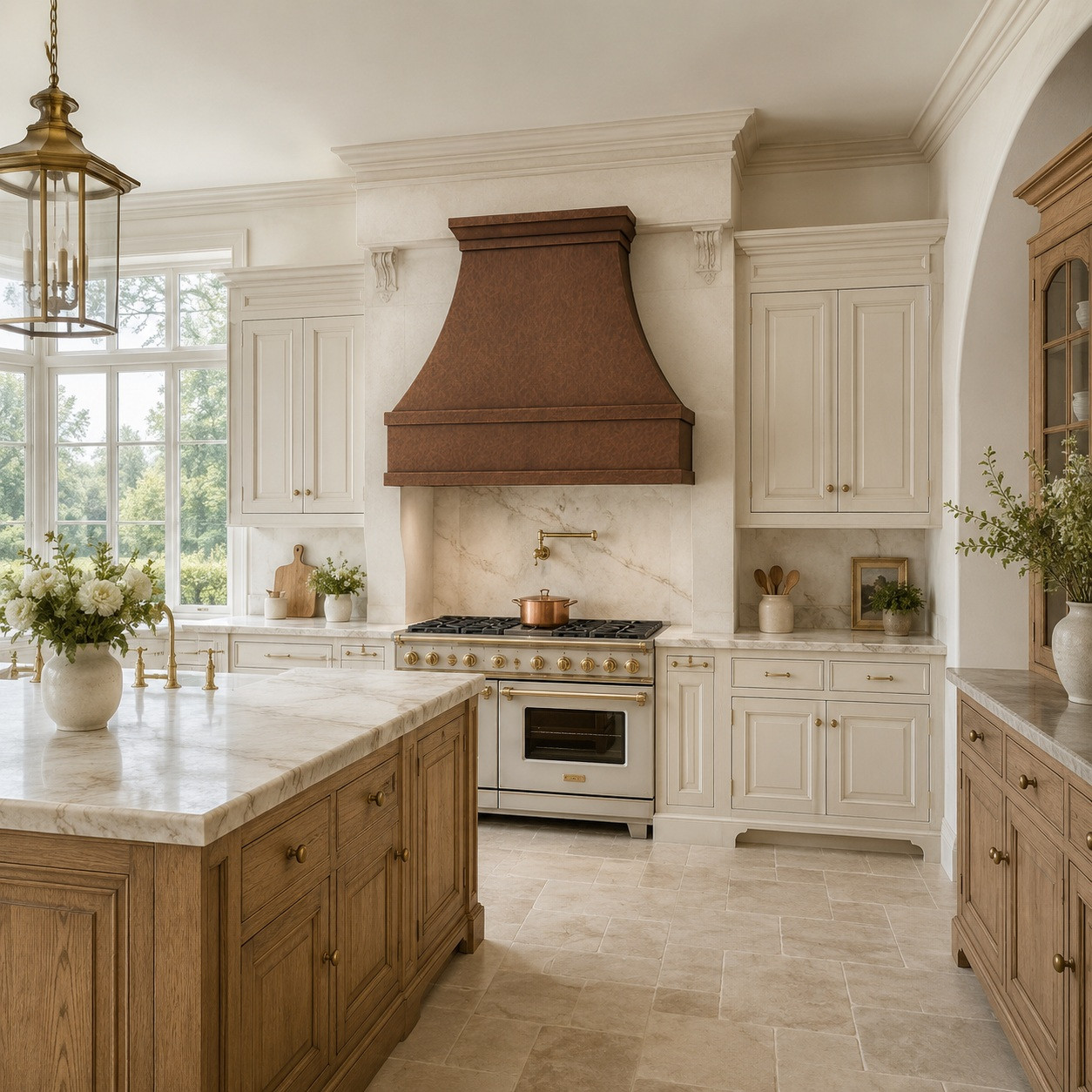
In a French Provincial kitchen, the bell copper hood feels graceful, tailored, and architectural. French Provincial interiors often use painted cabinetry, limestone, marble, plaster walls, soft white or putty finishes, antique brass, carved details, and classic tile. The hood’s long curve connects with traditional French range-wall forms, while the tall apron gives the lower section a furniture-like presence above the cooking area.
The absence of straps and rivets is important in this scene because French Provincial kitchens often already include decorative cabinet profiles, stone edges, corbels, or shaped hardware. A quieter copper hood lets those elements remain elegant rather than crowded. The two folded bends create shadow lines that define the apron and canopy, while the warm copper finish adds depth against pale cabinetry and stone. For related style planning, review the French-style copper range hoods guide.
English Country Kitchen Image
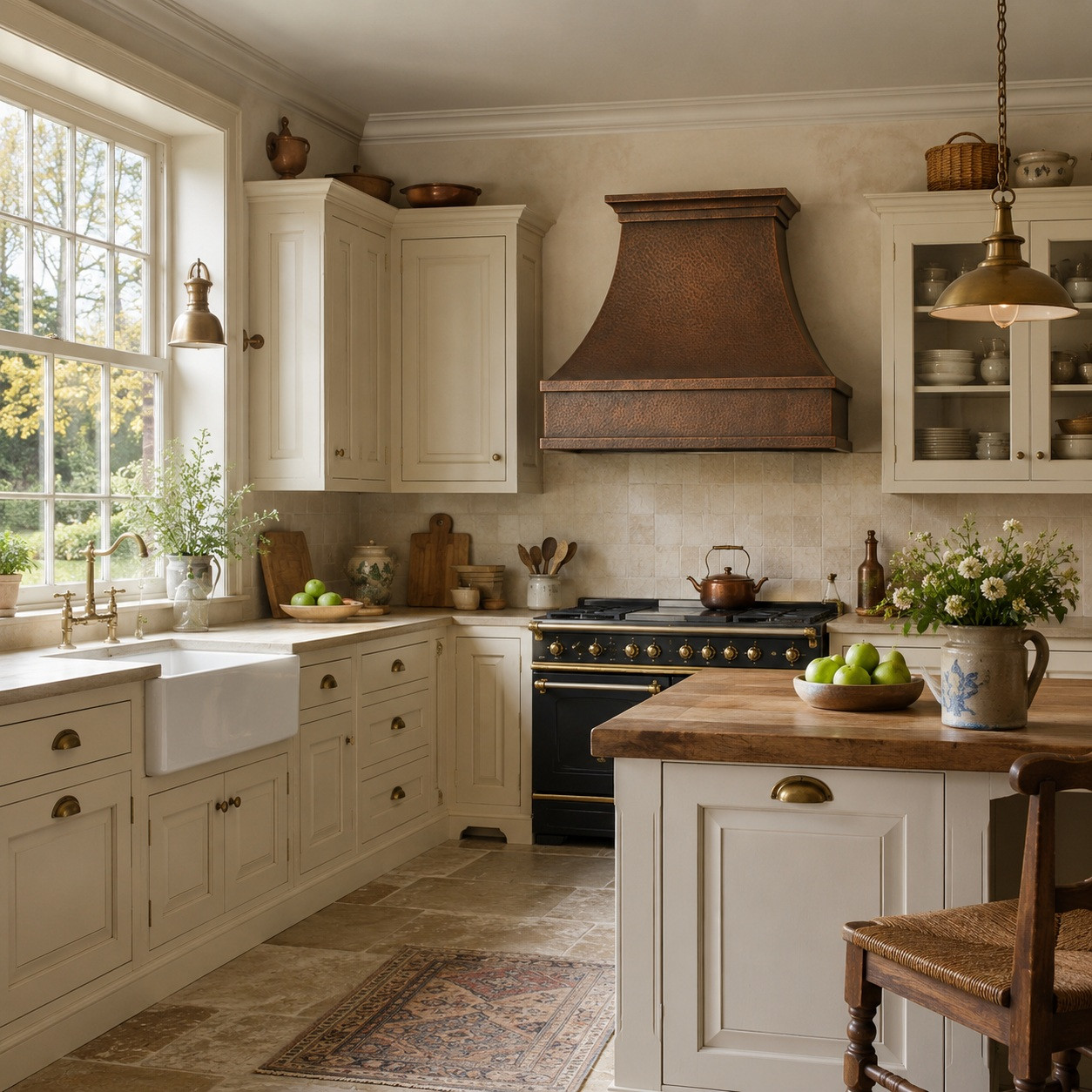
In an English country kitchen, the hood brings warmth and order to painted cabinetry, natural wood, stone counters, classic hardware, handmade tile, and collected room details. English country interiors can include layered textures and traditional finishes, so the hood’s plain copper face works especially well. It adds character through shape and patina rather than heavy ornament.
The tall apron gives the hood a grounded presence that pairs naturally with inset cabinets, range alcoves, open shelves, and stone backsplashes. The double-bend detail keeps the lower edge crisp and architectural, almost like a built-in cabinet rail or furniture molding translated into copper. The result is traditional but not overly decorative. A darker patina can make the hood feel more aged and country-house inspired, while a warmer patina can soften the room and coordinate with brass hardware, oak accents, and natural stone.
Georgian Kitchen Image
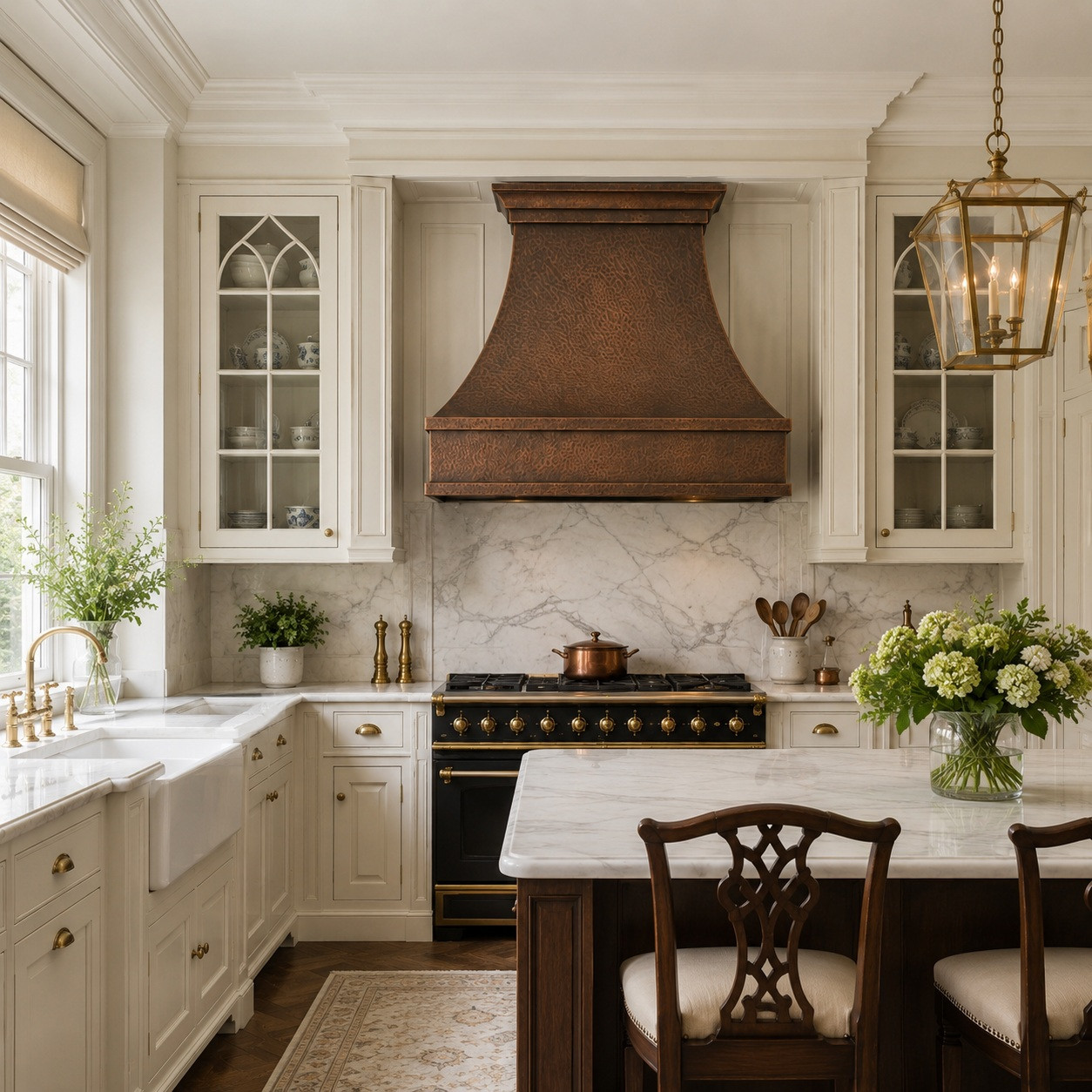
In a Georgian-inspired kitchen, the hood works because the design is symmetrical, ordered, and strongly proportioned. Georgian interiors often emphasize balance, classical lines, paneling, crown details, stone, painted cabinetry, and restrained ornament. The hood’s tall rectangular apron, horizontal copper bends, and layered crown align well with that architectural discipline. The bell curve adds movement, but the overall composition remains controlled.
This scene is strongest when the range wall feels formal and centered. The hood can sit between tall cabinets, above a stone backsplash, or within a balanced wall elevation. Because it has no rivets, straps, or raised decorative motifs, it does not interrupt the room’s orderly rhythm. The copper surface adds warmth to what could otherwise become a cool or rigid traditional kitchen. For broader handcrafted copper context, review the Rustica House copper range hoods guide.
New Traditional Kitchen Image

In a new traditional kitchen, this hood combines historical form with cleaner detailing. New traditional interiors often use classic cabinet profiles, restrained hardware, white oak, quartzite, marble, handmade tile, soft neutrals, and simplified architectural trim. The bell silhouette and layered crown provide traditional character, while the plain face and folded bends keep the hood compatible with updated finishes.
The tall apron makes the hood feel important without requiring decoration across the whole surface. This is useful in kitchens that want a strong focal point but avoid overly rustic or ornate metalwork. The copper finish can warm white, cream, gray, taupe, black, or wood cabinetry. The smooth organization of the apron also helps the hood pair with more refined lighting, stone counters, and simplified backsplashes. For finish comparison, review the copper patina finish options guide.
Tall Apron Design
The tall apron is the feature that gives this hood its strongest personality. Instead of using a short lower band, the apron becomes a large architectural surface below the bell canopy. This makes the hood feel substantial and built-in, especially in kitchens with formal cabinetry, high backsplashes, framed range walls, or traditional millwork.
The plain apron also gives the copper finish room to show. Since there are no straps, rivets, scrolls, or contrasting metals, the eye reads the patina, hammering, folds, and proportions first. That restraint is what makes the hood useful for French Provincial, English country, Georgian, and new traditional interiors.
Double Bend Detail
The two folded bends define the structure of the hood. The upper bend separates the canopy from the apron, while the lower bend finishes the base visually. These folds create horizontal shadow lines that give the hood depth without adding applied trim.
This detail is especially valuable in formal kitchens because it feels architectural, not decorative. The bends act like copper molding: simple, precise, and proportioned. They allow the hood to look complete while preserving the uninterrupted metal face.
Bell Shape and Crown
The bell-shaped canopy gives the hood its traditional movement. It narrows toward the crown and expands toward the apron, creating a graceful transition from the upper chimney area to the wider cooking zone. The layered crown adds a finished top edge that can coordinate with cabinet crown molding, ceiling beams, or framed range-wall details.
The result is a hood that feels traditional but edited. It has enough shape to stand out, enough apron height to feel substantial, and enough restraint to work in both classic and updated interiors.
Handcrafted Copper Finish
The softly hammered copper surface gives the hood warmth, depth, and natural variation. Each mark catches light differently, creating subtle highlights and darker low points across the bell body and tall apron. The finish may appear darker, warmer, or brighter depending on surrounding light and material colors.
Small differences in hammering, patina tone, fold definition, apron proportion, crown detail, seams, and artisan finishing should be expected in handmade copper work. These variations help each hood feel individual rather than mass produced.
Frequently Asked Questions
What makes this copper hood different?
This hood combines a long bell-shaped canopy with an unusually tall plain apron, two folded copper bends, a layered crown, and an uninterrupted copper surface without straps, rivets, scrollwork, or contrasting metals.
Which kitchen styles fit this hood?
This hood works well in French Provincial, English country, Georgian, new traditional, formal traditional, European farmhouse, and refined transitional kitchens.
Is every hood exactly identical?
No. Each hood is handmade, so hammering, patina tone, fold definition, crown detail, apron proportion, seams, and small artisan marks may vary. These differences are part of the handcrafted character.
Conclusion
The bell copper range hood with tall apron and double bend brings a long curved canopy, formal apron structure, folded copper shadow lines, layered crown detail, and handcrafted patina into the kitchen. These lifestyle images show how the hood adapts to French Provincial, English country, Georgian, and new traditional interiors while keeping its copper identity elegant, restrained, and architecturally strong.