 US Dollar
 Euro
Euro
 Australian Dollar
 Canadian Dollar
 Polish Zloty
 British Pound

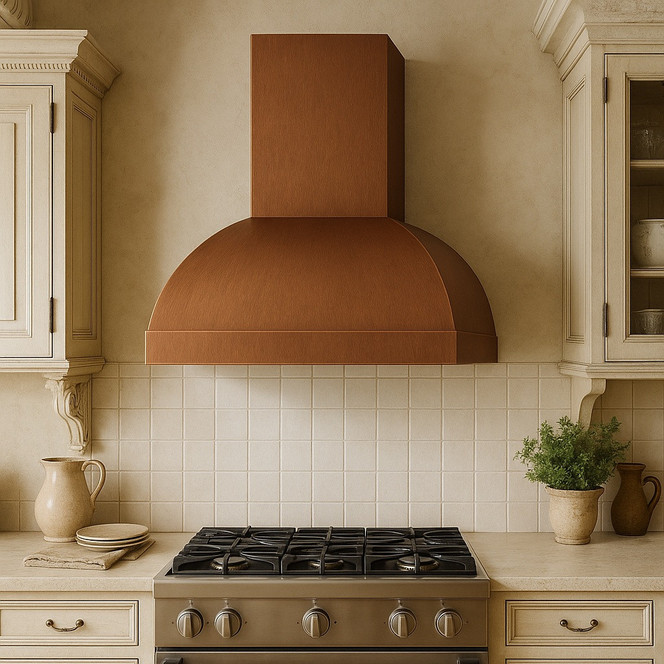
Barrel Copper Range Hood Guide explains how a curved copper hood can become the main architectural feature in a custom kitchen. With its rounded barrel canopy, hand-hammered surface, warm patina options, and made-to-order construction, this style works beautifully in Spanish Colonial, Mediterranean, farmhouse, rustic, traditional, and transitional interiors. The curved profile softens cabinetry lines while giving the cooking area a sculptural focal point with artisan character. Explore the barrel copper range hood to review finish options, sizing, installation styles, and custom details for wall-mount or kitchen-island applications.
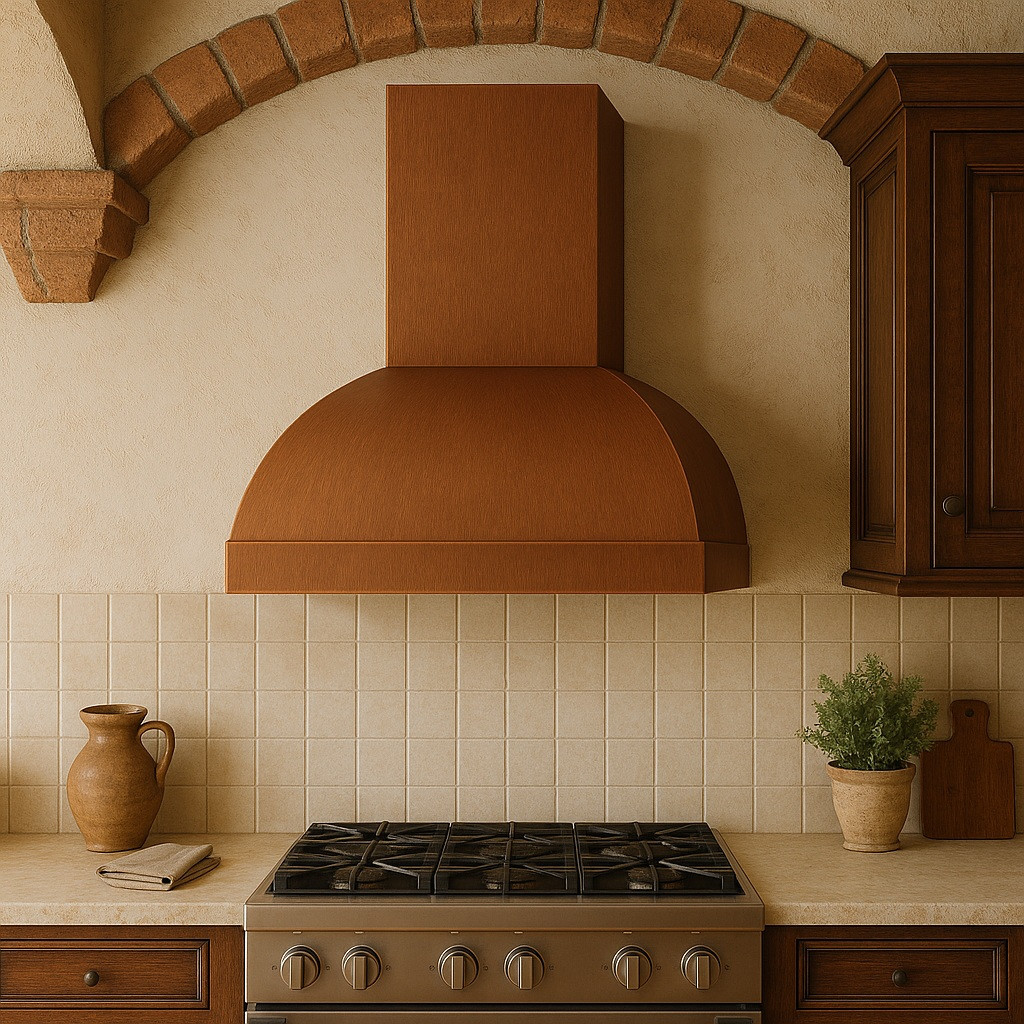
Barrel Hood Overview
A barrel copper range hood combines function, proportion, and handcrafted metalwork in one highly visible kitchen feature. Its rounded canopy creates a softer shape than a straight-sided or pyramidal hood, making it especially useful when cabinetry, beams, tile, or counters contain strong horizontal lines. The copper surface adds warmth above the range, while the hand-hammered texture introduces depth and movement. This type of hood is not only decorative. It can be built around ventilation requirements, ceiling height, range size, mounting location, and preferred insert configuration. The result is a practical kitchen hood with a strong artisan presence.
Curved Barrel Shape
The barrel silhouette is the defining feature of this hood style. Instead of forming a flat or sharply angled canopy, the lower body curves outward and upward, creating a rounded architectural profile. This shape gives the hood visual volume without making it feel heavy. It also works well over both straight ranges and island cooktops because the curved form looks balanced from different angles. In traditional kitchens, the barrel profile feels historic and substantial. In transitional kitchens, it softens clean cabinetry and adds a custom focal point. Its sculptural form makes the cooking wall feel intentionally designed.
Design Highlights
- Rounded barrel canopy
- Hand-hammered copper
- Custom patina finishes
- Wall or island mounting
- Made-to-order sizing
Hand-Hammered Texture
Hand-hammered copper gives the hood visible character that cannot be achieved with a perfectly flat surface. The small hammer marks catch light differently throughout the day, creating subtle variation across the canopy and chimney. This texture also helps the hood feel connected to traditional Mexican metalwork and handmade kitchen design. In rustic interiors, the hammered surface complements wood beams, stone, brick, and plaster. In more refined kitchens, it prevents the copper from looking too plain or industrial. Because every hammered surface contains natural variation, the hood feels individualized rather than mechanically uniform.
Patina Finish Options
Patina determines the mood of the copper hood. A dark coffee or antique finish creates a deeper Old World character, while natural copper feels warmer and more reflective. Honey tones can brighten the room, and oxidized green accents may suit artistic or Mediterranean interiors. A hand-polished option creates a cleaner copper appearance for kitchens that need stronger light reflection. The best finish depends on cabinetry, countertops, tile, flooring, and natural light. Darker patinas often work well with white cabinets and stone surfaces, while warmer finishes coordinate beautifully with wood, terracotta, cream plaster, and handmade tile.
Popular Patina Looks
- Dark coffee copper
- Antique espresso tone
- Natural fired finish
- Warm honey patina
- Oxidized green detail
Spanish Colonial Kitchens
A barrel copper range hood feels especially natural in Spanish Colonial kitchens. Its curved form pairs well with arched openings, plaster walls, exposed beams, wrought iron hardware, and patterned tile. The copper finish adds warmth against white or cream walls, while the hammered texture reinforces the handmade character associated with Spanish-style interiors. When paired with Talavera tile, dark wood cabinetry, or stone floors, the hood becomes a central feature without needing excessive decoration. A darker patina can create stronger contrast, while a warmer natural finish gives the kitchen a sunlit hacienda feeling.
Farmhouse Kitchen Style
In a farmhouse kitchen, the barrel copper hood brings warmth and authenticity. White shaker cabinets, apron-front sinks, butcher block, open shelves, and painted furniture all benefit from the contrast of hand-hammered copper. The rounded canopy softens the clean geometry of farmhouse cabinetry, while the patina adds a lived-in quality. A darker finish can make the hood feel historic, while a honey or natural finish creates a friendlier, brighter atmosphere. To keep the look balanced, repeat warm tones in wood stools, cabinet hardware, pottery, or lighting rather than filling the room with too many copper accents.
Farmhouse Pairings
- White shaker cabinets
- Apron-front sink
- Open wood shelving
- Stone countertops
- Rustic tile backsplash
Rustic Kitchen Character
Rustic kitchens are ideal settings for hammered copper. Reclaimed beams, textured walls, stone floors, clay tile, iron lighting, and natural wood all support the hood’s handcrafted appearance. A barrel shape adds movement to earthy materials and prevents the cooking wall from feeling too rigid. The patina can evolve naturally with use, which strengthens the sense of age and authenticity. In rustic interiors, small marks and tonal changes are not flaws. They become part of the hood’s character. This makes copper especially appealing for homeowners who prefer materials that develop personality over time.
Transitional Kitchen Balance
Transitional kitchens combine traditional comfort with cleaner modern lines. A barrel copper range hood helps bridge those styles. Its shape introduces classic softness, while the copper surface provides artisan texture against simple cabinetry. When placed between light cabinets or above a stone backsplash, the hood becomes the main decorative feature without making the kitchen feel overly ornate. Choose fewer straps and cleaner trim if the room leans modern. Select darker patina, rivets, or stronger molding if the room needs more traditional detail. This flexibility makes the barrel hood useful in kitchens that mix old and new design elements.
Transitional Details
- Clean cabinet lines
- Warm metal focal point
- Simple stone counters
- Balanced patina choice
- Moderate trim detail
Traditional Kitchen Setting
In traditional kitchens, the barrel copper hood can feel like an heirloom architectural feature. Detailed cabinetry, crown molding, decorative backsplashes, and formal layouts can support a more substantial copper design. The rounded canopy gives the range wall depth, while the patina adds richness. A darker antique or coffee finish often coordinates well with traditional wood stains, cream cabinets, and ornate trim. The hood should be sized generously enough to match the cabinetry scale. If it is too small, it may look weak beside large cabinets. Proper proportions help the hood feel built into the kitchen design.
Modern Kitchen Contrast
A barrel copper hood can also work in modern kitchens when used as a deliberate contrast. Clean slab cabinets, simple stone, concrete floors, and minimal hardware can make the hammered copper stand out as a sculptural element. The curved body softens sharp angles, while the warm metal prevents the room from feeling cold. For a more contemporary interpretation, choose a cleaner patina and limit extra straps or rivets. The hood should be the main visual statement, with surrounding surfaces kept simple. This approach works well for homeowners who want one handcrafted focal point inside an otherwise restrained kitchen.
Wall-Mount Installation
Wall-mounted barrel copper hoods are installed above ranges placed against a kitchen wall. This is the most common layout and allows the hood to work with surrounding cabinets, tile backsplashes, and chimney extensions. The width should usually relate to the range below and the cabinet spacing on each side. Height must also be planned carefully so the hood feels proportional between the countertop and ceiling. A wall-mounted hood can be framed by cabinetry, left freestanding, or extended with a chimney to reach the ceiling. The final layout should support both visual balance and ventilation performance.
Wall-Mount Planning
- Measure range width
- Check cabinet spacing
- Plan chimney height
- Confirm vent path
- Review backsplash scale
Island Hood Option
An island barrel copper hood is viewed from multiple sides, so its proportions and finish must look balanced throughout the kitchen. This installation style works above island cooktops and open-plan kitchens where the hood becomes visible from dining and living areas. Island hoods require careful planning because ductwork, ceiling support, and sightlines are more exposed. The curved barrel profile is useful in this setting because it feels sculptural from different angles. Choose a finish that coordinates with nearby lighting, stools, table bases, and cabinet hardware. The hood should define the island without blocking the openness of the room.
Custom Sizing Guide
Custom sizing allows the barrel copper hood to fit the exact kitchen layout. Width, height, depth, chimney proportion, apron size, and ventilation insert requirements should be reviewed before production. A larger range may need a wider hood for proper coverage, while tall ceilings may require an extended chimney. Standard kitchen-island and wall-mount layouts may need different support and ducting considerations. Customization is also important for style. A taller chimney can feel more architectural, while a lower profile may suit smaller kitchens. The best hood size balances ventilation, cabinet layout, ceiling height, and visual proportion.
Custom Size Details
- Hood width
- Hood height
- Standard depth
- Chimney length
- Insert compatibility
Ventilation Planning
A copper hood cover should be planned with the ventilation insert in mind. The insert determines airflow, lighting, filters, ducting needs, and service access. Some homeowners choose a range hood only and provide their own insert, while others select an available insert option during ordering. Cooking style matters. Frequent frying, grilling, or high-heat cooking may require stronger ventilation than light daily use. The hood should be built to fit the selected insert securely and allow proper clearance above the cooking surface. Ventilation planning should happen early, before the hood dimensions and cabinet layout are finalized.
Straps and Details
Decorative straps, rivets, apron bands, and crown details can change the personality of a barrel copper hood. Simple strapless designs feel cleaner and more transitional, while riveted straps add rustic or Old World character. A stronger apron can visually anchor the curved canopy, and crown molding can give the chimney a more finished architectural look. Details should be selected according to the room’s style. A farmhouse kitchen may need restrained trim, while a Spanish Colonial or traditional kitchen can support heavier decorative metalwork. The goal is to enhance the barrel form without overwhelming the copper surface.
Copper Hood Care
Copper should be cleaned gently to preserve its finish. Use mild soap, warm water, and a soft cloth for routine cleaning. Avoid abrasive pads, harsh chemicals, bleach, ammonia, and aggressive polishing unless the finish is intended to be bright and polished. Patinated copper should not be scrubbed hard because the surface color may change. Dry the hood after cleaning to prevent water spots. Grease should be removed before it becomes sticky or difficult to clean. With regular care, a barrel copper hood can maintain its beauty while continuing to develop natural depth and character.
Care Guidelines
- Use mild soap only
- Wipe with soft cloth
- Dry after cleaning
- Avoid abrasive pads
- Protect the patina
Barrel Copper Hood FAQ
What makes the barrel shape useful?
The curved barrel shape gives the hood a sculptural profile and helps soften straight cabinetry lines. It also creates a strong focal point above the range or kitchen island.
Can I choose the patina finish?
Yes. Patina options can include dark coffee, antique, natural, honey, oxidized green, and polished copper looks depending on the desired kitchen style.
Is this hood available for islands?
Yes. The barrel copper range hood can be made for wall-mount or kitchen-island installation, with planning for the correct venting and support.
Does hammered copper need special care?
Hammered copper should be cleaned with mild soap, warm water, and a soft cloth. Avoid abrasive products because they can damage patina and surface texture.
Which kitchens fit this hood best?
This hood works well in Spanish Colonial, Mediterranean, farmhouse, rustic, traditional, transitional, and selected modern kitchens that need a handcrafted focal point.
Design Summary
A barrel copper range hood combines rounded form, hand-hammered texture, warm patina, and custom construction. Its curved canopy creates visual movement above the cooking area, while the copper surface adds depth and artisan character. Wall-mount versions work beautifully with cabinetry and backsplashes, while island versions become sculptural centerpieces in open kitchens. The style can be adapted through patina, sizing, straps, rivets, apron details, and chimney height. Whether used in a rustic farmhouse or a refined Spanish Colonial kitchen, this hood brings warmth and strong architectural presence to the room.
Final Design Guidance
Barrel Copper Range Hood Guide details how this handmade copper hood style can transform a kitchen through shape, finish, and proportion. The rounded barrel canopy softens the cooking wall, while hammered copper introduces texture and lasting character. Custom sizing makes it suitable for wall-mounted ranges and kitchen islands, and patina options allow the hood to coordinate with many interior styles. Choose the finish, ventilation setup, and decorative details according to the room’s architecture and cooking needs. The result is a functional ventilation cover with heirloom-quality craftsmanship and bold visual appeal.