 US Dollar
 Euro
Euro
 Australian Dollar
 Canadian Dollar
 Polish Zloty
 British Pound

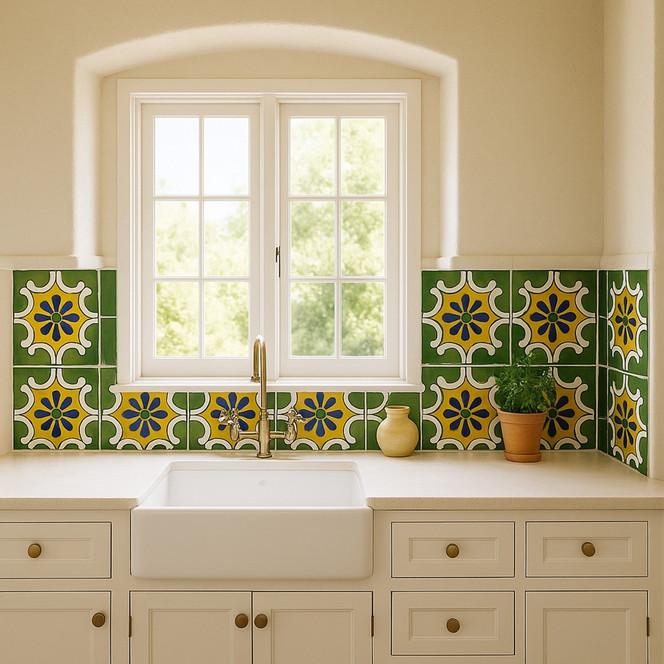
Explore the charm of Mexican Talavera tiles, a long-standing artisan craft admired by designers, architects, and home decor lovers around the world. These handcrafted tiles showcase vivid color, bold geometry, and cultural motifs, making them a beautiful fit for kitchens, bathrooms, floors, and commercial spaces. Talavera is not only decorative. It is practical, durable, and designed to bring life to everyday surfaces that need both style and protection.
The origin and characteristics of Talavera
Talavera tiles are crafted using traditional techniques dating back to Mexico’s colonial era. Each piece is shaped, hand-painted, and kiln-fired at high temperatures, which helps the glaze set and supports long-term durability in real homes. This process also creates the signature look Talavera is known for: crisp outlines, expressive brushwork, and a glossy finish that catches light with depth rather than flat shine. Learn more about the craft tradition and what makes these ceramics distinctive in our section on Mexican Talavera ceramic.
What makes Talavera feel special is that it never looks machine-perfect. Even when a pattern repeats, small variations show the artisan hand. That is part of the value. The surface reads alive, warm, and personal. In design terms, Talavera adds movement to spaces that might otherwise feel too neutral or too modern. In practical terms, glazed ceramic provides a surface that wipes clean, resists moisture, and stands up well in kitchens and bathrooms when installed correctly.
Why Talavera tiles work so well in modern homes
Many people associate Talavera with traditional interiors, but these tiles work beautifully in modern spaces too. In contemporary kitchens, a bold patterned backsplash can become the only “ornament” needed, replacing extra decor with one strong artisan feature. In bathrooms, Talavera can warm up stone and plaster and prevent a room from feeling cold or overly minimal. Even in commercial spaces, the color and pattern help create an atmosphere that guests remember.
Talavera also supports flexible design approaches. You can go full pattern for dramatic impact. You can use a pattern band as a frame line. You can also mix patterned tiles with calmer supporting solids, so the room feels balanced rather than busy. That flexibility is one reason Talavera continues to feel timeless. It can be traditional, modern, rustic, or eclectic depending on how you place it and what materials you pair around it.
Mexican tiles for backsplash
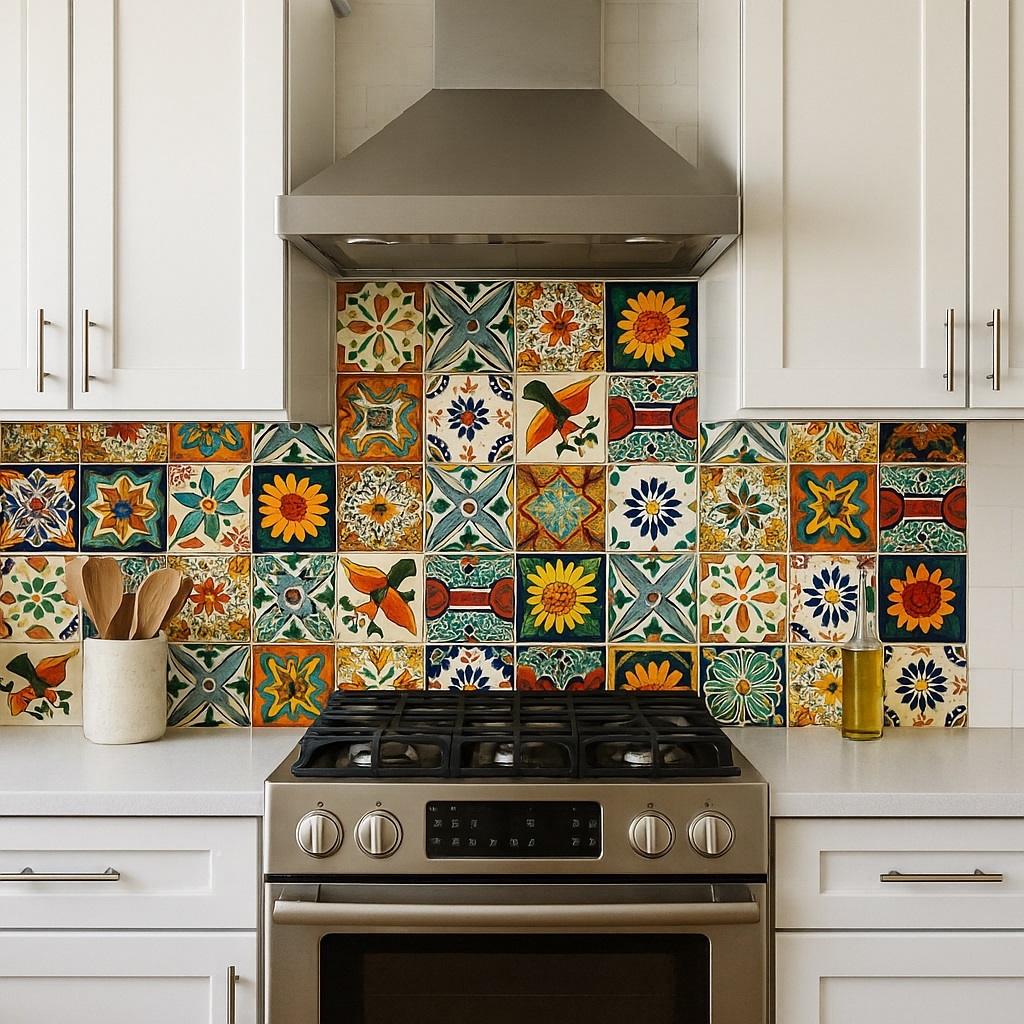
A Mexican tile backsplash is one of the easiest ways to add color and personality to your kitchen. Because backsplashes sit at eye level, even a small tiled area can change the whole mood of the room. Talavera patterns work especially well behind ranges and sinks, where the backsplash naturally becomes a focal zone. With a variety of designs available, you can personalize the space while still keeping it functional and easy to clean. For additional ideas and layout direction, find inspiration in this article.
When planning a backsplash, start with the visual center first. That may be the range wall, the sink wall, or the main prep zone. Center the strongest pattern on that area, then let the tile run outward in a way that keeps cuts balanced at the ends. If you have outlets, plan their placement early so they do not interrupt the main pattern center. If you are mixing patterns, keep one pattern dominant and use secondary patterns as accents or small inserts. This prevents the backsplash from feeling chaotic.
Grout, spacing, and layout planning
Grout color changes the final look more than many people expect. A soft neutral grout helps unify the design and keeps attention on the tile pattern. A darker grout increases contrast and makes each tile edge more visible. For many Talavera patterns, a lighter grout is easier on the eye, especially across larger areas. In small accents, slightly darker grout can add definition. The best approach depends on your room palette and how bold the tile design is.
Layout planning matters most at edges and corners. If the tile is used as a backsplash, decide how the tile will terminate at cabinet ends, window trims, and open shelves. A clean termination keeps the installation looking intentional. Dry layout a small area if possible, then confirm where the pattern lines land and where your cuts will fall. Also plan your waste factor. Cuts, breakage, and future repairs require extra tile, and matching a discontinued pattern later can be difficult.
Talavera sinks for restaurants
For commercial spaces looking to make a statement, Talavera sinks offer a unique and artistic touch. These handcrafted sinks are perfect for restaurants that want an authentic and colorful atmosphere, especially in guest restrooms where design moments matter. A Talavera sink can become a brand detail, helping the space feel curated and memorable while still offering daily practicality. Explore more about their charm in this blog post.
In restaurant settings, durability and maintenance are key. Glazed Talavera surfaces are typically easy to wipe clean, but staff routines matter. Use mild cleaners rather than harsh abrasives. Protect the surrounding countertop with proper sealing and water management. Also consider how the sink coordinates with lighting, mirror frames, and hardware. When the metals and tile colors feel connected, the restroom reads premium without needing excessive decor.
A variety of tiles and flooring options
Talavera is part of a wider world of Mexican ceramic design. If you are planning a full project, it helps to understand the main tile categories and how each one performs in different settings. Some tiles are designed for walls and decorative zones. Others are built to handle more wear. Some are flat, while others are sculpted for texture and shadow. Here are three core categories to explore as you plan your space.
-
Mexican Tiles: Traditional tiles perfect for walls, countertops, and outdoor spaces.
-
Mexican Relief Tiles: Raised surface tiles that add texture and depth to any area.
-
Mexican Rustic Floor Tiles: Ideal for creating an authentic rustic atmosphere in any space.
Where relief tiles shine
Relief tiles are designed for dimensional texture. They add shadow and highlight, which makes a wall feel more architectural and layered. Relief tiles are best used where the surface does not need to be perfectly flat, such as feature walls, fireplace surrounds, vanity walls, and framed panels. In kitchens, relief tiles can be used in backsplash accents, but many homeowners reserve them for zones that are more decorative and less exposed to heavy splatter. The sculpted surface can hold more grime if placed directly behind a high-splash cooking area, so placement is key.
If you want a more dramatic Talavera effect without covering an entire wall in busy pattern, relief tiles offer a great solution. You can use a few pieces as a focal insert, then surround them with calmer tiles to create a balanced composition. This approach creates depth and craft presence while keeping the room easy to live with.
Decorating tips with Talavera tiles
- Color Combinations: Pair bold Talavera patterns with warm, neutral tones for balance.
- Small Spaces: Use simpler designs to avoid overwhelming compact areas.
- Maintenance: Clean tiles regularly with non-abrasive products to preserve their shine and color.
Common mistakes to avoid
One common mistake is using too many unrelated patterns in one small space. Talavera can handle bold color, but it still needs structure. If the room is compact, choose one dominant pattern and repeat it, or use a simple pattern field with one accent insert. Another mistake is skipping layout planning and then ending up with awkward cuts at the most visible edge. Start from the main focal center and work outward so the edges land cleaner.
Another issue is ignoring lighting. Glossy glazed tiles look different in daylight than under warm bulbs. If your kitchen is dim, a brighter palette can lift the space. If your kitchen is already full of contrast, a calmer pattern can prevent overload. Also consider how the tile relates to your hardware finish. Warm metals often complement warm Talavera palettes, while cooler metals can work well with blue-forward designs.
Conclusion
Enhance your home or commercial space with authentic Mexican Talavera tiles. These handcrafted pieces celebrate Mexico’s rich heritage while offering durability, charm, and a unique way to express personal style. Use them as a backsplash focal point, a bathroom accent, or a signature detail in a restaurant space. With smart layout planning, thoughtful grout selection, and balanced pattern choices, Talavera becomes more than decor. It becomes a lasting design feature that brings warmth and character into everyday life.