 US Dollar
 Euro
Euro
 Australian Dollar
 Canadian Dollar
 Polish Zloty
 British Pound

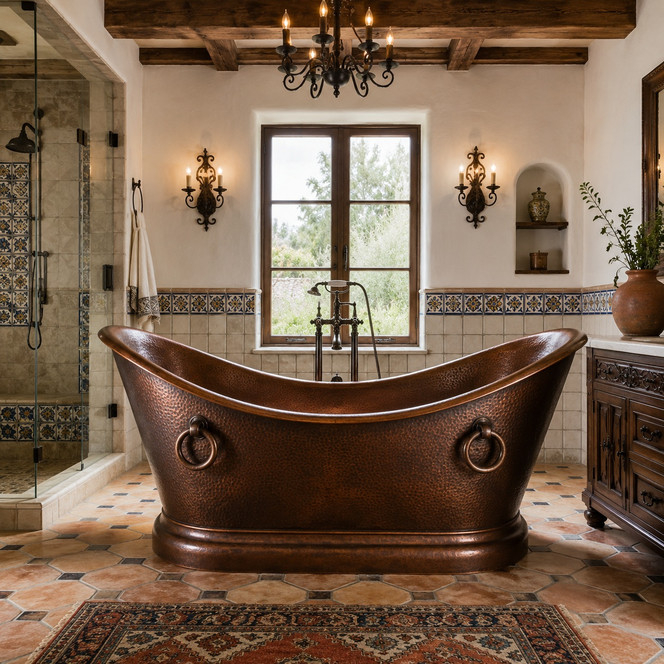
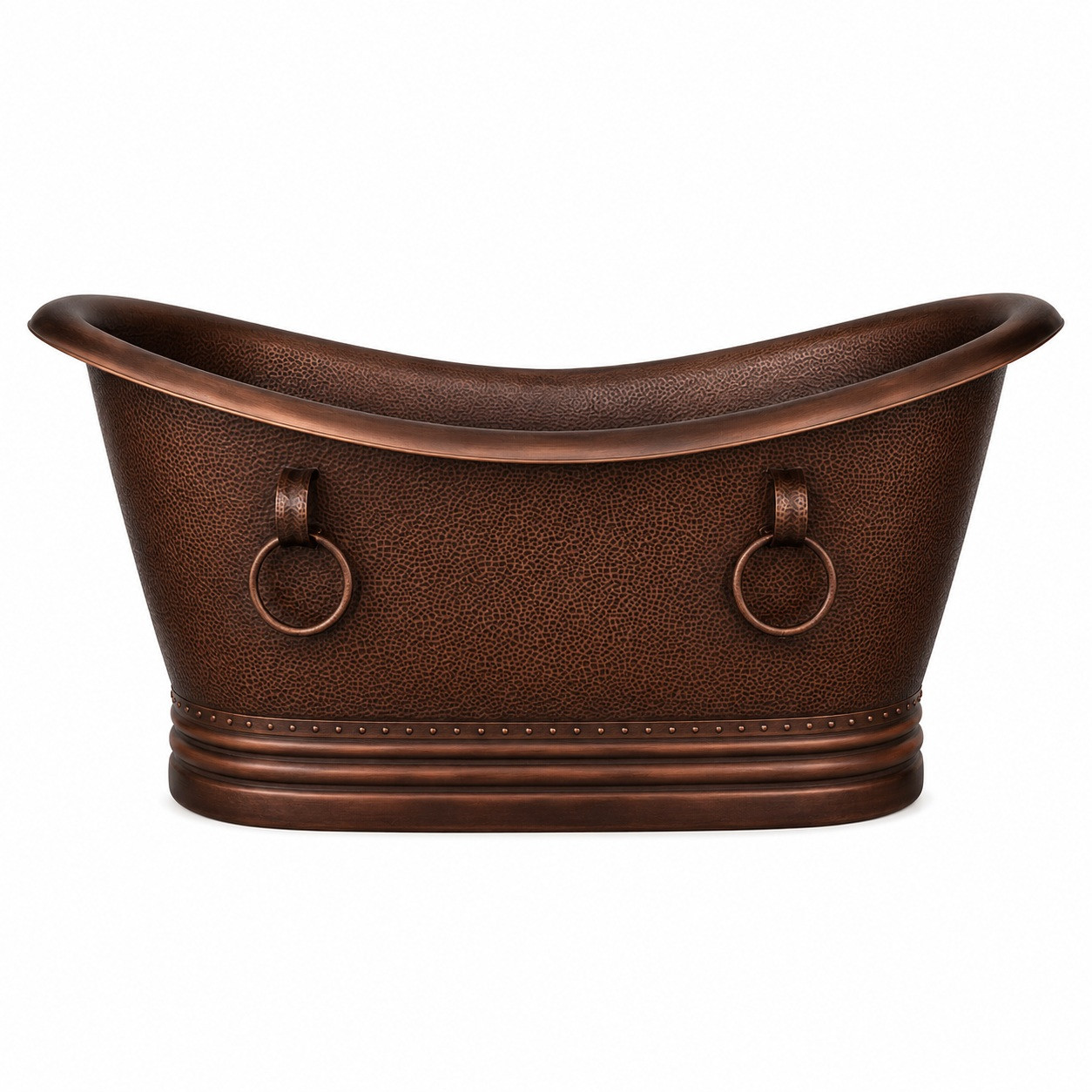
72 Inch Hand-Hammered Copper Bathtub Double Slipper Guide explains how a freestanding copper bathtub can bring artisan texture, generous soaking comfort, and warm coffee patina into a luxury bathroom. This handcrafted 72 inch hand-hammered copper bathtub features a double slipper shape with raised ends, a lower center entry area, a rolled rim, a pedestal base, and decorative copper ring accents. Its 72 inch length supports a spacious soaking experience, while the hammered copper surface gives the tub depth, movement, and handmade character. The main image shows a rich Coffee patina, and additional finish options allow the bathtub to coordinate with rustic, Tuscan, Mediterranean, farmhouse, lodge, transitional, and luxury spa bathrooms. Because every bathtub is made by hand, natural finish movement, hammering variation, rim shaping character, seam details, and small artisan irregularities should be expected. No two pieces are identical. Compare how the 72-inch proportions and copper surface interact with different bathroom materials and finishes in our 72-inch copper bathtub bathroom design images.
Blog Summary
- Design: Double slipper bathtub
- Material: Hand-hammered copper
- Finish: Coffee patina shown
- Size: Spacious 72 inch length
- Placement: Freestanding centerpiece
- Details: Rolled rim and rings
Design Guide Overview
A 72 inch hand-hammered copper bathtub is designed for bathrooms that need a strong focal point, generous soaking comfort, and natural artisan warmth. The double slipper form gives the bathtub two raised reclining ends, allowing the user to rest comfortably from either side. The lower center section makes entry easier while preserving the dramatic raised-end profile. The Coffee patina gives the copper a deep brown finish with warm highlights, making the tub suitable for rustic, Tuscan, Mediterranean, farmhouse, lodge, transitional, and luxury bathrooms. Its freestanding placement allows the bathtub to define the room without requiring built-in surrounds.
Double Slipper Shape
The double slipper shape is one of the most comfortable and visually distinctive bathtub forms. Both ends rise higher than the center, creating a balanced silhouette that supports reclining from either side. This makes the tub more flexible than a single slipper model, especially in bathrooms where the fixture is centered, placed near a window, or positioned as the main design feature. The lower middle section improves access and creates a graceful transition between the raised ends. In a copper bathtub, this profile feels especially elegant because the hammered surface highlights the curve of the body.
Shape Benefits
- Comfort: Raised reclining ends
- Balance: Symmetrical tub profile
- Access: Lower center opening
- Style: Classic luxury shape
- Use: Freestanding focal point
Angled View and Room Placement
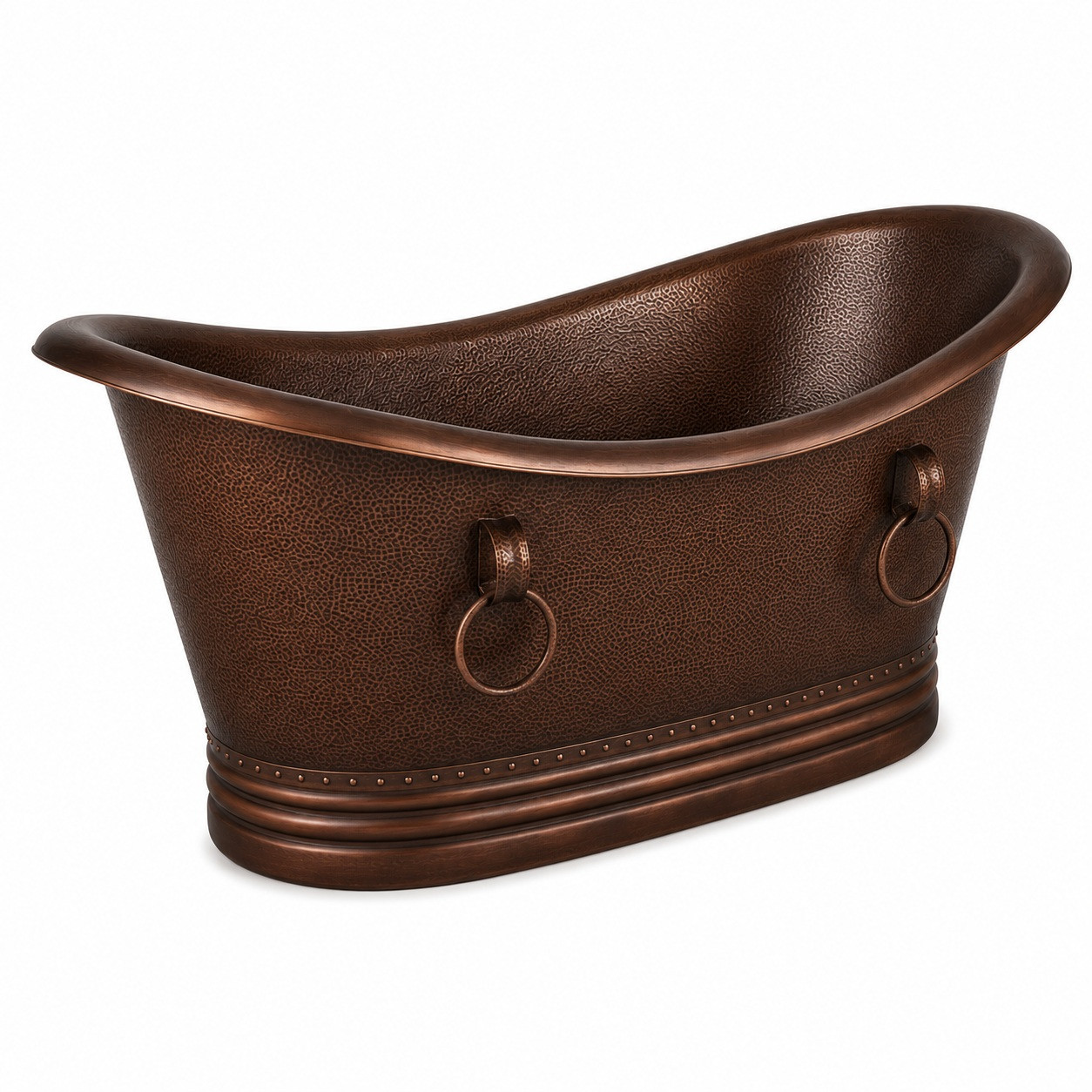
The angled view helps show how the double slipper body, pedestal base, rolled rim, and Coffee patina work together as a sculptural bathroom centerpiece. This view is important because a freestanding bathtub is rarely seen from only one side. It may be viewed from the vanity, shower entry, doorway, window wall, or dressing area. The angled profile helps confirm that the tub has enough surrounding clearance and that its raised ends do not feel crowded by walls, furniture, or plumbing fixtures.
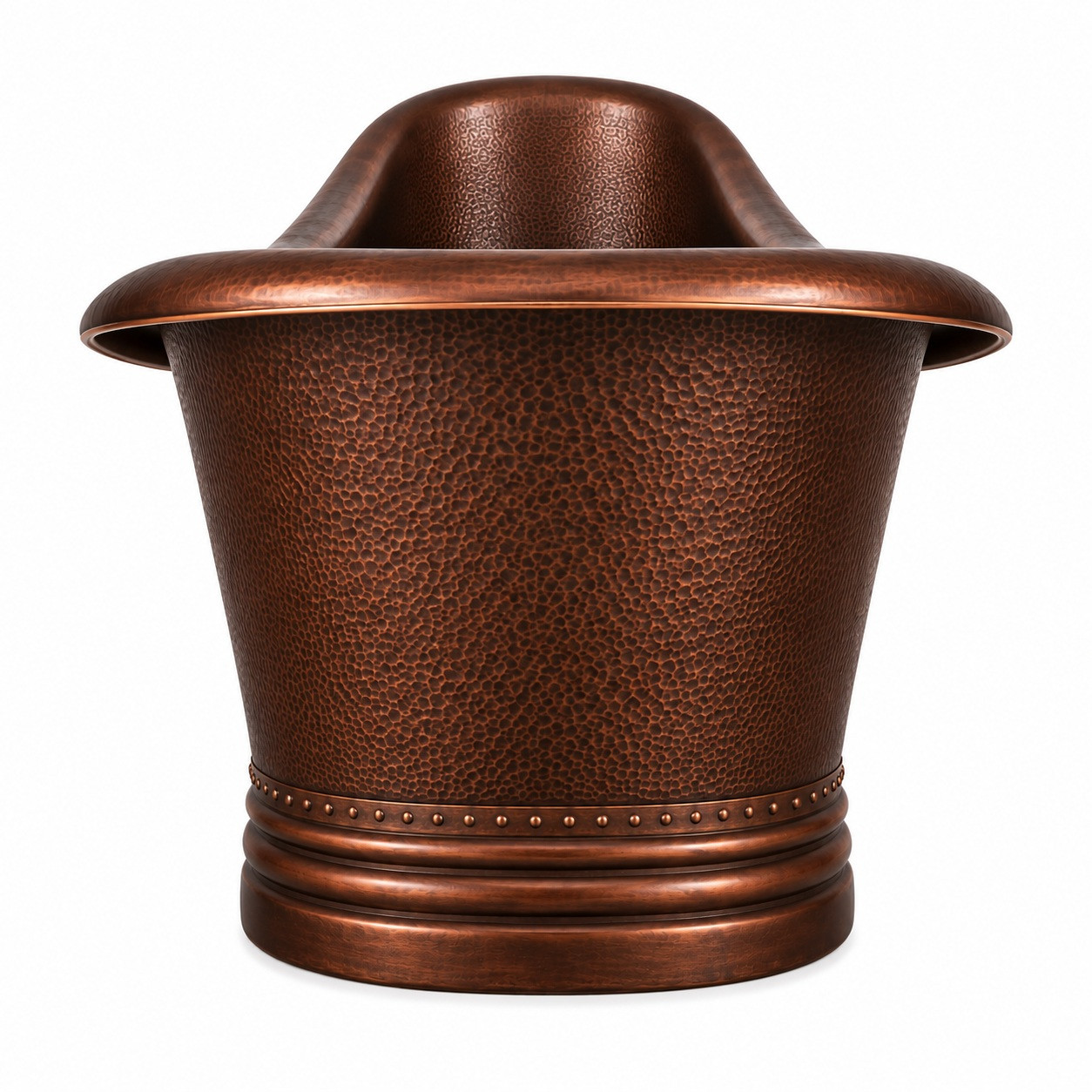
End View and Raised Slipper Profile
The end view shows the high slipper end, rounded rim, hammered surface, and curved copper wall more clearly. This perspective is useful for understanding how the bathtub will look when placed at the end of a bathroom, near a window, or centered below a chandelier. The raised end creates visual height without requiring a built-in surround. It also gives the bather a comfortable reclining surface. In a handmade copper tub, the end profile may show subtle forming character, rim movement, and hammering variation that make the piece feel handcrafted rather than factory-flat.
Top View and Center Drain Planning
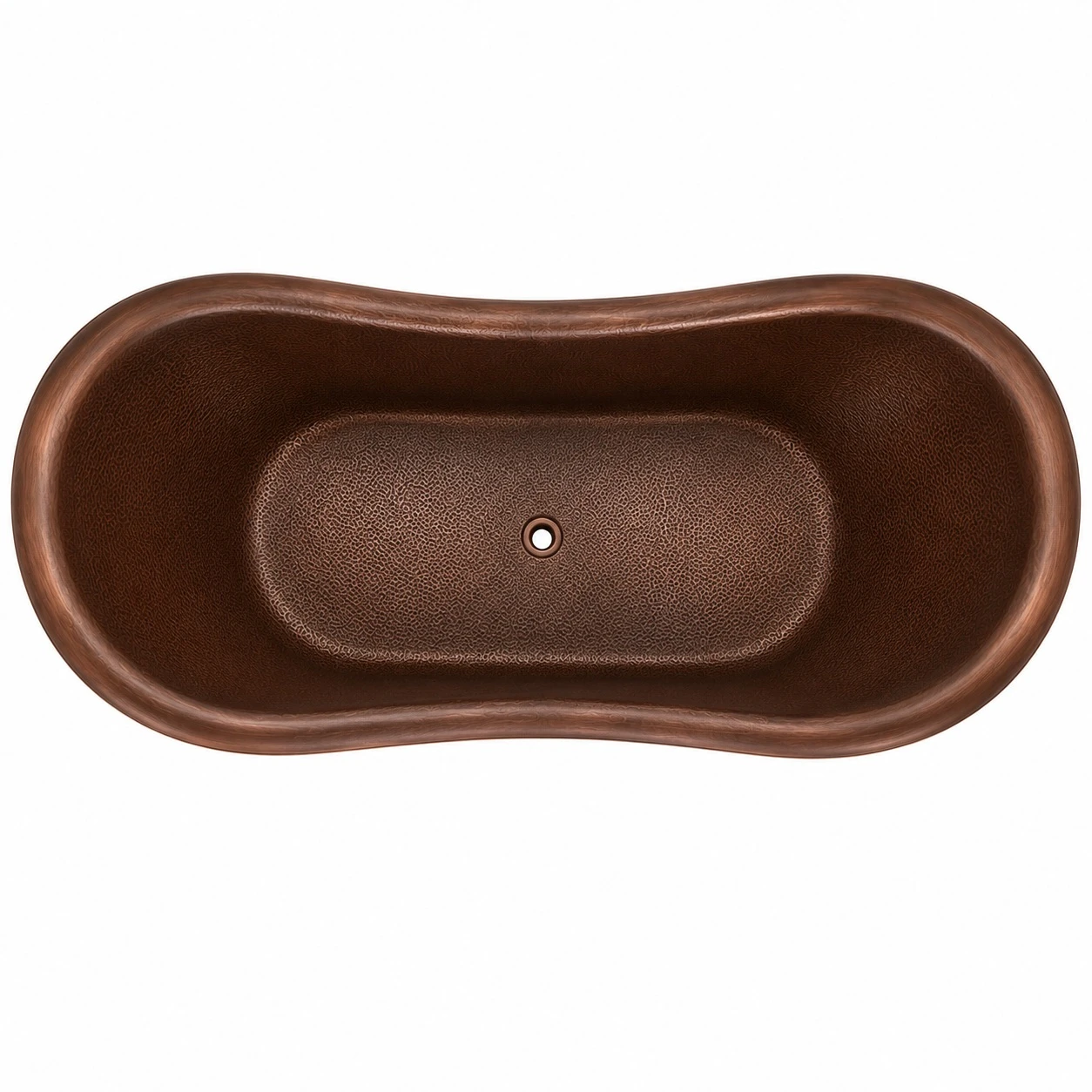
The top view helps with layout planning because it shows the bathtub opening, rolled rim, symmetrical double slipper shape, and center drain location. A center drain can work well in a double slipper bathtub because the raised ends remain available for reclining from either side. Before installation, confirm the drain position, trap location, floor structure, and faucet reach. The top view also helps designers understand how much floor space should remain around the tub for movement, cleaning, and visual balance.
Hand-Hammered Copper
The hand-hammered copper surface gives this bathtub its artisan identity. Hammer marks create subtle highs and lows across the metal, allowing light to move differently across the curved body. This texture helps the bathtub feel handcrafted rather than factory-flat. It also supports the natural beauty of copper by adding visual depth to the Coffee patina. Hammered copper works especially well in bathrooms with stone, plaster, wood, bronze hardware, clay tile, iron lighting, and natural textiles. To compare related handmade tub designs, browse the hammered copper bathtubs collection.
Coffee Patina Finish
The Coffee patina gives the bathtub a darker and more grounded appearance than bright natural copper. Its deep brown tone works beautifully with warm stone, limestone, travertine, wood vanities, bronze fixtures, black iron accents, and cream plaster walls. The finish also emphasizes the hammering because raised areas can catch warmer highlights while recessed areas appear deeper. In luxury bathrooms, Coffee patina creates a calm, rich, and aged look. It is especially useful when the design goal is artisan warmth without the stronger shine of polished copper.
Patina Benefits
- Tone: Deep coffee finish
- Depth: Highlights hammering
- Warmth: Adds rich copper color
- Style: Rustic luxury look
- Pairing: Works with stone
Copper Finish Options
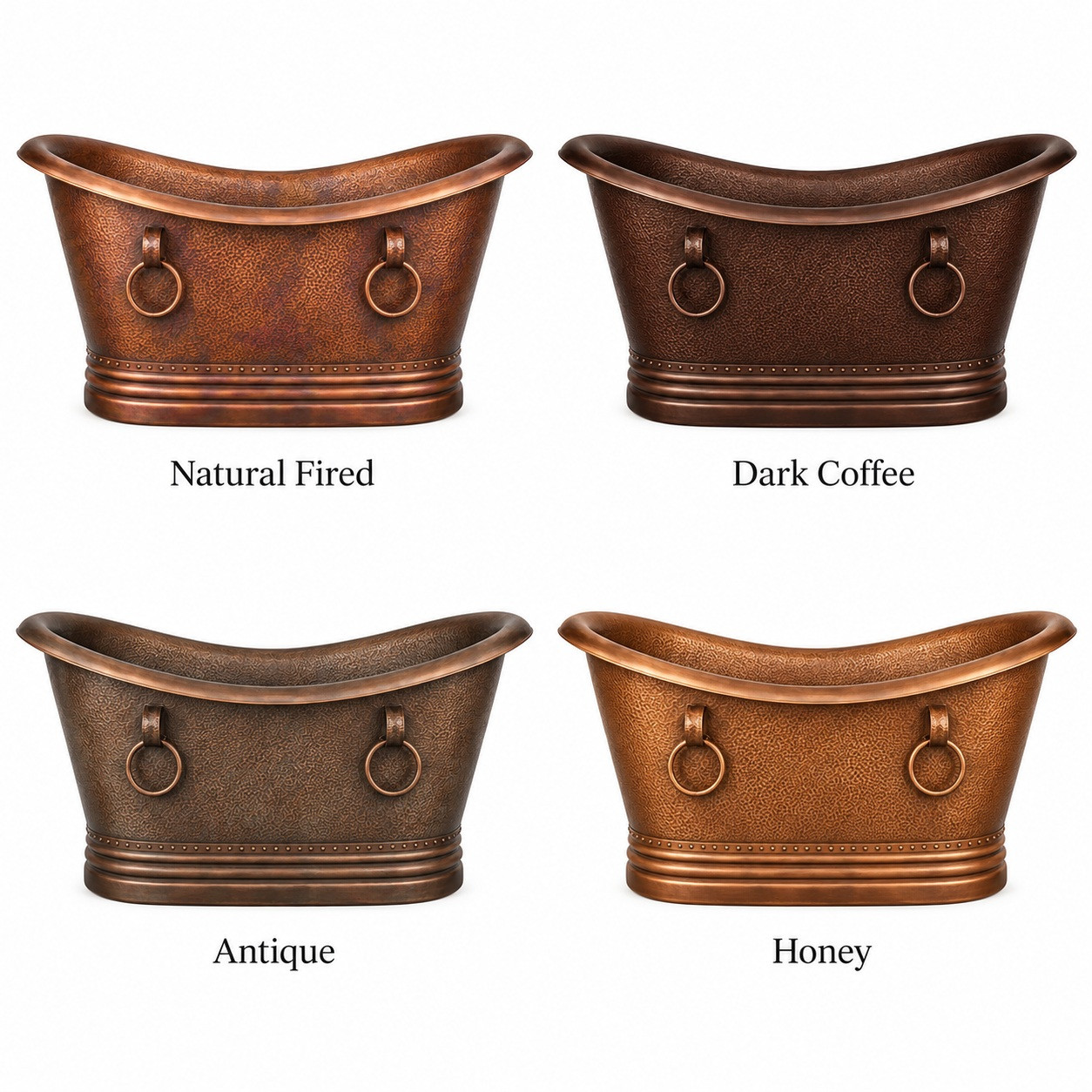
This bathtub can be planned in several copper finish options. Natural Fired offers lively copper movement with warm reddish and bronze variation. Dark Coffee creates the deeper look shown in the main image. Antique provides a softer aged effect. Honey gives the bathtub a warmer golden copper tone. Because copper patinas are applied by hand, finish samples and product images should be treated as guides rather than exact color promises. Bathroom lighting, wall color, flooring, and surrounding fixtures can also change how the finish appears.
Freestanding Placement
A freestanding copper bathtub gives the bathroom more design flexibility than a built-in tub. It can be placed near a window, centered beneath a chandelier, positioned against a feature wall, or used in an open bathing area. Because the full exterior is visible, the hammered copper surface and double slipper profile become part of the room’s architecture. This type of bathtub works best when there is enough clearance around the tub for cleaning, movement, and visual breathing room. To compare related layouts, review the freestanding copper bathtubs category.
72 Inch Size
The 72 inch length gives this bathtub a spacious soaking presence. Larger than many compact tubs, it is well suited for primary bathrooms, spa-style suites, and luxury remodels where comfort matters. The length supports a more relaxed bathing posture, while the raised slipper ends provide back support. Because the tub is substantial, the bathroom should be planned carefully around its footprint. Flooring, faucet placement, drain location, walkways, wall clearances, and sightlines should be considered before installation. A 72 inch copper tub should feel generous and intentional, not crowded into a small space.
Size Planning
- Length: Generous 72 inch body
- Space: Plan room clearance
- Drain: Confirm floor layout
- Faucet: Choose proper reach
- View: Center the tub well
Technical Drawing and Dimensions
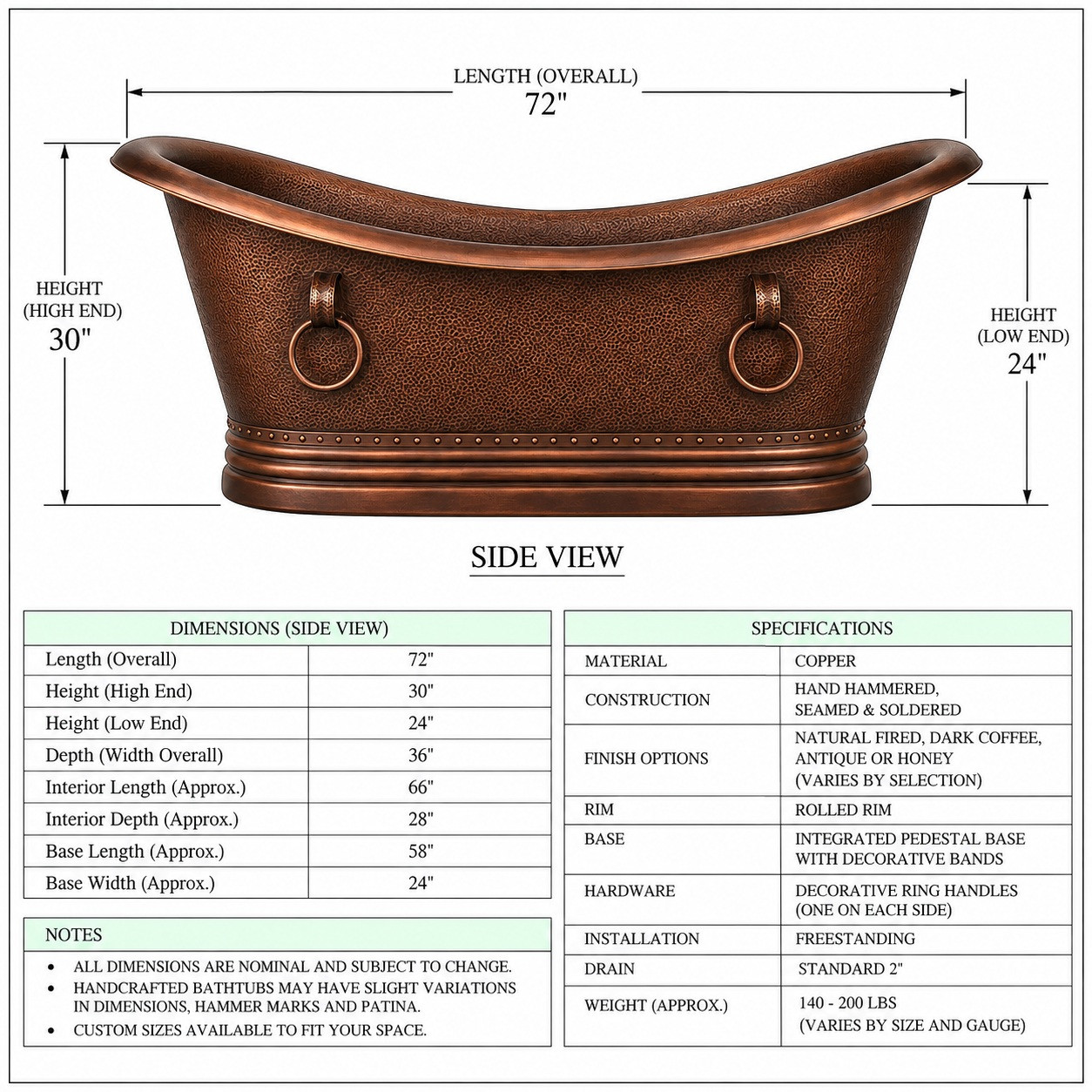
The technical drawing helps confirm the bathtub’s length, width, height, double slipper profile, pedestal base, rolled rim, and drain position before installation. This is useful for homeowners, interior designers, contractors, plumbers, and tile installers because a freestanding bathtub affects the floor plan, sightlines, plumbing layout, and delivery path. Before ordering, compare the drawing with the bathroom’s finished dimensions, door openings, floor structure, faucet location, and drain rough-in. The tub should have enough clearance to look intentional from the front, side, end, and angle views.
Pedestal Base
The pedestal base gives the bathtub a raised and finished appearance. Instead of resting directly on the floor with a plain bottom edge, the base creates a more sculptural transition between the tub body and the floor surface. This detail helps the bathtub feel substantial and intentional. It also supports traditional, Tuscan, Mediterranean, rustic, and luxury bathroom styles. When paired with stone flooring or handmade tile, the pedestal base makes the tub look grounded without needing claw feet or heavy decorative supports. The design feels classic, stable, and refined.
Rolled Rim Detail
The rolled rim adds comfort, strength, and visual softness to the bathtub. It creates a rounded edge along the top of the tub, helping the copper body feel finished and substantial. The rim also complements the double slipper profile by following the raised ends and lower center section. In a hand-hammered bathtub, the rolled rim catches light differently from the body, adding another layer of metal detail. This feature is especially attractive in bathrooms where the tub is viewed from several angles. It gives the bathtub a crafted edge without adding excessive ornament.
Decorative Ring Accents
Decorative copper ring accents add a traditional detail to the bathtub body. These rings create visual points of interest without changing the overall clean double slipper shape. They can also reinforce the handcrafted character of the piece by suggesting older bathing vessels and artisan metalwork. In rustic or Tuscan bathrooms, ring accents coordinate well with iron lighting, bronze hardware, carved wood, and stone surfaces. In transitional bathrooms, they add a small amount of ornament while allowing the tub’s shape and patina to remain the main focus. The result feels detailed but still balanced.
Detail Features
- Rim: Rounded finished edge
- Base: Raised pedestal support
- Rings: Decorative side accents
- Texture: Hammered copper body
- Finish: Coffee patina depth
Luxury Bathroom Use
In a luxury bathroom, this copper bathtub can become the main sculptural element. Its size, patina, and double slipper profile give the room a sense of comfort and craftsmanship. Pair it with stone floors, wall sconces, plaster walls, warm wood vanities, and understated fixtures. The bathtub should have enough surrounding space to be appreciated from the front, side, end, and angle views. A freestanding filler or wall-mounted tub faucet can work depending on plumbing layout. The goal is to make the tub feel central, calm, and permanent rather than simply decorative.
Tuscan Bathroom Style
Tuscan bathrooms often use warm stone, plaster walls, aged wood, bronze hardware, and earthy color palettes. A Coffee patina copper bathtub fits this style naturally because the dark finish coordinates with terracotta, travertine, limestone, and rustic wood. The hammered texture supports the handmade atmosphere, while the double slipper shape adds elegance. Pair the tub with iron lighting, textured walls, and natural flooring for a stronger old-world effect. Avoid overly polished chrome or cold white surfaces if the goal is a warmer Tuscan mood. The copper should feel connected to the room’s natural materials.
Mediterranean Bathroom Style
Mediterranean bathrooms often combine stone, plaster, warm metals, arched openings, patterned tile, and soft natural light. This copper bathtub supports that environment because its Coffee patina feels aged and rich. The double slipper silhouette brings graceful movement, while the hammered surface adds depth. It can be paired with limestone floors, hand-painted tile borders, bronze fixtures, and textured cream walls. If decorative tile is used, keep the surrounding palette controlled so the tub remains the focal point. The best Mediterranean bathrooms feel relaxed, layered, and warm rather than overly formal.
Style Pairings
- Tuscan: Stone and aged wood
- Mediterranean: Tile and plaster
- Rustic: Iron and natural floors
- Transitional: Clean stone surfaces
- Lodge: Beams and warm walls
Farmhouse Bathroom Use
In a farmhouse bathroom, a hand-hammered copper bathtub adds warmth and character against painted walls, wood vanities, simple mirrors, and natural flooring. The Coffee finish works especially well with white, cream, gray, sage, and dark wood palettes. A freestanding copper tub can make the room feel more personal than a standard acrylic or porcelain fixture. The double slipper shape adds comfort, while the pedestal base keeps the tub visually grounded. Use simple textiles, aged brass or bronze fixtures, and soft lighting to keep the farmhouse look warm and comfortable.
Transitional Bathroom Use
Transitional bathrooms combine clean surfaces with warmer traditional elements. This copper bathtub can provide the artisan focal point that keeps the room from feeling too plain. Pair it with neutral stone floors, simple wall tile, a clean-lined vanity, and restrained hardware. The Coffee patina adds depth, while the double slipper shape brings soft curvature into the room. To avoid a crowded look, keep nearby materials calm and allow the bathtub to lead. The contrast between smooth stone and hammered copper can make the bathroom feel refined, warm, and intentionally designed.
Rustic Lodge Bathroom Use
Rustic lodge bathrooms often include wood beams, stone walls, leather accents, iron lighting, and large windows. A 72 inch copper bathtub works well in this setting because it has enough visual weight to stand beside strong natural materials. The Coffee patina feels warm and substantial, while the hammered surface reflects firelight, daylight, or chandelier light in a soft way. Place the tub where it can be viewed as a centerpiece, not hidden in a corner. The best lodge-style bathrooms use the copper tub to balance rugged architecture with soaking comfort.
Installation Planning
Installation planning should begin before the bathtub arrives. Confirm floor strength, plumbing location, drain alignment, faucet type, water supply lines, and access for delivery. A 72 inch copper tub can be large and heavy, so pathways, doorways, stairs, and room entry points should be measured. Freestanding tubs also require careful faucet selection because the spout must reach the basin comfortably. Floor-mounted fillers, wall-mounted faucets, or tub-mounted fixtures may be possible depending on the model and plumbing plan. Professional installation is recommended when floor reinforcement, drain relocation, or new plumbing is required.
Install Checks
- Floor: Confirm support
- Drain: Align plumbing early
- Faucet: Check spout reach
- Access: Measure doorways
- Pro: Use licensed help
Copper Bathtub Care
Copper bathtubs should be cleaned gently to protect the finish and patina. Use mild soap, warm water, and a soft cloth after bathing. Avoid abrasive pads, harsh cleaners, bleach, ammonia, acidic products, and aggressive polishing compounds. These can affect the Coffee patina or scratch the hammered surface. Rinse away bath products after use and dry the tub if water spotting is a concern. Copper naturally changes over time, and that aging is part of its character. For broader cleaning and ownership guidance, review the copper bathtub cleaning and care guide.
Hammered Bathtub Benefits
Hammered copper bathtubs are valued because they combine useful bathing comfort with visible handmade craftsmanship. The texture makes the surface more dimensional than smooth metal and can help the tub feel warmer within the bathroom design. Hammering also interacts beautifully with patina, creating varied highlights across curved areas. Because every handcrafted surface has natural variation, the tub does not feel mass produced. This makes it a strong choice for homeowners who want a bathroom fixture that feels personal, durable, and visually distinctive. Learn more about related designs in the hammered copper bathtubs article.
Common Questions
What makes this copper bathtub distinctive?
The 72 inch length, double slipper shape, hand-hammered copper surface, Coffee patina, pedestal base, rolled rim, and ring accents make it distinctive.
Is this bathtub freestanding?
Yes. This bathtub is designed as a freestanding centerpiece and should be planned with clearance around the visible copper body.
What finish is shown in the main image?
The main product image shows a Coffee patina with deep brown copper tone and warm hammered highlights.
What bathroom styles fit this tub?
It works well in Tuscan, Mediterranean, farmhouse, rustic lodge, transitional, luxury spa, and traditional bathroom designs.
Why choose a double slipper bathtub?
A double slipper bathtub has two raised reclining ends, giving the tub balanced shape and comfortable soaking support from either side.
What should be checked before installation?
Confirm floor support, delivery access, drain alignment, faucet reach, water supply lines, surrounding clearance, and professional installation needs.
Can this tub be used near a window?
Yes. A 72 inch freestanding copper bathtub can look beautiful near a window when privacy, clearance, flooring, and plumbing are planned correctly.
How should the copper surface be cleaned?
Use mild soap, warm water, and a soft cloth. Avoid abrasives, acidic products, bleach, ammonia, and aggressive polishing compounds.
Will the copper patina change?
Yes. Copper naturally develops tonal movement from air, water, touch, bath products, cleaning habits, humidity, and light exposure.
Why are handmade variations expected?
Each tub is hand formed and hammered, so surface movement, rim character, patina variation, and small artisan irregularities are normal.
Design Summary
A 72 inch hand-hammered copper bathtub with double slipper shape is ideal for bathrooms that need comfort, warmth, and artisan presence. The raised ends support reclining, the lower center improves access, and the rolled rim gives the tub a finished edge. Coffee patina adds depth and coordinates with stone, wood, plaster, bronze, and iron accents. The pedestal base and decorative rings give the design a substantial traditional character. Whether used in Tuscan, Mediterranean, farmhouse, rustic lodge, luxury, or transitional bathrooms, this tub works best when it has enough space to stand as the room’s focal point.
Final Design Guidance
72 Inch Hand-Hammered Copper Bathtub Double Slipper Guide shows how size, shape, patina, and placement work together in a luxury bathroom. Choose this bathtub when the room needs a freestanding centerpiece with deep soaking comfort and handmade copper character. Plan the floor support, drain location, faucet reach, delivery path, and surrounding clearance before installation. Pair the Coffee patina with stone, plaster, warm wood, bronze fixtures, soft lighting, and natural textures. When planned carefully, this 72 inch hand-hammered copper bathtub adds comfort, craftsmanship, and lasting visual warmth to the bathroom.