 US Dollar
 Euro
Euro
 Australian Dollar
 Canadian Dollar
 Polish Zloty
 British Pound

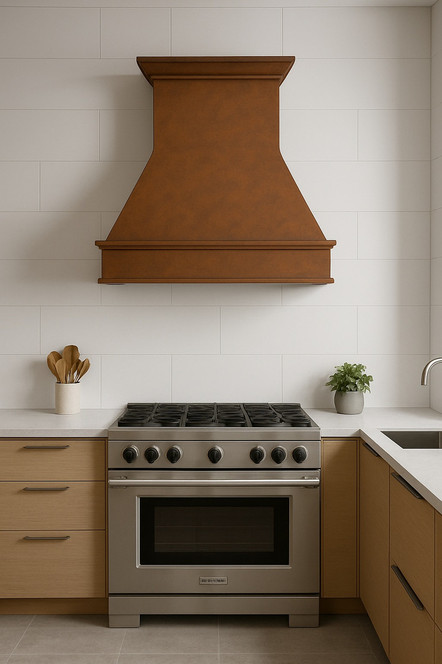
48-Inch Copper Range Hood: Custom Ventilation for a Statement Kitchen
A 48-inch copper range hood offers the scale, visual presence, and ventilation flexibility required for larger residential kitchens. Its generous width makes it especially suitable for professional-style ranges, wide cooktops, and cooking areas designed as architectural focal points. Handcrafted in Mexico, a 48-inch copper range hood combines traditional metalworking with custom dimensions, decorative finishes, and modern ventilation compatibility. Whether installed in a farmhouse, Spanish Colonial, Mediterranean, or transitional kitchen, it creates a warm centerpiece designed around the proportions and functional requirements of the room.
Blog Summary
- Product: 48-inch copper range hood
- Best For: Wide ranges and cooktops
- Depth: Commonly 24 inches
- Options: Wall or island mounting
- Craft: Handmade in Mexico

Why Choose a 48-Inch Copper Hood?
A 48-inch hood provides substantial coverage without reaching the oversized proportions required for restaurant-style installations. It works especially well in medium and large kitchens where the cooking area needs a stronger visual anchor than a standard stainless steel insert or compact canopy can provide.
This width also gives artisans enough surface area to incorporate decorative straps, rivets, moldings, aprons, and hand-hammered textures without making the design feel crowded.
Match the Hood to the Cooking Surface
Hood sizing should begin with the range or cooktop. In many kitchen layouts, the hood is designed wider than the cooking surface to improve coverage and create balanced proportions. For example, a 48-inch hood may be paired with a narrower range when the surrounding cabinetry and ventilation plan allow it.
The exact recommendation should consider the appliance manufacturer’s requirements, cooking intensity, hood depth, mounting height, blower capacity, and local building regulations.
Important Measurements
- Hood Width: 48 inches
- Typical Depth: About 24 inches
- Height: Customized to ceiling
- Insert Space: Confirm before production
- Mounting: Wall or kitchen island
Allow Space for the Ventilation Insert
A custom copper hood must be built around the selected ventilation insert. The internal opening, hood depth, liner requirements, duct connection, and service access should all be verified before production begins.
As a practical guideline, the insert should be narrower and shallower than the exterior hood so there is sufficient space for installation, support, and airflow. Supplying the complete insert specification sheet before production helps prevent compatibility problems at the installation stage.
Wall-Mounted and Island Configurations
A 48-inch copper hood can be designed for installation against a wall or above a central kitchen island. Wall-mounted models often coordinate with cabinetry, tile backsplashes, and architectural surrounds. Island hoods must be finished attractively on all sides because they remain visible throughout the room.
Island installations may also require additional structural planning, ceiling support, and careful duct routing. A contractor should verify these conditions before ordering.
Installation Options
- Wall Mount: Traditional cooking wall
- Island Mount: Finished on all sides
- Ducted: Vents air outdoors
- Recirculating: Filters and returns air
- Insert Ready: Built for selected blower
Hand-Hammered Copper Texture
Hand-hammering adds depth and movement to the copper surface. The small impressions created by the artisan reflect light differently across the hood, making the finish appear richer throughout the day.
Hammered copper also gives the appliance a traditional handcrafted appearance that pairs naturally with wood cabinetry, stone countertops, plaster walls, and handmade tile.
Smooth Copper for a Cleaner Look
For a more contemporary or transitional kitchen, the hood may be produced with a smoother surface. Smooth copper emphasizes the shape and silhouette rather than the texture, creating a cleaner architectural statement.
This option works well with flat-panel cabinets, polished countertops, minimalist lighting, and simpler decorative straps.
Choose the Right Copper Patina
The finish determines whether the hood feels rustic, formal, aged, or contemporary. Warm antique finishes create an Old World character, while lighter natural copper feels brighter and more modern. Darker coffee patinas add depth and contrast against light cabinetry.
Popular Copper Finishes
- Natural: Bright copper warmth
- Antique: Traditional aged character
- Coffee: Rich brown appearance
- Dark Coffee: Dramatic contrast
- Custom Patina: Project-specific finish
Decorative Straps and Rivets
A 48-inch hood offers ample room for decorative metalwork. Straps may be installed vertically, horizontally, or in a combined layout. Rivets can be added along the straps, apron, or molding to emphasize the handcrafted construction.
These details may be produced in matching copper or contrasting metals such as brass or iron, depending on the desired kitchen style.
Decorative Options
- Vertical Straps: Emphasize height
- Horizontal Bands: Define proportions
- Rivets: Handcrafted detail
- Apron: Decorative lower edge
- Crown: Finished upper molding
Styles That Work with a Copper Hood
Copper is remarkably adaptable. In a farmhouse kitchen, it complements reclaimed wood and apron-front sinks. In Spanish Colonial interiors, it pairs with Talavera tile, dark iron, and carved cabinetry. Transitional kitchens use copper to soften white, gray, or cream surfaces, while Mediterranean spaces benefit from its warm, aged character.
Compatible Kitchen Styles
- Farmhouse: Warm rustic centerpiece
- Spanish Colonial: Artisan character
- Mediterranean: Old World elegance
- Transitional: Traditional-modern balance
- Contemporary: Sculptural metal feature
Pairing Copper with Cabinetry
White and cream cabinets allow copper to become the dominant focal point. Dark wood creates a richer, more traditional environment, while pale oak or walnut produces a softer transitional look.
The hood can also coordinate with cabinet hardware, faucets, lighting, or a copper sink without requiring every metal finish in the kitchen to match exactly.
Backsplash and Countertop Pairings
A 48-inch copper hood looks especially striking above handcrafted tile, natural stone, brick, or plaster. A restrained backsplash allows the metalwork to lead the design, while colorful Talavera tile creates a stronger Hacienda or Spanish Colonial appearance.
Quartz, granite, marble, soapstone, and wood counters can all complement copper when their color and texture are selected with the hood finish in mind.
Recommended Materials
- Talavera Tile: Colorful artisan detail
- Natural Stone: Timeless texture
- Brick: Rustic architectural depth
- Plaster: Soft neutral backdrop
- Wood: Warm material balance
Ducted or Recirculating Ventilation
A ducted hood moves cooking air outside the home and is generally preferred when the kitchen layout permits exterior venting. A recirculating configuration filters grease and odors before returning the air to the room, making it useful where exterior ductwork is unavailable.
The selected insert must be designed for the intended ventilation method. The contractor should also confirm duct diameter, electrical requirements, clearances, and local code compliance.
Blower Capacity and Cooking Habits
Blower capacity should reflect the range output, cooking frequency, kitchen size, duct length, and appliance manufacturer’s specifications. Homeowners who cook frequently with high heat may require a more powerful insert than those using an electric cooktop for lighter meals.
The exterior copper hood can be customized around many third-party inserts, provided the complete dimensions and installation requirements are reviewed before fabrication.
Custom Height for the Kitchen
The hood height should be selected according to the ceiling, mounting location, cabinetry, and desired proportions. Tall ceilings may require a longer chimney or a hood produced in separate sections for easier transport and installation.
A shorter hood may suit an under-cabinet configuration, while a tall tapered model can emphasize vertical space in a large open kitchen.
Professional Installation
Because a 48-inch metal hood can be substantial in size and weight, professional installation is strongly recommended. The installer should verify wall or ceiling support, electrical connections, duct alignment, insert mounting, and the manufacturer’s required clearance above the cooking surface.
Planning these elements before production helps ensure the finished hood fits correctly and performs as intended.
Pre-Order Checklist
- Range Size: Confirm exact dimensions
- Insert PDF: Provide specification sheet
- Ceiling Height: Measure finished space
- Duct Route: Confirm with contractor
- Mounting Support: Prepare before delivery
Copper Hood Care
Routine cleaning should be gentle. Use mild soap, warm water, and a soft cloth to remove dust or cooking residue. Avoid abrasive pads, acidic cleaners, bleach, and aggressive metal polish unless the finish was specifically designed to be polished.
Copper is a living material, so subtle tonal changes may develop over time. Many homeowners value this natural evolution because it adds depth and individuality to the hood.
Maintenance Tips
- Clean: Mild soap and water
- Dry: Use a soft cloth
- Avoid: Harsh chemicals
- Filters: Clean as recommended
- Patina: Expect natural variation
Why Choose a Handmade 48-Inch Hood?
A handmade hood offers the ability to control the dimensions, silhouette, texture, finish, straps, rivets, apron, and insert compatibility. Instead of adapting the kitchen to a standard appliance shell, the hood can be designed around the actual room and cooking equipment.
Every hand-hammered surface also carries slight variations that distinguish the piece from factory-produced ventilation covers.
Ordering and Project Planning
Before ordering, finalize the hood width, overall height, depth, finish, mounting type, and ventilation insert. If using a third-party insert, provide the manufacturer’s full specification document rather than only the model name.
Visit the 48-inch copper range hood product page to review the available design, or explore additional custom copper range hood ideas for finish and style inspiration.
Conclusion
A 48-inch copper range hood provides an ideal combination of coverage, custom design, and architectural impact for larger home kitchens. With options for hand-hammered or smooth copper, custom patinas, decorative straps, wall or island mounting, and compatibility with selected ventilation inserts, it can be built around both the room and the homeowner’s cooking needs. Handmade in Mexico, the finished hood becomes a functional ventilation enclosure and a lasting centerpiece shaped by authentic artisan metalwork.