 US Dollar
 Euro
Euro
 Australian Dollar
 Canadian Dollar
 Polish Zloty
 British Pound

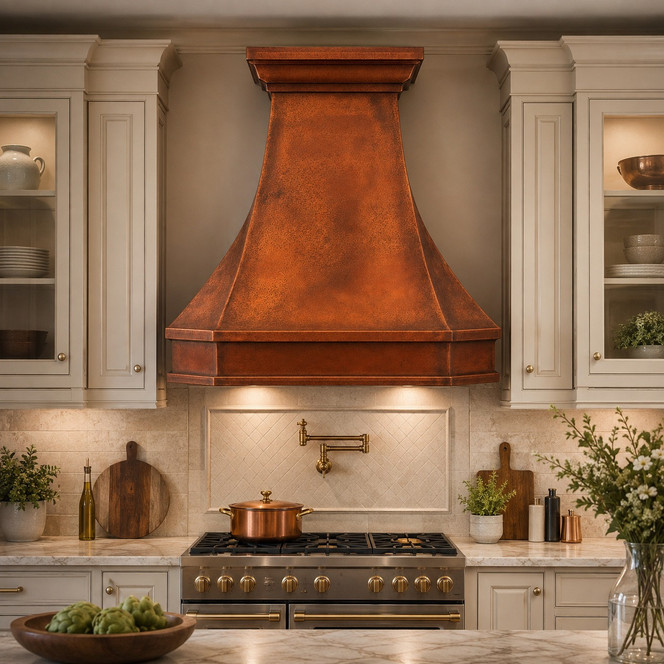
30-Inch Copper Range Hoods: Compact Artisan Ventilation for Smaller Kitchens
30-inch copper range hoods combine efficient kitchen ventilation with the warmth, texture, and architectural presence of handcrafted metalwork. Designed for compact ranges, apartments, breakfast kitchens, guest houses, and smaller remodeling projects, these hoods provide a distinctive alternative to ordinary stainless steel appliances. A 30-inch copper range hood can be customized in height, depth, mounting style, texture, patina, and internal ventilation preparation, allowing the appliance to fit both the cooking equipment and the surrounding cabinetry. Whether the kitchen is farmhouse, Spanish Colonial, rustic, transitional, or contemporary, a handmade copper hood introduces enduring character without requiring an oversized cooking wall.
Blog Summary
- Product: 30-inch copper range hood
- Best For: Compact kitchen ranges
- Mounting: Wall, island, or cabinet
- Options: Patinas and custom inserts
- Craft: Handmade in Mexico
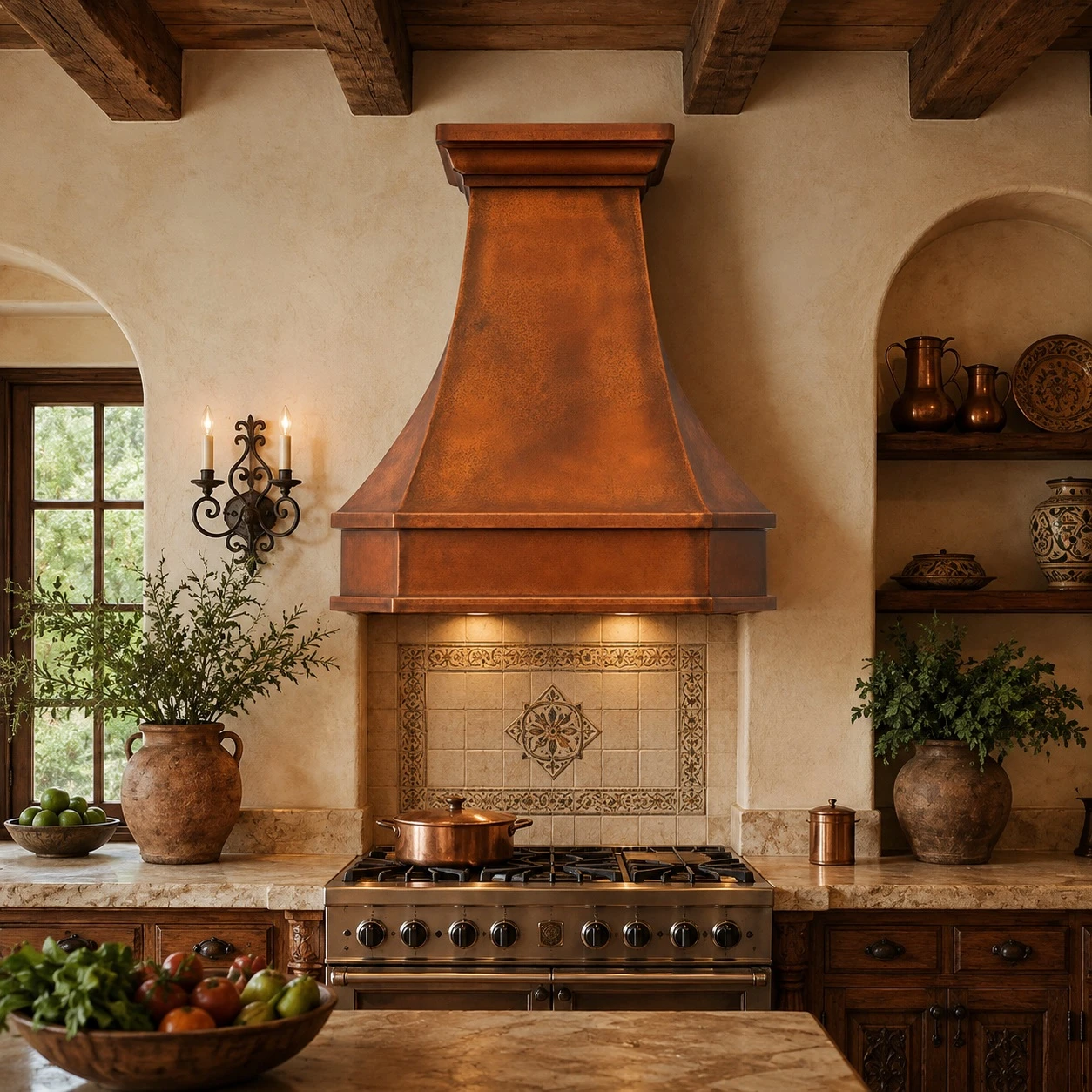
What Is a 30-Inch Copper Range Hood?
A 30-inch copper range hood is a decorative metal enclosure generally designed for use above a compact cooking range or cooktop. The copper shell provides the visible architectural form, while the internal insert contains the blower, filters, lighting, and controls.
The hood may be ducted outdoors or configured for recirculation when the selected insert supports that function.
Why the 30-Inch Size Is Popular
A 30-inch range is common in apartments, townhomes, guest kitchens, small family homes, and compact renovation projects. Matching the hood to this scale helps preserve cabinet space while still creating an attractive focal point above the cooking surface.
The smaller width also makes artisan metalwork accessible in rooms where a 42-, 48-, or 60-inch hood would dominate the architecture.
Ideal Applications
- Apartments: Compact cooking layouts
- Guest Houses: Smaller kitchen spaces
- Breakfast Kitchens: Secondary cooking areas
- Townhomes: Limited cabinet openings
- Renovations: Existing 30-inch ranges
More Than a Functional Appliance
A range hood removes or filters smoke, steam, grease, heat, and cooking odors. When the enclosure is handmade from copper, the appliance also becomes a visible part of the kitchen design.
Instead of disappearing beneath cabinetry, the hood introduces color, texture, and artisan detail above the stove.
Handcrafted in Mexico
Each copper hood is individually produced by experienced Mexican metalworkers. Copper sheets are measured, cut, formed, hammered, joined, and finished according to the dimensions and configuration selected for the project.
This process allows the hood to respond to the kitchen rather than forcing the homeowner to work around a standardized factory shell.
Artisan Characteristics
- Hand Formed: Individual metal silhouette
- Hand Hammered: Artisan texture
- Hand Finished: Applied copper patina
- Custom Built: Project dimensions
- Made in Mexico: Traditional metalwork
Hammered Copper Texture
Hammered copper remains one of the most recognizable surfaces for custom range hoods. Small impressions created by hand reflect light differently across the front and sides, giving the metal depth and movement.
The texture also reinforces rustic, Spanish Colonial, Hacienda, farmhouse, Southwestern, and Mediterranean design.
Smooth Copper Finish
A smoother copper surface creates a cleaner and more architectural appearance. It places greater attention on the hood silhouette, patina, apron, straps, and surrounding cabinetry.
Smooth copper works especially well in transitional and contemporary kitchens, although subtle handmade variation may still remain visible.
Surface Options
- Hammered: Traditional artisan texture
- Smooth: Refined architectural surface
- Light Hammering: Subtle visual movement
- Deep Hammering: Strong rustic character
- Custom Texture: Project-specific finish
Natural Copper Patina
Natural copper displays reddish, golden, and warm brown tones. It works well in transitional, farmhouse, contemporary, and rustic kitchens where the metal should remain bright and expressive.
The finish may continue developing additional tonal depth as the copper responds to air, moisture, cleaning, and everyday kitchen use.
Coffee and Antique Patinas
Coffee and antique finishes create deeper brown tones associated with aged architectural metalwork. These patinas pair naturally with wood cabinetry, plaster walls, stone, handmade tile, and black iron.
Darker copper also creates strong contrast against white, cream, and light-gray kitchens.
Oxidized Green Copper
Green and turquoise oxidation can create a more artistic finish inspired by naturally weathered copper. The effect may cover the entire hood or appear selectively around seams, edges, and decorative details.
This patina works particularly well against neutral cabinetry and simple backsplashes where the hood is intended to become the main color feature.
Patina Options
- Natural: Warm reddish copper
- Antique: Traditional aged tone
- Coffee: Rich brown appearance
- Dark Coffee: Deeper dramatic finish
- Oxidized: Green and turquoise variation
Copper as a Living Finish
Copper is a living material that changes gradually with exposure to air, moisture, oils, heat, and cleaning products. The surface may darken, lighten, or develop additional tonal variation over time.
These changes are natural characteristics of genuine copper and contribute to the individuality of the hood.
Wall-Mounted 30-Inch Hoods
A wall-mounted hood is installed above a range positioned against a wall. The front and two sides are finished, while the back remains open against the mounting surface.
This configuration integrates naturally with cabinetry, tile backsplashes, shelves, and plaster cooking walls.
Under-Cabinet Copper Hoods
An under-cabinet hood fits beneath the bottom of an upper cabinet or built-in enclosure. This design is useful when vertical space is limited or when the homeowner wants to retain more storage above the range.
The compact form should still provide sufficient internal space for the selected ventilation insert.
Island Copper Hoods
A 30-inch island hood can be suspended above a compact cooktop located within a kitchen island. Because the hood remains visible from all directions, all four sides must be finished attractively.
Island models also require ceiling support, carefully planned ductwork, and balanced proportions.
Mounting Configurations
- Wall Mount: Installed against wall
- Under Cabinet: Compact cabinet placement
- Island Mount: Finished on four sides
- Ceiling Mounted: Suspended installation
- Custom: Project-specific configuration
Choosing the Correct Hood Width
The hood width should be evaluated together with the cooking surface, mounting height, blower performance, cabinet spacing, and manufacturer requirements. Some projects use a hood that matches the range width, while others provide additional coverage beyond the cooktop.
A contractor or ventilation professional should confirm the final dimensions before production.
When a Wider Hood May Be Better
A 30-inch range does not always require a 30-inch hood. Intensive cooking, high-output burners, elevated mounting, or an open island layout may benefit from a wider enclosure and capture area.
When space permits, homeowners may consider a 36-inch hood above a 30-inch range for additional side coverage.
Sizing Considerations
- Range Width: Confirm cooking surface
- Cabinet Opening: Measure available space
- Mounting Height: Follow specifications
- Cooking Style: Consider heat and grease
- Capture Area: Review side coverage
Standard Hood Depth
A standard copper range hood depth is commonly around 24 inches. This dimension provides room for the insert and helps cover the front burners on many residential ranges.
Custom depths may be produced when the cooking appliance or insert requires additional clearance.
Custom Height
The hood height depends on ceiling height, mounting clearance, cabinetry, ductwork, and the desired visual proportions. A compact kitchen may require a shorter chimney, while a high ceiling can support a taller architectural profile.
Custom height allows the hood to appear integrated rather than undersized or excessively elongated.
Key Dimensions
- Width: Based on cooking area
- Height: Adapted to ceiling
- Depth: Commonly about 24 inches
- Chimney: Sized for duct route
- Insert Opening: Built to specifications
Ventilation Insert Planning
The copper enclosure and ventilation insert must be planned together. Before production begins, provide the insert brand, model, complete dimensions, duct position, liner requirements, and technical documentation.
The interior of the copper hood can then be prepared around the selected system.
Economy 200 CFM Insert
Rustica House offers an economy 200 CFM insert for lighter residential cooking applications. This option includes basic ventilation, filtering, and lighting inside the decorative copper shell.
Homeowners who cook frequently or use higher-output appliances may require a more powerful buyer-supplied system.
Buyer-Supplied Inserts
The hood can be prepared for an internal ventilation insert rated up to approximately 1,200 CFM or an external blower system rated up to approximately 1,500 CFM when complete specifications are provided before production.
The buyer purchases the ventilation equipment separately, and the internal copper construction is customized around the submitted documentation.
Insert Information Needed
- Brand: Confirm manufacturer
- Model: Provide exact number
- Width: Verify full dimension
- Depth: Confirm internal clearance
- Specifications: Submit technical sheet
Ducted Ventilation
A ducted range hood moves cooking air outside through approved metal ductwork. This configuration is generally preferred when the kitchen allows a practical exterior vent route.
The duct diameter, route, number of elbows, termination, and local requirements should be reviewed by the installer.
Recirculating Ventilation
A recirculating hood filters cooking air and returns it to the kitchen. This option may be useful in apartments, interior kitchens, or buildings where exterior ducting is not available.
The insert must support recirculation, and the copper hood may require side openings so filtered air can return to the room.
Ventilation Methods
- Ducted: Exhausts air outdoors
- Recirculating: Returns filtered air
- Internal Blower: Motor inside assembly
- External Blower: Remote motor location
- Side Vents: Recirculation outlet
Round Openings and Airflow
The decorative shell may be prepared with round duct openings according to the insert and ventilation plan. The opening size should follow the blower manufacturer’s requirements rather than being selected only by the hood width.
Reducing the duct below the specified diameter may restrict airflow and increase noise.
Decorative Aprons
The lower apron gives a compact copper hood greater architectural presence. It may remain simple or include embossed motifs, rivets, decorative borders, or layered metal details.
Even on a 30-inch hood, a carefully proportioned apron can make the appliance feel substantial without appearing oversized.
Straps and Rivets
Vertical or horizontal straps divide the copper surface and emphasize the hood’s proportions. Rivets can follow the straps, crown, apron, or seams to reinforce the handcrafted appearance.
These details may match the copper body or use contrasting iron, brass, or zinc.
Decorative Options
- Apron: Finished lower band
- Straps: Vertical or horizontal
- Rivets: Artisan metal detail
- Crown: Upper molding
- Embossing: Hand-hammered motif
Farmhouse Kitchen Design
A 30-inch copper hood works beautifully in a compact farmhouse kitchen with shaker cabinets, apron-front sinks, open shelves, wood counters, and handmade tile.
Hammered copper and a coffee patina add warmth without requiring a large architectural enclosure.
Spanish Colonial Kitchens
Spanish Colonial interiors combine copper, Talavera tile, carved wood, plaster, wrought iron, and terracotta. A small copper hood can reinforce this material palette while fitting between narrow cabinets.
Decorative straps, rivets, and darker patinas strengthen the Old World appearance.
Hacienda-Style Kitchens
Hacienda kitchens often emphasize handcrafted surfaces and warm natural materials. A copper hood above a compact range can become the central artisan feature even when the room itself is modest in size.
Pair it with plaster walls, dark wood, iron lighting, and colorful tile for a cohesive composition.
Traditional Pairings
- Talavera Tile: Colorful backsplash
- Dark Wood: Warm cabinetry
- Iron Lighting: Strong contrast
- Terracotta: Earthy flooring
- Plaster: Soft architectural wall
Transitional Kitchens
Transitional interiors combine traditional materials with cleaner forms. A smooth or lightly hammered 30-inch copper hood can add warmth above simple cabinetry without making the kitchen feel heavily rustic.
Natural copper works well with white, gray, walnut, oak, quartz, and understated hardware.
Contemporary Kitchens
A compact copper hood can become the only handcrafted focal point in a contemporary kitchen. Flat cabinetry, simple stone, and neutral walls allow the warm metal to stand out.
A restrained shape and minimal decoration generally work best in modern settings.
Industrial Kitchens
Natural copper can also complement exposed brick, black iron, concrete, stainless steel, and open shelving. The material adds warmth to an otherwise cool industrial palette.
Visible rivets and simple straps reinforce the straightforward fabricated appearance.
Compatible Styles
- Farmhouse: Handcrafted warmth
- Spanish Colonial: Historic detail
- Hacienda: Mexican artisan character
- Transitional: Balanced material contrast
- Contemporary: Sculptural focal point
Pairing with White Cabinets
White cabinets create clear contrast with copper and allow the hood to become the dominant feature above the range. Natural copper appears brighter, while coffee patinas create a richer traditional effect.
Warm hardware and lighting can connect the hood to the rest of the kitchen.
Pairing with Wood Cabinets
Copper and wood share warm undertones. Walnut and dark-stained wood support a formal Old World appearance, while oak and lighter finishes create a relaxed farmhouse or transitional look.
The hood should remain visually distinct from the cabinets rather than blending completely into them.
Cabinet Pairings
- White: Strong copper contrast
- Cream: Soft traditional warmth
- Walnut: Rich material depth
- Oak: Relaxed natural balance
- Gray: Transitional coordination
Backsplash Options
Talavera tile creates a colorful Mexican or Spanish Colonial backdrop, while stone, plaster, brick, and neutral ceramic keep attention on the metalwork.
When the hood includes straps, rivets, or a decorative apron, a simpler backsplash can prevent visual competition.
Backsplash Pairings
- Talavera: Artisan color
- Stone: Timeless natural texture
- Plaster: Soft neutral backdrop
- Brick: Rustic material depth
- Neutral Tile: Restrained support
Coordinating Copper Fixtures
The hood can be paired with a copper sink, cabinet hardware, lighting, cookware, or decorative accessories. Exact color matching is not necessary, but the finishes should share a compatible warm direction.
Review additional hand-hammered copper hood ideas for coordinated kitchen metalwork.
Mixed-Metal Design
Copper works well with black iron, brass, bronze, zinc, and stainless steel. A stainless range can sit below a copper hood without appearing mismatched when the room repeats both finishes intentionally.
Black iron lighting or cabinet hardware can help connect the warm hood with cooler appliances.
Compact Kitchens and Visual Proportion
A small kitchen still benefits from a strong focal point, but the hood must remain proportionate to the room. Excessive height, depth, or ornament can make the cooking wall feel crowded.
A 30-inch hood with a clean profile and controlled apron provides character while preserving visual openness.
Small Kitchen Storage Considerations
Installing a decorative hood may reduce upper-cabinet storage, especially when the enclosure extends to the ceiling. Plan nearby shelves, drawers, and pantry space before finalizing the design.
An under-cabinet hood may preserve more storage in especially compact layouts.
Small Kitchen Planning
- Cabinet Space: Review lost storage
- Depth: Preserve head clearance
- Height: Avoid oversized proportions
- Lighting: Maintain task illumination
- Ventilation: Fit insert correctly
Installation Preparation
A copper hood should be installed by a qualified contractor familiar with structural support, ductwork, electrical connections, appliance clearances, and ventilation inserts.
The installer should review the hood and insert documentation before cabinets, walls, and duct openings are finalized.
Installation Checklist
- Support: Prepare wall or ceiling
- Insert: Confirm exact compatibility
- Duct: Verify route and diameter
- Electrical: Plan power location
- Clearance: Follow appliance guidance
Professional Installation Is Recommended
Custom copper hoods are not intended to be treated like lightweight plug-in appliances. Their size, weight, insert, ductwork, and mounting require coordinated installation.
Professional work also helps protect the copper finish from dents, scratches, and improper handling.
Cleaning the Copper Surface
Use mild soap, warm water, and a soft cloth to remove dust and cooking residue. Dry the surface gently after cleaning.
Avoid abrasive pads, bleach, ammonia, acids, and aggressive copper cleaners that may damage or remove the patina.
Maintaining the Filters
Grease filters should be cleaned or replaced according to the insert manufacturer’s instructions. Regular maintenance supports airflow and reduces grease accumulation inside the hood.
The mechanical insert and decorative copper enclosure may require different cleaning products and schedules.
Care Tips
- Surface: Clean gently
- Dry: Use soft cloth
- Avoid: Harsh chemicals
- Filters: Maintain regularly
- Patina: Expect natural change
Polishing Copper
Polishing can remove or alter an applied patina, so it should not be used automatically on an antique, coffee, or oxidized hood. Homeowners who prefer a bright polished finish should confirm the recommended care method before cleaning.
For most artisan patinas, gentle soap-and-water maintenance is the safer approach.
Durability of Copper
Copper is a durable architectural metal that does not rust like iron. It may change color, develop patina, and show fine scratches, but these characteristics do not mean the material is failing.
With appropriate care and proper installation, a handmade copper hood can remain a long-term kitchen feature.
Understanding Handmade Variation
Small differences in hammering, dimensions, patina, seams, rivets, and edge shape are expected in handmade copper products. These characteristics confirm the artisan production process.
Lifestyle images should be treated as design inspiration, since the finished hood may vary slightly in color and surface detail.
Production and Delivery
Custom copper range hoods are made in central Mexico, packed for export, transported to the border, cleared through customs, and then transferred to a U.S. carrier for final delivery.
Production and delivery timing depends on customization, insert preparation, packing, customs processing, and destination.
Delivery Stages
- Production: Handmade in Mexico
- Inspection: Reviewed before packing
- Export: Transported toward border
- Customs: Cleared for U.S. entry
- Delivery: Final domestic carrier
Inspecting the Hood After Delivery
The receiving team should inspect the crate before signing for freight delivery. Visible damage should be documented on the delivery receipt and photographed immediately.
The hood should remain protected until the contractor is prepared to install it.
Why Custom Copper Stands Apart
Factory hoods are built around fixed dimensions, finishes, and insert configurations. A handmade copper hood can be adapted to the actual range, ceiling, cabinetry, ventilation system, and design goals.
The result feels connected to the architecture rather than added as an ordinary appliance after the kitchen is completed.
Ordering and Project Planning
Before ordering, confirm the hood width, height, depth, mounting style, texture, patina, straps, rivets, ceiling height, range dimensions, duct route, and exact ventilation insert.
Visit the 30-inch copper range hood product page, review ductless copper range hood options, and explore additional Mexican copper range hood designs before finalizing the project.
Conclusion
30-inch copper range hoods provide compact ventilation, custom dimensions, living patinas, and handcrafted metal character for kitchens where space is limited but design still matters. Available as wall-mounted, under-cabinet, island, ducted, or recirculating configurations, these hoods can be prepared for an economy insert or a compatible buyer-supplied ventilation system. With thoughtful sizing, proper insert planning, professional installation, and gentle maintenance, a handmade 30-inch copper hood becomes a lasting focal point that adds warmth and architectural identity to even the smallest kitchen.