 US Dollar
 Euro
Euro
 Australian Dollar
 Canadian Dollar
 Polish Zloty
 British Pound

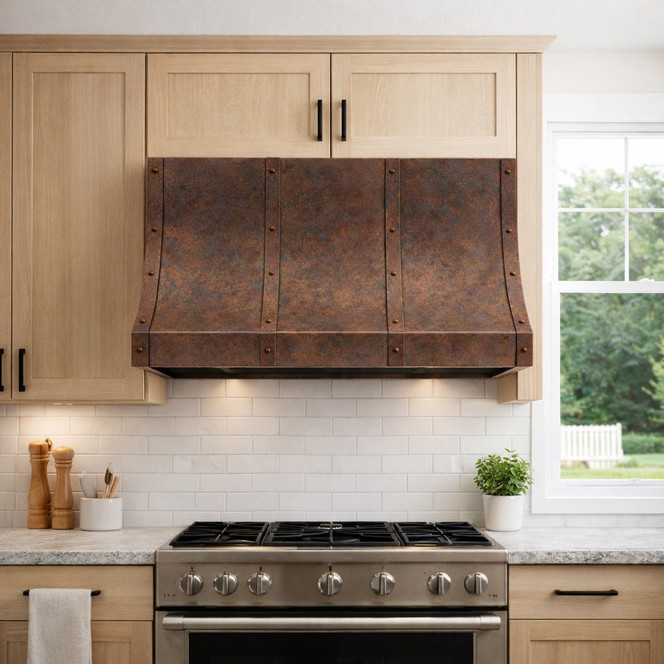
A kitchen metal range hood is one of the most influential design elements in a cooking space. While its primary purpose is ventilation, a handcrafted metal hood also serves as a focal point that defines the room's architectural character. Whether the design style is rustic farmhouse, Spanish Colonial, Hacienda, Mediterranean, transitional, industrial, or contemporary, the right metal hood can unify cabinetry, countertops, tile, lighting, and decorative accents into a cohesive design. Available in copper, zinc, iron, tin, and mixed-metal combinations, these custom-crafted hoods provide homeowners with an opportunity to combine functionality, craftsmanship, and personalized style. Choosing the right hood material, finish, and configuration can dramatically enhance both the appearance and performance of a kitchen.

Why Metal Range Hoods Matter in Kitchen Design
Few kitchen elements attract as much attention as the range hood. Positioned directly above the cooking area, it naturally becomes a visual anchor within the room. While standard appliance hoods often disappear into the background, handcrafted metal hoods contribute texture, color, and architectural presence.
A well-designed metal hood serves two important purposes. First, it helps remove smoke, steam, grease, and cooking odors. Second, it enhances the overall design by introducing handcrafted materials and custom detailing that elevate the space beyond ordinary kitchen design.
Homeowners exploring kitchen metal range hoods quickly discover the wide variety of available materials, finishes, and customization possibilities that allow each project to reflect a unique style.
The combination of practical performance and artistic craftsmanship is one of the primary reasons metal range hoods remain among the most desirable kitchen upgrades available today.
Benefits of Metal Range Hoods
- Function: Effective ventilation
- Style: Strong visual impact
- Craftsmanship: Artisan-made quality
- Customization: Tailored designs
- Durability: Long-lasting materials
Planning the Right Range Hood
Selecting the ideal range hood begins with understanding the kitchen layout and ventilation requirements. The size of the cooktop, ceiling height, cabinet configuration, and mounting location all influence the final design.
A large professional range often requires a wider hood body, while smaller kitchens may benefit from more compact proportions. Ceiling height affects chimney dimensions, and the surrounding cabinetry influences how decorative or minimalist the hood should appear.
The material should also coordinate with other finishes throughout the room, including faucets, cabinet hardware, lighting fixtures, sinks, and furniture. Homeowners planning a renovation often find it helpful to consult a range hood buying guide before making final design decisions.
Planning Basics
- Measure: Cooktop width
- Evaluate: Ceiling height
- Select: Wall or island mount
- Match: Overall room style
- Plan: Ventilation insert early
Copper Range Hoods
Copper remains one of the most popular materials for custom range hoods due to its warmth, elegance, and timeless appeal. Copper naturally develops character over time, creating a living finish that evolves with age.
These hoods are especially well suited to rustic kitchens, Spanish Colonial homes, Mediterranean villas, farmhouses, and traditional interiors. Available in smooth or hammered surfaces, copper can be finished in a variety of patinas ranging from natural copper and honey tones to dark coffee and antique finishes.
Copper works beautifully alongside wood beams, stone walls, brick surfaces, Talavera tile, and forged iron lighting. The combination creates a rich and welcoming environment filled with artisan character.
Homeowners seeking warmth and handcrafted elegance often choose copper range hoods as the focal point of their kitchen design.
Popular Copper Finishes
- Natural: Warm copper tones
- Honey: Soft golden color
- Coffee: Rich dark patina
- Antique: Aged appearance
- Hammered: Artisan texture
Zinc Range Hoods
Zinc offers a completely different aesthetic. Its cooler gray tones provide a softer and more understated appearance that complements a wide range of kitchen styles.
Zinc hoods are particularly popular in French Country, farmhouse, cottage, transitional, and rustic-modern interiors. Their subtle color variations create visual interest without overwhelming the space.
Because zinc pairs beautifully with marble, limestone, white cabinetry, and natural wood, it is often selected for kitchens that emphasize elegance and restraint rather than dramatic contrast.
Homeowners looking for a refined alternative to copper frequently explore custom zinc range hoods for their versatile appearance and timeless appeal.
Iron Range Hoods
Iron range hoods provide bold architectural presence and exceptional durability. Their substantial appearance makes them ideal for kitchens featuring exposed beams, stone walls, heavy wood cabinetry, and traditional ironwork.
Available in black, rusted, brushed, and aged finishes, iron hoods can range from rustic and historic to sleek and industrial. Their versatility allows them to complement a variety of design styles while maintaining a strong visual identity.
Spanish Revival homes, Hacienda-inspired kitchens, mountain lodges, and industrial lofts frequently incorporate iron hoods as statement pieces.
For homeowners seeking a dramatic centerpiece, iron range hoods provide exceptional visual impact and artisan craftsmanship.
Tin Range Hoods
Tin range hoods offer a lighter and often more decorative alternative to heavier metal options. Their handcrafted character makes them particularly appealing in Colonial, farmhouse, rustic, and vintage-inspired kitchens.
Depending on the finish and decorative details, tin hoods can feel elegant, rustic, or highly artistic. Embossed patterns, punched designs, and decorative trim contribute to their unique appearance.
Tin also coordinates beautifully with handmade ceramic tile, artisan mirrors, rustic lanterns, and traditional Mexican decorative elements.
Homeowners seeking a lighter handcrafted aesthetic often prefer tin range hoods for their versatility and decorative appeal.
Metal Style Options
- Copper: Warm artisan beauty
- Zinc: Soft gray elegance
- Iron: Bold architectural style
- Tin: Decorative charm
- Mixed Metals: Custom contrast
Mixed Metal Designs
Mixed metal hoods have become increasingly popular as homeowners move away from matching every metal finish throughout a kitchen. By combining materials such as copper, zinc, iron, brass, or tin, designers can create layered compositions that feel custom and sophisticated.
Decorative straps, rivets, trim bands, and aprons often provide opportunities to introduce contrasting metals without overwhelming the overall design.
These combinations help connect faucets, lighting, cabinet hardware, and furnishings into a cohesive visual composition.
Many homeowners interested in layered finishes explore mixed metal hoods to achieve this customized appearance.
Wall Mount and Island Configurations
Metal range hoods are generally available in wall-mounted and island configurations. Each option offers unique design opportunities depending on the kitchen layout.
Wall-mounted hoods are installed against a vertical wall and often become the focal point of a decorative backsplash. They work well in both traditional and contemporary kitchens.
Island hoods, on the other hand, are suspended above cooking islands and remain visible from multiple angles. Because of their prominence, they frequently incorporate additional decorative details and become sculptural features within open-concept spaces.
Choosing the correct configuration ensures both functional performance and visual balance throughout the room.
Configuration Options
- Wall Mount: Traditional placement
- Island: Open concept kitchens
- Custom Size: Tailored dimensions
- Decorative Trim: Personalized details
- Custom Finish: Unique appearance
Range Hood Inserts and Ventilation
The decorative exterior of a range hood is only part of the equation. Inside the hood, a properly sized ventilation insert provides the mechanical performance required to remove smoke, steam, grease, and odors.
Inserts may include fans, filters, lights, and speed controls. Selecting the correct insert depends on the cooking style, range size, and ventilation requirements of the kitchen.
Because inserts influence the overall dimensions of the hood, they should be selected early in the design process. Homeowners researching technical requirements often review information about kitchen range hood inserts before finalizing their custom hood specifications.
Insert Considerations
- Power: Ventilation needs
- Ducting: Ducted or recirculating
- Lighting: Built-in illumination
- Filters: Easy maintenance
- Controls: Convenient access
Design Details That Make a Difference
Small details often have a significant impact on the final appearance of a custom range hood. Decorative straps, hand-hammered surfaces, rivets, crown moldings, aprons, and custom trim all contribute to the hood's personality.
A rustic kitchen may benefit from extensive decorative metalwork, while a transitional kitchen often favors cleaner lines and more restrained detailing. The goal is to create a hood that complements the room rather than competes with it.
Carefully selected design details transform a functional appliance cover into an architectural feature that enhances the overall kitchen environment.
Decorative Features
- Rivets: Artisan character
- Straps: Structural detail
- Aprons: Decorative emphasis
- Crown: Finished appearance
- Hammering: Surface texture
Conclusion
Kitchen metal range hoods combine ventilation performance with architectural beauty, making them one of the most influential design features in any kitchen. Whether crafted from copper, zinc, iron, tin, or a combination of metals, these handcrafted hoods offer homeowners the opportunity to personalize their cooking space while enhancing both functionality and style. With custom sizes, artisan finishes, decorative details, and multiple mounting configurations available, a metal range hood can serve as a lasting centerpiece that defines the character of the entire room.