 US Dollar
 Euro
Euro
 Australian Dollar
 Canadian Dollar
 Polish Zloty
 British Pound


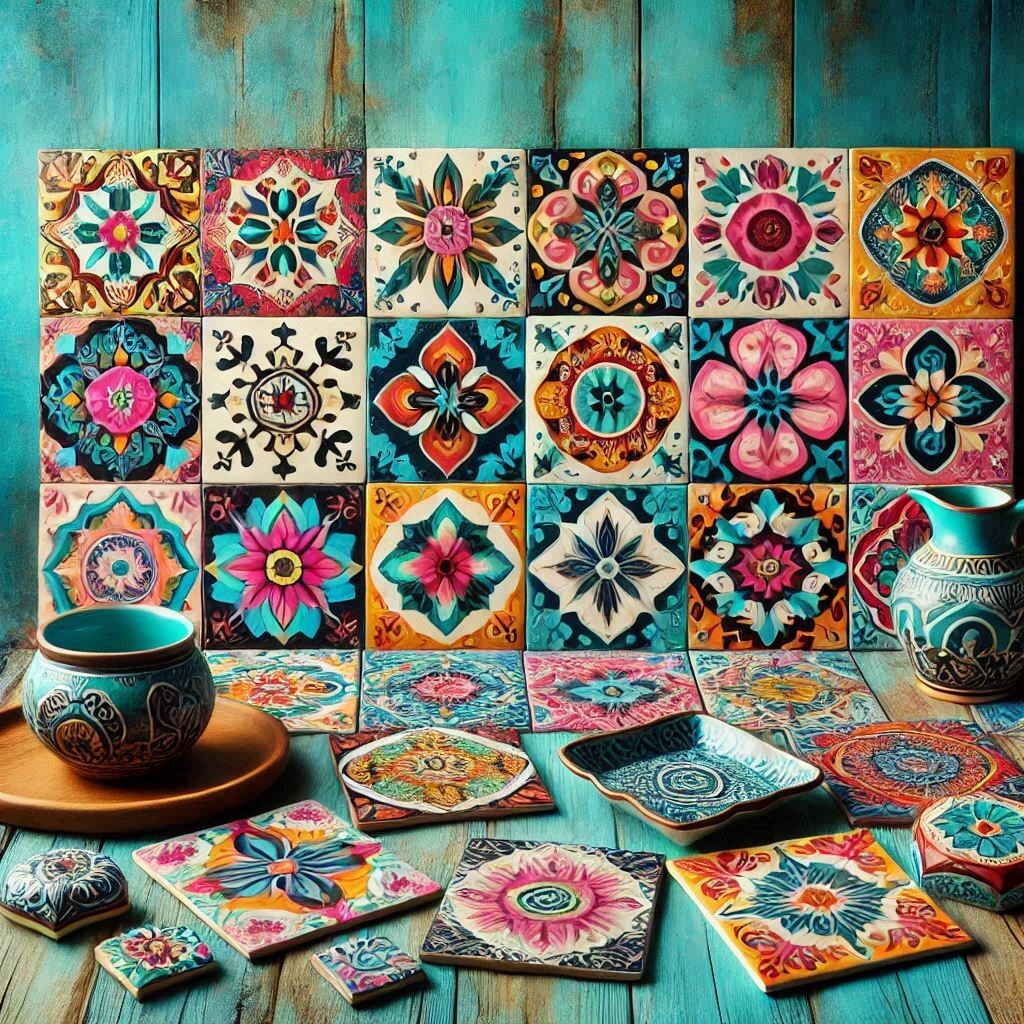
When homeowners and designers ask why Mexican Talavera tiles remain one of the most enduring choices in decorative surfaces, the answer lies in their history, craftsmanship, and unmatched visual character. Authentic Talavera tiles bring color, movement, and cultural depth into a space in ways mass-produced ceramics never can. From kitchens and bathrooms to courtyards and stair risers, these tiles continue to define interiors that value artistry and tradition. Explore the full selection of Mexican tiles to see how handmade design transforms architectural surfaces.
The Origins of Mexican Talavera Tile
Talavera tile is not simply a decorative product; it is the result of centuries of artistic exchange and refinement. The tradition traces its roots to Spanish ceramic techniques introduced during the colonial period. These European methods merged with Indigenous Mexican artistry, local clays, and mineral pigments, forming a distinct ceramic language that is now unmistakably Mexican.
Over generations, artisan families refined these techniques, passing knowledge by hand and practice rather than machines. This continuity is why authentic Talavera tiles still display subtle variations in glaze, line thickness, and color intensity. Each tile reflects the human hand behind it, preserving a living craft rather than an industrial process.
What Makes Talavera Tiles Different From Standard Ceramic Tiles
Unlike factory-produced tiles, Mexican Talavera tiles are handmade from start to finish. Artisans shape the clay, apply a tin-based glaze, and paint designs freehand using mineral pigments. This process creates depth and texture that printed or molded tiles cannot replicate.
Because each tile is painted individually, no two pieces are identical. Slight differences in brushstroke, glaze pooling, or color saturation are not flaws; they are proof of authenticity. These natural variations give Talavera installations a dynamic, organic appearance that feels alive rather than repetitive.
Why Color Plays Such an Important Role in Talavera Design
Color is one of the defining characteristics of Mexican Talavera tiles. Traditional palettes include cobalt blue, terracotta red, mustard yellow, forest green, and black, all set against a creamy white background. These colors are derived from mineral-based pigments that react uniquely during firing.
The result is color with depth rather than flat uniformity. Blues may appear richer in some areas, while yellows and greens show subtle tonal movement. This layered color quality allows Talavera tiles to interact beautifully with natural light, enhancing both rustic and refined interiors.
Common Talavera Patterns and Their Meaning
Talavera patterns often combine geometry with natural motifs. Floral rosettes, radiating stars, cross forms, vines, and symmetrical borders appear frequently. These designs draw inspiration from Moorish geometry, European ornamentation, and Indigenous symbolism.
Many patterns are structured around balance and repetition, creating visual rhythm without overwhelming the space. Others are more expressive and playful, making them ideal for accent walls, backsplashes, or focal points. This range of pattern styles is one reason Talavera tiles adapt so well to different design aesthetics.
Applications of Mexican Talavera Tiles in Interior Design
Mexican Talavera tiles are remarkably versatile. In kitchens, they are commonly used for backsplashes behind ranges and sinks, where they add color and personality while remaining durable and easy to clean. In bathrooms, they elevate vanity walls, shower surrounds, and tub enclosures with handcrafted detail.
Talavera tiles also work beautifully on stair risers, fireplace surrounds, and decorative niches. Even small installations, such as a framed panel or border, can dramatically change the character of a space.
Outdoor and Architectural Uses
Thanks to their fired ceramic body and durable glaze, Talavera tiles perform well in outdoor environments. Courtyard fountains, garden walls, patio kitchens, and exterior staircases often feature Talavera surfaces that age gracefully over time.
In architectural applications, these tiles act as both surface material and ornament. They frame doorways, accent arches, and define transitions between spaces, reinforcing a sense of place and tradition.
The Role of High-Relief and Dimensional Tiles
In addition to flat tiles, Mexican artisans produce dimensional and sculpted designs. Raised floral motifs, geometric relief patterns, and decorative borders add shadow and texture to walls. These relief tiles create depth that changes throughout the day as light moves across the surface.
Relief tiles are especially effective when used sparingly as accents or combined with flat field tiles. This layered approach allows designers to create focal points without overwhelming the overall composition.
Why Handmade Variation Is a Design Advantage
Some homeowners accustomed to uniform materials may initially be surprised by Talavera’s variation. However, this quality quickly becomes one of its greatest strengths. Variation prevents visual fatigue and gives installations a sense of movement and warmth.
In large surfaces, handmade variation breaks up repetition, making walls feel more organic and inviting. In smaller applications, it adds character that mass-produced tiles simply cannot achieve.
Maintenance and Longevity of Talavera Tiles
Talavera tiles are easier to maintain than many people expect. Regular cleaning with mild soap and water is usually sufficient. Harsh chemicals and abrasive cleaners should be avoided, as they can dull the glaze over time.
In wet areas or kitchens, sealing the grout and occasionally sealing the tile surface can provide added protection against staining. With proper care, Talavera tiles can last for decades while retaining their color and charm.
How Talavera Tiles Complement Different Design Styles
In rustic and farmhouse interiors, Talavera tiles reinforce warmth and authenticity. Their earthy colors pair naturally with wood, stone, and wrought iron. In Mediterranean and Spanish Revival spaces, Talavera patterns echo historical architectural elements.
Even in contemporary interiors, Talavera tiles can be used as contrast elements. A single patterned backsplash or accent wall introduces handcrafted texture into clean-lined spaces, preventing them from feeling sterile.
Cultural and Ethical Value of Authentic Talavera
Choosing authentic Mexican Talavera tiles supports artisan communities and preserves traditional craft practices. Many workshops operate as family businesses, where skills are taught across generations rather than automated.
This ethical dimension adds meaning beyond aesthetics. Talavera tiles are not disposable design trends; they are cultural artifacts that connect modern homes to centuries of craftsmanship.
Why Talavera Tiles Continue to Define Mexican Design
Talavera tiles remain relevant because they balance beauty, durability, and cultural identity. They are expressive without being fleeting, decorative without being fragile. This balance allows them to adapt across eras while retaining their core character.
Whether used extensively or as a single accent, Talavera tiles communicate intention. They signal a respect for craft, history, and individuality that resonates strongly in today’s design landscape.
Conclusion: Why Mexican Talavera Tiles Endure
Mexican Talavera tiles offer more than surface decoration. They bring color, texture, and history into everyday spaces, transforming walls and floors into works of functional art. Their handmade nature ensures that each installation feels personal rather than generic.
For those looking to explore design possibilities beyond the basics, discover classic patterns within Mexican tile patterns or add sculptural depth with Mexican relief tiles. When chosen thoughtfully, Talavera tiles become a defining element that elevates an entire space for generations.