 US Dollar
 Euro
Euro
 Australian Dollar
 Canadian Dollar
 Polish Zloty
 British Pound

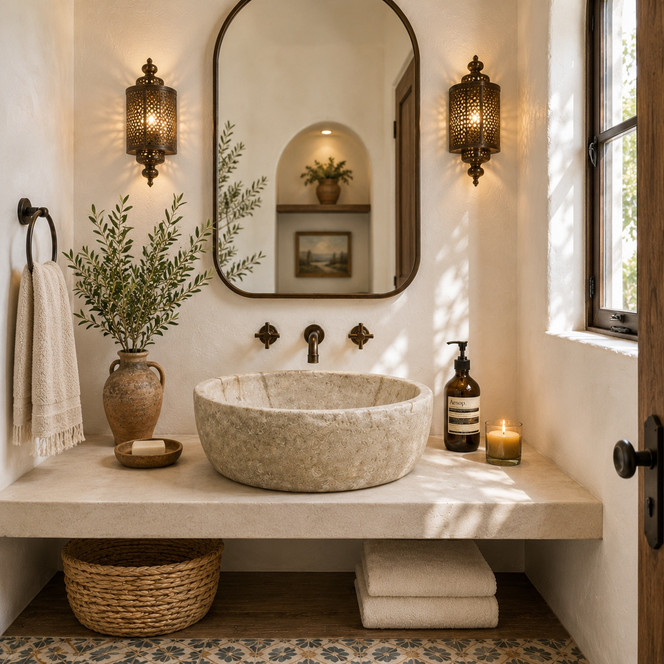
Stone Bathroom Sinks Guide helps homeowners, designers, and hospitality projects choose a sink with natural texture, rustic durability, and strong architectural character. Stone sinks work beautifully in powder rooms, guest bathrooms, primary suites, hacienda interiors, Mediterranean bathrooms, and boutique hotel vanities. Their carved forms, earthy colors, and organic surfaces make each piece feel substantial and unique. Explore our stone bathroom sinks collection to compare shapes, finishes, and rustic vanity ideas for your next bathroom project.
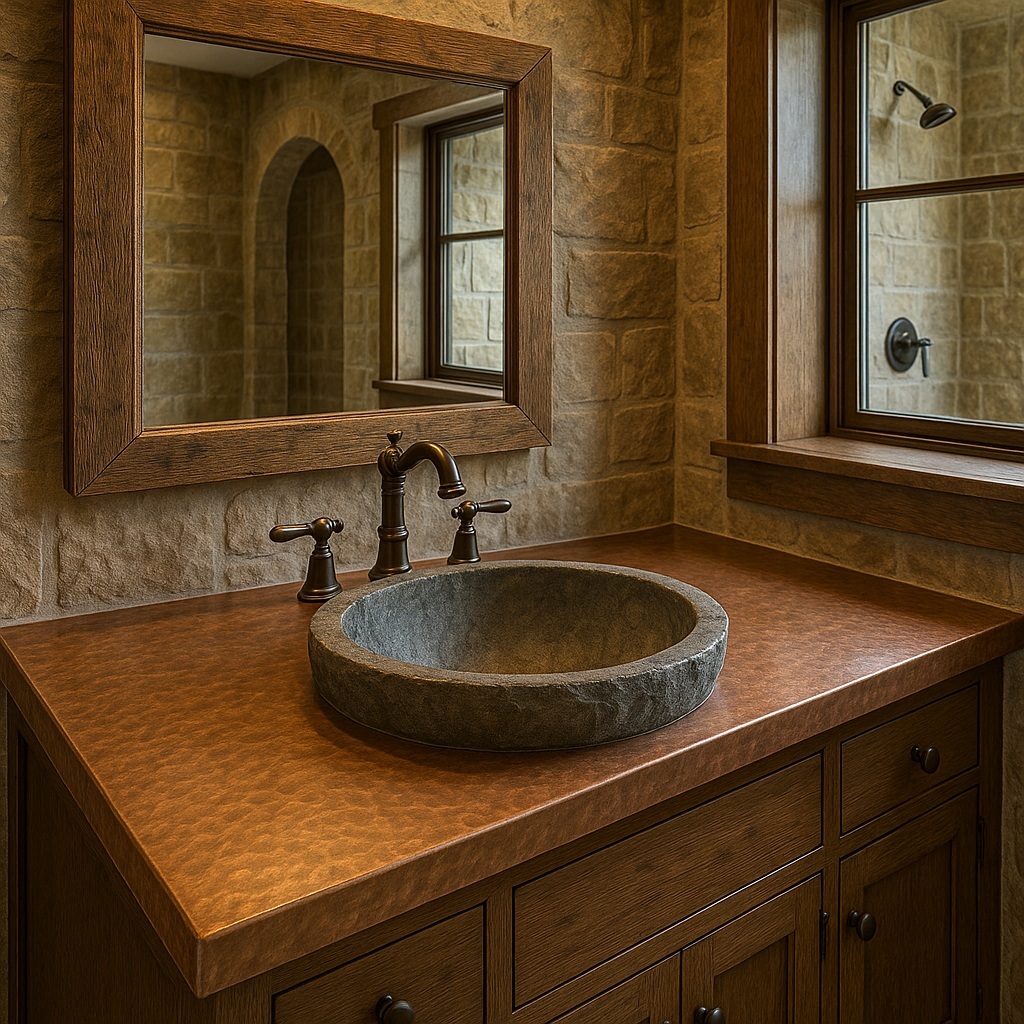
Stone Sink Appeal
A stone bathroom sink brings a grounded, natural presence that standard ceramic or porcelain sinks often cannot match. The weight, texture, and carved appearance of stone give the vanity area a stronger sense of permanence. Instead of looking like a simple plumbing fixture, the sink becomes part of the room’s architecture. This makes stone especially useful in bathrooms where materials matter, including spaces with plaster walls, wood vanities, iron mirrors, Saltillo floors, Talavera tile, or natural stone counters. The sink can be rustic and rugged, smooth and refined, or sculptural depending on the shape and finish selected.
Rustic Bathroom Style
Stone sinks fit naturally into rustic bathrooms because they share the same earthy character as wood, clay, iron, plaster, and handmade tile. A rectangular trough sink can create a strong horizontal focal point, while a round or oval basin softens the vanity layout. In hacienda or Spanish Colonial bathrooms, stone pairs beautifully with carved wood cabinets, wrought iron hardware, aged brass faucets, and warm wall finishes. For broader room planning, explore rustic bathroom ideas to coordinate sinks, mirrors, counters, lighting, and tile surfaces.
Stone Sink Benefits
- Natural carved texture
- Strong rustic character
- Durable vanity focal point
- Pairs with wood and iron
- Works in powder rooms
Choosing the Shape
The shape of the sink should match the vanity size, room layout, and design mood. Rectangular sinks feel architectural and work well on longer counters or wall-mounted vanities. Round stone sinks create a softer focal point and are practical for compact bathrooms or powder rooms. Oval basins offer a balanced option between curved elegance and functional width. Trough sinks are especially effective in guest bathrooms, restaurant restrooms, and boutique hotel spaces where the sink should feel memorable. The best shape is the one that leaves enough counter space, supports faucet placement, and feels proportional to the mirror and vanity below it.
Vanity Pairings
Stone sinks need a vanity or counter surface that can support their visual weight. Reclaimed wood vanities create a warm rustic setting, while plaster or masonry bases make the sink feel built into the architecture. Floating wood shelves can support a lighter contemporary rustic mood when properly engineered. Stone sinks also pair well with copper, especially when the room includes warm metals and handmade finishes. Homeowners who want a richer vanity surface can consider bathroom copper countertops for a warm contrast against carved stone texture.
Ideal Vanity Materials
- Reclaimed wood base
- Copper countertop surface
- Natural stone counter
- Rustic plaster vanity
- Handmade tile surround
Faucet Selection
Faucet style is important because stone sinks often have thicker walls, deeper basins, or raised vessel profiles. A vessel sink may need a taller faucet or wall-mounted fixture, while a drop-in or carved basin may work with a standard deck-mounted faucet. Finish also affects the final look. Brass, bronze, black iron, and copper tones all coordinate well with stone because they add warmth and age. Polished chrome can work in transitional spaces, but rustic bathrooms usually benefit from softer metal finishes. For a warm traditional pairing, browse bathroom brass faucets before finalizing the sink layout.
Color and Texture
Stone bathroom sinks can range from pale cream and beige to gray, charcoal, tan, brown, and warm earth tones. Some pieces show smooth surfaces, while others display chiseled edges, rough exteriors, or naturally varied stone movement. Texture matters because it changes how the sink interacts with light and surrounding materials. A rough stone exterior can add primitive character to a hacienda bathroom, while a smoother carved basin may suit transitional or Mediterranean interiors. When choosing a color, compare it with the vanity, wall finish, floor tile, mirror frame, and faucet metal so the sink feels connected to the full room.
Powder Room Impact
Powder rooms are ideal places for stone sinks because the space is small enough for one strong material to define the entire design. A carved stone basin can sit on a simple wood vanity and immediately become the focal point. Since powder rooms are often used by guests, a distinctive sink helps create a memorable impression without requiring a large renovation. Pairing the sink with a handcrafted mirror, warm lighting, and textured walls can make the room feel complete. In a compact setting, the goal is to choose a sink with enough presence to stand out while still leaving comfortable space for use.
Powder Room Ideas
- Use a carved vessel sink
- Add a rustic wood vanity
- Choose a brass faucet
- Install warm wall lighting
- Pair with a metal mirror
Guest Bathroom Use
In a guest bathroom, a stone sink can create comfort and character at the same time. The material feels durable, grounded, and welcoming, especially when paired with natural wood, soft towels, warm lighting, and handmade tile. A rectangular stone basin can make the vanity feel substantial, while an oval or round sink can make the room feel softer. Guest bathrooms benefit from materials that look intentional but are not overly delicate. Stone works well because it can support daily use while still offering a decorative presence. The sink should be easy to access, properly sealed when needed, and installed with enough space around the faucet.
Hospitality Bathrooms
Stone sinks are useful in boutique hotels, restaurants, spas, and lodge bathrooms because they help create a distinctive experience. Guests often remember tactile materials, especially when the sink feels handmade or carved from a natural block. In commercial interiors, the sink should match the overall brand atmosphere. A rustic restaurant may benefit from darker stone and iron fixtures, while a spa bathroom may need lighter stone and softer lighting. Hospitality projects should consider maintenance access, faucet durability, counter support, and cleaning routines. When selected carefully, a stone sink adds authenticity and helps the bathroom feel designed rather than generic.
Clearance Opportunities
Stone sinks are substantial pieces, and buyers sometimes find excellent options through limited availability or clearance categories. Clearance sinks may include discontinued shapes, overstock designs, closeout finishes, or individual pieces ready for faster purchase. Because stone can vary naturally, it is important to review dimensions, drain placement, finish, color, and installation type before buying. A clearance sink can be a strong value when the size and style fit the project. For budget-conscious bathroom planning, check sink clearance options to compare available styles before ordering a custom piece.
Buying Checks
- Confirm sink dimensions
- Check drain placement
- Review faucet height
- Plan counter support
- Match room materials
Installation Planning
Installation should be planned before the sink is purchased. Stone sinks can be heavy, so the vanity or countertop must provide proper support. Faucet placement should be checked carefully, especially for raised vessel sinks or thick stone rims. Drain compatibility is also important because basin depth, drain hole size, and counter thickness may affect the final hardware selection. Wall-mounted faucets should align with the basin center and provide enough reach into the bowl. A professional installer can help confirm support, plumbing, sealing, and placement. Careful planning ensures that the sink looks balanced and functions comfortably after installation.
Care and Maintenance
Stone bathroom sinks should be cleaned gently to preserve their surface. Mild soap, water, and a soft cloth are usually appropriate for routine cleaning. Harsh chemicals, acidic cleaners, and abrasive pads should be avoided because they may damage the finish or affect the stone. Some stone sinks may benefit from sealing, depending on the material and surface treatment. Water should not be allowed to sit for long periods, especially in areas with mineral-heavy water. Drying the surface helps reduce spotting and buildup. With regular care, a stone sink can maintain its natural beauty while continuing to serve as a durable vanity centerpiece.
Care Tips
- Clean with mild soap
- Avoid acidic cleaners
- Use a soft cloth
- Dry after heavy use
- Seal when recommended
Buying Guide Summary
When buying a stone bathroom sink, begin with the room size and vanity layout. Choose a shape that fits the available space and supports comfortable faucet placement. Decide whether the room needs a rectangular trough, round vessel, oval basin, or carved sculptural form. Compare color and texture with floors, counters, mirrors, lighting, and hardware. Make sure the vanity or countertop can support the sink’s weight. Review drain placement and installation requirements before ordering. A stone sink should feel practical, proportional, and visually connected to the bathroom materials around it.
Final Design Guidance
Stone Bathroom Sinks Guide shows how natural material, carved form, and rustic texture can transform a vanity area. Stone sinks work beautifully in powder rooms, guest bathrooms, hacienda interiors, Mediterranean homes, boutique hotels, restaurants, and spa-like spaces. Their strength comes from the combination of function and sculptural character. When paired with wood, copper, brass, iron, plaster, tile, or natural counters, the sink becomes a central design feature rather than a simple fixture. With the right shape, faucet, support, and care routine, a stone bathroom sink can bring lasting authenticity and architectural warmth to the room.