 US Dollar
 Euro
Euro
 Australian Dollar
 Canadian Dollar
 Polish Zloty
 British Pound

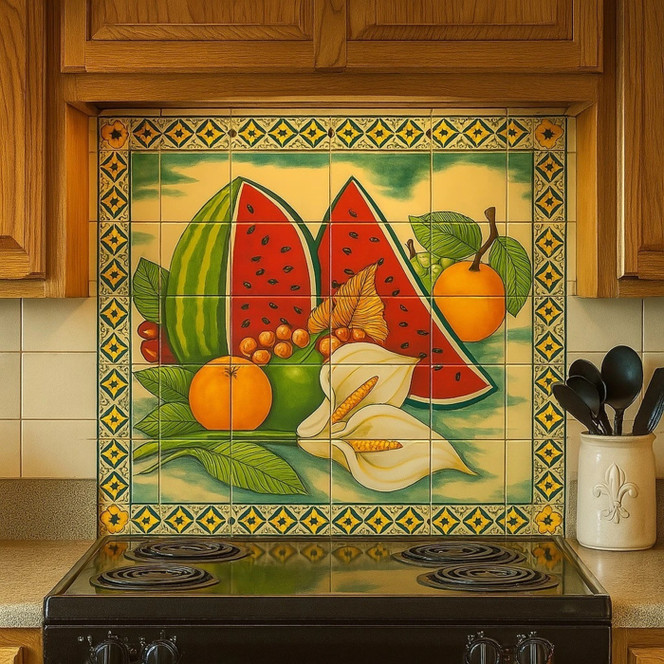
Mexican Tile Murals Buying Guide helps homeowners, designers, and restaurant owners choose the right hand-painted ceramic mural for kitchens, patios, stair landings, dining rooms, and rustic wall features. Mexican tile murals combine artisan painting, colorful glaze, and traditional decorative storytelling in a format that works as both wall protection and permanent ceramic art. Before selecting a scene, size, border, or installation location, explore our Mexican tile murals collection to compare landscape scenes, floral designs, village artwork, fruit themes, animal motifs, and backsplash mural options.
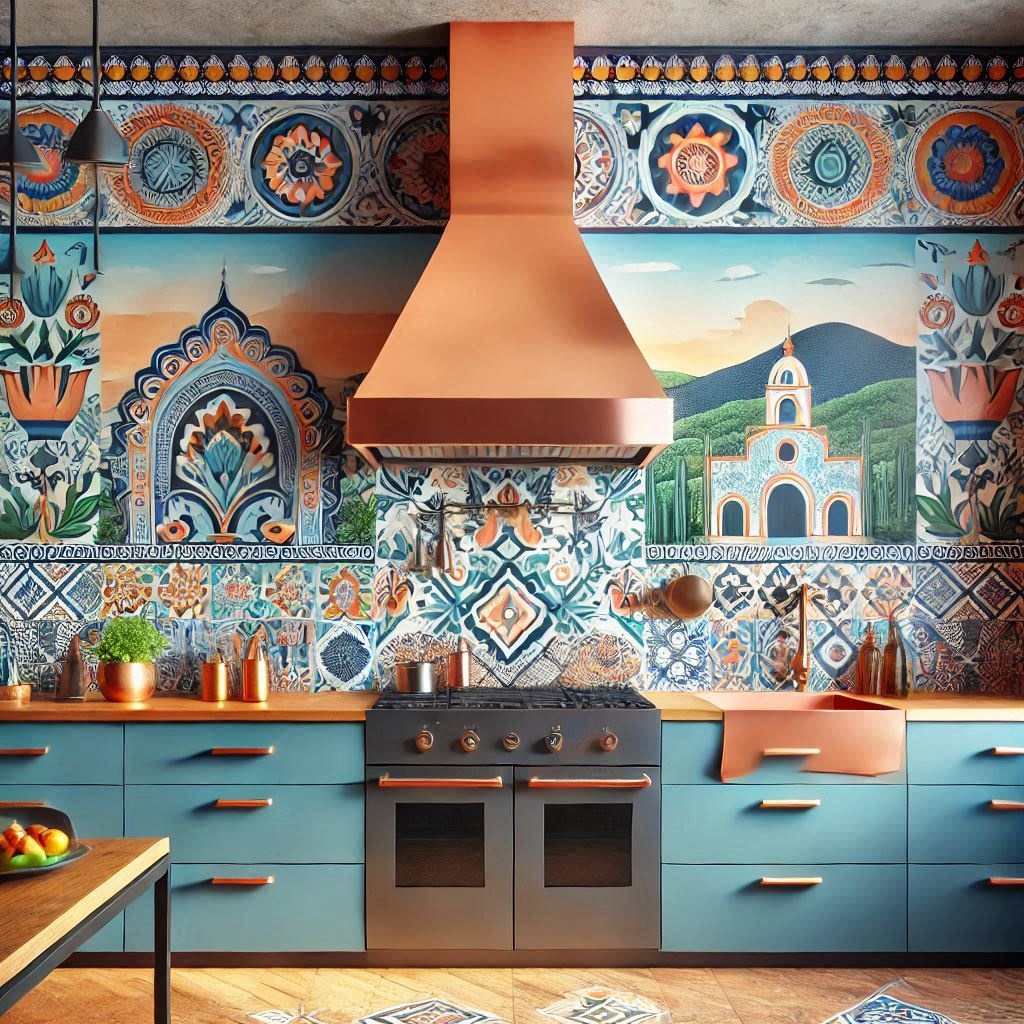
Tile Mural Guide
Buying a Mexican tile mural begins with understanding how the artwork will function in the room. A mural is not only a decorative image; it also becomes part of the architecture. In kitchens, it may frame the stove, protect the backsplash, or add color above a sink. On patios, it can turn a plain wall into a permanent focal point. In restaurants, it can support a rustic, Hacienda, Mediterranean, or Mexican theme. Because each mural is assembled from individual ceramic tiles, the final design should be chosen according to wall size, viewing distance, tile layout, surrounding materials, and the mood of the space.
Choosing the Theme
The mural theme should match the room’s purpose and design style. Village scenes create a warm traditional feeling, while fruit and flower murals work beautifully in kitchens and dining spaces. Bird, animal, and landscape murals bring more movement and storytelling to patios or feature walls. A backsplash behind the stove may benefit from a centered scene with strong colors and a clear focal point. A larger wall can support a more detailed composition with background architecture, trees, mountains, water, or garden elements. For broader design inspiration, explore unique Mexican tile murals before choosing the final subject.
Popular Mural Themes
- Village street scenes
- Fruit and floral artwork
- Bird and animal designs
- Rustic landscape views
- Kitchen still life murals
Kitchen Backsplash Use
Kitchen backsplashes are one of the most popular places to install Mexican tile murals because the wall behind the stove naturally draws attention. A mural in this location can frame the range, coordinate with the hood, and create a colorful centerpiece between cabinets. When buying a backsplash mural, measure the available wall area carefully and consider whether the mural needs a border, surrounding field tile, or a simple ceramic frame. For placement ideas, installation planning, and design examples, review this kitchen backsplash tile guide before finalizing the layout.
Size and Proportion
Size is one of the most important buying decisions. A mural that is too small may feel lost on a large wall, while an oversized mural can overwhelm a compact backsplash. Standard ceramic mural tiles are often arranged in grids, so the overall size depends on the number of tiles used across the width and height. Measure the target wall, then allow space for grout lines, borders, trim tiles, and surrounding field tiles. A range backsplash often looks best when the mural is centered above the cooktop. A patio wall can support a larger composition because viewers usually see it from farther away.
Size Planning Tips
- Measure the wall first
- Allow room for borders
- Center above the stove
- Check grout spacing
- Match viewing distance
Color Selection
Mexican tile murals are known for vivid color, but the best choice depends on the surrounding room. Cobalt blue, yellow, terracotta, green, orange, and white are common in Talavera inspired artwork. A bright mural can energize a neutral kitchen, while a softer landscape scene may work better in a traditional dining room or patio. If the room already includes colorful tile, pottery, or painted cabinetry, choose a mural that repeats one or two existing colors. In a white kitchen, a stronger mural can become the primary accent. In rustic spaces, warmer earth tones often coordinate beautifully with wood, stone, copper, and iron.
Tile and Material Quality
When buying a mural, look closely at the ceramic surface, glaze quality, and painted detail. Hand-painted tiles will show slight variations in linework, color, and brush movement, which are part of their artisan character. The glaze should feel finished and suitable for decorative wall use. Because the mural is composed of individual tiles, the image must align properly when installed. Buyers should also consider whether they need matching field tiles, border tiles, or trim pieces. For coordinating ceramic surfaces beyond murals, browse Mexican ceramic tiles to plan a complete backsplash or wall design.
Border and Trim Choices
Borders help a Mexican tile mural look complete. A border tile can frame the artwork like a picture, separating the painted scene from surrounding field tiles or wall materials. Simple borders keep the focus on the mural, while patterned borders add more decorative rhythm. In kitchens, a border can help the mural fit neatly between cabinets or within the backsplash area. On patios, borders can make the installation look more architectural. Trim tiles can also help finish exposed edges. The right border should support the mural colors without competing with the main scene, especially when the mural already includes detailed artwork.
Border Options
- Simple ceramic frame
- Patterned Talavera trim
- Solid color border
- Relief tile accents
- Decorative edge tiles
Best Room Locations
Mexican tile murals can be used in many locations as long as the wall surface and installation plan are suitable. In kitchens, they work behind stoves, above sinks, along prep areas, or inside breakfast nooks. In patios, they can decorate garden walls, outdoor kitchens, covered terraces, and poolside spaces. Restaurants often use murals near bars, dining niches, serving counters, or entry walls to create a memorable atmosphere. Bathrooms can use smaller murals above vanities or inside decorative niches. The best location is one where the mural can be seen clearly and protected from unnecessary impact or harsh cleaning conditions.
Installation Planning
Installation should be planned before the mural is ordered. The wall should be clean, level, and prepared for ceramic tile. Before setting the tiles, lay out the mural in order so the painted image aligns correctly. Grout spacing should be consistent across the design, and the installer should check whether surrounding border or field tiles need cuts. The grout color also affects the final appearance. A lighter grout can soften the grid, while a darker grout emphasizes each tile. Because a mural depends on accurate alignment, professional installation is recommended, especially for larger scenes or projects with decorative borders.
Installation Checklist
- Dry lay the mural first
- Confirm tile sequence
- Use consistent spacing
- Choose grout carefully
- Hire a tile professional
Indoor and Outdoor Use
Mexican tile murals can work indoors and outdoors, but the installation location matters. Indoor murals are often easier to maintain because they are protected from weather, direct sun, and outdoor debris. Outdoor murals should be installed in appropriate conditions, ideally on stable walls and protected areas when possible. Patios, covered terraces, and outdoor kitchens can be excellent locations when the tile is installed properly. Buyers should consider climate, exposure, cleaning access, and wall preparation before placing any ceramic mural outside. A professional installer can help determine whether the selected wall and setting are suitable for long-term use.
Restaurant and Commercial Spaces
Mexican tile murals are especially effective in restaurants because they help create atmosphere without requiring large structural changes. A mural can define a bar wall, add color to a dining area, or create a focal point near a serving station. In Mexican, Southwestern, Mediterranean, or rustic restaurants, the mural can reinforce the dining theme and give guests a memorable visual detail. Commercial buyers should consider durability, cleaning access, viewing distance, and how the mural will photograph for marketing. Larger spaces may need bigger murals or repeated tile features so the design does not disappear in the room.
Care and Maintenance
Ceramic mural tiles are practical when cleaned gently. Use mild soap, water, and a soft cloth for routine care. Avoid harsh chemicals, abrasive pads, and acidic cleaners because they may affect the glazed surface or grout. In kitchens, wipe grease and food splashes before they harden. Around sinks, dry the surface to reduce buildup. Outdoor murals may need more frequent cleaning depending on dust, moisture, and exposure. Proper care helps preserve the painted detail and keeps the mural looking bright. Grout lines should also be maintained because they frame every tile and affect the overall appearance of the artwork.
Care Tips
- Use mild soap
- Avoid abrasive pads
- Wipe splashes quickly
- Dry wet areas
- Maintain grout lines
Buying Guide Summary
To choose the right Mexican tile mural, start with the wall location and available space. Decide whether the mural will be used as a kitchen backsplash, patio feature, restaurant accent, bathroom detail, or decorative wall scene. Select a theme that matches the room’s architecture and mood. Measure carefully, then decide whether to add borders, field tiles, or trim pieces. Review colors in relation to cabinetry, stone, plaster, wood, iron, and existing tile. Plan installation before ordering so the final mural fits the wall and aligns correctly. A good mural should feel both artistic and integrated into the room.
Final Design Guidance
Mexican Tile Murals Buying Guide gives buyers a clear path for selecting ceramic wall art that fits the room, style, and installation area. These murals bring handmade color, cultural character, and decorative storytelling to kitchens, patios, restaurants, dining rooms, and rustic interiors. By comparing theme, size, color, tile quality, border options, and placement, homeowners and designers can choose a mural that becomes a lasting focal point. Whether placed behind a stove, above a sink, on a patio wall, or inside a restaurant, a Mexican tile mural can transform a plain surface into handcrafted ceramic artwork.