 US Dollar
 Euro
Euro
 Australian Dollar
 Canadian Dollar
 Polish Zloty
 British Pound

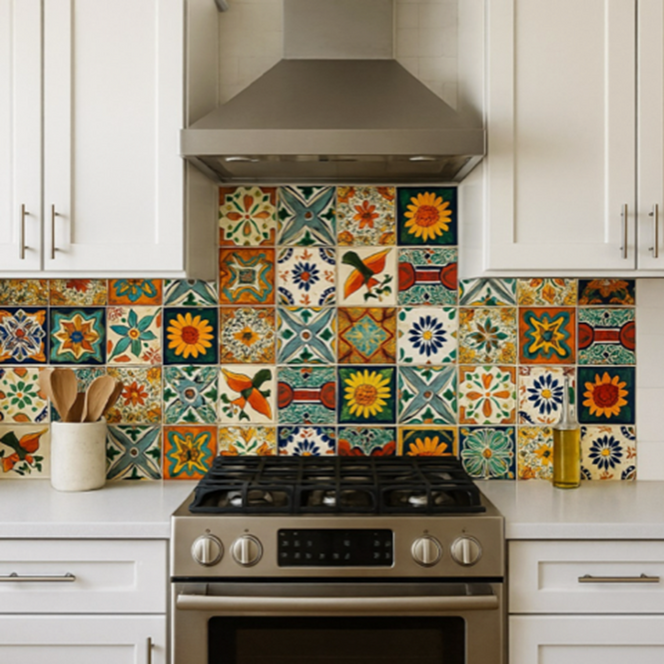
A Mexican Tile Backsplash Talavera Mix Kitchen Design is one of the fastest ways to turn a simple kitchen into a warm, character-rich space. The patchwork look feels handmade, expressive, and timeless, especially when it is built from many different Talavera patterns. This guide explains how the mix works, how to balance color, how to plan layout, and how to keep the design vibrant without feeling chaotic. Start by exploring our Mexican tiles to compare patterns and build your ideal Talavera mix.
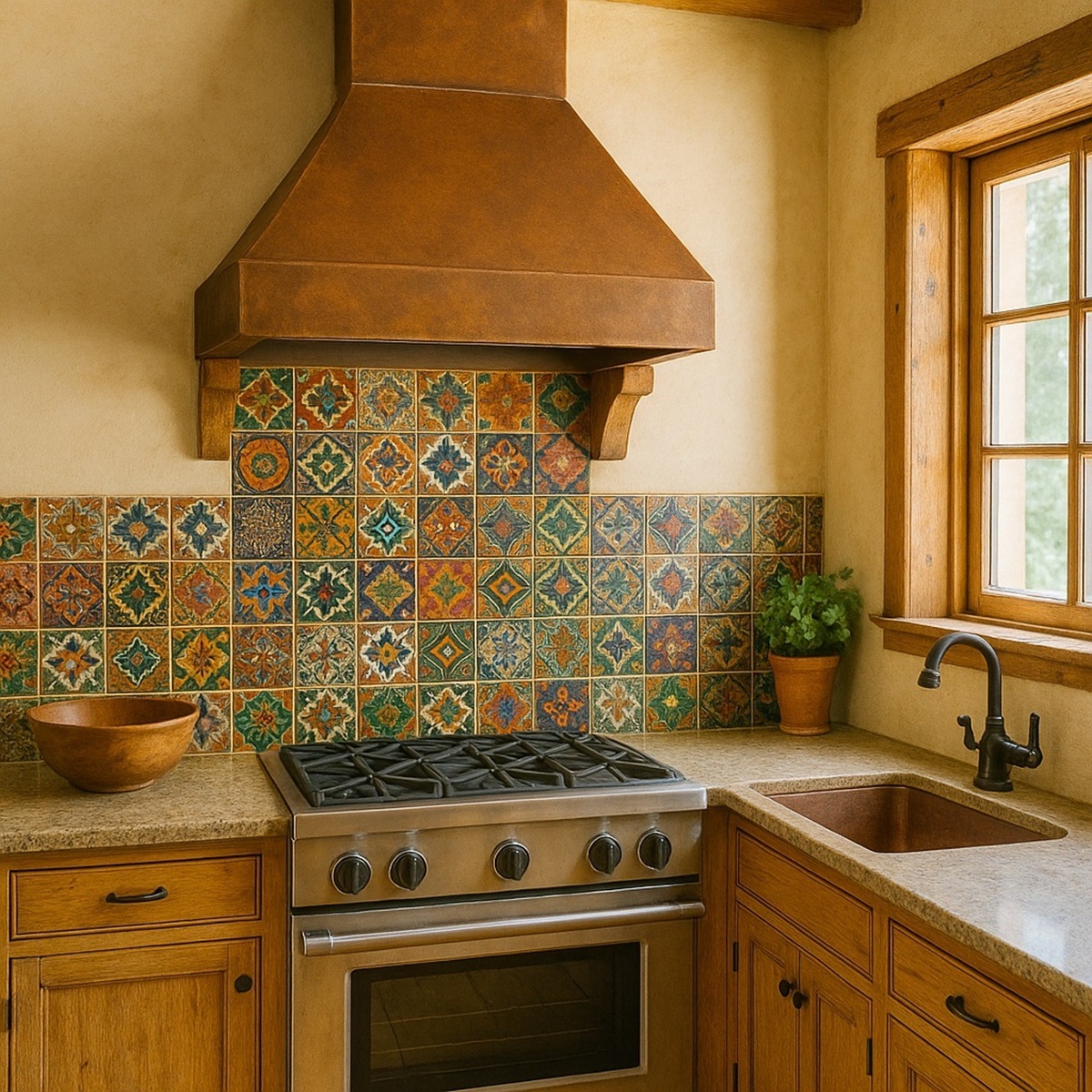
What makes a Talavera mix backsplash different
A Talavera mix backsplash is not designed to look uniform. It is designed to feel organic and collected, like a quilt made from many unique fabric squares. Each tile reads as its own mini artwork, yet the full wall still feels cohesive because the grid keeps the structure clean. This is why the style works in both rustic and modern kitchens. It brings lively detail, but the straight layout keeps it controlled.
The key idea is intentional randomness. There is no strict repeating sequence. Patterns are mixed on purpose so the wall feels handmade rather than mass-produced. When the mix is done well, the result looks curated, not messy.
Grid-based installation and the patchwork effect
The classic Talavera mix look uses a grid layout with consistent spacing. Tiles are typically standard square formats, often 4 by 4 inches, which helps the pattern feel crisp and traditional. Uniform spacing matters because it creates a calm framework. The wall can be full of visual activity, but the grid keeps it readable.
Because the mix does not repeat in a strict pattern, the grid becomes the “order” behind the creativity. That balance is what makes the backsplash feel like a quilt. Each tile is unique, but the overall field still feels intentional.
Color palette and visual balance
A strong Talavera mix relies on saturated, traditional Mexican color. The most effective mixes use bold hues with enough white space to keep the wall bright. A well-balanced palette also prevents one color from taking over one section of the backsplash.
Dominant colors that anchor the wall
Cobalt blue usually anchors many designs. It creates visual weight and helps tie different tiles together. Golden yellow tones add strong highlights that make the wall feel sunny and energetic. Terracotta orange and rust tones bring warmth and earthy depth. Emerald and olive greens add natural balance and keep the palette from feeling too hot.
Supporting colors that keep the mix readable
White backgrounds create breathing space and contrast. They help the wall avoid looking heavy. Black outlines define each motif clearly, which is typical of Talavera and Majolica-inspired design language. Those outlines make the pattern readable from a distance and help the wall feel crisp even when the colors are bold.
A simple color strategy that prevents chaos
The best mixes distribute color evenly. Warm and cool tones should feel balanced across the wall. Blue and yellow often repeat naturally, creating rhythm without obvious repetition. The goal is not to avoid repeating color. The goal is to avoid clustering one dominant color in one corner where it feels accidental.
Pattern diversity and classic Talavera motifs
Talavera mix backsplashes feel rich because the tile patterns are varied. Instead of one repeating motif, you get many different design languages working together. That variety is what makes the wall feel collected and artisan.
Geometric patterns
Geometric tiles often include starbursts, crosses, radial symmetry designs, diamonds, and quatrefoil forms. These tiles add structure and rhythm because the shapes feel architectural and balanced. They help anchor the wall when the mix includes more organic motifs.
Botanical and organic motifs
Floral rosettes, sunflower-like bursts, leaves, and vine-inspired patterns bring movement and softness. These motifs add warmth and help the wall feel welcoming rather than strict. They also connect naturally to rustic materials like wood, stone, and plaster.
Figurative and folk art elements
Bird tiles, especially hummingbird motifs, add charm and personality. Folk-art illustrations give the wall a story-like quality, where each tile feels like a small scene. These figurative pieces often become the tiles people notice first, which is why they work best when placed thoughtfully rather than clustered.
Decorative border and textile-inspired tiles
Some Talavera mix tiles mimic ribbon borders, stitched textiles, or decorative banding. These tiles are useful because they can act like “connectors” between stronger patterns. They help the eye move across the wall and they can calm the composition when the mix includes many bold motifs.
Artistic style and craftsmanship cues
A Talavera mix backsplash often reflects hand-painted tradition, even when a set is produced in batches. The look usually features bold outlines, flat color fills, and strong symmetry mixed with folk-art spontaneity. This combination is part of what makes Talavera feel so recognizable. Tiles look crafted rather than printed, even when designs are carefully repeated across different tiles.
Many mixes reflect classic Mexican Talavera heritage associated with regions known for ceramic traditions. The design language is rooted in artisan aesthetics, where pattern, color, and brushwork create a lively surface that feels human and expressive.
Why Talavera mix works in a modern kitchen
A colorful Talavera backsplash looks strongest when the surrounding kitchen is calm. Neutral cabinetry and clean counters create a frame that lets the tile become the focal point. This contrast strategy is why the style works so well in transitional kitchens. White shaker cabinets keep the room bright. Stainless steel appliances provide a modern anchor. The tile becomes the main art feature without needing extra decor.
In practical terms, the backsplash also plays a functional role. It acts as a protective surface behind cooking zones while also serving as the identity statement of the room. Instead of relying on paint color or decorative shelves, the tile provides the personality.
Installation and practical considerations
Talavera mix backsplashes are usually installed with light grout, often off-white or warm beige, to maintain brightness. Uniform spacing is important because it supports clean alignment and makes the field feel intentional. It also helps with future repair because individual tiles can be replaced more easily when the grid is consistent.
Glazed tile surfaces are well-suited to high-use kitchens because they resist moisture and handle heat near cooking areas. Routine cleaning is usually simple with mild soap and a soft cloth. Avoid abrasive cleaners that can dull grout or scratch the glaze.
Where this style fits best
A Mexican Tile Backsplash Talavera Mix Kitchen Design works naturally in Spanish Colonial kitchens, hacienda interiors, Mediterranean kitchens, rustic farmhouse settings, and warm transitional spaces. It can also add warmth to modern minimalist kitchens, where the tile becomes the single expressive element that keeps the room from feeling sterile.
Because the mix includes both geometric and organic motifs, it can bridge many styles. The key is to keep surrounding finishes calm enough that the tile remains the star. When cabinetry and counters are quiet, the Talavera mix reads sophisticated rather than busy.
Key takeaways for planning your own Talavera mix
This backsplash style succeeds because it combines structure with expressive variety. The grid creates order. The patterns add craft. The color balance keeps it vibrant without feeling chaotic. If you want the look to feel intentional, focus on even distribution and strong contrast control.
Design checklist
- Use a clean grid with consistent spacing
- Mix patterns without strict repetition
- Distribute blues and yellows evenly
- Use white space for breathing room
- Balance geometric and floral motifs
- Place figurative tiles as accents
- Choose light grout for brightness
- Keep the kitchen palette calm
Conclusion
A Mexican tile mix backsplash is designed to feel organic, handcrafted, and full of cultural character. The grid keeps the wall clean. The varied patterns create a quilt-like composition. The bold Talavera palette stays vibrant because warm and cool tones are balanced across the field. In a modern kitchen with neutral finishes, the backsplash becomes the defining focal point and the design identity of the space. With thoughtful layout planning and color distribution, you can create a Mexican Tile Backsplash Talavera Mix Kitchen Design that feels timeless, welcoming, and truly one of a kind.