 US Dollar
 Euro
Euro
 Australian Dollar
 Canadian Dollar
 Polish Zloty
 British Pound

Mexican Hacienda Style Homes: History, Architecture
Centuries ago in Mexico, during the era of the great land barons, colonial hacienda homes—often called ranchos—functioned like self-sufficient small towns. A traditional estate included workers’ quarters, a private chapel, bunkhouses for vaqueros, a tack room for saddles and harnesses, barns for prized animals, storehouses, and the more refined family residences. While that way of life has changed, the architectural soul of the hacienda endures. Today, “hacienda style” describes an aesthetic that blends Spanish and Indigenous influences into warm materials, human-scale proportions, and welcoming outdoor courtyards. You no longer need to own a tequila or wine estate to enjoy the look. With thoughtful choices—whether small accents or bold upgrades—you can cultivate Southwestern character at home with elements like patio dining furniture and color-rich Talavera planters that carry the spirit of Mexico into everyday living.
Why the Courtyard Still Defines the Hacienda
The courtyard is the heart of a classic hacienda. Traditionally, bedrooms, salons, and corridors wrap around an open patio, with covered walkways that give shade in summer and shelter during the rains. If you are designing a new build or renovating an older property, consider organizing your plan around an interior court. Tall privacy walls create a calm microclimate and a sense of refuge, while arches and carved stone columns add rhythm and depth. Layer in flowering vines, a trickle of water from a wall or bowl fountain, and potted palms to soften the masonry. This central outdoor room becomes a living area in its own right—ideal for morning coffee, evening meals, and quiet gatherings beneath the stars.
Materials that Ground the Style in Place
Hacienda architecture draws its power from simple, honest materials. Adobe or stuccoed masonry walls provide mass, thermal stability, and a tactile hand-hewn look. Terracotta roof tiles nod to the Iberian roots of the style. Stone, soil, wood, and clay are everywhere, revealing the character of the land. Exterior walkways may be flagged in stone or fired brick; interiors transition to hand-painted tiles, rustic wood, and burnished metals. When possible, take cues from your site: frame views of existing trees, incorporate native plants, and allow courtyards to unfold around the natural terrain. Even a contemporary pool can feel at home here if its edges, tile, and coping appear timeworn and authentic—what designers might call a modern interpretation of rustic building material.
Hacienda Look Thrives Today
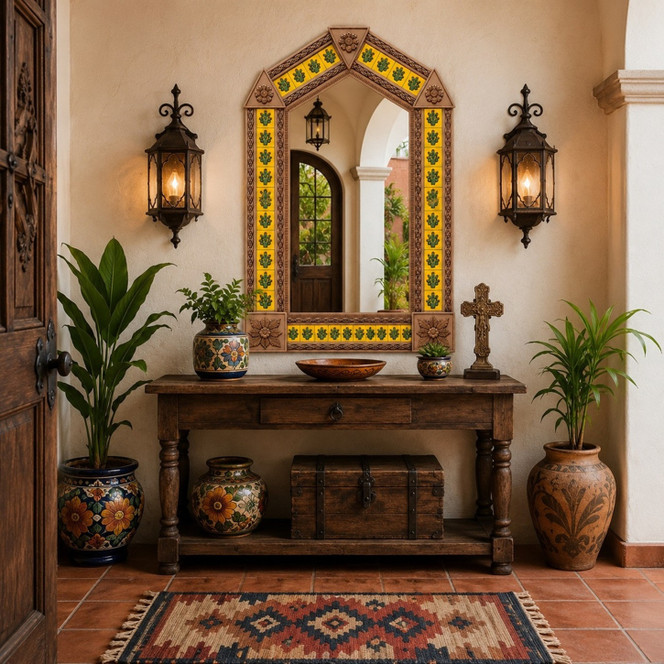
Mexican hacienda style is common throughout the Southern United States and across Latin America, and has evolved into a favored vocabulary for high-end homes in central Mexico as well as warm-weather U.S. regions. The appeal crosses borders: expatriates and sun-seekers adopt it for its indoor-outdoor lifestyle and timeless comfort. At its core, the look is rustic and organic—never fussy, always tactile. Interiors embrace earthy textures and handcrafted finishes that weather beautifully. Hallmarks include hand painted tiles, wrought-iron doors and grilles, timber beams, and plaster walls that diffuse light. Reflective accents—like punched tin mirrors—add sparkle without breaking the honest, artisan-made feel. Larger anchor pieces such as zinc range hoods, farmhouse dining tables, and handmade wooden furniture ground rooms with scale and presence.
Design DNA: Arches, Shade, and Human-Scale Proportions
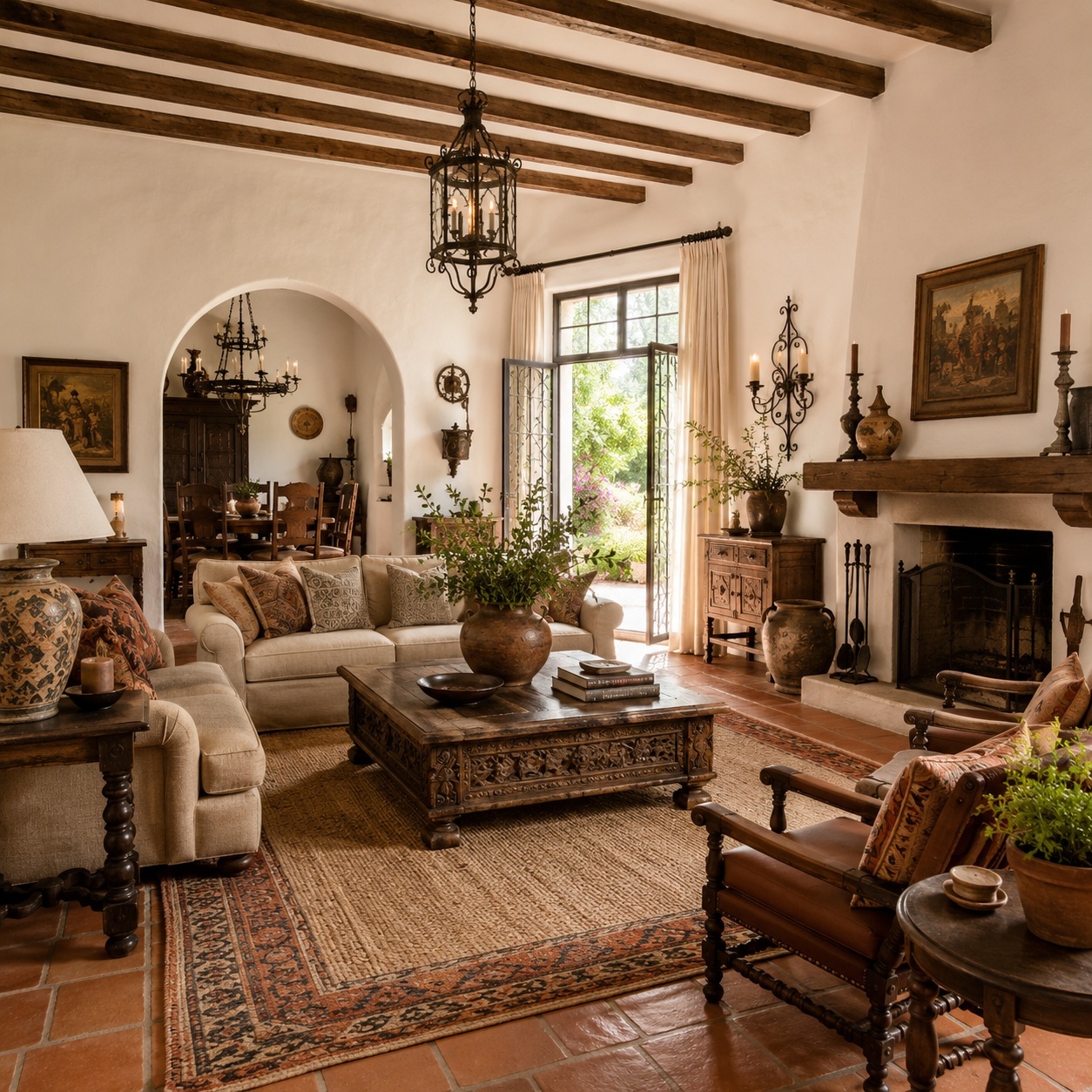
Arches are more than decoration; they are a climate response, creating long, shaded galleries that cool interiors and connect rooms to gardens. Door and window openings tend to be tall and narrow, with deep jambs that cast dramatic shadows. Ceilings may be flat plaster or feature timber vigas and latillas. Colors are sun-washed rather than synthetic: whites and creams for walls, terracotta and sand for floors, and a supporting cast of indigo, green, and golden yellow in tile and textiles. The overall effect is relaxed, durable, and deeply livable—spaces that invite use rather than perfection.
Outdoor Living: Furniture, Fountains, and Dining Under the Sky
Hacienda life flows outside. A covered portal becomes a dining room, and a bougainvillea-draped wall turns into a backdrop for gatherings. Consider a grouping of patio dining furniture to anchor your courtyard or veranda. A stone or cantera fountain introduces soothing sound and a focal point; even a small wall fountain transforms a patio into a sanctuary. For color and movement, place Talavera planters in thirds or fives along a wall or stair, balancing large leafy greens with flowering varieties. If space allows, a masonry wood oven or grill becomes the social heart for weekend cooking, reinforcing the generous spirit of the style.
Kitchen Character
The kitchen is an ideal place to showcase artisan work. A sculptural metal hood draws the eye and sets the material tone for the room. Explore ideas for a metal range hood in a kitchen that harmonizes with hand-painted tile and rustic wood. Talavera backsplashes bring pattern and color across the cooking zone, while open shelves with carved brackets display pottery and copper vessels. Mix textures: smooth plaster walls, hand-hewn cabinet doors, and worn stone counters. A long trestle table and benches accommodate casual meals, homework, and weekend projects, while a black wrought iron chandelier adds graphic contrast over the dining area. Because hand-forged ironwork is a centuries-old trade, you can extend the motif to cabinet pulls, door hardware, and window grilles for cohesion.
Hand-Painted Tile
Tile is the language of the hacienda. In kitchens, it protects walls and adds personality; in baths, it elevates showers and vanities; on stair risers, it becomes a rhythm of color that is both eye-catching and protective. Start with a field tile that sets a calm base tone, then layer in borders or decos for movement. The trick is restraint—let one pattern lead, while others provide supporting accents. For inspiration and practical guidance, explore the world of rustic wall tiles and the tradition of talavera tile, where variation is a feature, not a flaw. Slight differences in glaze and brushwork catch light beautifully and keep surfaces lively over time.
Lighting and Ironwork: The Jewelry of the Hacienda
Ironwork frames the architectural story. Exterior doors, balconies, and stair rails gain identity with forged scrolls and hammered textures. Inside, chandeliers, sconces, and lanterns provide structure and warmth. Balance scale and detail: a large chandelier can float over a dining table or living room, while smaller lanterns punctuate corridors and porches. Reflective pieces like punched tin mirrors amplify natural light and add sparkle to otherwise matte palettes. When selecting fixtures, favor hand-made pieces with subtle irregularities; they age gracefully and tie back to the artisan tradition that defines this style.
Baths with Soul: Copper, Tile, and Sun-Washed Plaster
In the bathroom, a single statement can transform the space. A freestanding copper bathtub brings warmth, durability, and a timeless silhouette. Hand-hammered surfaces develop a soft patina that pairs naturally with stone floors and plaster walls. Surround the tub with cheerful tile—perhaps a border at chair-rail height, a mosaic niche, or patterned risers on a step-up platform. Metal mirrors and iron towel bars carry the language of the rest of the house into the bath, creating continuity without feeling themed.
Where to Begin
If a top-to-bottom renovation is not in the cards, start small. Swap a standard dining set for Mexican outdoor dining furniture and move meals outside whenever weather allows. Refresh a kitchen backsplash with a band of Talavera decos, or add patterned tiles to stair risers for protection and pop. Upgrade one light at a time: a wrought-iron chandelier in the entry or dining room reads big without changing walls. Consider a living room focal point like a metal hood or a pair of tall iron doors to a patio. You can even begin with art and accessories—textiles, pottery, and mirrors—to test a palette before committing to architectural changes.
Bringing Room by Room
- Entry and corridors: arches, niches, tile thresholds.
- Living areas: timber, woven chairs, layered textures.
- Dining spaces: big table, benches, iron chandelier.
- Kitchens: sculptural hood, hand-painted backsplash.
- Bedrooms: quiet walls, textiles, iron canopy bed.
- Baths: one bold feature; keep finishes simple.
- Patios and courtyards: shade, seating, water.
Authenticity Through Craft
What sets true hacienda style apart is craftsmanship. Machine-made replicas rarely capture the nuance of handwork: the slight wave in a plaster wall, the hammered marks on iron, the soft variability of glaze. Sourcing matters. Our company focuses on authentic, handmade colonial pieces across kitchen and bath, wall decor, lighting, and Mexican outdoor dining furniture. Whether your goal is a full-scale renovation or a targeted refresh, you can realize your vision of a Hacienda-inspired home improvement with a few smart choices. Start with a statement—perhaps a metal range hood in a kitchen—and let the rest of the palette follow. Talavera on the backsplash, a long wood table, and a black wrought iron chandelier will carry the theme with ease.
Stair Risers, Patios
Details bring rooms to life. Tiling stair risers with talavera tile is more than a decorative flourish. It protects a high-wear surface and visually ties floors to the rest of the palette. On patios, a patterned tile rug beneath a dining table defines the zone without adding bulk. In bathrooms, a small niche lined with decos can be the difference between generic and personal. At entrances, a patterned threshold welcomes guests and signals the style within. Small decisions like these pay outsized dividends in mood and coherence.
Color Strategy
Hacienda interiors are often remembered for their color, but the secret is restraint. Begin with earth tones—plaster whites, bone, clay, and wood—and use saturated hues as accents in tile, textiles, and art. Blues cool sunlit rooms; greens connect interiors to gardens; ochres and reds echo clay roofs and soil. Metal finishes, from zinc to blackened iron to weathered copper, add depth without overwhelming. The result is a layered palette that feels collected over time rather than installed all at once.
Common Pitfalls
- Over-patterning: select one hero motif.
- Glossy newness: choose matte, hand finishes.
- Themes without context: reflect local climate.
- Lack of shade and airflow: add deep eaves.
- Scale errors: size up doors and fixtures.
Planning a Renovation
- Identify the heart: courtyard or terrace.
- Set materials: plaster, timber, stone, tile, metal.
- Stage upgrades: start with lighting and tile.
- Unify hardware and ironwork finishes.
- Furnish slowly: invest in heirloom anchors.
Bringing the Hacienda Home
Hacienda style is less a checklist than a way of living. It prizes shade as much as sunlight, texture as much as color, and craft as much as convenience. Whether you begin with patio dining furniture, an expressive tile stair, or a copper centerpiece bathtub, each step draws you closer to a home that feels grounded and welcoming. If your vision includes more ambitious moves—arches, carved stone columns, or a full courtyard plan—approach the work as a layered process. Over time, the patina of use will enrich every surface, just as it has in Mexico’s historic estates. With the right blend of materials, proportion, and craft, the spirit of the hacienda can thrive wherever you live.