 US Dollar
 Euro
Euro
 Australian Dollar
 Canadian Dollar
 Polish Zloty
 British Pound

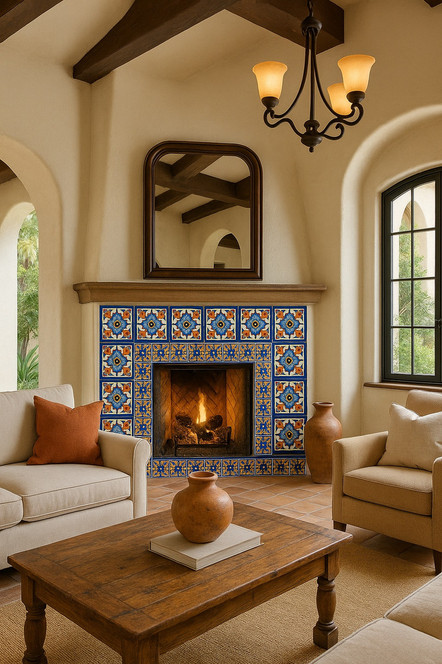
This buying guide helps you choose the right quantity, layout, and finish details for the Mexican Blue Floral Talavera Tile. It explains where this pattern looks best, how to plan symmetry, and how grout color changes the final look. You will also learn simple care habits that protect the glaze and keep the floral design crisp over time.

What makes this blue floral tile easy to design with
This pattern relies on classic blue and white contrast, so it pairs naturally with many materials. Blue floral Talavera reads clean in modern kitchens, but it also fits rustic, coastal, and transitional interiors. The floral theme adds movement without feeling chaotic, especially when the repeat is kept consistent across a full backsplash or feature wall.
Start with placement and lighting
Before you choose quantity, decide where the tile will live. A kitchen backsplash is the most common placement because the pattern sits at eye level and catches light. Bathroom walls and accent niches also work well when you want color without overwhelming the entire room.
Pick a layout approach that supports the pattern
This tile looks best when the grid is straight and the spacing is consistent. If your surface has a strong center point, begin layout from the center so both ends land with balanced cuts. Center-start layout also helps the pattern feel intentional near corners, outlets, and cabinet edges.
Full field installation for maximum impact
A full field creates a traditional Talavera presence and turns the surface into a focal feature. This approach works best when counters and cabinets stay calm, so the blue floral repeat carries the visual interest. If you want to see other coordinated options, browse the wider Mexican tiles category and compare color intensity across patterns.
Accent use for controlled color
If your room already has strong stone movement or bold paint, use this tile as an accent strip, framed insert, or small backsplash zone. Accent use keeps the color story while protecting visual balance. It also reduces the number of cuts, which can help keep the floral repeat looking clean.
Choose grout color based on the look you want
Grout can either soften the grid or highlight it. A lighter grout keeps the surface airy and lets the blue floral shapes stand out as the main event. A slightly darker grout makes each tile edge more defined, which can add structure in modern rooms.
Plan the right quantity with a realistic buffer
Do not order only the exact square footage. You need extra tile for cuts, breakage, and future repairs. Cuts near corners, outlets, and trim consume more tile than most people expect. An extra buffer also helps you keep the pattern consistent if you need to replace a tile later.
Mixing this pattern with other tiles
If you want a more collected look, you can combine this tile with complementary patterns or mixed lots. For curated variety, explore Mexican tile patterns to compare repeats and border styles. If you want a more playful, patchwork effect, review Mexican pattern tile mix options and plan a balanced distribution of color.
Cleaning and care stays simple
Use mild soap, water, and a soft cloth for routine cleaning. Avoid abrasive pads and harsh chemical cleaners because they can dull glazed surfaces over time. In kitchens, wipe splatters early so oils do not build a film. In bathrooms, rinse soap residue when possible to keep the glaze bright.
Quick buying checklist
- Decide placement and viewing distance first
- Plan symmetry before cutting begins
- Choose grout to soften or outline the grid
- Order extra tile for cuts and future repairs
- Compare patterns if mixing with other tiles
- Use gentle cleaners to protect the glaze
Conclusion
The Mexican Blue Floral Talavera Tile is an easy choice when you want handcrafted color that still feels clean and controlled. Plan the layout from the center, choose grout for the level of definition you prefer, and order enough tile to handle cuts and future needs. With simple maintenance, the glossy surface stays bright and the blue floral pattern remains a timeless focal point in kitchens, baths, and accent walls.