 US Dollar
 Euro
Euro
 Australian Dollar
 Canadian Dollar
 Polish Zloty
 British Pound

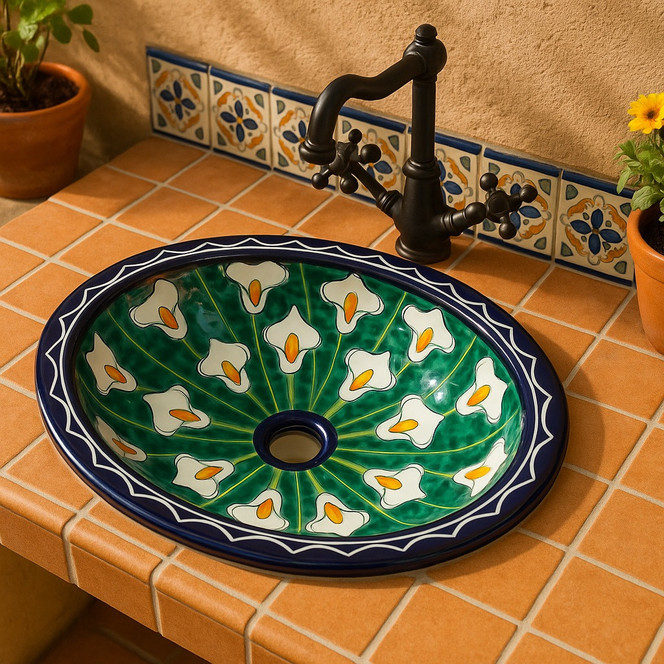
Color and pattern shape your bathroom more than you expect. A sink sits at eye level. It becomes the vanity’s main accent. That makes every hue feel stronger. This guide keeps the process simple. It uses clear steps and real room cues. Start by browsing Mexican bathroom sinks. Then match your choice to tile, paint, and light. You will avoid visual noise. You will also avoid “almost matching” whites. The goal is easy harmony. The goal is a sink that feels chosen, not random.
Start with finishes you will not replace
Your sink should follow what is already fixed. Tile is usually the biggest driver. Countertops are the second driver. Flooring also matters a lot. These surfaces set the room’s temperature. They also set its pattern energy. If your floor is bold, the sink must breathe. If your counter is dark, the sink will pop more. Stand in the room and look around. Identify the two most dominant surfaces. Let those surfaces guide your sink choice.
Read undertones, not color names
“White” is not one color. Some whites look creamy and warm. Other whites look crisp and cool. Beige can lean yellow, pink, or green. Stone can lean blue or gold. These undertones create the final mood. A sink can clash without obvious reasons. That clash is usually undertones. Compare your wall white to your counter white. Then imagine the sink’s base glaze beside them. Choose a base glaze that sits calmly with both.
Decide the sink’s role in the bathroom
Every bathroom needs one clear focal point. Sometimes that is the sink. Sometimes it is the shower wall. Sometimes it is the mirror. Decide the focal point first. This prevents competing statements. If the room already has bold tile, choose a calmer sink. If the room is simple, choose a stronger sink. This decision also reduces regret. You will know what you are building toward. You will also know what to avoid.
Choose a focal pattern when the room is quiet
Quiet rooms can handle more pattern. White walls help bold designs shine. Simple counters also help. A focal sink should have strong contrast. It should also have clear structure. Symmetry reads calmer than chaos. Borders help contain busy details. A centered motif helps too. If you choose a focal sink, keep other items minimal. Let the sink carry the personality. Then the room feels curated, not crowded.
Choose a supporting pattern when the room is busy
Busy rooms already have movement and texture. Patterned floors create constant visual activity. Veined stone counters also create movement. In these rooms, the sink should support. Choose designs with more open glaze areas. Choose simpler borders and fewer color breaks. This keeps the vanity readable from the doorway. It also keeps your eyes relaxed. The craft still shows. It just does not compete with everything else.
Pick a palette rule and stick to it
Talavera sinks can include many colors at once. That does not mean your bathroom should repeat them all. Too many repeats create clutter. A simple palette rule prevents that. Choose one dominant sink color. Then choose one supporting sink color. Let the rest stay inside the pattern. This keeps the room calm. It also makes the sink feel special. You get richness without visual overload.
Use two colors plus a neutral base
Most bathrooms already have a neutral base. That base is often white, cream, or stone. Treat that base as your “quiet zone.” Then add two colors through the sink. Cobalt and white feel classic and crisp. Green and white feel fresh and earthy. Yellow accents add warmth and light. Keep the dominant color obvious. Keep the supporting color smaller. This creates hierarchy. Hierarchy always looks more intentional.
Repeat one sink color once in the room
One repeat makes the sink feel built in. It does not need to be large. A towel can do it. A small vase can do it. Even a candle label can help. Choose the easiest color to repeat. Then repeat it only once. This single echo ties the vanity together. It also keeps the sink from feeling isolated. Avoid repeating every color in the pattern. That usually makes the room feel busy.
Match pattern density to bathroom size
Bathrooms amplify pattern more than other rooms. They are smaller and brighter. Hard surfaces reflect color strongly. That makes dense designs feel louder. Pattern density should follow room size. It should also follow how much visual texture exists already. A dense sink can look amazing. It just needs space and calm around it. A lighter sink can still look rich. It relies on glaze quality and clean borders.
Small bathrooms need breathing room
In a small bath, you see everything at once. Dense patterns can feel chaotic quickly. Choose designs with open fields of glaze. Choose patterns with clear symmetry. Borders should feel tidy and contained. A simpler pattern can still feel premium. It can even feel more elegant. Small rooms reward restraint. They also reward clarity. Your sink should feel like a jewel, not wallpaper.
Large bathrooms can handle richer designs
Large bathrooms have more negative space. That space calms the eye. It also gives patterns room to read. You can choose bolder borders and denser motifs. You can also use deeper colors. Dark blues and warm yellows feel grounded here. Just keep one major statement at the vanity. If the shower wall is bold, reduce sink density. If the shower is calm, the sink can lead.
Coordinate the sink with tile and paint
Your sink sits between wall and counter. It must bridge both surfaces. The easiest method is “echo and balance.” Echo one element in the room. Balance the rest with calm. If tile has straight grids, choose structured patterns. If tile has organic movement, choose softer motifs. Paint color also matters. Warm paint softens contrast. Cool paint sharpens contrast. Choose the sink that looks right in your light.
Busy tile works best with calmer sink patterns
Busy tile already delivers strong rhythm. It can include repeats, borders, and color breaks. A busy sink on busy tile can feel too loud. Choose a sink with fewer motifs. Choose a sink with wider quiet areas. Let the border carry the detail. Let the bowl center stay calmer. This keeps the bathroom readable. It also keeps the vanity from feeling like a collage. Calm sinks make busy tile look more refined.
Calm tile allows bold sink patterns
Calm tile creates a clean backdrop. That backdrop makes Talavera pop. In these bathrooms, a bold sink feels intentional. Choose strong contrast and clear geometry. Choose lively borders and confident pigments. Keep your counter surface simple if possible. Keep the mirror frame simple too. This prevents competition. The sink becomes art. The room still feels balanced. You get energy without mess.
Use hardware finishes to steer the mood
Faucets and pulls act like a frame. They sit close to the sink glaze. Their metal tone shifts how colors read. Black creates crisp edges and contrast. Brass adds warmth and glow. Chrome and nickel feel clean and bright. Pick a finish that supports your palette. Do not treat metal as neutral. Metal reflects light and color. It can either harmonize or fight. A good match makes everything look more finished.
Black hardware makes patterns feel sharper
Matte black increases graphic contrast. It also makes outlines look cleaner. This pairs well with cobalt-heavy designs. It also suits modern or rustic bathrooms. Black can overwhelm delicate pastel palettes. If your sink has softer tones, black may feel heavy. Use black when you want structure. Use it when you want drama. Keep surrounding accessories minimal. Then black frames the sink without dominating it.
Brass hardware warms the glaze and softens contrast
Brass adds golden warmth to the vanity zone. It makes whites look creamier. It also makes blues feel richer. Brass pairs well with earthy patterns. It also pairs well with warm yellows and greens. In cool gray bathrooms, brass can still work. Keep the sink base tone compatible with cool whites. Then brass becomes a planned contrast. The result feels layered and intentional, not mismatched.
Chrome and nickel keep the look bright and clean
Chrome reflects light strongly and reads crisp. Nickel feels softer and less mirror-like. Both finishes work well with cool palettes. They also work with white-forward sinks. If your bathroom is small, these finishes help it feel brighter. They can also help patterns feel lighter. If your sink has warm accents, nickel often blends better. Chrome can make warm colors feel more intense. Choose based on your lighting tone.
Test your choice under real bathroom lighting
Lighting changes saturation and warmth fast. Daylight shows true undertones and contrast. Night lighting shows how the vanity will feel daily. Warm bulbs can push yellows forward. Cool bulbs can intensify blues. This can be good or bad. The key is awareness. Think about your bulb type and brightness. Also think about how glossy surfaces reflect light. A glossy glaze can look brighter at night. Plan for the room you actually live in.
Daylight reveals true base tone and clarity
Daylight is the best truth test. It shows whether whites match. It also shows whether colors feel balanced. Check the bathroom near midday if possible. Look at the wall color and counter tone. Imagine the sink’s base glaze beside them. If the base glaze seems too yellow, it may fight cool surfaces. If it seems too icy, it may fight warm surfaces. Choose a base glaze that looks calm in daylight. Then accents will look better too.
Night lighting reveals comfort and visual fatigue
Night lighting decides daily mood. Many people use warm vanity bulbs. Warm light can soften strong blues. It can also boost warm accents. This can make patterns feel cozier. It can also make them feel busier. Imagine brushing teeth at night. Imagine the pattern at that distance. If it feels too loud, choose a simpler design. If it feels too flat, choose a stronger border. Choose what feels comfortable for daily routines.
Avoid the most common color and pattern mistakes
Most mistakes come from excitement, not bad taste. People choose what looks striking online. Then the room feels messy in person. The fix is simple planning. Avoid repeating too many colors around the sink. Avoid mismatched whites between sink, wall, and counter. Avoid competing motifs between sink and tile. These three issues create most “off” bathrooms. When you avoid them, your sink looks more expensive. It also looks more intentional. The craftsmanship becomes clear and readable.
Too many repeated colors creates clutter
Talavera patterns can include many hues. Repeating all of them spreads noise across the room. Instead, repeat only one sink color once. Keep other accessories neutral. Let the sink do the storytelling. This also helps small bathrooms feel larger. It keeps the vanity from feeling busy. It also makes cleaning easier visually. Clutter is not only physical. It is also visual. Reduce repeats and the room feels calmer immediately.
The wrong white makes everything feel mismatched
White clashes are surprisingly common. A sink base can be warm and creamy. Your wall white can be cool and gray. Put them together and it feels wrong. The pattern might be perfect, yet it still clashes. Always think of “white temperature.” Match warm whites with warm surfaces. Match cool whites with cool surfaces. If you cannot match perfectly, choose a sink with a busier border. Borders distract from white mismatch better than plain designs.
Competing motifs makes the room feel noisy
Motifs can clash even when colors match. A busy floral sink can fight geometric tile. A sharp graphic border can fight organic stone veining. You want one main motif family. Either choose soft curves throughout. Or choose structured geometry throughout. You can mix, but do it carefully. Use one motif as the leader. Use the other as a quiet supporting texture. This keeps the room unified. It also makes the sink feel like a planned centerpiece.
Quick decision checklist
- Identify two dominant fixed surfaces
- Match sink base undertone to those surfaces
- Decide sink as focal or supporting
- Choose density based on room size
- Repeat one sink color once, then stop
- Align metal finish with warm or cool tones
- Check daylight, then check night lighting
- Avoid competing motifs with existing tile
Conclusion
Choosing sink color and pattern should feel clear, not stressful. Start with what you cannot change. Then decide the sink’s role in the room. Match undertones before matching accent colors. Choose pattern density based on bathroom size and tile activity. Use hardware to support the mood, not fight it. Test your choice in day and night lighting. Repeat one sink color once for cohesion. When you follow these steps, your sink feels intentional and the bathroom feels complete.