 US Dollar
 Euro
Euro
 Australian Dollar
 Canadian Dollar
 Polish Zloty
 British Pound

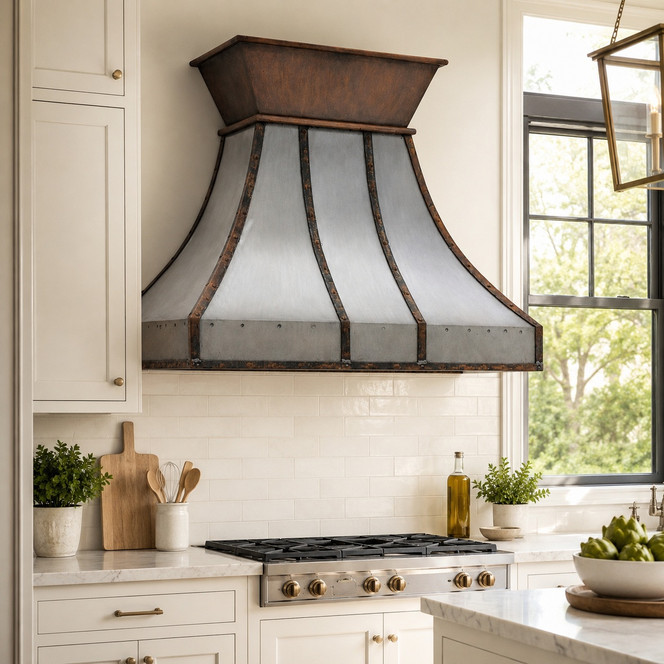
Iron Range Hood with Riveted Straps and Flared Collar is designed for kitchens that need dark metal character, strong architectural lines, and handcrafted Old World detail above the cooking surface. Its iron body, riveted vertical straps, flared upper collar, and substantial metal presence make it suitable for transitional, modern rustic, industrial loft, Spanish Revival, and rustic European kitchen interiors. Unlike a plain appliance hood, this design works as a custom metal shell prepared for ventilation planning while adding visual strength to the range wall. Explore the riveted iron range hood to review its shape, finish, installation options, and handcrafted details.
Blog Summary
- Design: Riveted iron hood
- Shape: Flared collar profile
- Style: Rustic and industrial
- Use: Wall or island planning
- Finish: Dark handcrafted iron
Design Guide Overview
An iron range hood with riveted straps and a flared collar is a strong design choice for kitchens that need visual weight above the range. The dark metal finish creates contrast against light cabinetry, stone backsplashes, plaster walls, brick, and wood surfaces. Riveted straps add depth and a handcrafted industrial rhythm, while the flared collar gives the upper portion a bold architectural transition. This type of hood works best when treated as the main focal point of the cooking wall. Cabinets, tile, hardware, and lighting should support the iron design rather than compete with its dark metal presence. Browse room inspiration in our riveted iron range hood image guide to see how the design works with rustic and modern kitchen settings.
Riveted Strap Detail
The riveted straps are one of the most important visual features of this hood. They create vertical structure and reinforce the handmade metal character. Rivets add small raised points across the surface, giving the hood a more substantial and crafted appearance than a smooth appliance cover. This detail works especially well in industrial loft kitchens, rustic European interiors, and Spanish Revival rooms where visible metalwork is part of the design language. The straps also help break up the dark surface so the hood feels dimensional rather than flat. Their spacing should feel balanced with the hood width and surrounding cabinetry.
Strap Design Benefits
- Texture: Adds metal depth
- Rhythm: Creates vertical lines
- Detail: Shows rivet work
- Style: Supports rustic rooms
- Focus: Frames the range
Flared Collar Shape
The flared collar gives the hood a powerful upper transition. Instead of moving straight into a narrow chimney or flat top, the collar expands outward and creates a broader architectural break. This shape makes the hood feel more custom and helps it hold its own in kitchens with tall walls, high ceilings, heavy beams, or large cooking appliances. The flared collar also balances the vertical straps by adding horizontal emphasis near the top. In transitional kitchens, the collar adds interest without requiring ornate decoration. In rustic and industrial kitchens, it reinforces the sturdy metalwork character of the hood.
Handcrafted Iron Finish
Iron brings a different personality from copper, zinc, brass, or stainless steel. It feels darker, stronger, and more architectural. A handcrafted iron finish can show tonal variation, subtle surface marks, and aged character that work well with rustic materials. The finish should be coordinated with the kitchen’s hardware, lighting, table bases, and other metal details. Black iron pairs beautifully with wood beams, natural stone, brick, plaster, leather seating, and dark cabinet hardware. It can also contrast sharply with white cabinetry for a dramatic range wall. The key is to repeat dark metal in small places so the hood feels integrated.
Iron Finish Pairings
- Wood: Adds natural warmth
- Stone: Grounds dark metal
- Brick: Supports rustic style
- Plaster: Softens the hood
- Leather: Adds rich texture
Metal Hood Category
This riveted iron hood belongs to a wider group of handcrafted ventilation covers made from different metals and finishes. Copper offers warmth and evolving patina, zinc creates softer gray tones, pewter feels refined and muted, and iron creates bold dark structure. Comparing materials helps determine which hood will best support the kitchen style. Iron is especially effective when the goal is strength, contrast, and architectural definition. For broader shape and material comparisons, explore metal range hoods and review how different metals change the mood of the cooking wall.
Iron Hood Category
Iron range hoods are useful in kitchens that need stronger visual contrast than copper or zinc can provide. Their dark finish can make light cabinetry look sharper, emphasize the range area, and connect with iron lighting, black hardware, steel windows, or metal furniture bases. Some iron hoods are simple and minimal, while others include straps, rivets, collars, crowns, or apron details. This riveted strap and flared collar model leans toward rustic industrial and Old World design, but it can also work in transitional interiors when surrounding details are kept clean. Browse iron range hoods for related handcrafted styles.
Industrial Loft Kitchens
Industrial loft kitchens often include exposed brick, concrete, steel, black window frames, open shelving, and simple cabinetry. A riveted iron hood fits naturally in this setting because the dark metal looks structural rather than decorative. The flared collar adds a custom architectural detail, while the rivets connect with the language of metal fabrication. To keep the kitchen balanced, pair the hood with restrained cabinetry, stone or concrete counters, and warm wood accents. Too many heavy details can make the room feel dark, so use the hood as the main feature and support it with lighter walls or open visual space.
Industrial Pairings
- Brick: Adds loft texture
- Concrete: Keeps it modern
- Steel: Supports metal style
- Wood: Warms the room
- Glass: Lightens dark metal
Modern Rustic Kitchens
Modern rustic kitchens combine cleaner lines with natural materials. The riveted iron hood works well because it creates a strong focal point without needing excessive carving or decorative motifs. Pair it with flat or shaker cabinetry, stone counters, open wood shelves, matte black hardware, and simple backsplash materials. The hood can provide the rugged character, while the rest of the room remains open and edited. This balance prevents the kitchen from looking overly themed. A flared collar adds enough shape to feel handmade, and the dark iron finish brings contrast to warmer wood and neutral walls.
Rustic European Style
Rustic European kitchens often use stone, aged wood, plaster, muted colors, and substantial architectural forms. An iron hood with riveted straps fits this style because it feels durable and historically grounded. The dark finish can echo old hardware, forged lighting, door straps, fireplace tools, and antique furniture details. The flared collar gives the hood a sense of masonry-like weight, even though it is a metal shell. Pair it with limestone, brick, reclaimed beams, cream plaster, or darker stained cabinetry. The result can feel collected, traditional, and slightly aged without becoming overly ornate.
Transitional Kitchen Use
In transitional kitchens, the iron hood should be used carefully as a focused contrast. Light cabinetry, stone counters, and simple tile can make the dark metal feel refined rather than heavy. The riveted straps introduce texture, but surrounding materials should remain calm. A plain backsplash or soft stone field often works better than a highly patterned tile. Repeating black or iron tones in cabinet pulls, lighting, or stool frames helps connect the hood to the rest of the room. The flared collar adds architectural interest while still allowing the kitchen to feel updated and balanced.
Transitional Pairings
- Cabinets: Keep lines simple
- Stone: Use quiet surfaces
- Hardware: Repeat black iron
- Lighting: Choose warm bulbs
- Tile: Avoid busy patterns
Spanish Revival Influence
Spanish Revival kitchens often feature plaster walls, arches, dark wood, clay tile, iron lighting, and handmade surfaces. A riveted iron hood can fit this style because forged metal is already common in railings, chandeliers, gates, lanterns, and hardware. The hood’s dark body creates contrast against warm plaster and can coordinate with wrought iron fixtures. The flared collar gives the design a strong architectural top, while the rivets bring handcrafted detail. To keep the room balanced, use tile and color in controlled areas. Let the iron hood remain the central feature above the range.
Wall or Island Planning
This hood style can be planned for wall or island installation depending on the kitchen layout. A wall-mounted version works above a range against a backsplash and can be framed by cabinets or left open as a freestanding focal point. An island version must look balanced from multiple sides because it is visible from the kitchen, dining, and living areas. The flared collar, straps, and rivets should align clearly with the main viewing angles. Island installations also require careful ceiling support and duct routing. In either layout, proportions should be confirmed before production begins.
Planning Checks
- Width: Match range scale
- Height: Fit ceiling space
- Depth: Support capture area
- Duct: Plan vent route
- Insert: Confirm fit early
Ventilation Insert Needs
The iron exterior creates the design statement, but the insert provides the ventilation function. Before ordering a custom hood, confirm the insert size, airflow requirements, filter access, duct direction, and lighting needs. Cooking habits matter. Frequent frying, grilling, or high-output ranges may require stronger airflow than light residential cooking. The hood cover should be sized to provide sufficient capture area while maintaining comfortable clearance above the cooking surface. A successful installation combines visual proportion with practical performance. The goal is a hood that looks powerful, removes smoke and odors, and works with the kitchen’s actual cooking demands.
Backsplash Coordination
The backsplash should support the riveted iron hood without competing against it. Simple stone, brick, plaster, subway tile, or muted handmade tile can work well. A dramatic patterned backsplash may be possible, but it should be balanced carefully because the hood already has rivets and straps. Light backgrounds make the dark iron silhouette stand out, while darker stone creates a moodier and more enclosed feeling. In rustic European and industrial kitchens, brick can be especially effective. In transitional kitchens, quieter tile usually works better. The best backsplash gives the hood a clear stage.
Hardware and Lighting
Hardware and lighting help integrate the iron hood into the rest of the kitchen. Cabinet pulls, hinges, pendants, sconces, pot racks, or table bases can repeat the dark metal finish in smaller doses. Warm bulbs are helpful because they soften the black iron and prevent the range wall from feeling cold. If the kitchen includes stainless steel appliances, use wood, stone, or warm lighting to balance the cooler metal. The hood should not be the only dark element in the room, but it also should not be surrounded by too many competing black details.
Finish Coordination
- Pulls: Repeat dark metal
- Lights: Use warm tones
- Wood: Balance the iron
- Stone: Add natural weight
- Trim: Keep details aligned
Care and Cleaning
Iron range hoods should be cleaned gently to protect the finish. Use a soft cloth for dusting and mild cleaning as needed. Avoid abrasive pads, harsh chemicals, or soaking the surface. Grease should be removed before it becomes sticky, especially around straps, rivets, seams, and lower edges. Decorative rivets may collect dust and cooking residue, so these details should be wiped carefully. If the finish is intentionally aged or patinated, aggressive scrubbing can disturb the surface. Regular light cleaning is better than occasional harsh cleaning. Proper care helps the iron hood keep its rich, dark character.
Design Summary
An iron range hood with riveted straps and flared collar is ideal for kitchens that need structure, contrast, and handcrafted metal detail. Its dark finish can define the cooking wall, while the riveted straps and flared collar add depth and architectural strength. The hood works well in industrial loft, rustic European, modern rustic, Spanish Revival, and transitional kitchens when surrounding materials are planned with restraint. Proper sizing, insert planning, backsplash coordination, and finish repetition are essential. When balanced correctly, the hood becomes a functional ventilation cover and a commanding design feature.
Final Design Guidance
Iron Range Hood with Riveted Straps and Flared Collar works best when the kitchen is planned around its dark metal presence. Use the hood as the main focal point, then support it with related hardware, warm lighting, stone, wood, plaster, brick, or simple tile. Confirm dimensions, installation style, and ventilation insert requirements before production so the hood performs as well as it looks. Whether used in a rustic European kitchen, industrial loft, Spanish Revival room, or transitional design, this handcrafted iron hood adds strength, depth, and lasting architectural character above the range.