 US Dollar
 Euro
Euro
 Australian Dollar
 Canadian Dollar
 Polish Zloty
 British Pound

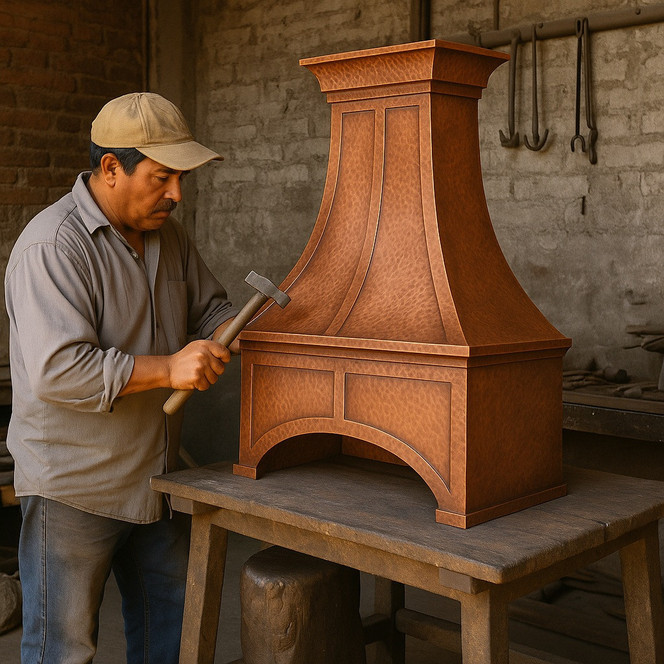
A bell silhouette feels timeless, but never ordinary. This hand hammered bell hood combines soft curvature with artisan texture, creating a focal point that looks rooted and refined. The shape naturally frames the cooktop, while hammered copper breaks up reflections and adds depth across changing light. If you are planning a classic kitchen, a modern rustic refresh, or a warm transitional layout, this guide explains how the bell form works, how to choose proportions, and how to select a patina that supports your palette. You will also find practical planning notes for venting, insert fit, and daily care, so the hood performs as beautifully as it looks.
Why the bell shape stays popular
The bell profile solves two goals at once: it reads decorative without feeling fussy, and it supports real capture over the cooking area. The wider base visually anchors the hood to the range, then the controlled taper guides the eye upward to the chimney. In most kitchens, that taper is the difference between a hood that feels bulky and one that feels tailored. A bell hood also softens hard lines from cabinets, stone slabs, and tile grids. That gentle curve helps a kitchen feel calmer, especially when you use strong materials like dark wood, veined marble, or high contrast tile patterns. When you add hand hammering, the hood gains a quiet shimmer that looks alive, not glossy or flat.
How hand hammering changes the look
Hammered copper is not just decoration. It changes how light behaves across the surface, turning glare into a warm, broken reflection. In bright kitchens, hammering prevents the hood from reading like a mirror. In darker kitchens, it keeps the copper from disappearing into shadow. The texture also helps hide minor fingerprints and everyday marks, which is useful in a working kitchen. Most importantly, hammering communicates craft. It signals that the hood is built, not stamped. Each strike creates micro variations, so the hood feels personal and original even when the overall silhouette stays classic.
Choosing the right patina for your kitchen
Patina is the mood setter. A brighter copper tone feels crisp and energetic, especially with white cabinetry and clean counters. Light antique finishes land in the middle, offering warmth without heavy drama. Deep aged finishes feel grounded and historic, pairing naturally with wood beams, plaster textures, and old world tile. If your kitchen already has strong movement in stone veining or patterned backsplashes, a calmer patina often looks best, because it supports the space instead of competing with it. If your kitchen is minimal and quiet, a deeper patina or richer copper tone can become the main visual story.
Proportion basics that make a hood look custom
Great proportions are what separate “installed” from “integrated.” A hood that is too narrow looks undersized, even if it technically vents. A hood that is too shallow can look fine but perform poorly, because steam and grease roll past the capture area. The bell form helps, but it still needs correct scale. Many homeowners like a hood that has presence without overpowering the cabinetry. That balance usually comes from aligning key lines: the hood base with the range width, the hood centerline with the cooktop center, and the chimney with the vertical rhythm of surrounding cabinets or wall framing. When those alignments click, the hood looks like it belongs.
One planning section with quick bullets
Use these checkpoints before you finalize a custom order. They reduce install surprises and keep the finished look clean.
- Confirm cooktop width and heat output
- Choose depth for stronger vapor capture
- Decide ducted or recirculating ventilation
- Select insert model before final sizing
- Verify ceiling height and chimney length
- Plan duct path and electrical access early
- Check cabinet clearances near trim edges
- Pick patina to match your room palette
Venting choices that affect performance
A hood’s beauty is only half the story. The other half is how effectively it clears heat, steam, and grease. Ducted ventilation typically provides the strongest odor removal because it exhausts air outside. It also reduces humidity buildup during longer cooking sessions. Recirculating setups can work when ducting is not possible, but they depend on filter quality and consistent maintenance. If you cook frequently, especially with high heat, ducted venting is usually the better long term choice. If you cook lightly or live in a space where exterior venting is restricted, recirculation can still work, but you want realistic expectations and a maintenance routine that keeps filters doing their job.
Insert fit and what to confirm early
The hood shell and the insert must match in width, depth, and internal clearances. Inserts also differ in how controls are accessed, where lights are located, and how the duct collar aligns. That is why selecting the insert early is so important. It prevents last minute compromises like changing chimney height, reshaping the internal support frame, or altering trim details to make room. If you want quieter performance, consider insert options that support better sound management, or layouts that allow for remote blower solutions when appropriate. The goal is simple: choose the performance system first, then build a beautiful copper shell around it with confidence.
Where a bell copper hood looks best
The bell silhouette is unusually flexible. In a classic kitchen, it echoes traditional architecture and pairs naturally with crown molding, inset doors, and warm stone. In a rustic kitchen, it reads handcrafted and authentic, especially with wood textures and aged hardware. In transitional kitchens, the bell shape softens modern lines without looking ornate. Even in more contemporary spaces, a simplified bell hood with restrained trim can feel sculptural and intentional. The key is choosing the right finish and detail level. Cleaner edges and a calmer patina feel modern. More pronounced trim and deeper aging feel historic.
Design pairings that make copper feel intentional
Copper looks best when it has supporting materials nearby. That does not mean you need a fully copper kitchen. It means you should echo its warmth in a few places so the hood feels planned, not isolated. Warm wood tones, leather accents, terracotta hints, and creamy plaster finishes all support copper’s color. Matte black hardware creates contrast and makes copper glow. Aged brass can work as well, but you want to keep the undertones coordinated so the kitchen feels cohesive. If your counters are cool toned, like gray marble or honed charcoal stone, a deeper patina can bridge the temperature gap, making the whole room feel balanced.
How to read the lifestyle image and apply it at home
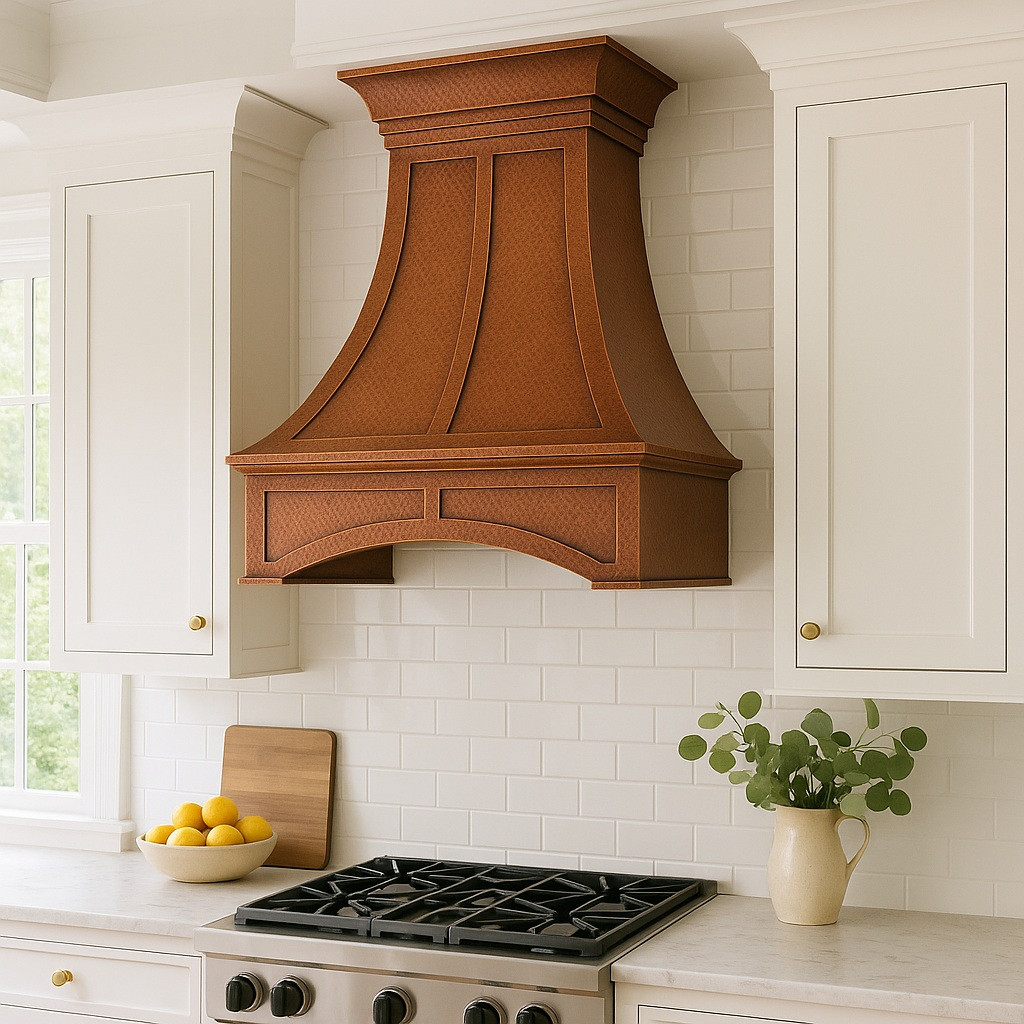
Lifestyle settings help you visualize scale, tone, and contrast. In the image above, the hood reads substantial without feeling heavy because the bell curve breaks up the mass. The hammered surface adds dimension, so the copper feels warm rather than shiny. Notice how the hood becomes the center of attention while still harmonizing with surrounding finishes. That is the lesson to bring home: let the hood be the hero, then keep nearby surfaces calm enough to support it. If your backsplash is highly patterned, choose a patina that is quieter. If your backsplash is simple, you can choose a richer patina and let the copper provide the texture.
Care and maintenance for hammered copper
Copper is easier to live with than many homeowners expect. For day to day cleaning, use a soft cloth with mild soap and water, then dry the surface to avoid water spotting. Avoid abrasive pads and harsh chemical cleaners, because they can scratch the surface or strip protective coatings. If your finish is designed to age, gentle cleaning is enough, and the patina will deepen naturally over time. If your finish is sealed or stabilized, follow the same mild approach and avoid aggressive polishing. The hammered texture helps disguise small marks, so you do not need to chase perfection. Consistent light care keeps the hood looking intentional.
Common mistakes to avoid when ordering
The most common mistake is choosing size purely by appearance. A hood can look beautiful and still underperform if it lacks depth or adequate capture area. Another mistake is waiting too long to pick the insert, then discovering the internal clearances do not match the planned shell. Duct planning is also often overlooked, especially in remodels where framing, beams, or upper cabinets restrict routing. Finally, some kitchens forget lighting. Good task lighting over the cooktop matters, and you want to confirm how the insert handles light placement and controls. A custom hood should install cleanly because the planning happened early, not because the installer had to improvise.
When custom sizing matters most
Custom sizing is especially useful in two situations: tall ceilings and wide cooking surfaces. In tall rooms, the chimney height and overall hood scale need to look proportional, or the hood can feel visually lost. On wider ranges, extra width and depth help capture steam and grease before it spreads. The bell shape can be scaled beautifully for both situations, but it needs the right balance so it does not become too bulky at the base. This is where small design moves help, like keeping trim restrained, choosing a hammer pattern that diffuses light evenly, and selecting a patina that complements the room rather than dominating it.
Final styling ideas for classic kitchens
Warm neutrals and natural stone
A bell hood feels at home with creamy whites, warm grays, and natural stone that has soft movement. Choose a patina that echoes the warmth in the stone, then keep hardware finishes consistent so the room feels composed. Hammered copper looks especially good with honed counters, because both surfaces share a low glare, tactile quality.
Wood beams and rustic accents
If your kitchen has beams, plank ceilings, or reclaimed wood elements, consider a deeper aged finish. The hood will look rooted, like it has always been part of the home. Use the hammered surface as a bridge between rough wood grain and smoother stone or plaster, so the room feels layered and intentional.
Transitional cabinetry and clean lines
In transitional spaces, keep the hood’s details disciplined. The bell curve provides softness, so you can reduce extra ornament. A balanced patina and even hammering create texture without visual noise. This approach lets copper feel refined, not rustic, while still delivering warmth that stainless cannot match.
Conclusion
A hand hammered bell copper range hood brings more than a beautiful finish. It adds shape, warmth, and artisan depth, while supporting practical capture over everyday cooking. When you plan proportions, venting, and insert fit early, the final result looks effortless and performs reliably. If you want to explore more styles and sizes, browse the copper range hood collection and check today’s range hoods sale for current opportunities.