 US Dollar
 Euro
Euro
 Australian Dollar
 Canadian Dollar
 Polish Zloty
 British Pound

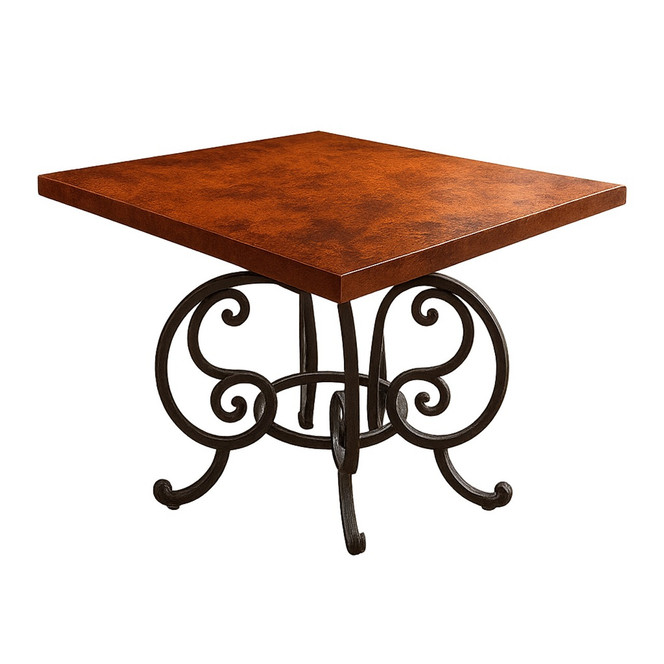
Handcrafted Round & Square Copper Table: Traditional Artistry Meets Enduring Elegance
The Handcrafted Copper Table with Wrought Iron Base is a masterful fusion of old-world craftsmanship and contemporary functionality. Available in both round and square formats, its hand-hammered copper top showcases subtle undulations, tonal variations from burnt orange to deep brown, and a matte, fire-aged patina that evolves with time. The wrought-iron base, shaped into elegant scrollwork, provides sturdy support and visual contrast, making the table a sculptural centerpiece. Ideal for rustic farmhouses, Spanish Revival interiors, transitional dining rooms, or colonial-style foyers, this table blends durability with heirloom appeal. Whether hosting daily meals or special gatherings, it invites tactile interaction and enriches any environment with its handcrafted narrative.
Little-Known Fact: In medieval Europe, monastic communities commissioned large copper tables for communal refectories—coppersmiths would inscribe subtle initials or symbols into the underside of each tabletop as a form of artisan “signature,” a tradition that survives today in certain Mexican workshops where master smiths mark their creations.
Craftsmanship and Material Origins
Each copper tabletop begins its life as recycled copper sheet sourced from Santa Clara del Cobre, Mexico, a region renowned for its multi-generation coppersmithing traditions. Artisans first anneal the metal to soften it, then hand-hammer it over wooden stakes and steel forms to achieve the signature dimpled texture and precise square or circular shape. This labor-intensive process work-hardens the copper, enhancing its strength and resistance to dents. After forging, the surface is treated with natural fluxes and fired over open flames, bringing out a spectrum of warm patinas. Once cooled, the tabletop is cleaned and optionally sealed—or left to age naturally—so that daily use and exposure to air gradually deepen its color and character. The wrought-iron base is forged in parallel workshops: heated, bent, and welded into graceful scrolls and supports before receiving a protective matte-black finish. The marriage of copper and iron underscores a dialogue between two elemental crafts, resulting in furniture that is both structurally robust and rich with artisanal provenance.
Styling Versatility
-
Rustic Dining Rooms with Reclaimed Wood or Stone
In a rustic dining room anchored by reclaimed wood beams and rough-hewn stone walls, the copper tabletop acts as a vital counterpoint, introducing warmth and luminosity. Designers often position the square or round copper surface atop a massive reclaimed oak base or a stone pedestal to reinforce the room’s organic ethos. The metal’s fire-aged patina resonates with the earth-toned textures of weathered wood and mortar, creating a cohesive material dialogue. Overhead, exposed rafters and wrought-iron chandeliers reflect softly in the hammered copper, amplifying the table’s tactile allure. Seating can range from hand-carved ladder-back chairs to leather-topped benches; the key lies in echoing the table’s handcrafted spirit. Layering hand-loomed wool rugs beneath the table not only mutes acoustics but also introduces geometric patterns that complement the copper’s irregular surface, grounding the design scheme. In this setting, the tabletop transcends its functional role: it becomes a communal hearth, encouraging lingering conversation and shared meals that celebrate both the home’s rustic backbone and the table’s artisanal lineage.
-
Spanish Colonial Homes, Talavera Tile & Iron Fixtures
Spanish Colonial interiors—characterized by Talavera-tiled floors, arched doorways, and wrought-iron accents—provide a fitting backdrop for the handcrafted copper table. Designers often pair the copper top with a base of twisted iron columns or scrolled legs, reflecting the region’s historic metalwork motifs. Surrounding the table with Talavera tile-inlaid benches or chairs ties the palette together, as the table’s burnt-orange patina harmonizes with the tile’s vibrant blues, yellows, and reds. Placing the table beneath a plaster archway or near a stone fireplace accentuates its sculptural form; candlelit iron sconces overhead cast dancing highlights across the hammered surface. Complementary textiles—such as embroidered linen runners or hand-woven rugs—introduce soft counterpoints to the metal’s solidity. This approach transforms the table into a visual anchor that unites architectural and decorative elements, reinforcing the home’s cultural narrative. Functional accessories—ceramic pitchers, pewter trays, or leather-strapped serving boards—celebrate the table’s communal purpose while honoring the Spanish Colonial tradition of shared dining and hospitality.
-
Eclectic Spaces Combining Modern and Traditional Forms
In eclectic interiors that blend contemporary minimalism with traditional craft, the round or square copper tabletop serves as a bridge between eras. Designers might set the tabletop on a sleek, powder-coated steel base to juxtapose the metal’s organic texture with clean lines. Surrounding the table with mid-century modern chairs in muted hues emphasizes its handcrafted irregularities. Abstract art on adjacent walls or sculptural ceramics on shelves echo the copper’s warm tonal variations, creating visual resonance. Strategic accent lighting—such as directional track lights or minimalist pendant fixtures—highlights the tabletop’s dimples, casting dynamic shadows and emphasizing depth. Incorporating unexpected elements like a glass cloche centerpiece around a potted succulent or a contemporary vase creates a tension that energizes the space. Layering small rugs or textiles—in jute, silk, or cowhide—defines the dining zone and softens hard surfaces. This design strategy underscores the tabletop’s versatility: it can anchor a room while adapting to diverse aesthetic influences, making it a focal point in homes that value both innovation and tradition.
-
Transitional Interiors Seeking Handcrafted Accents
Transitional interiors—where classic comfort meets contemporary style—benefit from the copper tabletop’s ability to introduce artisanal warmth without forsaking streamlined aesthetics. Designers typically select a minimalistic iron or steel base with slender legs, allowing the tabletop’s texture and patina to take center stage. Pairing the table with upholstered chairs in neutral fabrics—linen, wool, or velvet—adds a layer of softness that contrasts the metal’s solidity. Accent pieces, such as a single sculptural centerpiece or a bowl of organic fruit, draw attention to the table’s surface without clutter. Overhead, simple drum-shade pendant lights diffuse a soft glow, accentuating the copper’s tonal depth. Incorporating mirrored or glass-front cabinetry nearby reflects the table’s surface, amplifying its visual impact. A muted area rug—perhaps in a subtle ivory or dove gray—grounds the furniture grouping while preserving the room’s airy feel. This balanced approach ensures the copper tabletop enriches the transitional palette with handcrafted character, reinforcing a sense of curated elegance balanced by functional simplicity.
-
Mediterranean Patios and Covered Outdoor Settings
Covered outdoor terraces styled in Mediterranean fashion—featuring stucco walls, patterned tile floors, and lush greenery—provide an idyllic setting for the copper tabletop. Designers often anchor the tabletop on a sturdy wrought-iron base treated for outdoor exposure, ensuring it weathers gracefully. Surrounding the table with comfortable wicker or rattan seating, accented by waterproof cushions in cobalt blue or terracotta hues, creates an inviting al fresco dining experience. Terra-cotta planters brimming with bougainvillea or olive trees reinforce the regional palette, while a pergola draped with climbing vines filters sunlight, casting dappled patterns across the copper surface. Functional considerations, such as removable glass covers or protective sealants, ensure the tabletop remains pristine despite outdoor elements. Accent lighting—string lanterns or wrought-iron wall sconces—extends usability into evening hours, illuminating the table’s hammered texture. This design strategy transforms patios into extensions of interior living spaces, where the copper tabletop becomes a focal point for gatherings, blending the warmth of handcrafted metal with the natural beauty of the Mediterranean landscape.
My Opinion
In my view, the Handcrafted Round & Square Copper Table stands apart as a truly versatile piece that bridges the gap between art and everyday utility. Its evolving patina and tactile hammer marks invite engagement, encouraging users to see furniture as living artworks rather than static objects. The choice between round and square formats offers designers flexibility in shaping spatial dynamics—round tables foster intimacy, while square tables introduce defined edges. By combining recycled copper with wrought-iron bases, this table embodies sustainable craftsmanship and structural resilience. Whether central to a formal dining room or nestled in an eclectic nook, it consistently enriches interiors with warmth, narrative, and functional elegance.
Next Steps
To explore how a Handcrafted Round & Square Copper Table can elevate your space, start by ordering a finish sample swatch to evaluate patina depth alongside your existing materials. If you need guidance on base styles, seating configurations, or installation logistics, please contact us. Our design consultants will provide personalized recommendations, custom sizing options, and project support to ensure your table becomes the heirloom centerpiece you envision.
Conclusion
The Handcrafted Copper Table with Wrought Iron Base melds traditional artistry, sustainable materials, and functional design into a singular furniture piece. Its hand-hammered copper tabletop evolves over time, telling the story of daily life and gatherings, while its iron scrollwork base adds structural grace. Available in both round and square formats, this table adapts to diverse interiors—from rustic farmhouses and Spanish Revival halls to contemporary lofts and Mediterranean patios—serving as both a practical surface and an enduring symbol of artisanal excellence.