 US Dollar
 Euro
Euro
 Australian Dollar
 Canadian Dollar
 Polish Zloty
 British Pound

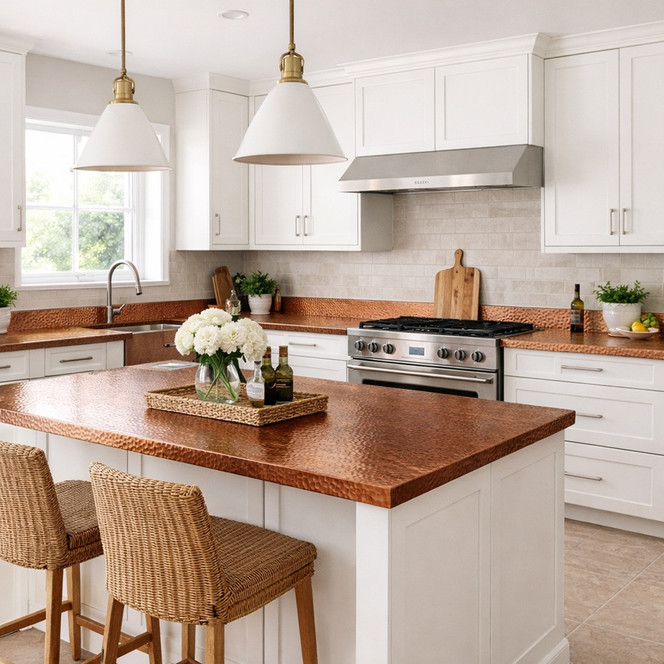
Hammered Copper Countertop with Backsplash Lifestyle Guide explains how a handcrafted copper countertop with an integrated backsplash can change the look and function of rustic farmhouse, Spanish Revival, modern Mediterranean, transitional, and Old World kitchens. This custom fabricated counter combines hammered copper texture, warm artisan patina, a finished rear backsplash, and durable surface character for kitchens, wet bars, coffee stations, and wall counters. Explore the hammered copper countertop with backsplash to review product details, custom sizing, finish options, and fabrication planning.
Blog Summary
- Material: Hammered copper surface
- Backsplash: Built-in rear edge
- Styles: Rustic to Old World
- Use: Counters and wet bars
- Planning: Custom dimensions
Lifestyle Guide Overview
A hammered copper countertop with backsplash brings more than a decorative metal surface into the kitchen. It creates a continuous work area with a finished rear transition where the counter meets the wall. The hammered texture adds depth, while the copper patina brings warmth that changes with lighting, cabinetry, tile, and surrounding materials. Because the backsplash is built into the design, the countertop feels more complete than a flat sheet of copper or a separate wall panel. For a full product and planning overview, review the copper countertop guide.
Rustic Farmhouse Kitchen

In a rustic farmhouse kitchen, the hammered copper countertop adds warmth, texture, and handcrafted character against painted cabinetry, wood shelving, ceramic accessories, and natural finishes. The built-in backsplash gives the counter a finished rear edge, which is useful behind sinks, prep areas, coffee stations, or wall counters where splashes and daily use are expected. Hammered copper pairs well with cream, white, sage, gray, and natural wood tones because it brings a rich contrast without feeling overly formal. In farmhouse interiors, the surface should look practical and lived-in. The evolving patina supports that relaxed character, making minor variation, water spotting, and daily wear part of the countertop’s natural appeal.
Farmhouse Pairings
- Cabinets: Cream or white shaker
- Wood: Shelves or rustic beams
- Tile: Simple handmade field
- Hardware: Bronze or black iron
- Finish: Warm aged copper
Spanish Revival Kitchen

In a Spanish Revival kitchen, hammered copper feels natural beside plaster walls, dark wood, wrought iron, handmade tile, and warm earth tones. The countertop’s built-in backsplash can create a strong transition between the work surface and the wall, especially when paired with tile, stone, or textured plaster above it. The hammered surface adds movement similar to hand-formed metalwork found in traditional Spanish interiors. Copper also coordinates well with Talavera tile, bronze fixtures, black iron lighting, and carved cabinetry when the palette is controlled. The key is balance. If the backsplash wall includes colorful tile, the copper counter should provide warmth and depth without competing with every decorative element.
Spanish Pairings
- Tile: Talavera or ceramic color
- Wood: Dark cabinet tones
- Metal: Iron and bronze accents
- Walls: Plaster or limewash
- Color: Clay and warm neutrals
Modern Mediterranean Kitchen

A modern Mediterranean kitchen can use a hammered copper countertop to soften clean lines and add warmth to stone, plaster, wood, and muted tile. The integrated backsplash is especially useful when the design needs a finished wall transition without a separate copper panel or decorative tile border. Hammered copper gives the room artisan depth while the modern layout keeps the overall look controlled. This balance works well with limestone, travertine, cream plaster, warm wood, terracotta accents, and bronze or brass fixtures. In Mediterranean interiors, copper should feel sun-warmed and natural, not overly polished. A darker patina can create depth, while a lighter finish can brighten the space.
Mediterranean Pairings
- Stone: Limestone or travertine
- Walls: Cream plaster finish
- Wood: Warm natural tones
- Metal: Brass or bronze
- Tile: Muted handmade pattern
Transitional Kitchen

In a transitional kitchen, a hammered copper countertop with backsplash can add the handmade warmth that clean cabinetry and stone surfaces sometimes lack. The counter works well when the surrounding design is simple: shaker cabinets, quiet tile, neutral walls, balanced hardware, and soft lighting. The built-in backsplash helps the copper feel intentional and custom-fabricated rather than applied as a loose decorative sheet. This style is especially useful for serving areas, beverage stations, perimeter counters, and compact work zones that need a strong design feature. The hammered surface adds texture, while the overall installation can remain polished and restrained. Copper creates contrast without making the kitchen feel overly rustic.
Transitional Pairings
- Cabinets: Clean shaker style
- Counters: Quiet stone nearby
- Tile: Simple backsplash field
- Lighting: Warm and balanced
- Hardware: Bronze or brass
Old World Kitchen

In an Old World kitchen, hammered copper brings historic warmth and a sense of permanence. The countertop works especially well with stone floors, plaster walls, dark wood cabinets, iron lighting, and aged bronze hardware. The built-in backsplash reinforces the custom fabricated appearance because it creates a continuous copper detail at the rear edge. This is valuable in kitchens that rely on substantial materials and handcrafted finishes. The surface does not need to remain perfect to look beautiful. Copper develops patina through water, touch, acids, cleaning habits, and daily use. In Old World interiors, this natural aging supports the design rather than reducing its appeal.
Old World Pairings
- Stone: Heavy natural texture
- Wood: Dark aged cabinetry
- Metal: Iron and bronze
- Walls: Plaster or brick
- Finish: Deep copper patina
Built-In Backsplash
The built-in backsplash is one of the most practical features of this countertop style. Instead of ending at a flat rear edge, the copper rises at the wall to create a more finished transition. This helps protect the wall behind the counter from everyday splashes, crumbs, and cleaning moisture. It also gives the counter a custom look because the surface and backsplash are planned together. The backsplash can be useful behind coffee makers, wet bars, prep counters, wall counters, and kitchen perimeter runs. Its height should be confirmed before production, especially when the wall includes tile, outlets, windows, shelves, or cabinet trim.
Hammered Copper Texture
Hammered copper gives the countertop depth and helps the surface feel handcrafted. The texture catches light differently across the counter, which makes the metal look warmer and more dimensional than smooth sheet copper. Hammering can also make daily wear feel less visually obvious because the surface already contains natural movement. This does not mean copper is maintenance-free. Water spots, acidic foods, fingerprints, and cleaning marks can still affect the finish. However, those changes are part of copper’s living character. Homeowners should expect variation rather than a perfectly uniform surface. The countertop is fabricated for real kitchen use, not simply decorative wall material.
Texture Benefits
- Depth: Adds surface movement
- Light: Creates warm highlights
- Style: Feels handcrafted
- Wear: Blends daily variation
- Patina: Ages naturally
Countertop Applications
A hammered copper countertop with backsplash can be used in several areas of the home. It works well for kitchen perimeter counters, rustic bar tops, coffee stations, serving counters, pantry counters, and wet bar surfaces. It can also complement copper, zinc, or wood table and counter surfaces in related spaces. When planning larger rooms, homeowners may combine copper counters with stone, wood, or painted cabinetry for contrast. To compare related metal surface options for dining, kitchen, and furniture projects, review copper and zinc tabletops.
Custom Fabrication
This countertop should be planned as a fabricated copper surface, not as a do-it-yourself backsplash sheet. Measurements, depth, length, backsplash height, edge profile, cutouts, seams, corners, sink placement, and installation conditions should be reviewed before production. Copper can be built over a supporting substrate so the counter has structure, thickness, and usable strength. Special requests may include integrated sinks, straight edges, marine-style edges, bullnose details, or decorative motifs depending on project requirements. Because every kitchen is different, accurate drawings and measurements help the finished countertop fit properly against walls, cabinets, appliances, and surrounding surfaces.
Measurements to Send
- Length: Total counter run
- Depth: Front to wall size
- Backsplash: Desired height
- Cutouts: Sink and fixture plans
- Edges: Preferred front detail
Patina Expectations
Copper patina should be understood honestly before ordering. Water can leave spots, acidic foods can brighten or darken areas, and daily contact can create tonal variation. Lemon juice, vinegar, tomato, wine, salt, and harsh cleaners may affect the surface quickly. Some homeowners love this evolving look because it makes the counter feel natural and aged. Others may prefer more controlled maintenance with gentle cleaning and protective wax. Neither approach is wrong, but expectations matter. A hammered copper countertop is a living metal surface. Its beauty comes from warmth, depth, and variation rather than perfect uniformity.
Care and Cleaning
Clean a copper countertop with mild soap, warm water, and a soft cloth. Avoid abrasive pads, bleach, ammonia, acidic cleaners, steel wool, and harsh degreasers because they can scratch or alter the patina. Dry the surface after cleaning if water spotting is a concern. Wipe acidic spills quickly to reduce strong finish changes. If wax is used, follow the product instructions and reapply as needed. Hammered texture should be wiped carefully so residue does not collect in low points. Regular gentle cleaning is better than occasional aggressive scrubbing, especially when the goal is preserving an aged copper finish.
Care Guidelines
- Soap: Use mild cleaner
- Cloth: Choose soft fabric
- Acids: Wipe spills quickly
- Dry: Reduce water spots
- Avoid: No harsh chemicals
Design Summary
A hammered copper countertop with backsplash is ideal for kitchens that need warmth, artisan texture, and a finished wall transition. It works across rustic farmhouse, Spanish Revival, modern Mediterranean, transitional, and Old World interiors because copper pairs naturally with wood, stone, plaster, tile, iron, bronze, and painted cabinetry. The built-in backsplash improves the rear edge visually and functionally, while hammering adds depth to the surface. Custom fabrication allows the counter to be planned around length, depth, cutouts, edge details, sink layouts, and backsplash height. With proper expectations, copper becomes a durable and expressive kitchen surface.
Final Design Guidance
Hammered Copper Countertop with Backsplash Lifestyle Guide shows how one handcrafted surface can adapt to many kitchen styles. Choose this countertop when the project needs a custom fabricated metal counter with warmth, texture, and a built-in backsplash. Pair it with rustic wood, stone, plaster, handmade tile, bronze hardware, or quiet transitional cabinetry depending on the room style. Confirm all measurements, sink or fixture cutouts, backsplash height, edge options, and installation conditions before production. When planned carefully, a Rustica House copper countertop adds lasting function, visual depth, and handcrafted character to the kitchen.