 US Dollar
 Euro
Euro
 Australian Dollar
 Canadian Dollar
 Polish Zloty
 British Pound


Elegant Gothic Revival Wrought Iron Lighting Fixture
The elegant Gothic Revival wrought iron lighting fixture is a commanding focal point that marries historic romance with modern reliability. Inspired by pointed arches and vertical lines, this hand-forged chandelier channels medieval architecture while supporting today’s lighting standards. In great rooms with cathedral ceilings, hacienda-style dining halls, or double-height entries, it delivers layered illumination and a sculptural presence. Forged by skilled metalworkers, each arm, scroll, and finial is shaped under heat and hammer, then finished in a protective patina to endure daily use. The result is a hand-forged Gothic Revival chandelier that balances dramatic silhouette with practical performance—ideal for homeowners seeking a fixture that feels both storied and contemporary.
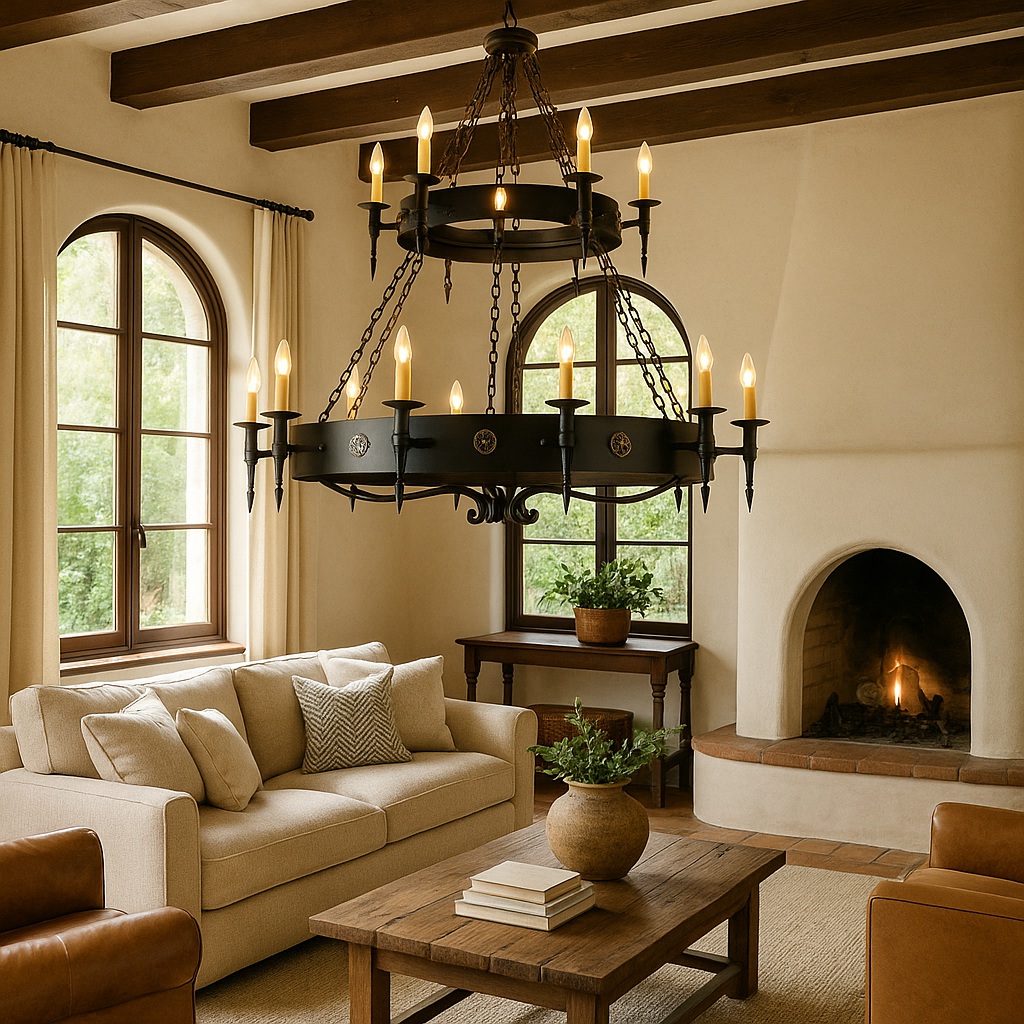
Beyond aesthetics, this medieval-inspired iron light fixture solves real design needs. Its multi-tier composition scales to expansive volumes, its candle-style bulbs provide warm ambience, and its dimmer-ready wiring supports flexible moods from casual dining to formal entertaining. Whether you’re curating Spanish Colonial interiors or transitioning a contemporary space with artisanal texture, a large Gothic wrought iron chandelier offers authentic detail without sacrificing day-to-day comfort.
Design Roots
Gothic Revival drew from medieval cathedrals, translating tracery, spires, and vertical thrust into nineteenth-century homes. Lighting adopted those cues with layered rings, sculpted scrolls, and pointed accents. Today’s makers reinterpret those forms with updated proportions and UL-listed components, producing a Spanish Colonial wrought iron lighting aesthetic that reads refined rather than theme-heavy.
- Pointed finials echo Gothic spires
- Layered tiers build vertical emphasis
- Scrollwork arms add graceful motion
- Candle sleeves evoke historic glow
- Embossed rosettes enrich surfaces
Artisan Craft
True character begins at the forge. Artisans heat bar stock to a bright orange, then shape curves, collars, and hooks with hammer and anvil. Every component—from the smallest rosette to the main support ring—receives attention, ensuring symmetry and structural integrity for a custom artisan-made iron chandelier that lasts.
Forging Steps
- Heat iron to forging temperature
- Hammer curves and scrolls by hand
- Form rings, collars, and finials
- Normalize metal to relieve stress
- True each piece for symmetry
Joinery
Joinery combines old-world methods with modern standards. Rivets, collars, and discreet welds secure arms and braces. Strategic gussets stiffen tiers without adding visual weight. The canopy, chain, and mounting plate are engineered for load, yielding a fixture that feels substantial yet balanced in motion.
Quality Checks
- Weight rating verified at canopy
- Tiers leveled and concentric
- Arms aligned to precise angles
- Electrical continuity confirmed
- Dimmer compatibility validated
Finish Options
Finish sets the mood and protects the iron. Hand-applied patinas settle into hammer texture, highlighting relief and depth. Choose a surface that complements architecture and hardware, from cabinet pulls to door straps, for a cohesive composition and a subtle antique finish wrought iron lighting vibe.
- Dark rust patina for aged warmth
- Matte black for crisp silhouette
- Oil-rubbed bronze for glow
- Antique pewter for cool tone
- Layered wax for soft sheen
Room Placement
Scale and sightlines matter. Large, multi-tier fixtures thrive where vertical volume and viewing distance let details read clearly. Measure traffic paths, table size, and ceiling height before specifying diameter and drop.
Grand Entries
In double-height foyers, the chandelier introduces architecture on arrival. Hang so the lower tier clears tall guests while the frame sits visually within the upper third of the space. This preserves drama without dominating door views.
Dining Rooms
Over a long table, align the fixture’s center with table center. Typical bottom-of-fixture height is 30–36 inches above the tabletop. Dimmer control lets you pivot from bright hosting to candlelit ambience.
Great Rooms
Cathedral ceilings invite layered tiers. Choose a diameter proportionate to the seating zone, not the full room footprint. Consider a secondary sconce plan to wash walls and showcase stone or plaster textures.
Outdoor Use
For covered loggias or verandas, specify damp-rated components and protective coatings. Maintain generous clearance from wind paths and salt air, and inspect hardware seasonally.
Light Benefits
Historic form meets modern function. Today’s fixtures offer efficient lamping, safer wiring, and convenient control, turning a storied silhouette into everyday utility.
Modern Tech
- LED-ready sockets for efficiency
- Dimmer support for mood shifts
- Compatible with smart controls
- Code-compliant internal wiring
- Heat-tested sleeves and bobeche
Even Lighting
Multiple lamps on each tier distribute light across seating, artwork, and circulation. Pair with wall sconces to reduce shadows and emphasize architectural relief.
Mood Control
Warm color temperature (think 2700–3000K) flatters finishes and skin tones, while dimming tailors ambience from everyday tasks to evening gatherings.
Style Tips
Blend the chandelier’s medieval DNA with tactile materials and grounded color. The aim is refined drama—never costume.
Colors
- Earth hues: umber, olive, ochre
- Neutrals: ivory, stone, charcoal
- Accents: burnished gold details
Materials
- Reclaimed wood for warmth
- Limestone or plaster walls
- Handmade tile or terracotta
Repetition
Echo iron lines in stair rails, cabinet hardware, and door straps. Small repeats create cohesion so the chandelier feels integral, not isolated.
Care Guide
Durable by nature, wrought iron still rewards light upkeep. Gentle care preserves patina, prevents corrosion, and keeps hardware secure.
Monthly Tasks
- Feather-dust tiers and arms
- Wipe sleeves with dry cloth
- Check for loose set screws
Yearly Tasks
- Apply microcrystalline wax
- Inspect chains and canopy
- Re-level tiers if needed
Safety
- Turn power off before service
- Use correct lamp wattage
- Hire licensed pros as needed
Buying Guide
Choose with both eye and calculator. Validate structure, scale, and serviceability to enjoy beauty without headaches.
Ceiling Height
- Leave ample head clearance
- Adjust chain for fine tuning
Size Rules
- Match diameter to table width
- Scale to seating footprint
Weight
- Verify box and joist rating
- Consider a medallion plate
Wiring
- Plan dimmers and loads
- Confirm LED compatibility
Customization
- Select patina and sheen
- Specify tier count and drop
If you anticipate future layout changes, consider a slightly smaller diameter and a long, adjustable chain. This keeps sightlines clean and eases relocation to a different room or ceiling height.
Pros
- Timeless, historic character
- Hand-forged artisan build
- Scales to large volumes
- Modern, dimmer-ready wiring
- Multiple finishes available
Conclusion
A Gothic Revival wrought iron chandelier bridges history and modern living. Hand-forged details, layered tiers, and protective patinas bring drama and durability to daily life. With careful sizing, finish selection, and a smart lighting plan, you get the look you love—plus flexible function. From grand entries to dining rooms and great rooms, this statement fixture delivers scale, warmth, and unmistakable artisanal character.