 US Dollar
 Euro
Euro
 Australian Dollar
 Canadian Dollar
 Polish Zloty
 British Pound

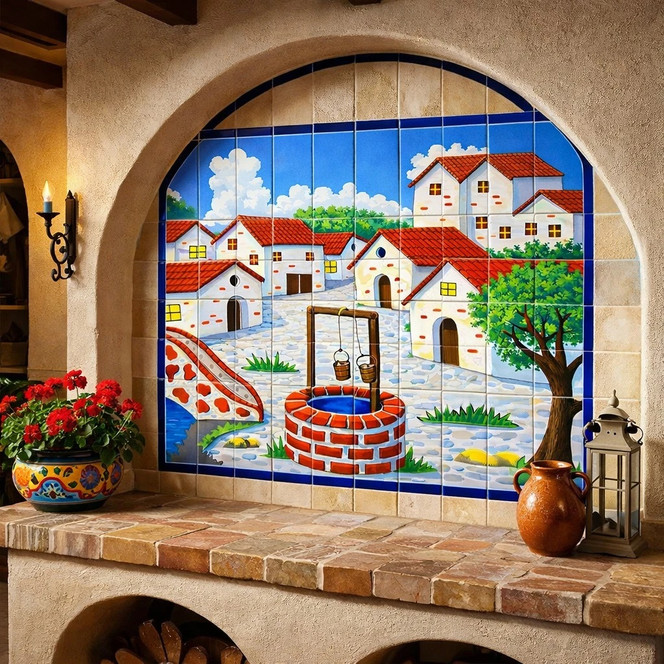
Decorating Kitchen Backsplash with a Tile Mural is one of the most effective ways to add color, texture, and handcrafted character to the heart of the home. A kitchen backsplash protects busy cooking areas, but it can also become a focal point with artisan ceramic artwork. Mexican mural tiles bring painted scenes, traditional patterns, and vivid glaze colors into spaces above stoves, sinks, counters, and preparation zones. Whether the kitchen is rustic, Colonial, Mediterranean, bohemian, or modern, a hand-painted mural can transform a simple wall into a personalized design feature. Browse handcrafted kitchen and bathroom scenes featuring artisan ceramic artwork in this kitchen tile murals collection.
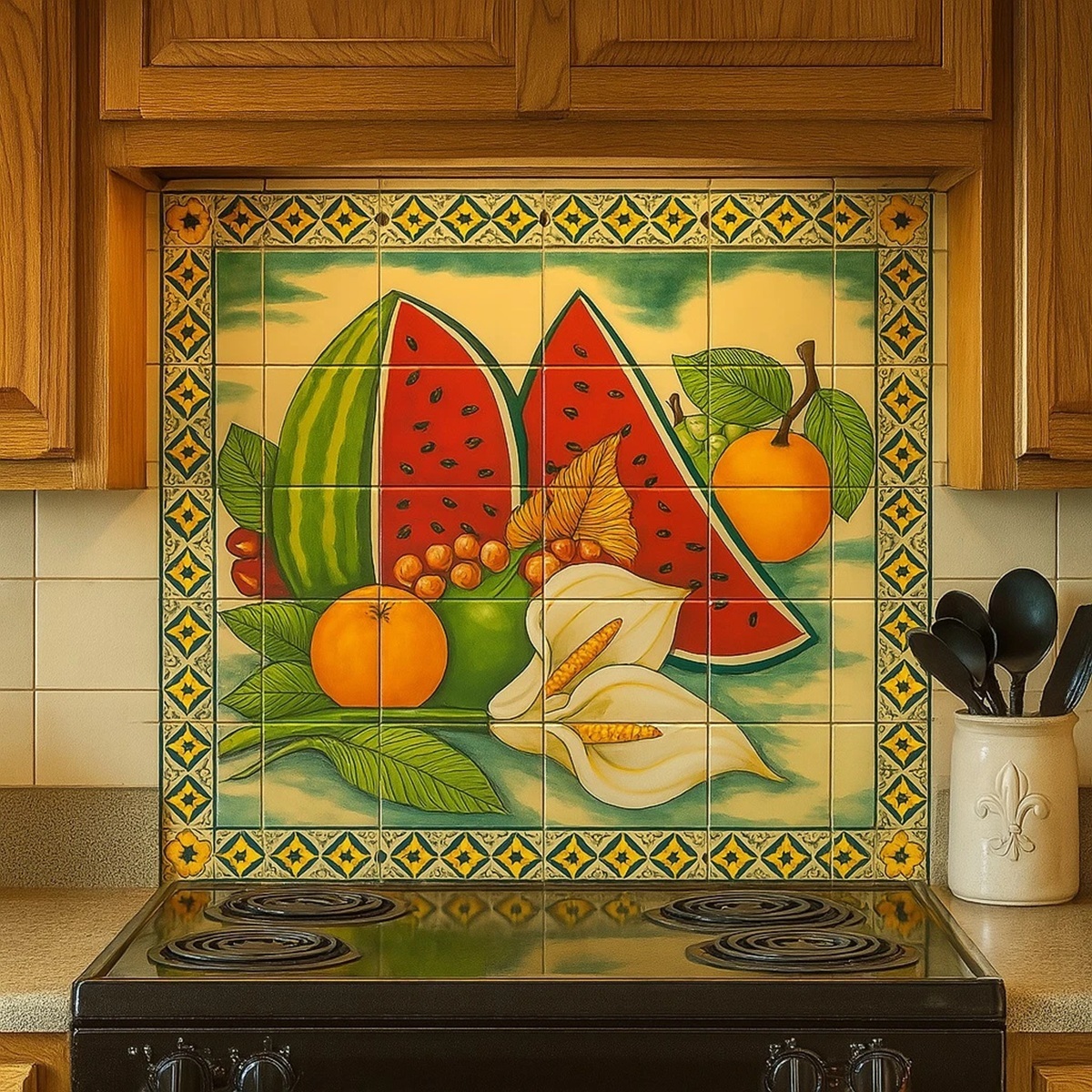
Kitchen Backsplash Appeal
The kitchen receives more daily use than almost any other room, so its surfaces need to feel practical, durable, and visually inviting. A backsplash is often the first area noticed behind the stove or sink because it sits directly in the work zone. Plain tile can protect the wall, but a mural adds a stronger sense of identity. Instead of treating the backsplash as a background surface, mural tile turns it into decorative architecture. Homeowners who enjoy warm interiors, artisan details, and regional design influences can use Mexican Talavera tiles to introduce color and handmade charm without changing the entire kitchen layout.
Tile Mural Focal Point
A kitchen tile mural works especially well when placed behind the stove, where the wall naturally becomes the visual center of the cooking area. This location allows the artwork to frame the range, hood, cabinetry, and surrounding tile field. Many homeowners also install mural tiles above a sink, on a bar wall, or within a breakfast nook where the design can be seen from several angles. The key is to give the mural enough space to be appreciated while surrounding it with complementary field tiles, trims, or simpler ceramic pieces. A well-placed mural feels intentional rather than crowded, creating a finished backsplash with balance and personality.
Mexican Mural Style
Mexican mural tiles are known for rich color, expressive brushwork, and themes inspired by landscapes, animals, village life, flowers, fruit, and traditional architecture. Some murals feel rustic and earthy, while others bring brighter blue, yellow, green, orange, and terracotta accents into the kitchen. Their handmade quality gives each section slight variation, which adds warmth to the finished installation. Unlike mass-produced backsplash panels, hand-painted ceramic murals show the artist’s touch in the glaze, outlines, and color transitions. This makes them ideal for kitchens that need a focal point with cultural depth, decorative energy, and a strong connection to artisan production.
Popular Mural Themes
- Mexican village scenes
- Fruit and floral designs
- Rustic landscape murals
- Bird and animal artwork
- Mediterranean kitchen views
Backsplash Design Planning
Before choosing a mural, consider the size of the wall, the width of the stove or sink, and the surrounding materials. A small mural may work beautifully above a compact range, while a larger composition can anchor a wide cooking wall. The mural should not feel squeezed between cabinets or overwhelmed by heavy patterns around it. Solid color tiles, handmade field tiles, or softer neutral ceramics can frame the scene and allow the painted design to stand out. For a more decorative approach, the mural can be bordered with trim pieces or relief tiles that create a finished edge and connect the artwork to the rest of the backsplash.
Combining Tile Types
Backsplash designs become more interesting when different tile formats work together. Solid ceramic tiles can create calm space around the mural, while trim tiles help define the frame. Patterned tiles can be used carefully along the lower edge, side borders, or surrounding backsplash zones. Homeowners who want more surface texture can combine mural artwork with decorative Mexican relief tiles for added depth. The most successful combinations use contrast without creating visual confusion. The mural should remain the main attraction, while surrounding tiles support its colors, proportions, and decorative rhythm.
Useful Tile Pairings
- Solid field tiles
- Patterned border tiles
- Raised relief accents
- Glossy ceramic trim
- Neutral handmade tiles
Color and Contrast
Color is one of the strongest reasons to use a mural in a kitchen backsplash. White kitchens, cream cabinetry, neutral stone, and simple plaster walls can all benefit from the lively contrast of painted ceramic tile. A mural with cobalt blue, golden yellow, green, or terracotta tones can instantly warm a plain setting. In darker kitchens, lighter mural backgrounds can brighten the cooking area and add visual separation behind the stove. The goal is not always to match every color exactly. Sometimes the best backsplash designs use the mural as the accent that breaks repetition and gives the room a memorable center.
Traditional and Modern Kitchens
Tile murals are often associated with rustic, Spanish Colonial, Hacienda, and Mediterranean kitchens, but they can also work in modern interiors. In traditional spaces, a mural supports wood cabinetry, iron lighting, stone counters, and copper range hoods. In modern kitchens, the same mural can create contrast against flat cabinet doors, smooth counters, and minimalist walls. This contrast is especially effective when the rest of the kitchen uses restrained colors. The handcrafted ceramic artwork softens clean lines and keeps the room from feeling too sterile. This is why handpainted Mexican tiles remain useful across many interior styles.
Border Tile Framing
A mural backsplash often looks more complete when it is surrounded by border tile. The border creates separation between the artwork and the rest of the wall, similar to a frame around a painting. It can be simple and narrow, or it can become a decorative feature with repeating patterns and strong color. A border is also useful when the mural dimensions do not perfectly fill the backsplash area, because it helps adjust the final layout. For more traditional kitchens, Mexican border tiles can add rhythm and structure while reinforcing the handcrafted character of the mural.
Border Design Ideas
- Frame the stove mural
- Outline a sink backsplash
- Separate patterned zones
- Add color around edges
- Finish tile transitions
Installation Considerations
Installing a kitchen tile mural requires careful layout before setting the tiles. Each piece should be arranged in order so the image lines up correctly. The wall should be clean, stable, and suitable for ceramic tile installation. Because murals depend on visual alignment, spacing should be planned before adhesive is applied. Grout color also matters. A softer grout can reduce visual interruption, while a darker grout may emphasize the tile grid. For areas behind stoves and sinks, proper sealing, cleaning access, and heat or moisture considerations should be reviewed with the installer. Professional installation is recommended when the mural includes many pieces or a detailed scene.
Care and Maintenance
Ceramic mural tiles are practical for kitchens when they are cleaned with care. A soft cloth, mild soap, and water are usually enough for regular surface cleaning. Harsh chemicals, abrasive pads, and acidic cleaners should be avoided because they may affect the glaze or grout. Around the stove, splashes should be wiped before they harden. Behind the sink, drying the surface helps keep the backsplash fresh and reduces buildup. Handmade ceramic tile is designed for use, but its beauty lasts longer when treated gently. With proper maintenance, the mural remains both a decorative feature and a protective kitchen surface.
Simple Care Tips
- Clean with mild soap
- Avoid abrasive pads
- Dry wet backsplash areas
- Wipe cooking splashes soon
- Protect grout lines well
Other Home Applications
Although kitchen backsplashes are a natural place for mural tile, the same idea can extend into other areas of the home. Bathrooms, patios, balconies, outdoor kitchens, and bar areas can all benefit from decorative ceramic artwork. A mural above a bathroom vanity can create a colorful focal point, while a patio wall mural can bring rustic charm to an outdoor seating area. In a breakfast room or dining space, mural tile can function almost like permanent wall art. Designs inspired by Old World Talavera tiles can connect these spaces through color, heritage, and handmade texture.
Choosing the Right Mural
The right mural should match the kitchen’s scale, mood, and long-term design plan. A busy kitchen may need a simpler mural with clear shapes and balanced colors. A neutral kitchen may benefit from stronger contrast and brighter painted details. For rustic kitchens, landscape, village, floral, or food-inspired murals often feel natural. For Mediterranean or Tuscan interiors, warm colors and pastoral scenes can support the room’s atmosphere. For modern kitchens, a single colorful mural surrounded by quiet tile can create a bold but controlled statement. The best choice is one that feels personal while still fitting the architecture and function of the room.
Final Design Guidance
Decorating Kitchen Backsplash with a Tile Mural gives homeowners a practical way to combine wall protection with artisan expression. A mural can define the stove area, brighten a neutral kitchen, frame a sink wall, or add a handcrafted focal point to a simple backsplash. With the right surrounding tiles, border pieces, grout color, and layout, Mexican mural tiles can feel both decorative and functional. They bring warmth, movement, and cultural character into everyday cooking spaces. Whether used in a rustic home, Colonial kitchen, Mediterranean villa, or modern white interior, a hand-painted tile mural can make the backsplash the most memorable surface in the room.