 US Dollar
 Euro
Euro
 Australian Dollar
 Canadian Dollar
 Polish Zloty
 British Pound

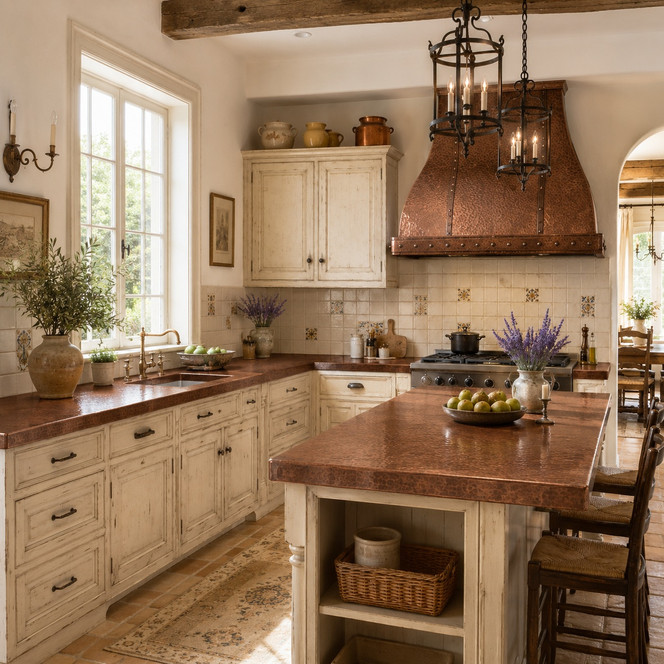
The Copper Kitchen Countertop without Backsplash is shown in these lifestyle images as a warm, handcrafted surface for traditional rustic, French country, rustic European, and transitional kitchens. Its smooth front edge, no-backsplash format, hammered copper surface, and living patina create a refined countertop option that can sit against tile, plaster, stone, or painted walls without covering the rear wall with metal. This makes the design especially useful when the kitchen already has a decorative backsplash or when the homeowner wants copper on the horizontal work surface only. Explore the Copper Kitchen Countertop without Backsplash to compare its finish, edge style, patina options, and kitchen design applications.
Blog Summary
- Focus: Lifestyle image guide
- Product: Copper countertop
- Design: No backsplash format
- Finish: Handcrafted copper patina
- Styles: Four kitchen ideas
- Use: Design inspiration
Copper Countertop Images
Lifestyle images help show how a copper countertop looks inside a complete kitchen rather than as a standalone material sample. Cabinet color, wall finish, backsplash tile, flooring, lighting, hardware, and countertop thickness all affect how the copper surface appears. In one room, the patina may look deep and rustic. In another, the same copper can appear brighter, warmer, or more refined because of surrounding materials and natural light.
For more product-specific planning details, read the copper kitchen countertop without backsplash guide. It explains how the no-backsplash format, copper surface, sizing, finish, and kitchen placement work together in this countertop design.
The no-backsplash format is one of the most important design features of this countertop. It allows the copper to remain focused on the working surface while leaving the wall treatment visible. This is helpful in kitchens with handmade tile, stone backsplashes, painted plaster, brick, wood paneling, or decorative wall finishes. The result is a cleaner installation that still delivers the warmth and character of handcrafted copper.
Design Highlights
- Handcrafted copper kitchen countertop
- No backsplash for cleaner wall design
- Warm patina with natural variation
- Works with tile, plaster, stone, and wood
- Suitable for rustic and refined kitchens
- Custom sizing for kitchen layouts
- Artisan surface with practical function
The copper surface gives the kitchen a warmer and more distinctive appearance than many conventional countertop materials. Stone, quartz, and stainless steel can be beautiful, but copper offers a living finish that responds to use, light, and time. Its patina can deepen naturally, creating a surface that feels handmade and personal rather than uniform.
Traditional Rustic Kitchen
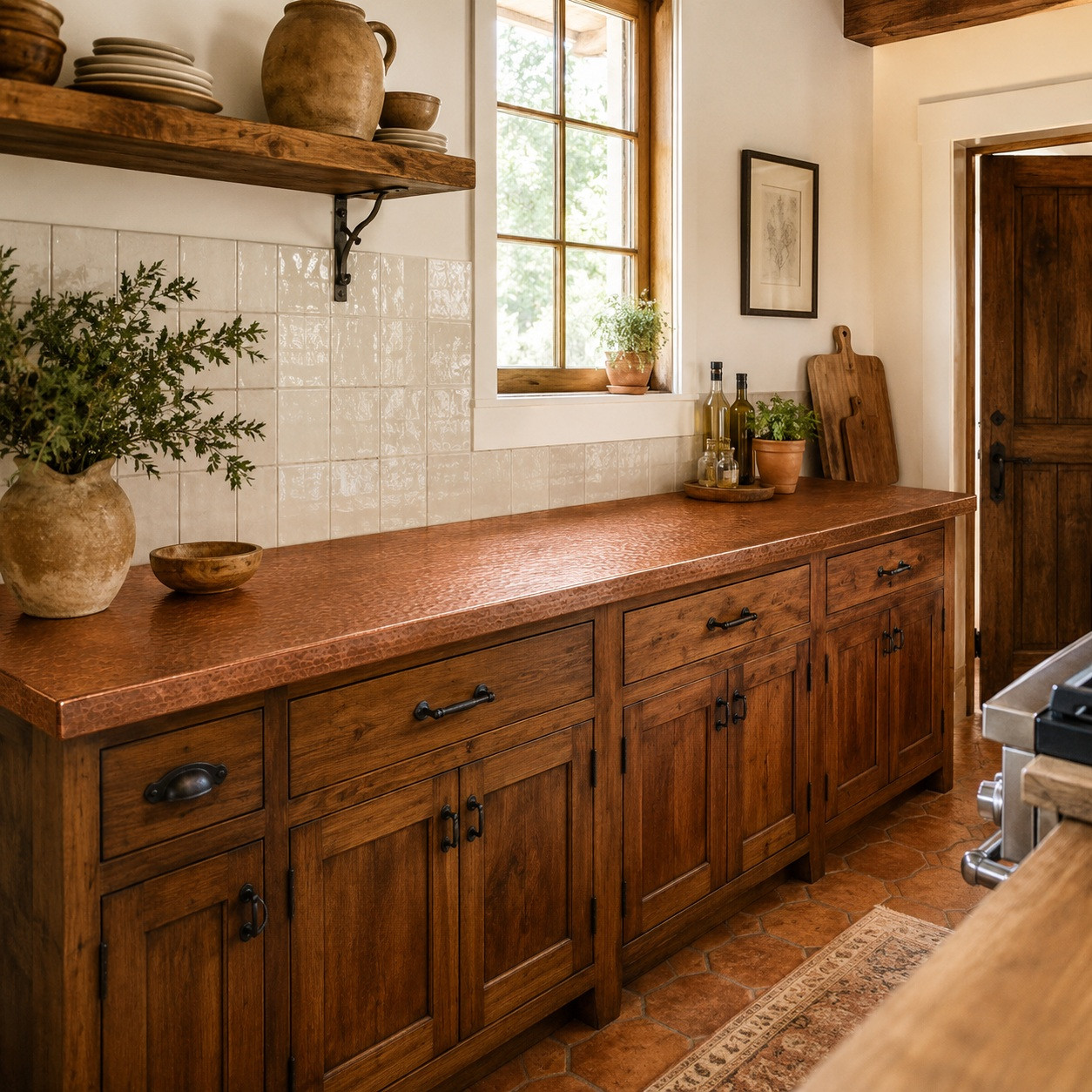
In a traditional rustic kitchen, the copper countertop without backsplash creates a warm and grounded work surface. Traditional rustic interiors often include wood cabinetry, stone floors, aged hardware, simple trim, and natural textures. Copper supports this atmosphere because it feels handcrafted, durable, and visually rich. The no-backsplash format keeps the rear wall open, allowing tile, plaster, or stone to remain part of the kitchen composition.
The countertop adds a strong material layer without making the kitchen feel overly formal. Its warm tone can coordinate with dark wood, cream cabinetry, bronze fixtures, black iron accents, and natural stone. A hammered or patinated copper surface also helps hide small marks and tonal changes that come with daily use. This makes the countertop feel appropriate for a kitchen designed around age, comfort, and authentic materials.
This lifestyle image shows how copper can become the detail that ties together rustic finishes. Instead of acting as a cold or purely practical surface, the countertop adds color, texture, and artisan character to the cooking and prep area.
French Country Kitchen

In a French country kitchen, the copper countertop adds quiet warmth and old-world charm. French country design often combines painted cabinetry, natural stone, wood furniture, soft neutral colors, antique-style hardware, and graceful architectural details. Copper fits this setting because it brings a handcrafted surface that feels elegant without appearing too polished.
The no-backsplash design is especially useful in this style. French country kitchens often rely on decorative tile, plaster walls, stone backsplashes, or paneling behind the counter. A copper backsplash could cover those features, but a countertop-only design allows the wall treatment to remain visible. This creates a layered look where copper, wall texture, cabinetry, and hardware all contribute to the room.
The warm patina works well with cream, taupe, gray, sage, blue, and natural wood palettes. It can also coordinate with brass, bronze, black iron, or aged nickel fixtures. In this setting, the copper countertop becomes a refined rustic accent rather than a heavy industrial feature.
Rustic European Kitchen

In a rustic European kitchen, copper feels naturally connected to the architecture. This style often includes stone walls, heavy wood, plaster textures, iron hardware, aged finishes, and handmade tile. A copper countertop without backsplash supports those materials because it adds a warm metal surface while keeping the wall design open and visible.
The countertop can look especially strong when paired with carved wood, limestone, travertine, brick, or plaster. Its reddish-brown and bronze undertones echo traditional metalwork used in old European interiors. Unlike a highly polished surface, a patinated copper countertop feels settled into the room. It supports the sense of age and material depth that defines rustic European design.
This lifestyle image shows how the copper surface can become part of a broader material story. The countertop does not need to dominate the kitchen. Instead, it works with wood, stone, and wall texture to create a layered, timeworn atmosphere.
Transitional Kitchen

In a transitional kitchen, the copper countertop creates a bridge between traditional warmth and updated simplicity. Transitional interiors often include clean cabinetry, neutral colors, stone or tile walls, modern lighting, and restrained decorative details. Copper adds warmth and individuality while the no-backsplash design keeps the installation cleaner and more adaptable.
This format is helpful when the kitchen already includes a backsplash selected for color, texture, or pattern. The copper stays on the horizontal plane, where it can serve as a work surface and visual accent without competing with the wall. The result feels custom, but still controlled. This makes the countertop suitable for kitchens that need artisan material character without becoming too rustic.
The warm patina can soften white, gray, blue, black, or wood cabinetry. It can also coordinate with mixed metal hardware and natural flooring. In a transitional setting, copper becomes the feature that adds personality while the surrounding finishes keep the room balanced and current.
No-Backsplash Design
The no-backsplash format gives the copper countertop a cleaner and more flexible appearance. Instead of continuing up the wall, the copper remains on the counter surface. This allows homeowners to use tile, stone, brick, plaster, paint, paneling, or another wall finish behind the counter. It is especially useful when the backsplash is already a major design feature.
This design also creates a lighter visual profile. A full copper backsplash can be beautiful, but it makes the copper more dominant. A countertop without backsplash gives the kitchen warmth while allowing other materials to share attention. That balance is helpful in French country, rustic European, transitional, and traditional rustic kitchens.
Copper Patina Character
Copper is a living material, which means its color can change naturally with use and exposure. A new copper countertop may show brighter tones, while a patinated surface can develop deeper browns, bronzes, and darker aged areas. This natural movement is part of the appeal of copper and gives the kitchen a more personal surface over time.
The patina can coordinate with many kitchen materials. It works with warm woods, cream cabinetry, stone floors, black hardware, bronze fixtures, and handmade tile. It can also add contrast in lighter kitchens where the cabinetry and walls are more neutral. The result is a countertop that feels both decorative and functional.
Care and Use
A copper countertop should be cleaned gently with mild soap, warm water, and a soft cloth. Abrasive pads, harsh chemicals, and acidic cleaners should be avoided because they can scratch the surface or alter the patina. After cleaning, the countertop should be dried to reduce water spotting and help preserve the finish.
Some homeowners prefer to maintain the existing patina with suitable wax, while others allow the copper to age naturally. Both approaches can be attractive. The best choice depends on whether the buyer wants a more controlled finish or a surface that develops additional character through regular use.
Related Resources
- Copper kitchen countertop without backsplash
- Copper kitchen countertop without backsplash guide
- Review the traditional rustic, French country, rustic European, and transitional lifestyle images above for room-by-room styling ideas
- Use the product page to compare patina, sizing, and finish options before planning a kitchen countertop order
Conclusions
The Copper Kitchen Countertop without Backsplash offers a warm handcrafted surface for kitchens that need copper character without covering the rear wall. Its no-backsplash format makes it especially useful when the kitchen already has tile, stone, plaster, brick, or painted wall details that should remain visible. These lifestyle images show how the countertop adapts to traditional rustic, French country, rustic European, and transitional interiors while keeping its artisan copper identity. With the right surrounding materials, it can become a refined focal point that supports both daily use and long-term kitchen style.