 US Dollar
 Euro
Euro
 Australian Dollar
 Canadian Dollar
 Polish Zloty
 British Pound


This gallery-style guide explores copper counters for kitchens and bathrooms, with real-life inspiration images and practical styling notes. For product options and layout ideas, visit our copper counters kitchen bathroom page and compare finishes that suit rustic, modern, and Spanish-inspired spaces.
Kitchen Copper Countertop Examples
Traditional Kitchen Copper Countertop

This traditional kitchen uses copper as a warm, furniture-like surface that softens the room’s structure. The counter’s mellow patina reads classic rather than flashy, pairing naturally with wood cabinetry, creamy stone, and heritage hardware finishes. Copper works especially well here because it adds depth without competing with decorative details. If your kitchen already has crown molding, raised panels, or ornate trim, copper counters can unify the look with a rich, continuous tone that feels collected over time.
Modern Kitchen Copper Countertop

In a modern kitchen, copper becomes a sculptural statement because the surrounding surfaces stay clean and minimal. Smooth lines, flat-front cabinetry, and simple hardware allow the counter’s natural color movement to take center stage. Copper also adds warmth where modern spaces can feel cold, especially beside white quartz, concrete textures, or matte black accents. The key is restraint: fewer competing materials, fewer busy patterns, and intentional lighting that highlights the copper’s glow without turning it into glare.
Copper Island Top and Work Surface
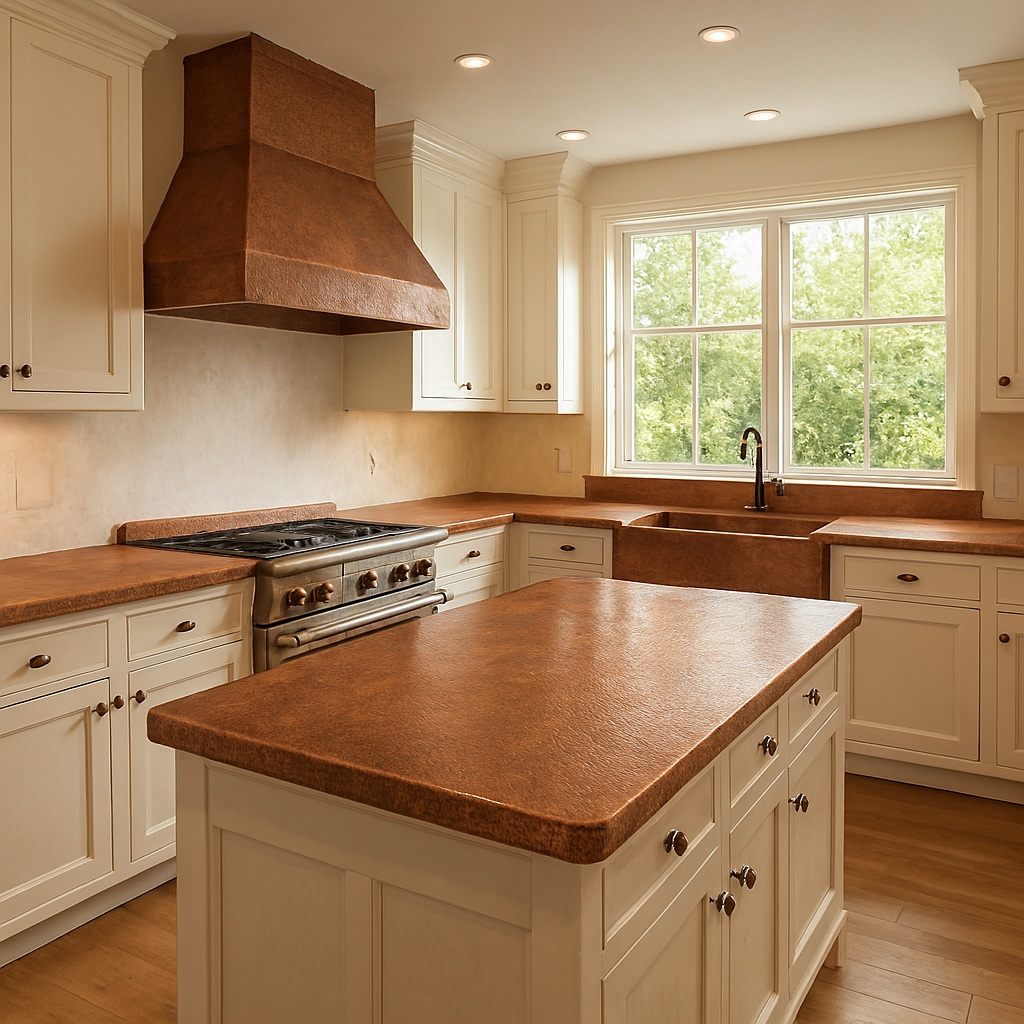
This copper top shows how the material can act as a durable island surface for prep, serving, and daily gathering. Even at a compact visual scale, copper adds a handcrafted identity that makes the island feel like a centerpiece rather than a plain block. It pairs well with butcher block, plaster walls, and natural stone, and it also complements iron stools and warm pendant lighting. For busy households, copper’s evolving patina is a benefit: it becomes more character-rich with use, rather than looking “worn out.”
Bathroom Copper Countertop Examples
Rustic Bathroom Countertop With Sink and Backsplash

This rustic bathroom uses copper for both the counter surface and the backsplash, creating a cohesive, wrapped look that feels grounded and artisanal. Copper’s warmth balances rough textures like stone, reclaimed wood, and hand-finished plaster, while the integrated sink area keeps the composition simple. Using copper on the vertical plane adds protection near water while also reinforcing the design story. This approach works especially well in bathrooms that want a true “hacienda” mood without relying on extra décor.
Eclectic and Bohemian Bathroom Vanity Counter

In an eclectic bathroom, copper counters help connect mixed elements into one warm foundation. Patterned tiles, layered textiles, and collected accessories can feel busy, so the copper surface provides a steady visual anchor. The patina’s tonal variation feels artistic rather than uniform, which suits bohemian styling and handmade décor. This look benefits from contrast: matte walls, textured tile, and soft woods let copper look rich without feeling too shiny. Thoughtful lighting keeps the surface glowing, not reflective.
Modern Bathroom Vanity With Copper Countertop

This modern vanity example shows how copper can stay contemporary when the lines remain crisp and the palette stays controlled. Copper becomes the “warm element” that replaces wood tones, especially in bathrooms built around white, gray, or black finishes. The counter’s subtle movement prevents the space from feeling sterile. Keep accessories minimal and choose hardware that complements copper’s tone, like brushed bronze or matte black. The result feels clean, modern, and still inviting.
Spanish Colonial Bathroom Vanity With Copper Counter

Spanish Colonial styling thrives on warmth, texture, and old-world materials, so copper counters feel completely at home. This vanity look pairs well with carved wood, hand-painted tile, and darker iron accents that echo traditional architecture. Copper’s patina reinforces the historic mood without needing heavy ornament. If your bathroom includes arches, decorative mirrors, or textured plaster walls, copper can unify those features into a cohesive palette. The counter becomes a handcrafted focal point that still feels functional and timeless.
Southwestern Double Vanity With Copper Sinks
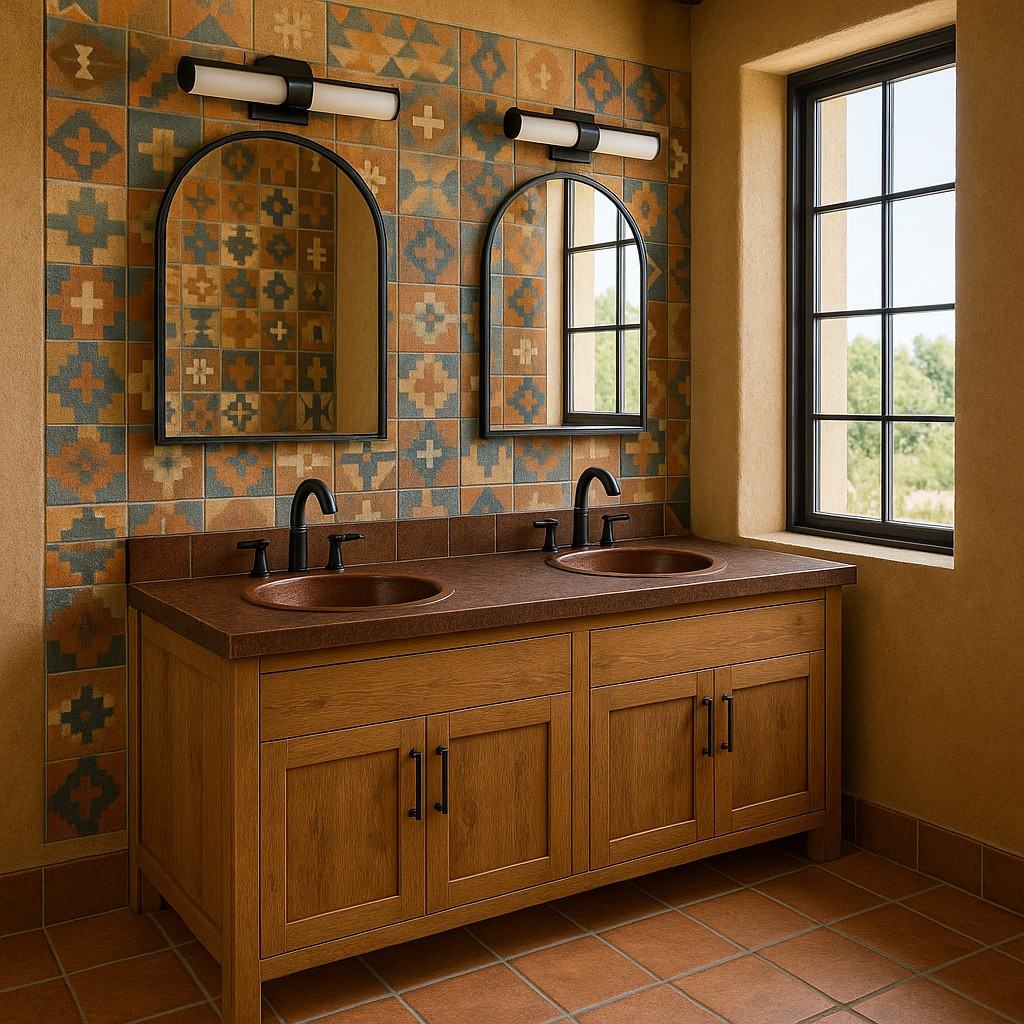
This double-vanity example shows how copper can scale beautifully for shared bathrooms while keeping the design cohesive. Two copper sinks create symmetry, and the countertop ties them together as one warm, continuous surface. Southwestern interiors often feature earthy tile, natural stone, and rustic woods, and copper fits naturally with those materials. Copper also adds a sense of craftsmanship that makes a large vanity feel custom, not mass-produced. With balanced lighting and clean daily care, this setup stays striking and welcoming.
Choosing the Right Copper Countertop Look
Hammered Versus Smooth Surfaces
Hammered copper counters diffuse reflections and hide small marks, making them feel relaxed and artisan. Smooth copper looks more tailored and can feel more modern, but it shows reflections and surface changes more clearly. If your space includes rustic beams, stone, or handcrafted tile, hammered copper usually feels more natural. If your space is minimalist, smooth copper can look architectural and intentional. Either way, copper develops character with time, which is part of its appeal.
Patina and Color Pairing
Warm brown and antique tones pair well with wood, terracotta, cream stone, and Spanish-inspired materials. Brighter copper can lift darker rooms and add energy to modern palettes. If you want a calm look, keep surrounding materials matte and warm. If you want contrast, pair copper with crisp whites, charcoal accents, or black iron hardware. Copper counters work best when the rest of the palette supports them, rather than competing for attention.
Everyday Care Basics
For most homes, gentle soap and water with a soft cloth is enough for daily care. Avoid abrasive pads and harsh chemicals that can scratch or strip a finish. If your copper counter is sealed, follow the finish guidelines to keep the surface consistent. If you prefer a living patina, let copper evolve naturally and focus on gentle cleaning. The goal is steady upkeep, not constant polishing.
Conclusion
If you are planning a kitchen island surface or a bathroom vanity upgrade, copper counters bring warmth, craftsmanship, and a finish that grows richer with time. Explore more options in our bathroom copper countertops collection and pair your design with handcrafted fixtures from our copper kitchen sinks selection.